Arbor Heights, King County
Arbor Heights is where West Seattle runs out: south of SW Roxbury Street, the last residential blocks before the city line. It joined Seattle decades after its neighbors and grew up almost entirely after the Second World War. Those two facts, a late annexation and a postwar building boom, explain most of what we find in its chimneys, from the age of the flues to the furnaces still burning oil. Below we lay out what public records say about the neighborhood and name each source, so you can weigh our advice against the record.
Book an inspection
Book your $99 inspection
$99 plus tax, deducted when you approve the repair
Not sure where to start
Pick what you're seeing at your Arbor Heights home — we'll point you to the right fix.
What we do
The same crew, the same written quote — for Arbor Heights homes.
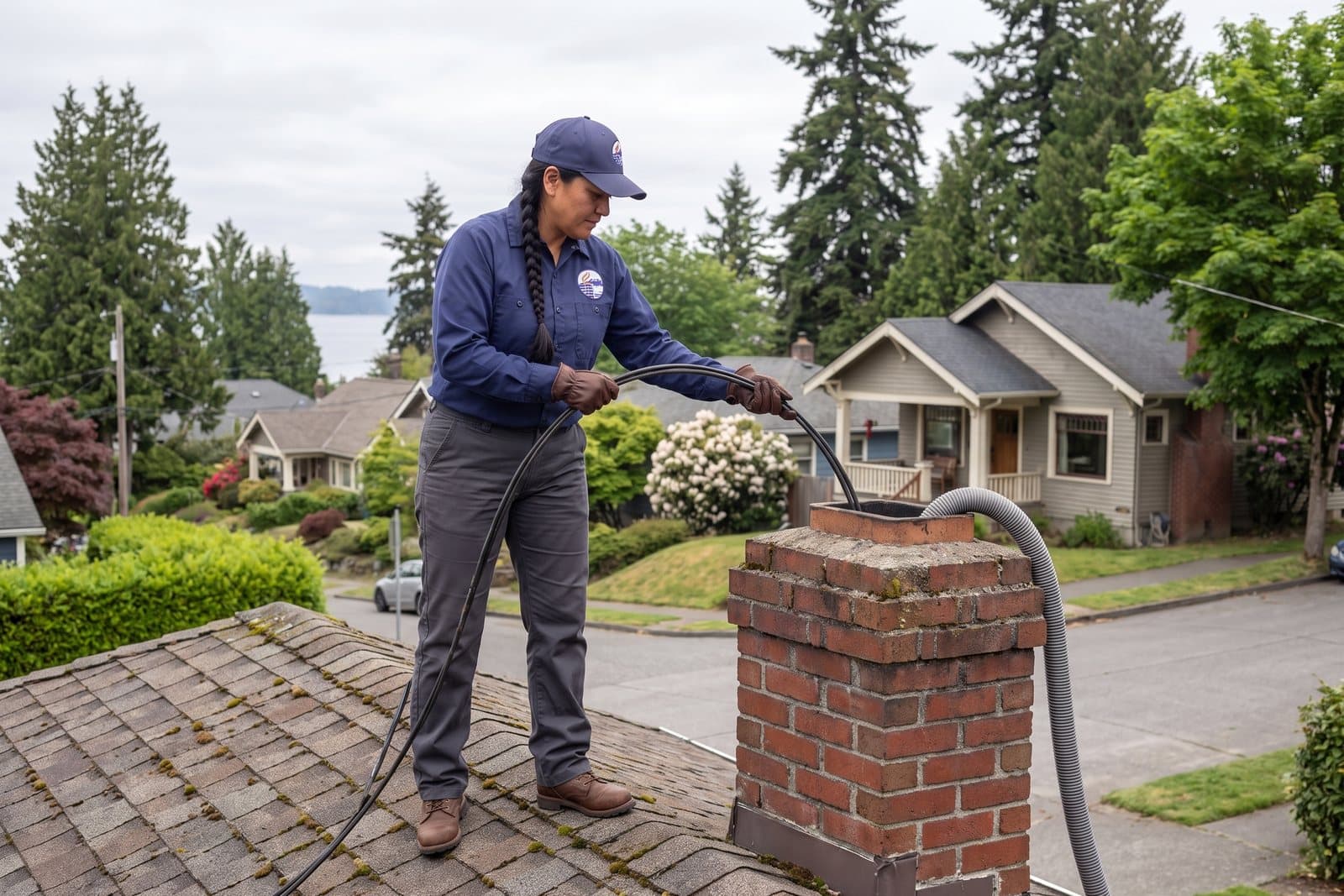
Full-height brushing of the flue with a head sized to its shape and material
Learn more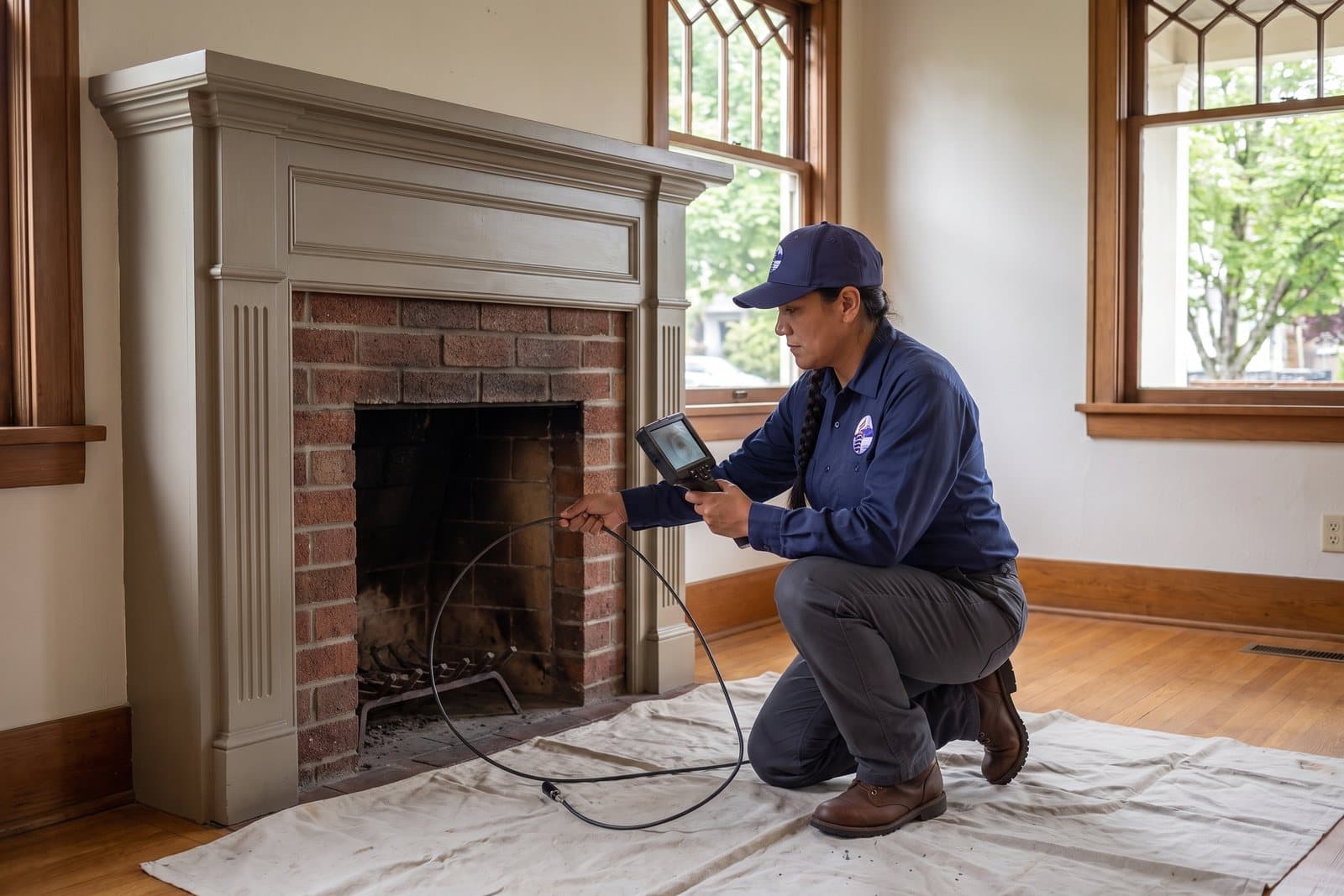
Level 1 examination of everything reachable, with a Level 2 camera pass when the reachable parts leave a question open
Learn more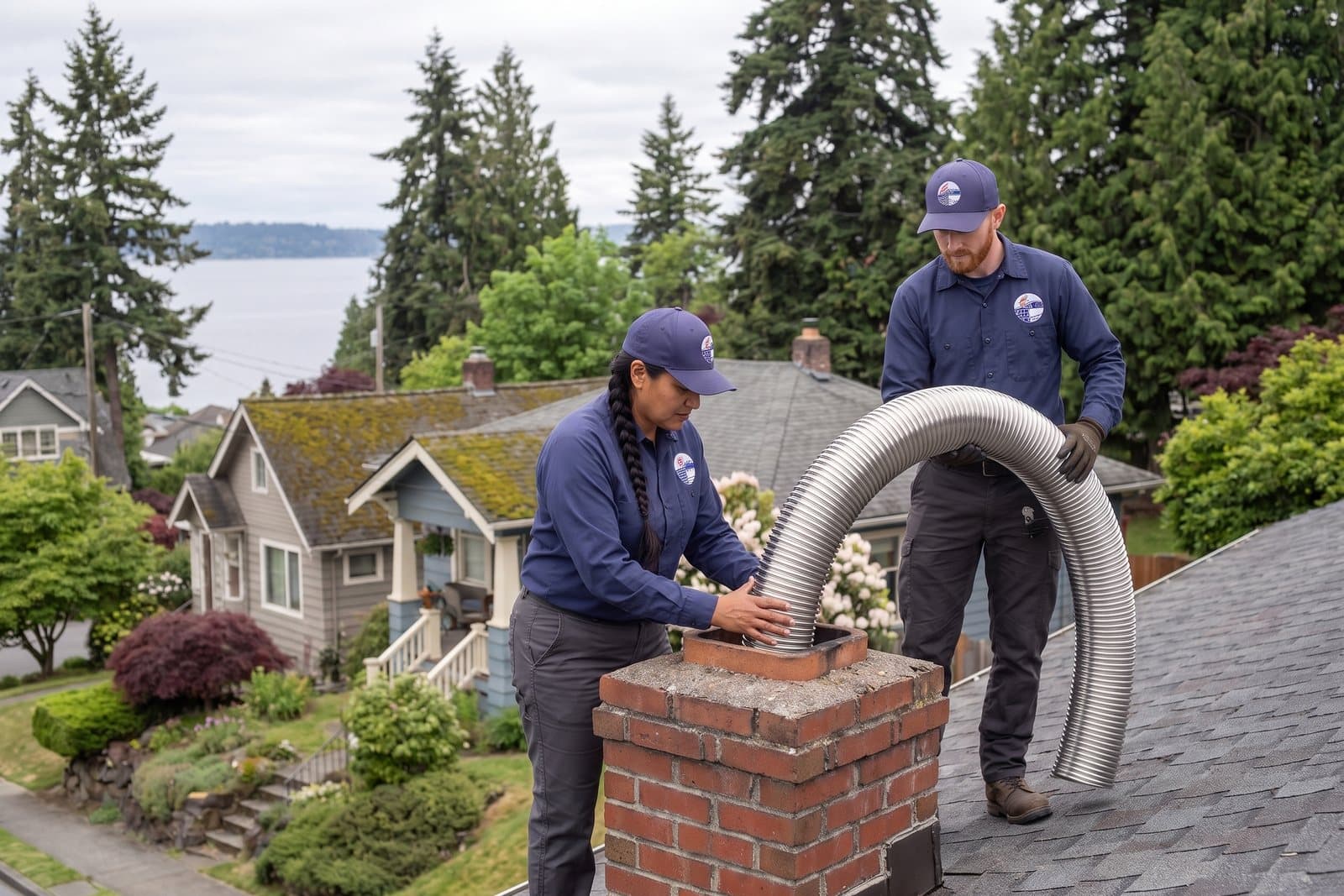
Camera survey and measurement of the existing flue before anything is ordered
Learn more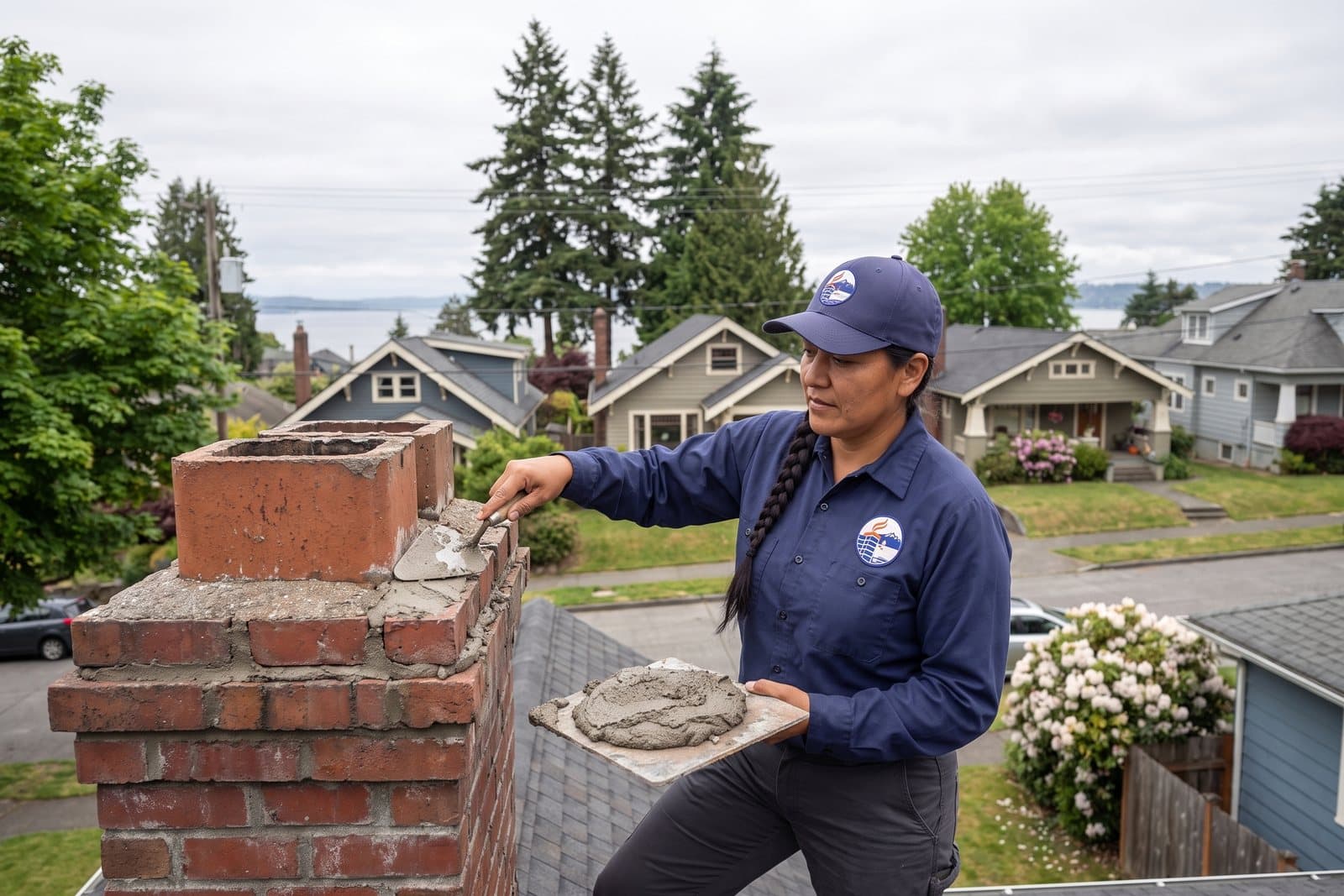
Assessment of the stack from roofline to crown, with a photo of each defect
Learn more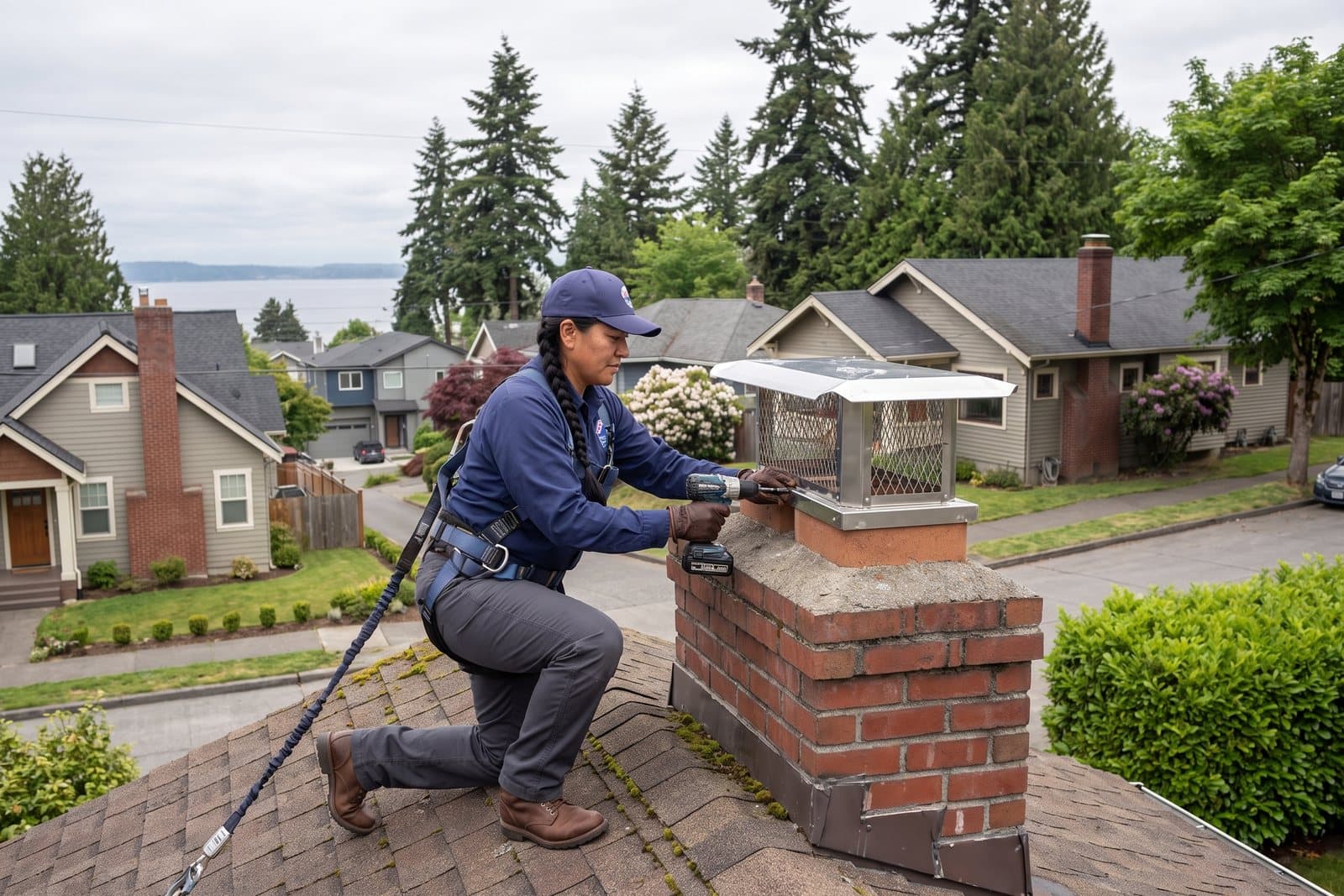
Measurement of each flue tile, or of the whole crown for a multi-flue cap
Learn more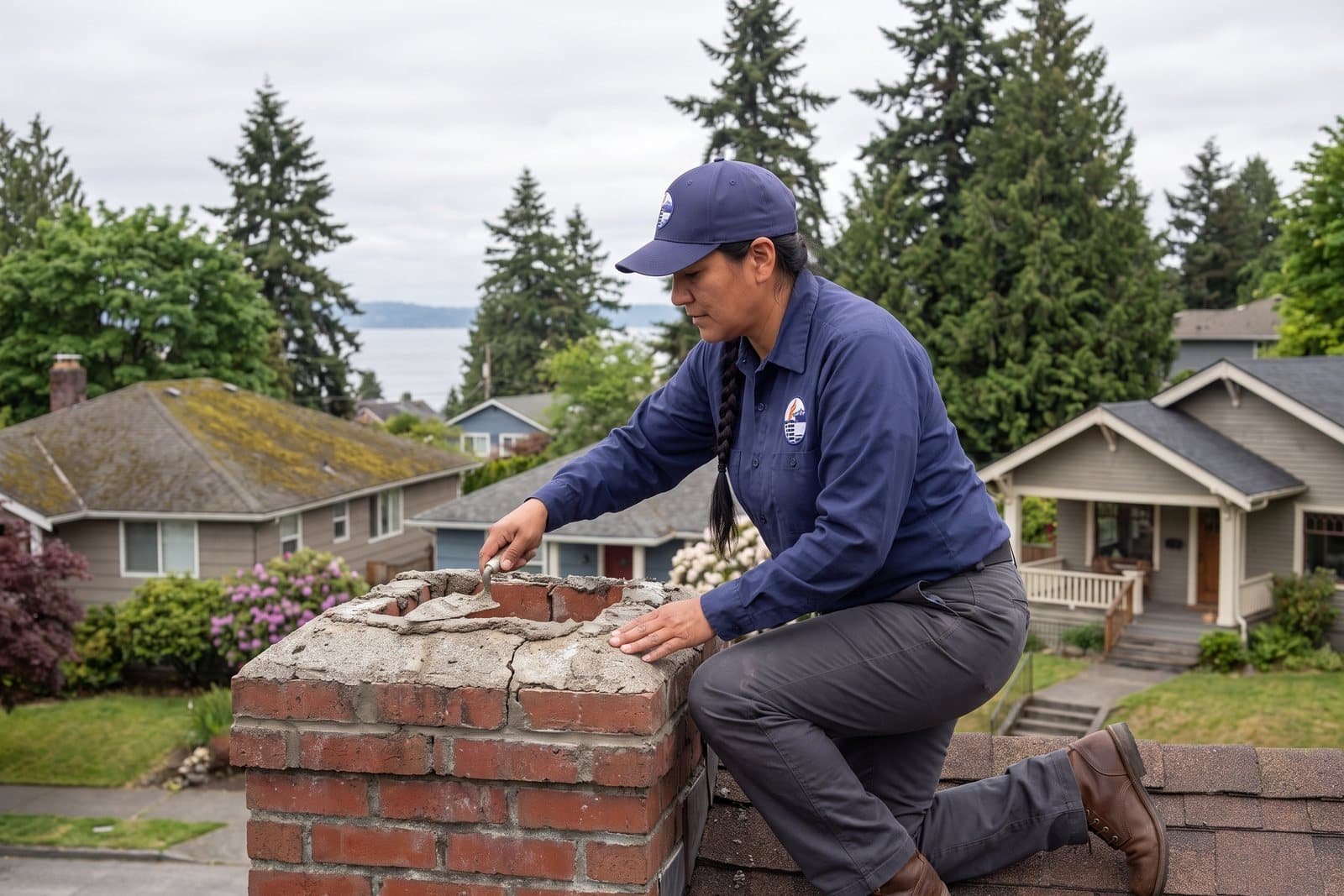
Joints cut back to firm mortar and repointed (tuckpointing) to match the existing profile
Learn more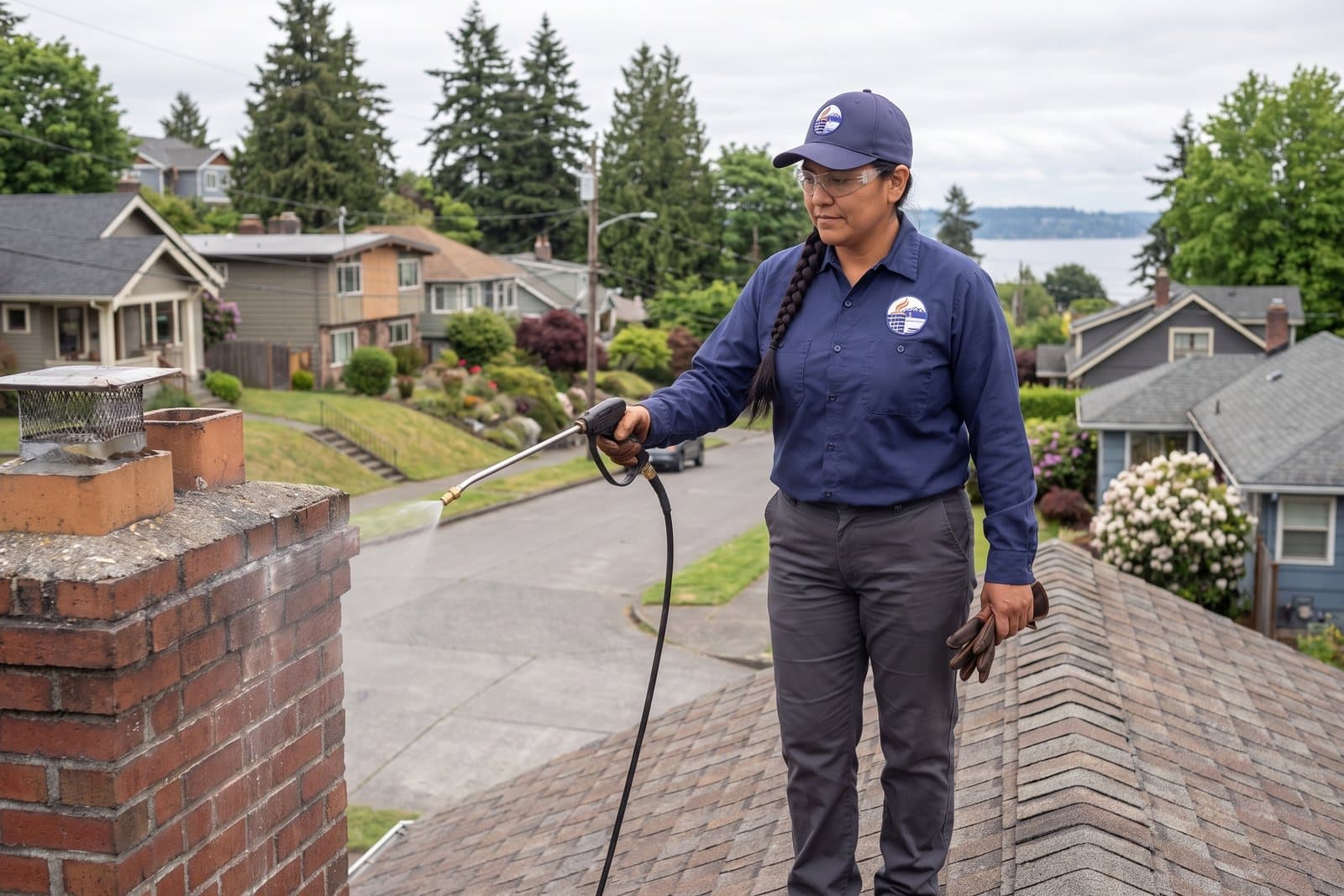
A check of joints, crown and flashing first; defects are repaired before any treatment
Learn more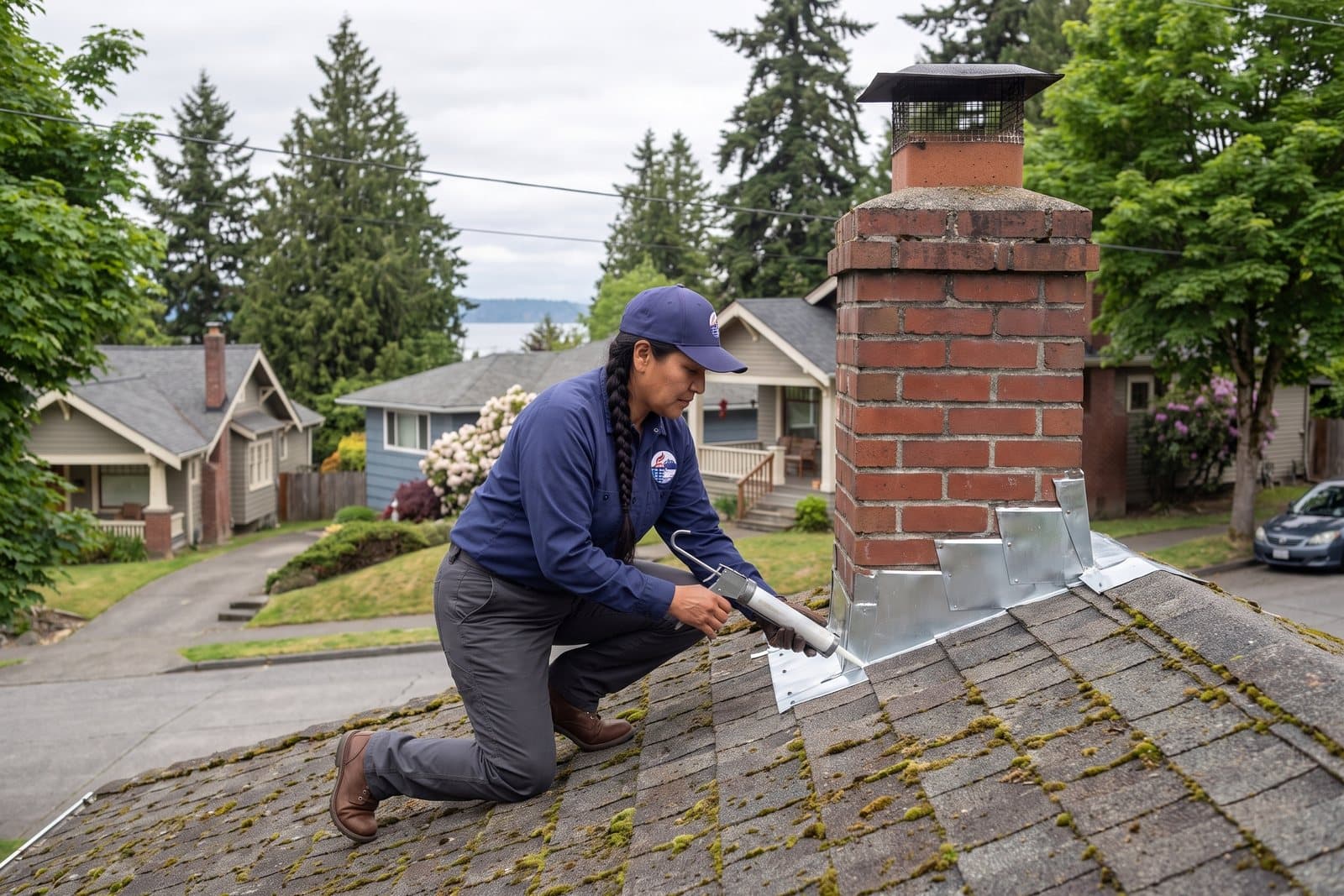
Leak tracing from the attic or the ceiling stain up to the roof
Learn more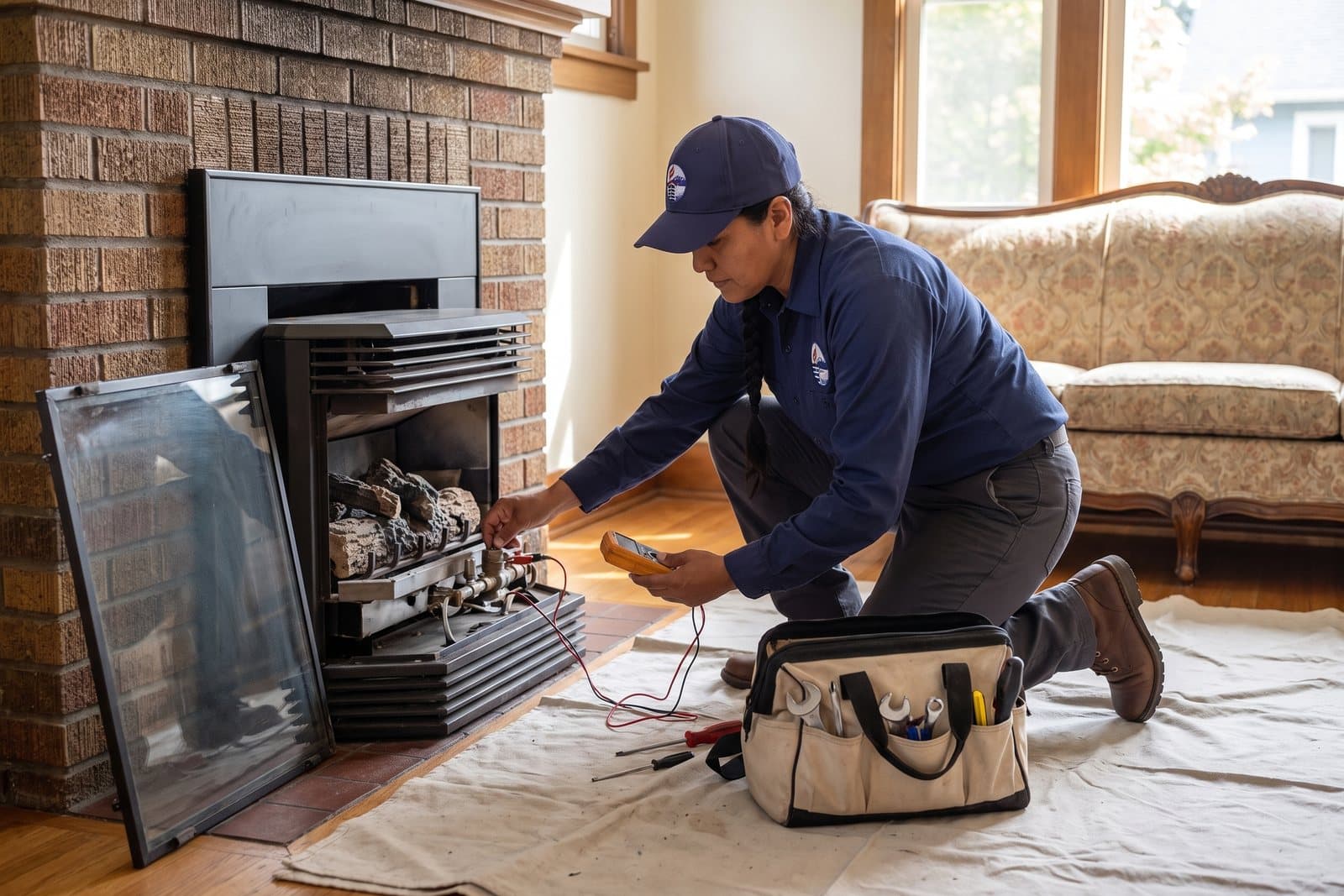
Burner, pilot assembly and firebox cleaned; logs or media put back in the layout the manual shows
Learn more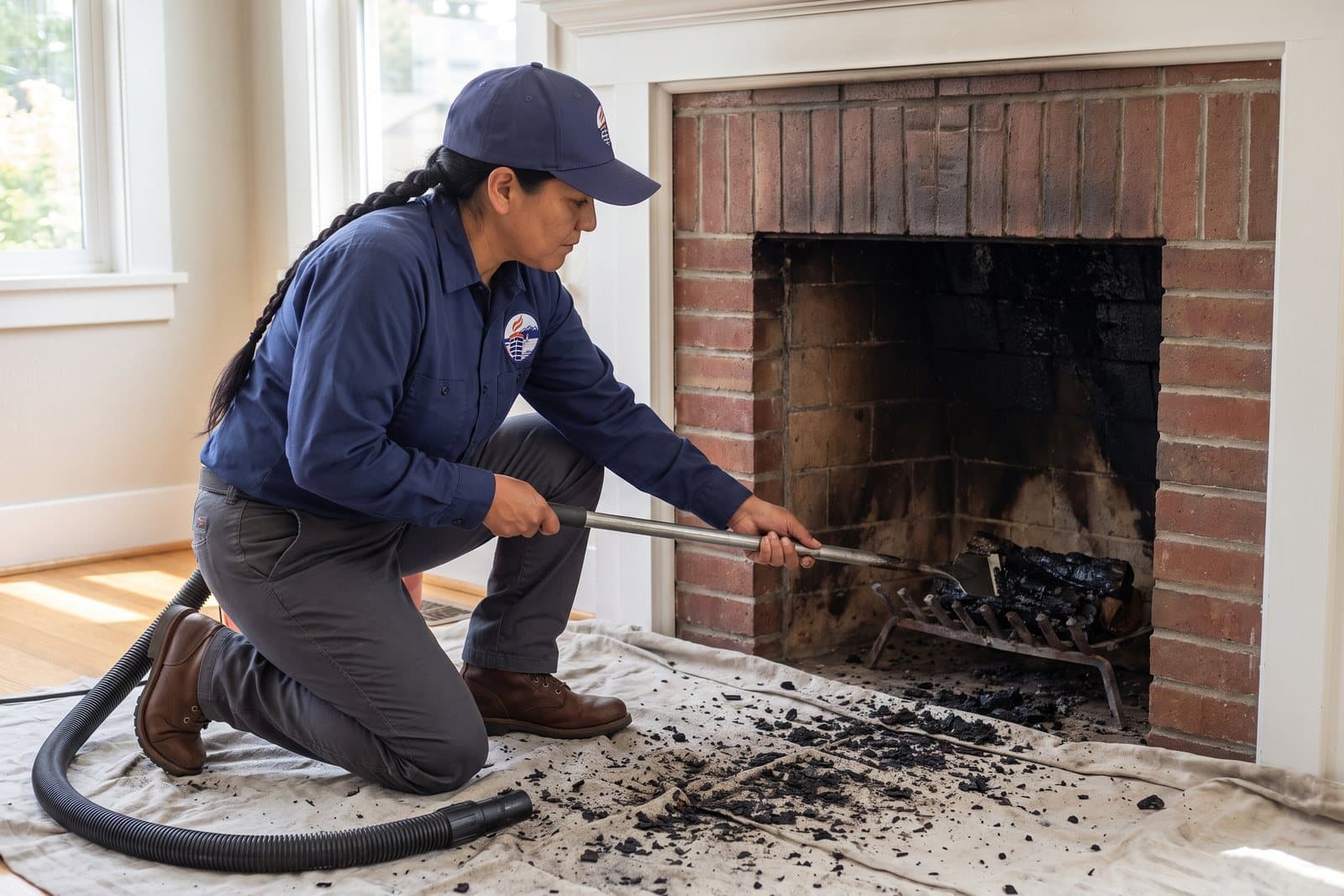
Camera survey to grade the deposit and check the liner beneath it
Learn more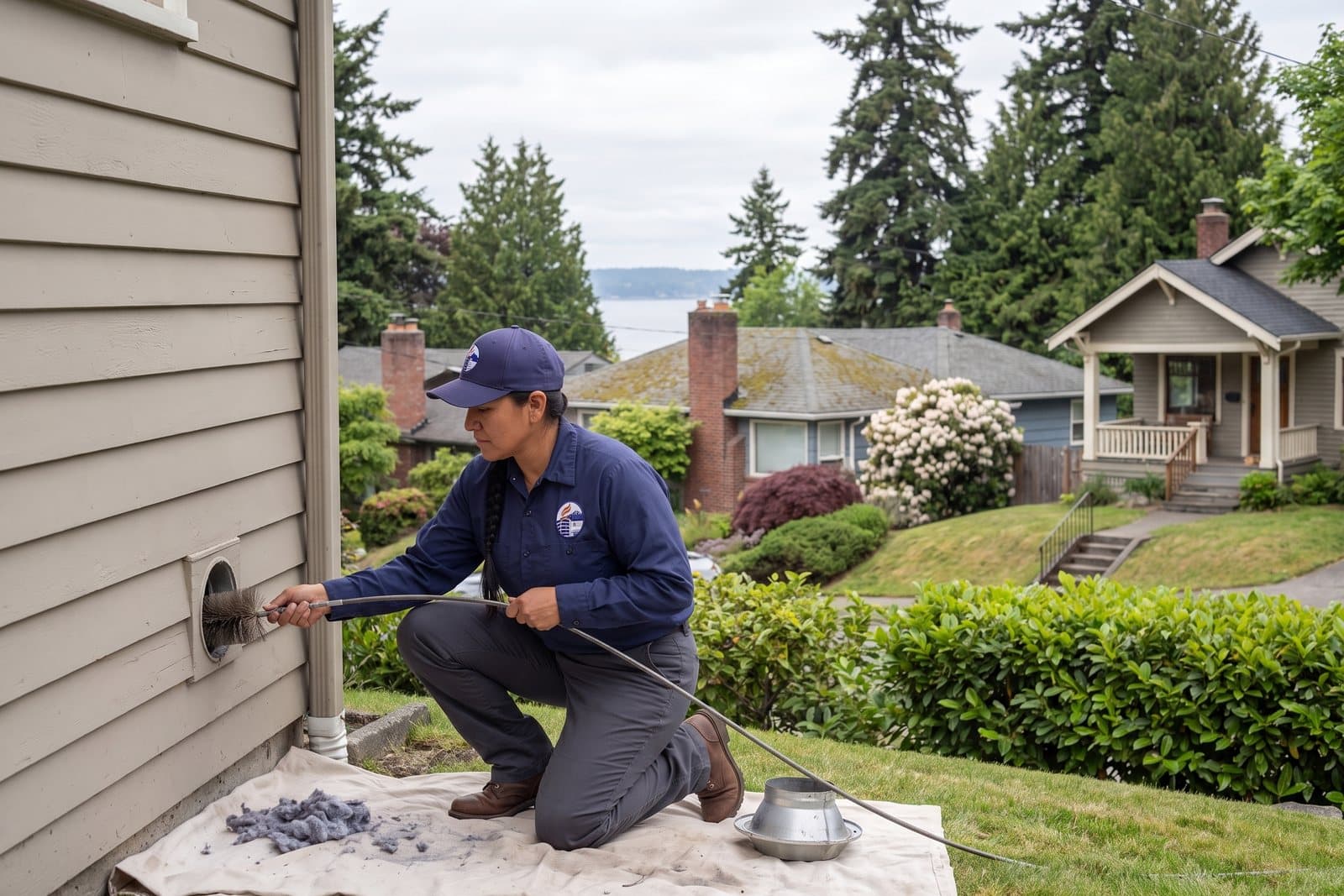
Dryer pulled out; the transition duct inspected, and replaced if it is plastic, thin foil or crushed
Learn more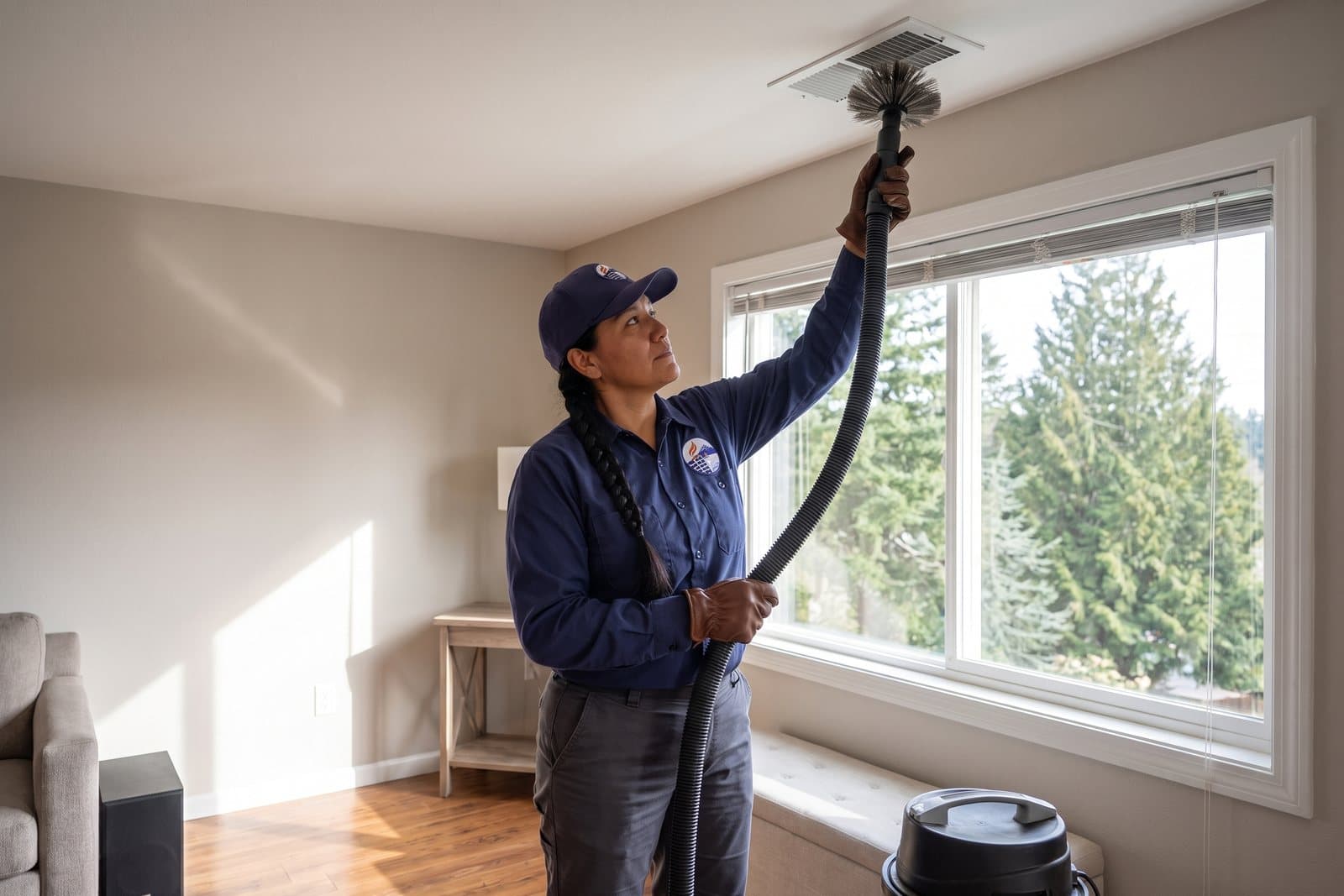
Inspection of the furnace, the plenum and a sample of ducts before any work, with photos
Learn moreRanges shown for orientation — the exact figure is written up on-site, after the inspection.
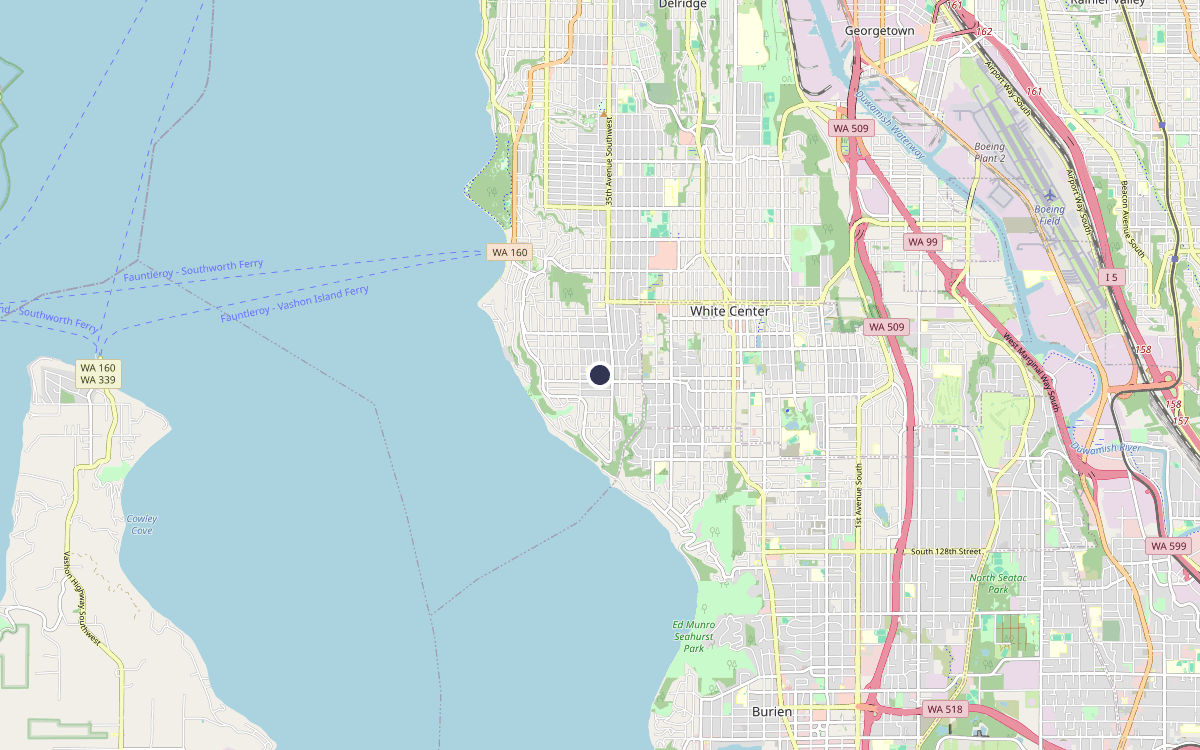
Service-area map — Arbor Heights, Seattle. Map data © OpenStreetMap contributors.
Wikipedia places Arbor Heights at the southern end of West Seattle, below SW Roxbury Street, and describes it as almost entirely zoned for housing, with no secondary school inside its bounds. On its western edge the ground drops toward Puget Sound through the wooded Seola Beach ravine, which the Seattle city limit follows. Seattle Parks manages two green pockets nearby: the undeveloped 7.5-acre Arroyos Natural Area off SW Arroyo Drive and Seola Park, a ravine of madronas with no beach access. Census figures quoted on this page belong to a ZIP code area that includes Arbor Heights but also extends beyond the city limit, so they describe the neighborhood and its surroundings together.
Before it was Arbor Heights, the area was known as Green Acres. HistoryLink's school history records residents asking for an elementary school in March 1938, and the Arbor Heights Improvement Club buying playground land in 1940. The district began a four-classroom building in 1948, and on April 25, 1949 it opened as an annex of Fauntleroy School, bringing home pupils who until then had been housed at Fauntleroy.
The houses went up around it fast. The school was enlarged in 1950, again in 1953 with an auditorium, lunchroom and gymnasium, and finally in 1958 with twelve more classrooms. HistoryLink links that pace to the homebuilding around it, and it fits the wider wartime surge, when defense jobs on Harbor Island pushed the peninsula's head count past 70,000, twice its prewar size, according to the same publisher.
West Seattle as a whole voted to join Seattle in 1907. Arbor Heights followed only in 1954, the same year its school grounds were expanded to 5.65 acres. The gap has a practical consequence the Seattle Landslide Study spells out: because the Arroyo Heights and Seola Beach areas came into the city so late, slope trouble from before annexation never reached city records.
Since annexation the record has filled in. Shannon & Wilson's study counts a half-dozen failures along the ravine's western flank from 1986 onward, the first set off by a spring storm, and blames one of that year's debris flows on a ruptured sewer line. Geology is kinder here than at Alki: no Lawton Clay is exposed beneath the Seola outwash, so the sand-on-clay seam behind so many peninsula slides is not mapped on this slope. Houses along Seola Beach Drive SW are also comparatively recent, mostly post-1960. For chimneys, the lesson is modest: on lots near the ravine, a stack that leans or cracks diagonally is worth a closer look at what the ground is doing.
The 1949 building was demolished in 2014. Its 89,000-square-foot replacement opened in September 2016 and enrolled 557 pupils in 2023. Single houses on their own lots dominate the blocks nearby: 66.6 percent of dwellings in that ZIP area, the highest share of any West Seattle ZIP area and far above Seattle's 36.8 percent.
No source we have read counts fireplaces, chimneys or chimney types in Arbor Heights, and we never assume them from an address. A house here may have a masonry chimney, a metal flue, a furnace vent only, or several of these; we look before we advise.
Ask the American Community Survey what heats Arbor Heights and its surrounding ZIP area, and 53.0 percent answer electricity, 37.4 percent utility gas, and 8.0 percent fuel oil: 849 of 10,617 homes. That oil share is the highest of any West Seattle ZIP area and nearly three times Seattle's 2.9 percent. Wood as the main heat is reported by very few homes, and the margin of error at that scale is wide.
Fuel is all the survey tracks; a hearth kept for cozy evenings or emergencies goes uncounted. What it does show is a neighborhood where a good number of chimneys exist to vent a furnace rather than a fire. Seattle's windstorm analysis adds the other side of the picture: many residents depend on electricity for heat, and outages like December 2006's leave them looking for another source. A fireplace or furnace flue in sound condition is part of being ready for that.
Census estimates put the median build year of housing in the ZIP area around Arbor Heights at 1965. About 49.6 percent of units date from 1940 to 1969, 37.1 percent from 1950 to 1969, and just 9.5 percent from before 1940, the lowest prewar share in West Seattle. Arbor Heights is, by the numbers, a postwar neighborhood.
Flues from those decades were built for the appliances of their time. Any later change of fuel, a new insert or a replacement furnace can leave a flue sized for something that is no longer there. Under Seattle's 2021 mechanical rules an insert needs its UL 1482 label and a by-the-manual installation, and in practice the manual calls for flue pipe sized to that particular model. Checking that match is a regular part of our work here.
Whether a Roxbury-south fireplace may burn tonight is decided four counties wide (King, Kitsap, Pierce and Snohomish) by the agency charged with clean air around the Sound, and that same office enforces its calls. They usually come during cold, still spells in fall and winter, when smoke hangs low. Summer bans on outdoor fires are a separate matter for the fire marshal.
The first stage idles every masonry or open wood hearth plus each stove or insert lacking certification. The second stage sweeps in the certified models and pellet burners as well. Whatever the stage, smoke must not be seen leaving a chimney, and a fire already going gets no more wood under state rule WAC 173-433-150. Exemptions go only to homes the agency has pre-approved for lacking adequate heat, and its yardstick is whether some other source holds lived-in rooms at 70 degrees, measured three feet up; an expensive furnace still counts as adequate.
For oil- and electric-heated homes, a ban rarely means a cold house, but it does mean the fireplace stays dark. The agency's ban status page is the place to check before lighting a fire on a still winter evening.
The grid we quote from for Arbor Heights homes — the $99 inspection comes first, the written quote before any work.
| Service | Price in Arbor Heights | What that covers |
|---|---|---|
| Chimney Sweep | $189–$449 | Full flue swept, Level 1 inspection included |
| Chimney Inspection | $99 plus tax | Level 1 visual; Level 2 adds a full camera scan |
| Chimney Relining | From $1,900 | Full-length stainless liner, sized to the appliance |
| Chimney Repair | From $425 | Masonry repair — brick and mortar, scoped after diagnosis |
| Chimney Cap Installation | $235–$850 | Stainless cap fitted; multi-flue and custom at the top |
| Masonry Repair (Crown / Repointing) | From $475 | Crown work, repointing and tuckpointing by surface area |
| Chimney Waterproofing | $320–$795 | Breathable sealer — reapplied every 3–5 years in this climate |
| Chimney Flashing Repair | $375–$1,500 | Reseal at the low end, full flashing replacement at the high |
| Gas Fireplace Service | $189–$475 | Annual service and tune-up; repairs quoted after diagnosis |
| Creosote Removal | From $245 | Priced by creosote stage — glazed stage 3 is the heavy end |
| Dryer Vent Cleaning | $105–$295 | Full run cleaned; roof or upper-floor terminations at the top |
| Air Duct Cleaning | From $535 | Whole HVAC system — trunks, branches and every register |
Ranges are what these jobs are quoted at in Arbor Heights. The exact figure is set on site after a $99 inspection (credited toward the job if you go ahead), and you approve it before any work starts.
Before and after
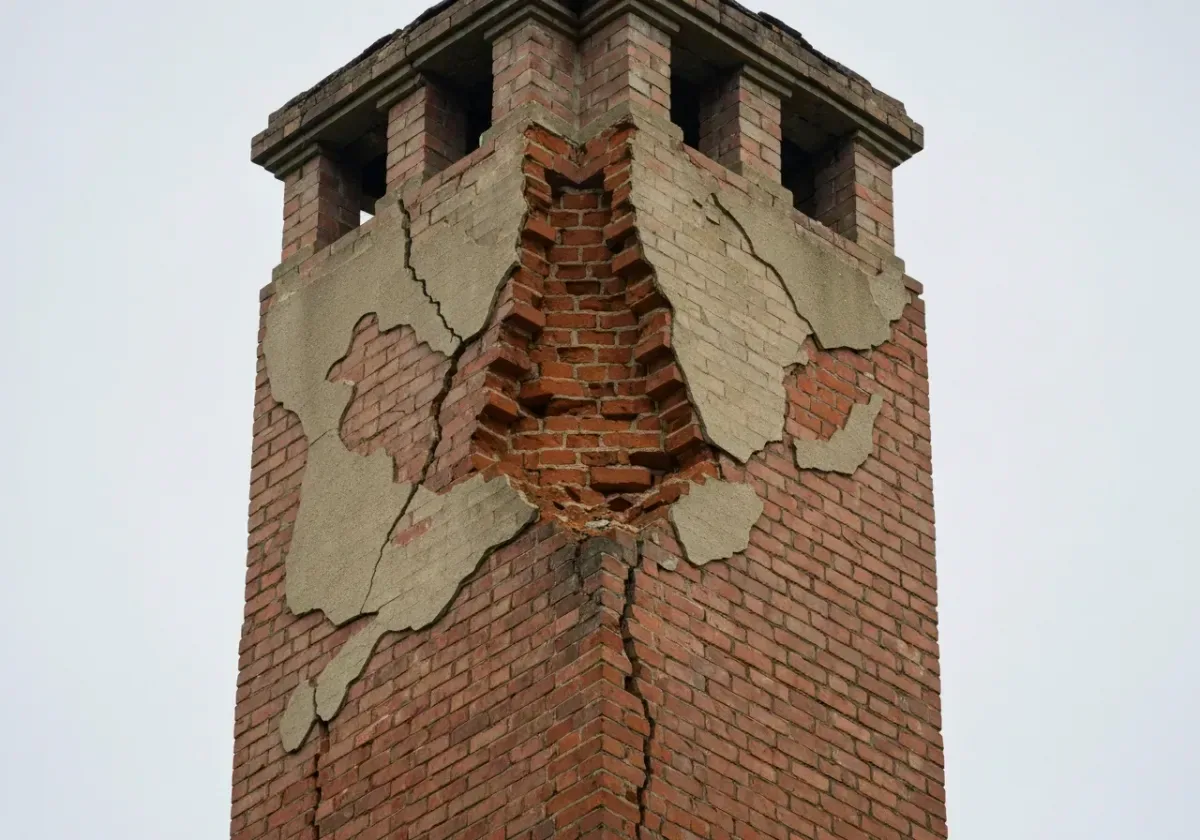
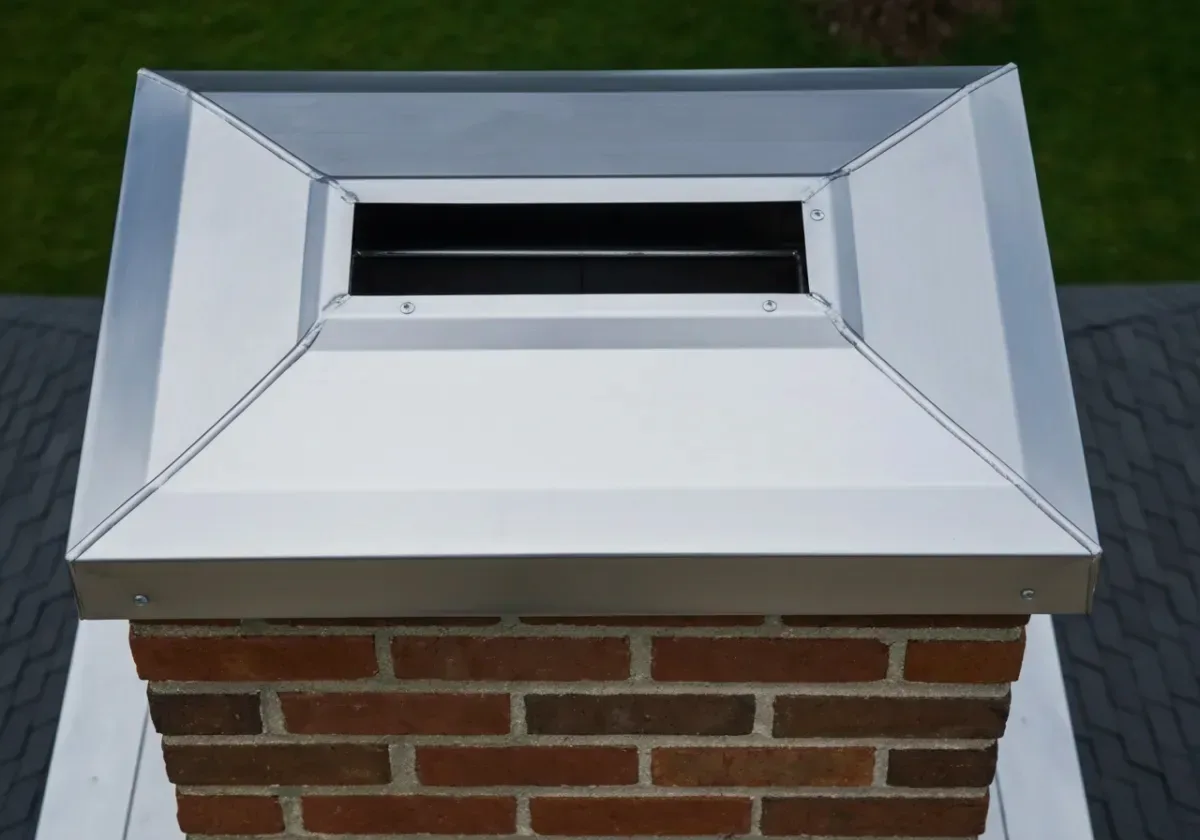
Illustrations of what each repair changes on a typical chimney — not photos of a specific job.
 Before
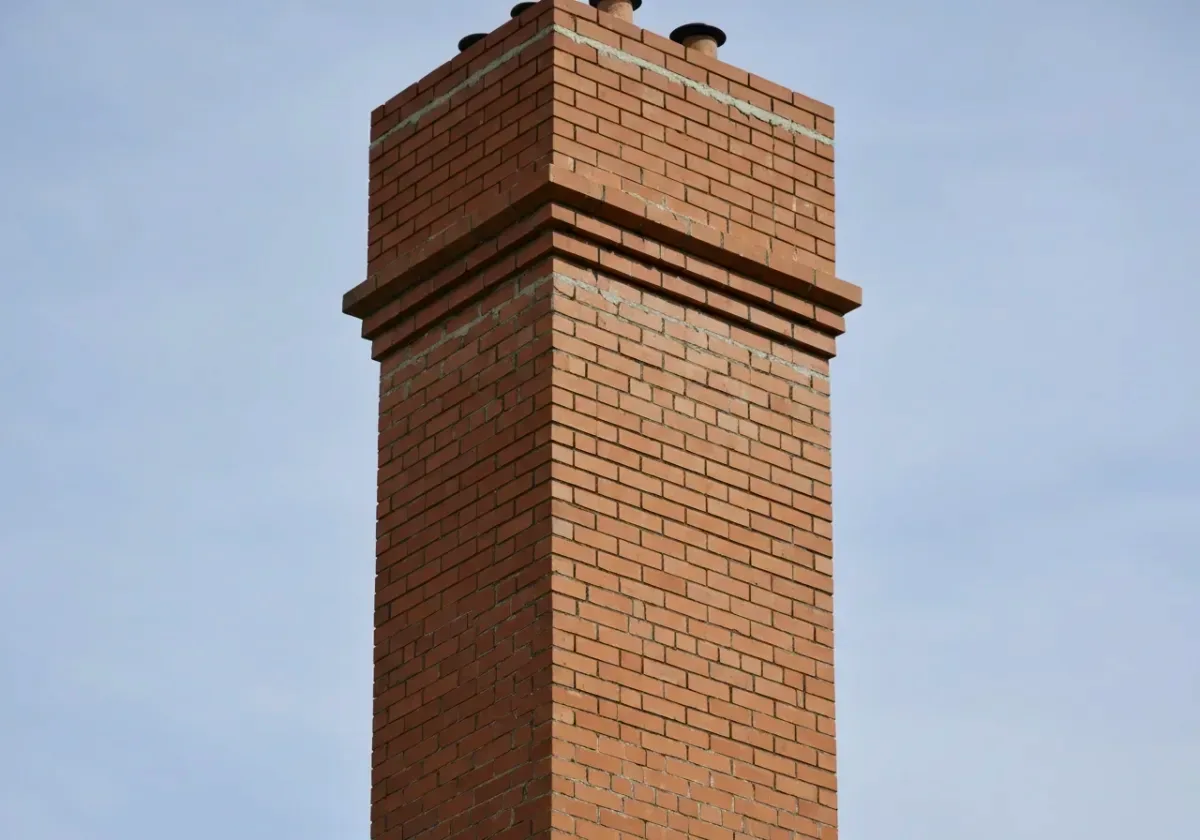 After
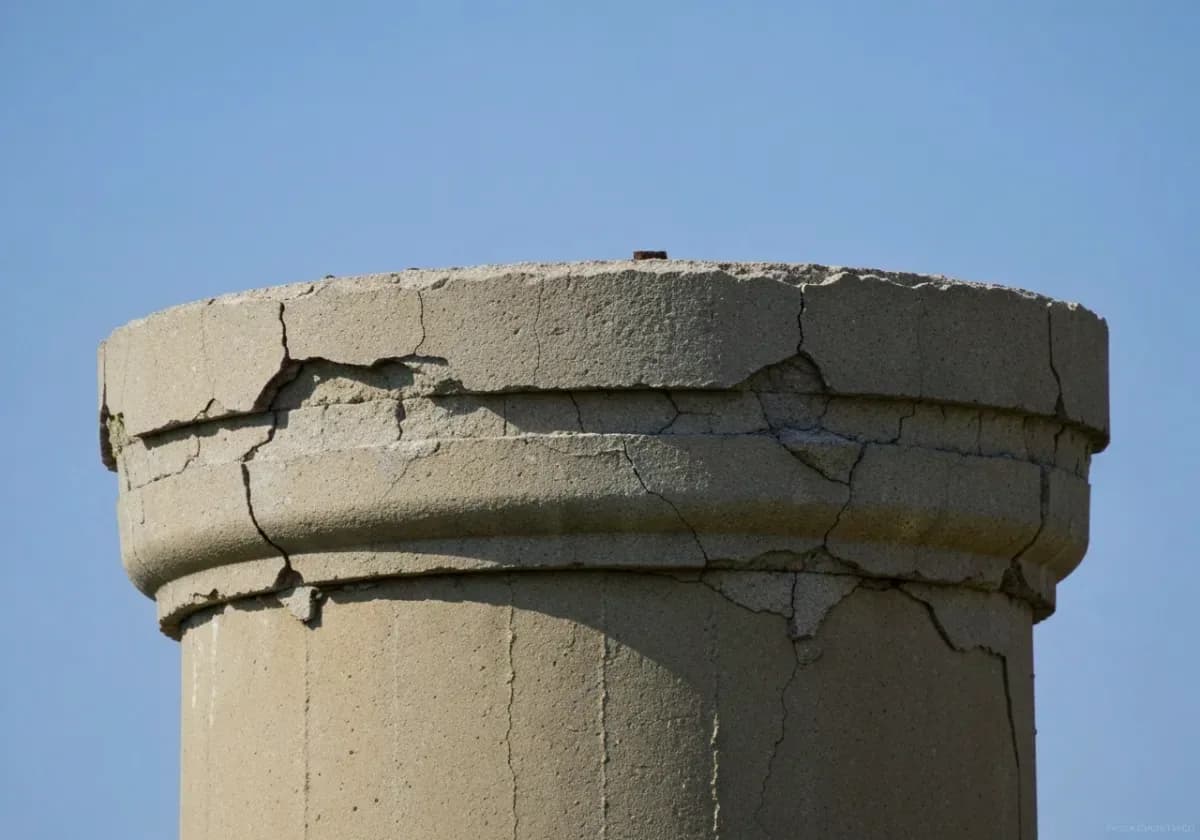 Before
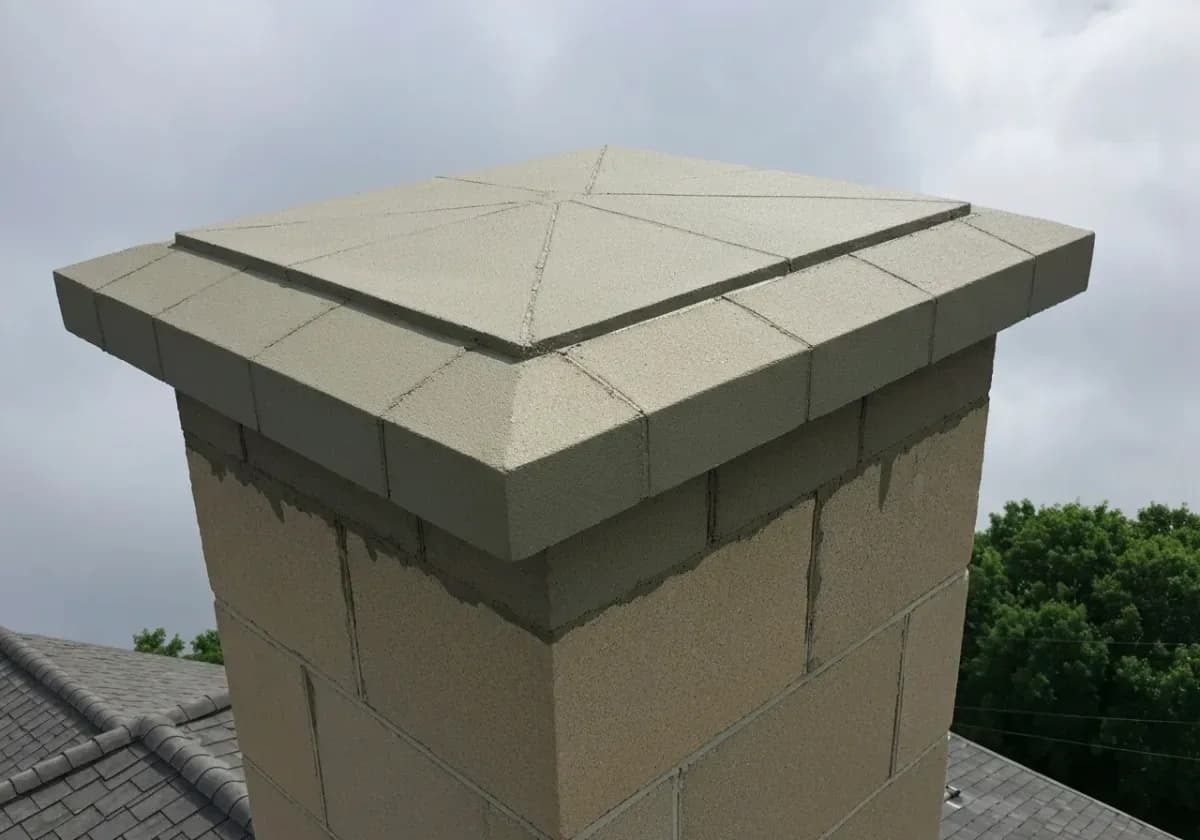 After
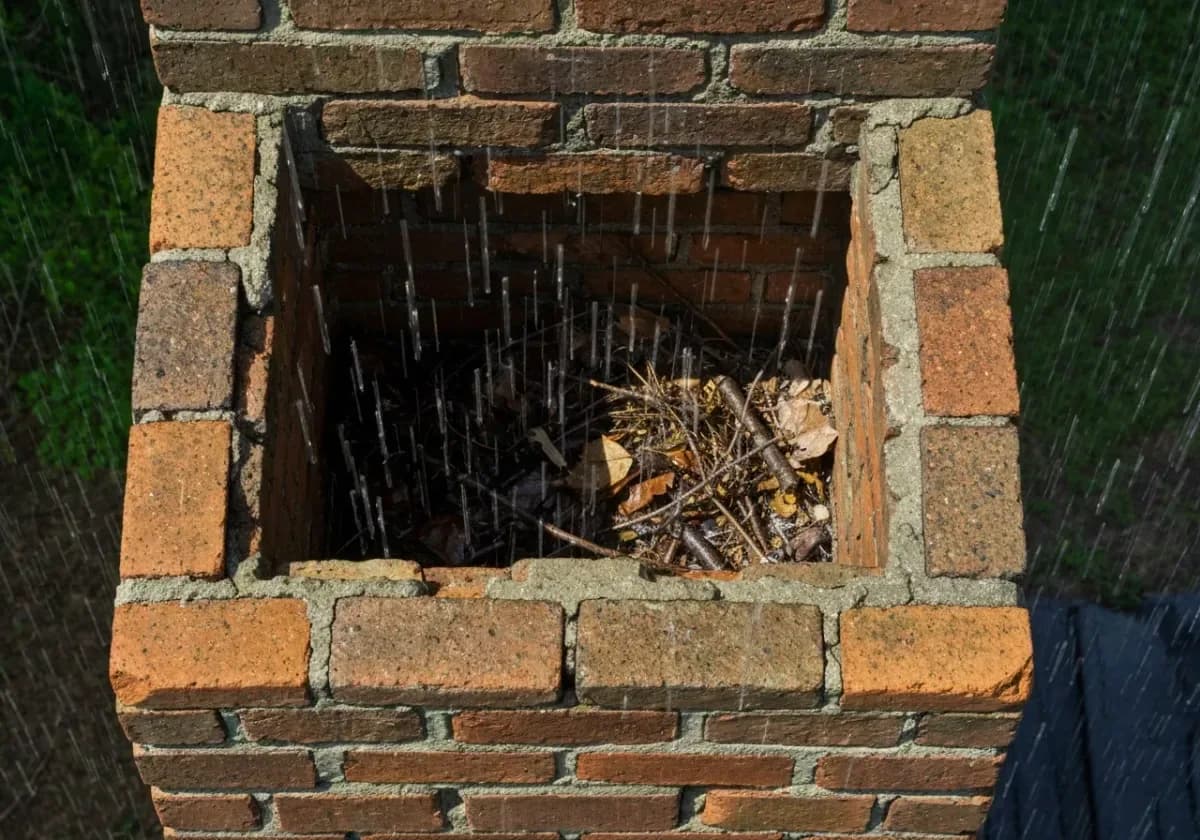 Before
 After
Four steps, each one on paper — so you always know what happens next.
Choose a genuine opening on the crew's calendar. Confirmation is immediate.
Liner, crown, cap, flashing and masonry examined in order — each finding photographed.
One document, plain numbers, covering only the work your chimney genuinely needs.
The repair is completed, then handed over with before-and-after photos of every item.
The Census survey does not ask why, only which fuel. Its answer for this corner: 8.0 percent of households on oil, more than anywhere else in West Seattle. We see the consequence rather than the cause: furnace flues that need the same yearly attention as fireplaces.
Only city maps and a geotechnical engineer can answer that for a given lot. We can tell you whether your chimney shows the cracks or lean that ground movement tends to produce.
Each chimney we inspect is billed $99 plus tax; you get the video stills and a written report. Sign off on a quote from us later and that job shrinks by $99. If you sign nothing, the $99 stays paid.
Not for everything. Repointing sits on the city's list of permit-exempt residential work. Anything bigger, we raise with SDCI for your particular house ahead of booking.
Choose a genuine opening on the crew's calendar. We inspect, quote in writing, and hand over a photo record of every repair.