Admiral, King County
Admiral is where West Seattle first became a town, on top of the bluff that ferry passengers once rode a cable car to reach. Its streets carry the peninsula's oldest plat, a cluster of designated landmarks and a school history that includes one of the clearest earthquake failures on record here. All of that shapes what a chimney in this neighborhood has been through and what rules apply when it needs work. Below, each point comes with the public source it rests on.
Book an inspection
Book your $99 inspection
$99 plus tax, deducted when you approve the repair
Not sure where to start
Pick what you're seeing at your Admiral home — we'll point you to the right fix.
What we do
The same crew, the same written quote — for Admiral homes.
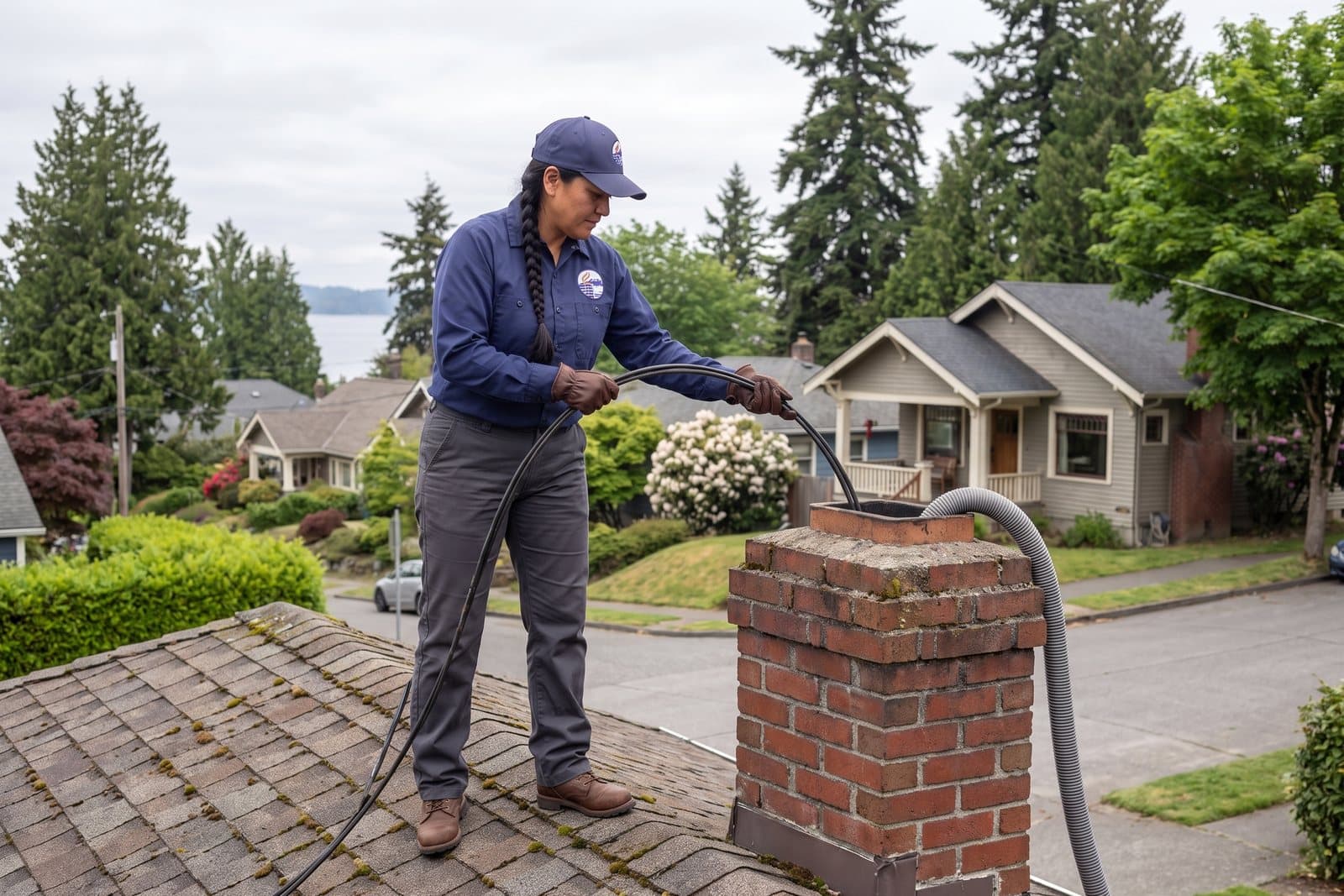
Full-height brushing of the flue with a head sized to its shape and material
Learn more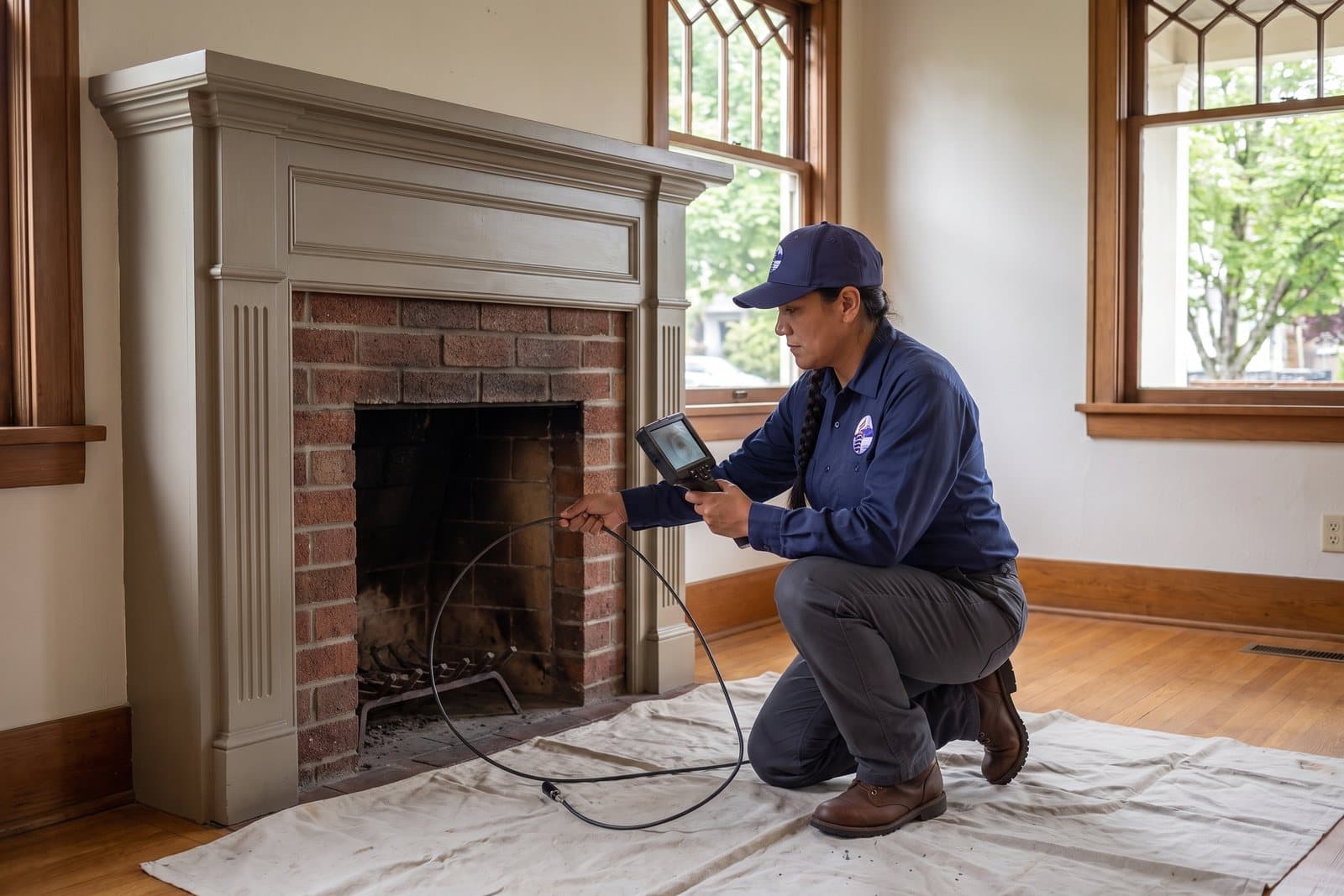
Level 1 examination of everything reachable, with a Level 2 camera pass when the reachable parts leave a question open
Learn more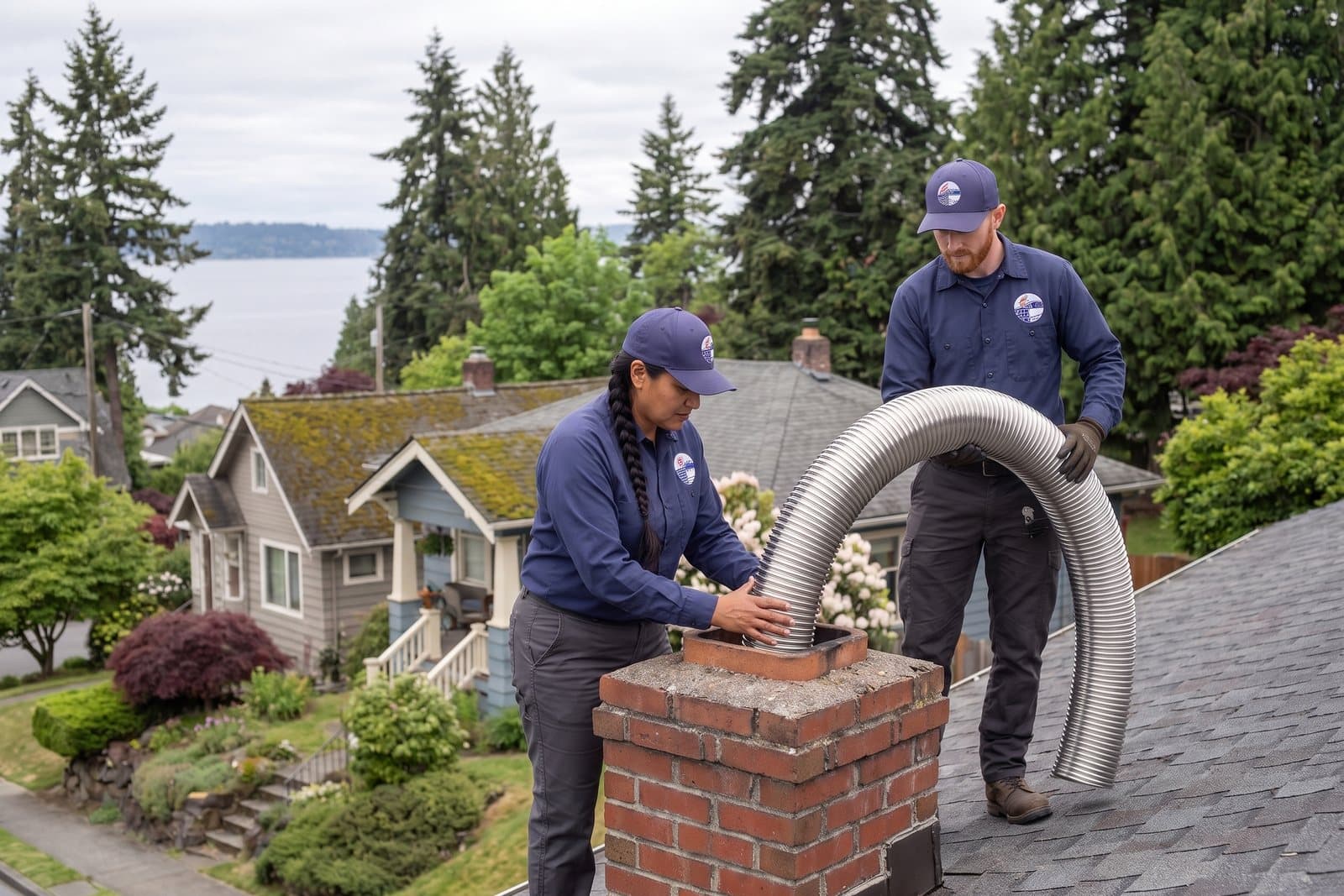
Camera survey and measurement of the existing flue before anything is ordered
Learn more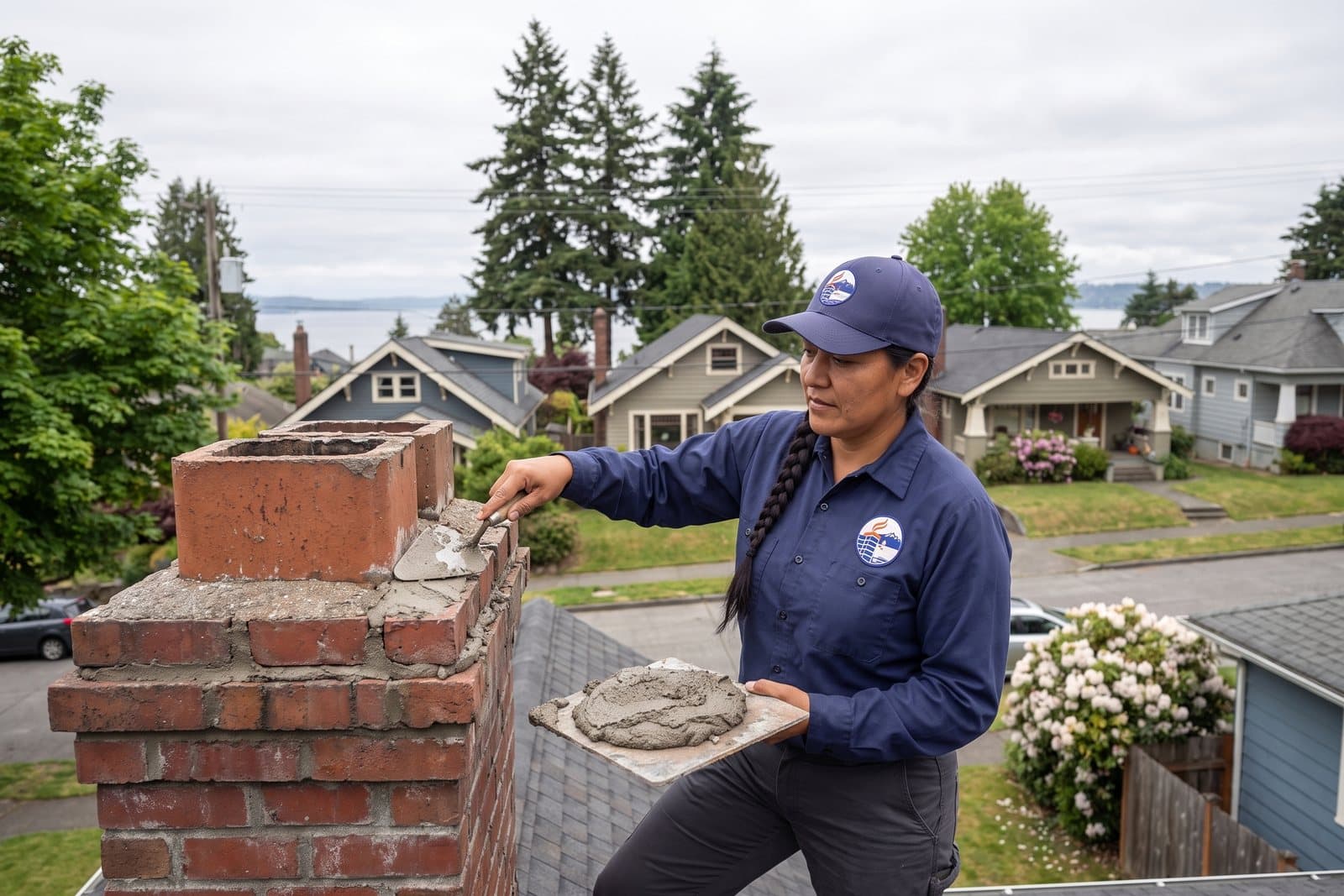
Assessment of the stack from roofline to crown, with a photo of each defect
Learn more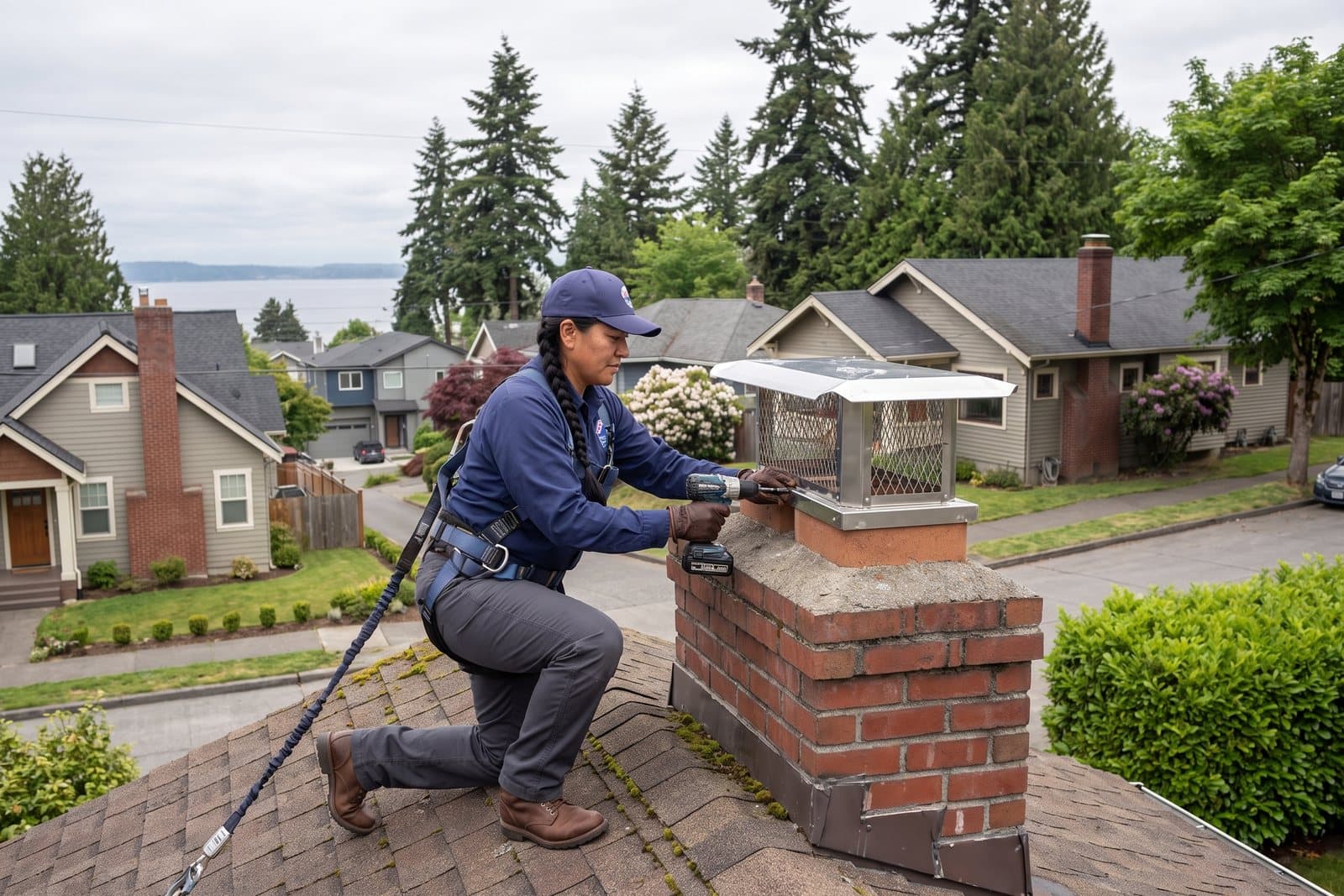
Measurement of each flue tile, or of the whole crown for a multi-flue cap
Learn more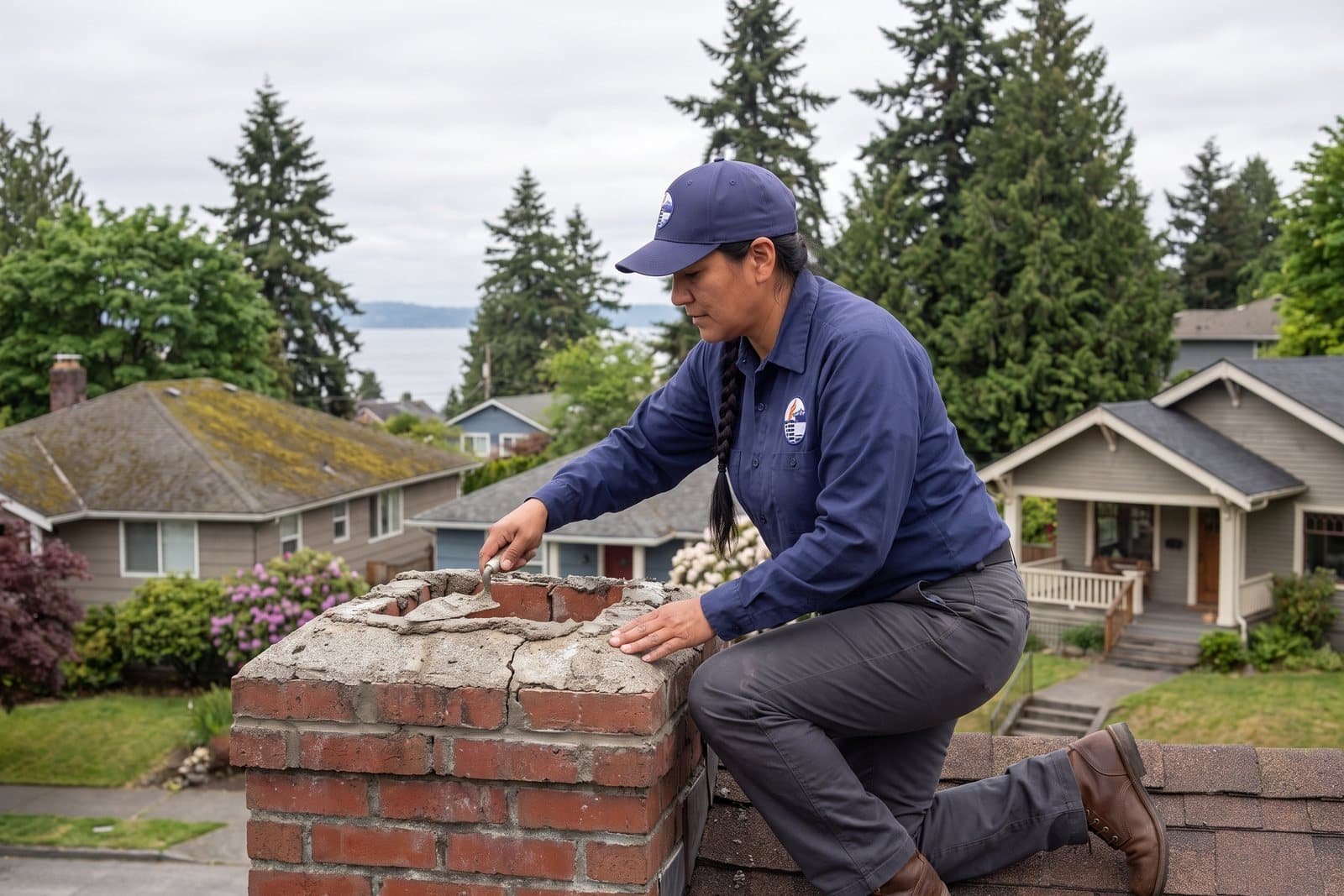
Joints cut back to firm mortar and repointed (tuckpointing) to match the existing profile
Learn more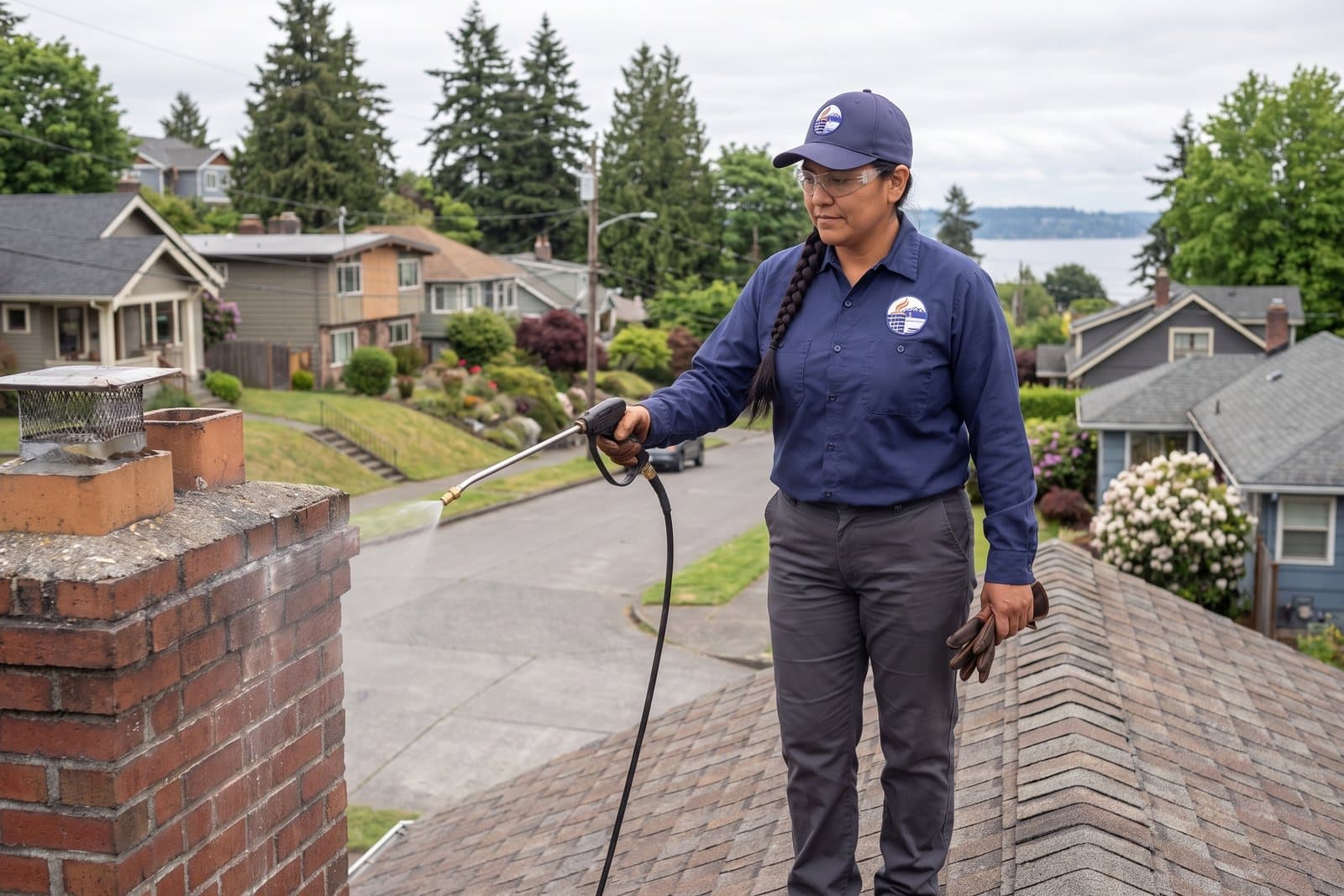
A check of joints, crown and flashing first; defects are repaired before any treatment
Learn more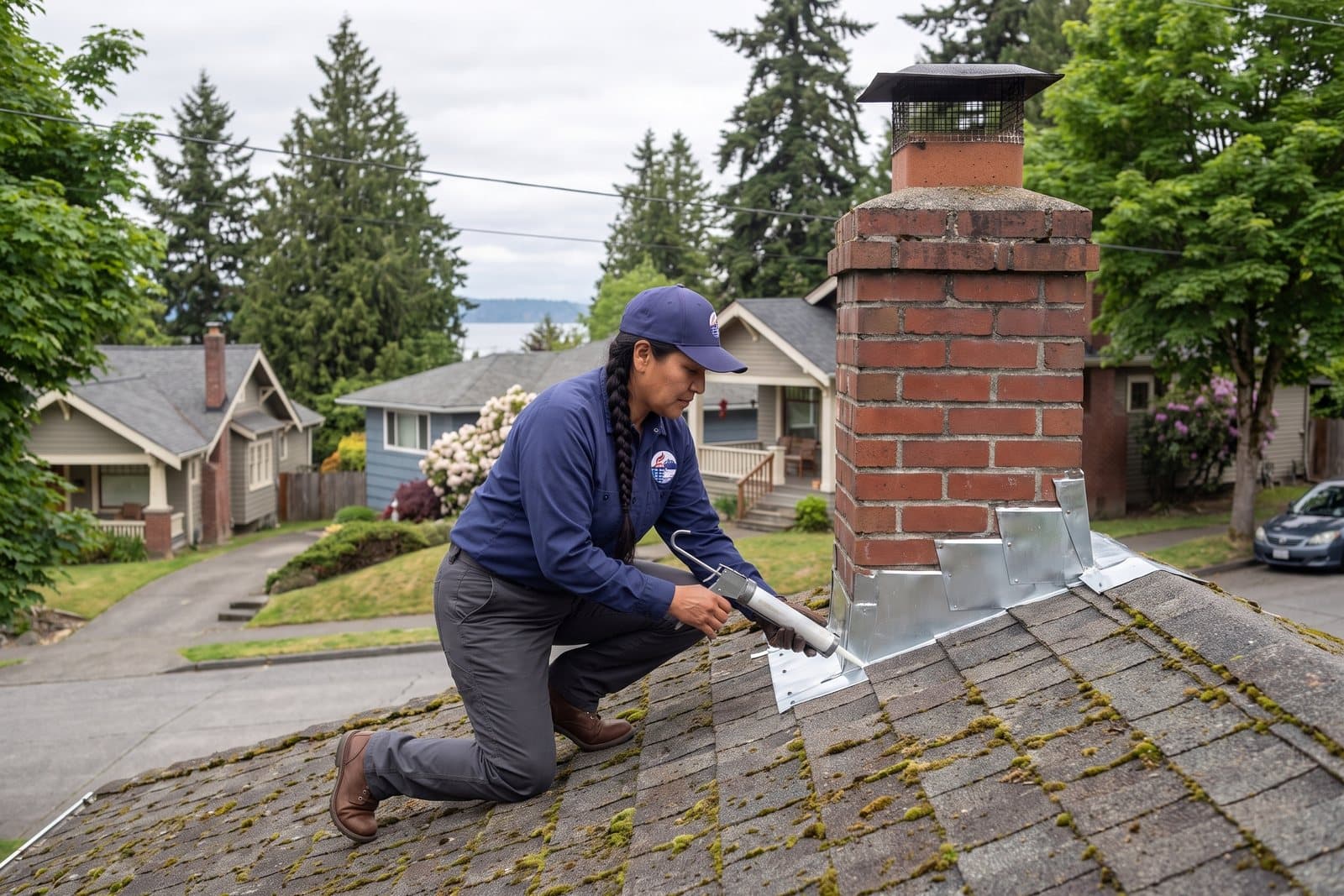
Leak tracing from the attic or the ceiling stain up to the roof
Learn more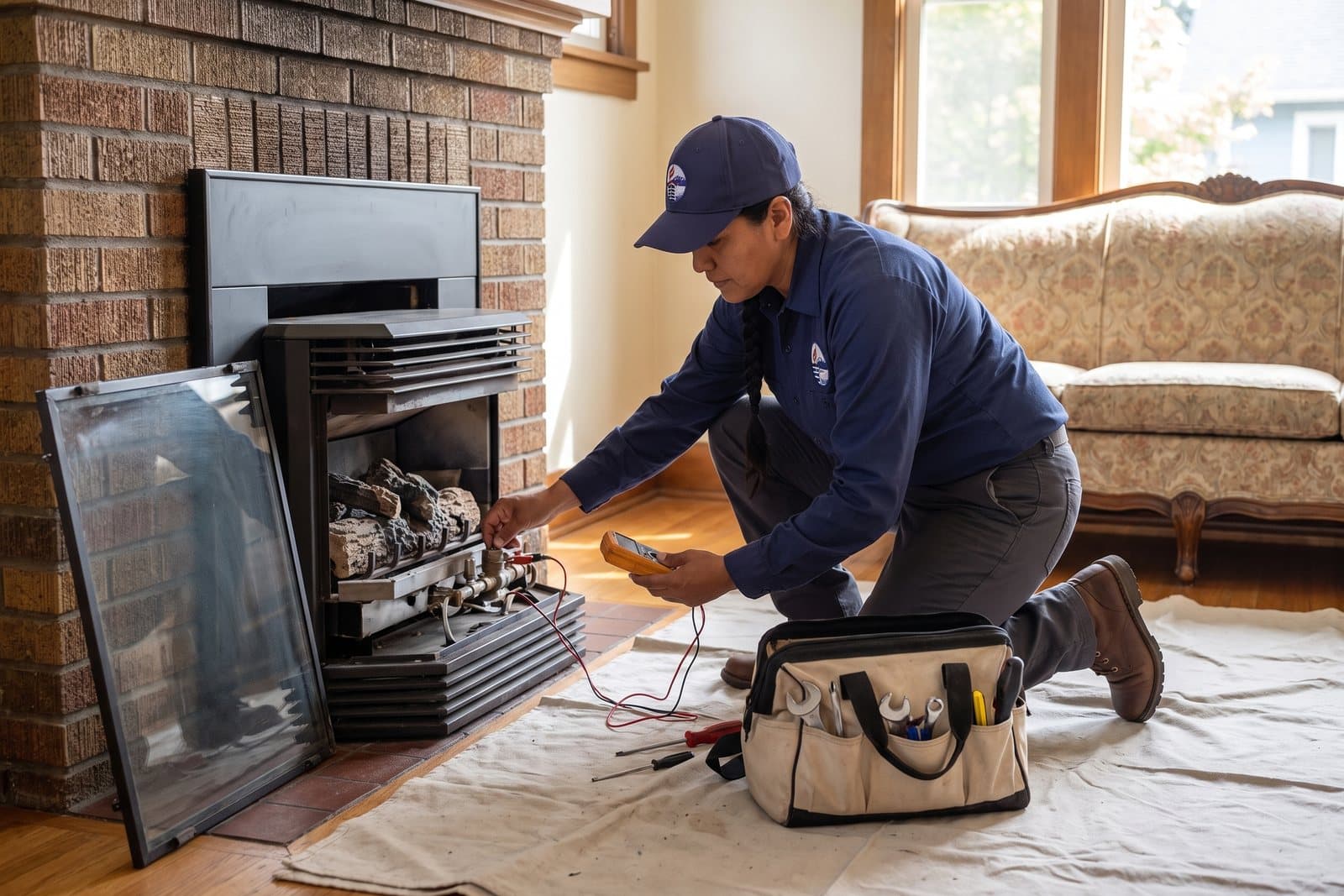
Burner, pilot assembly and firebox cleaned; logs or media put back in the layout the manual shows
Learn more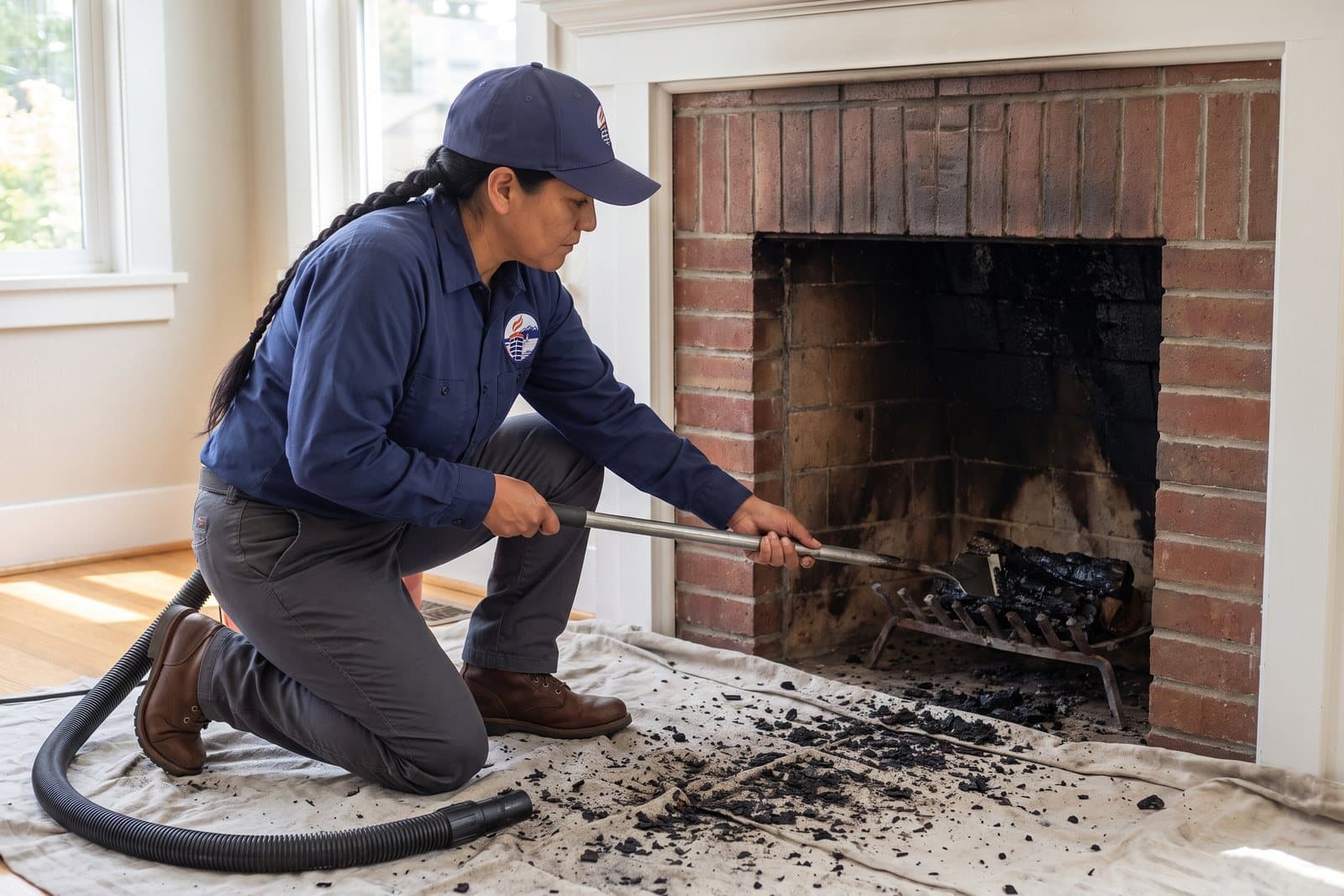
Camera survey to grade the deposit and check the liner beneath it
Learn more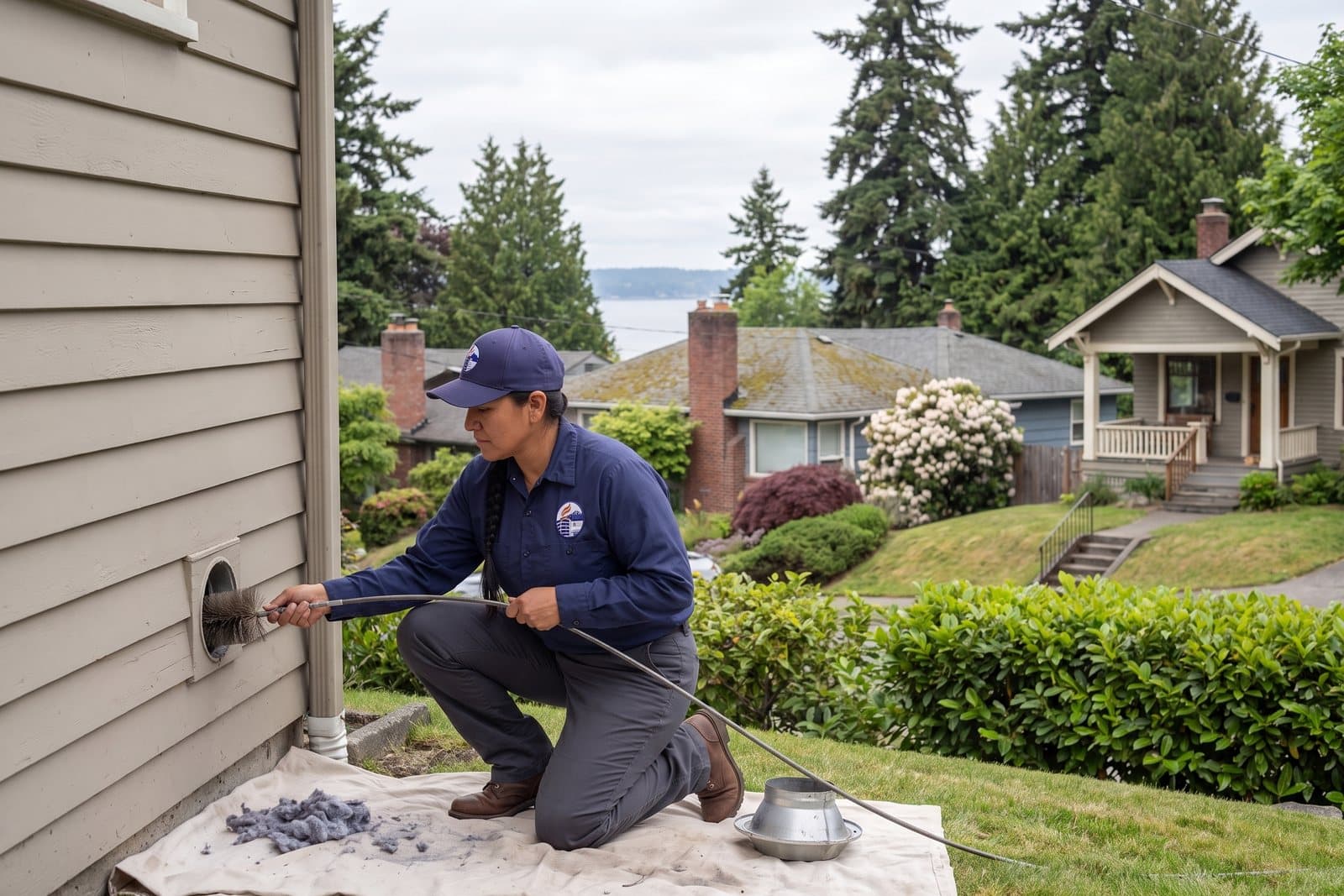
Dryer pulled out; the transition duct inspected, and replaced if it is plastic, thin foil or crushed
Learn more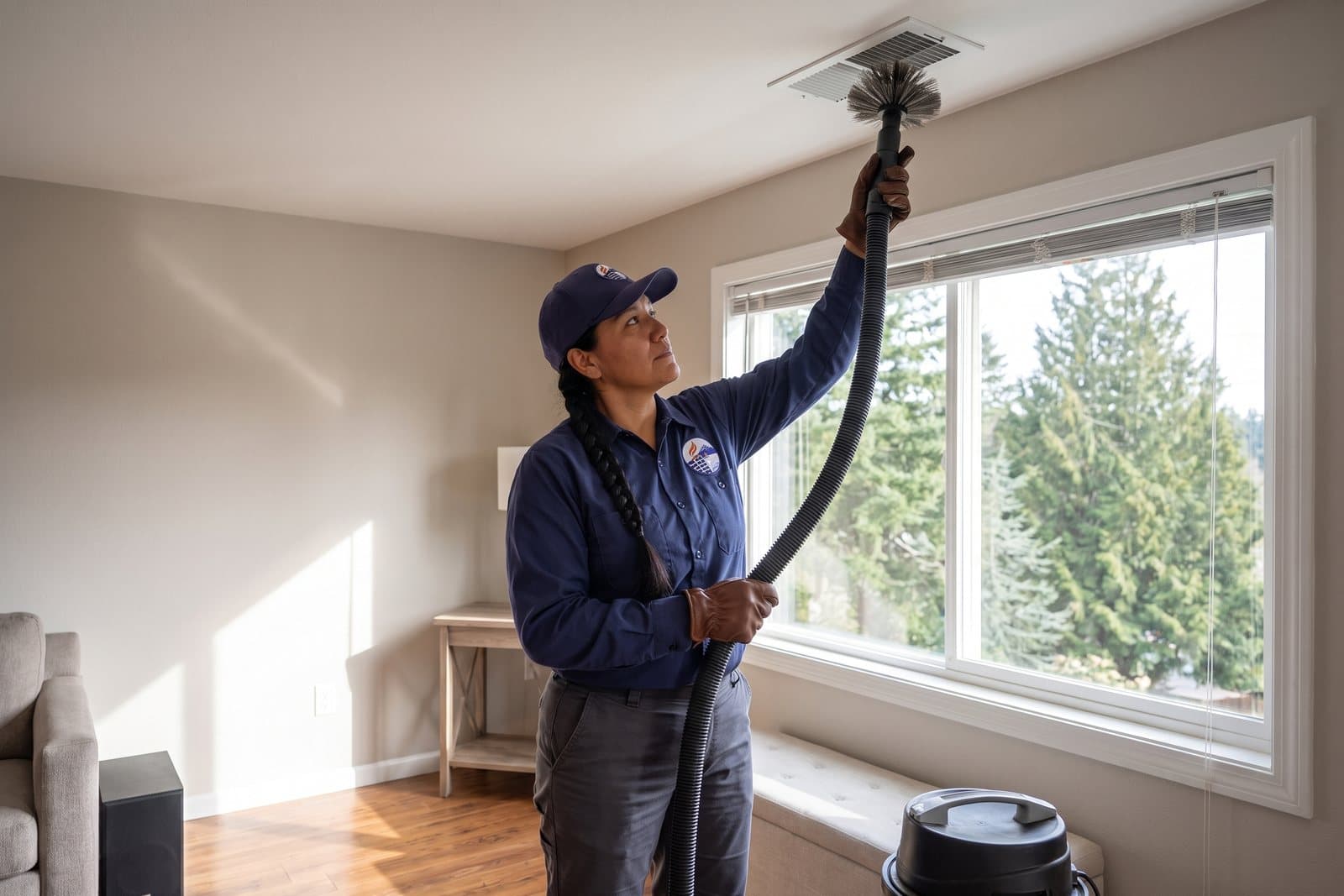
Inspection of the furnace, the plenum and a sample of ducts before any work, with photos
Learn moreRanges shown for orientation — the exact figure is written up on-site, after the inspection.
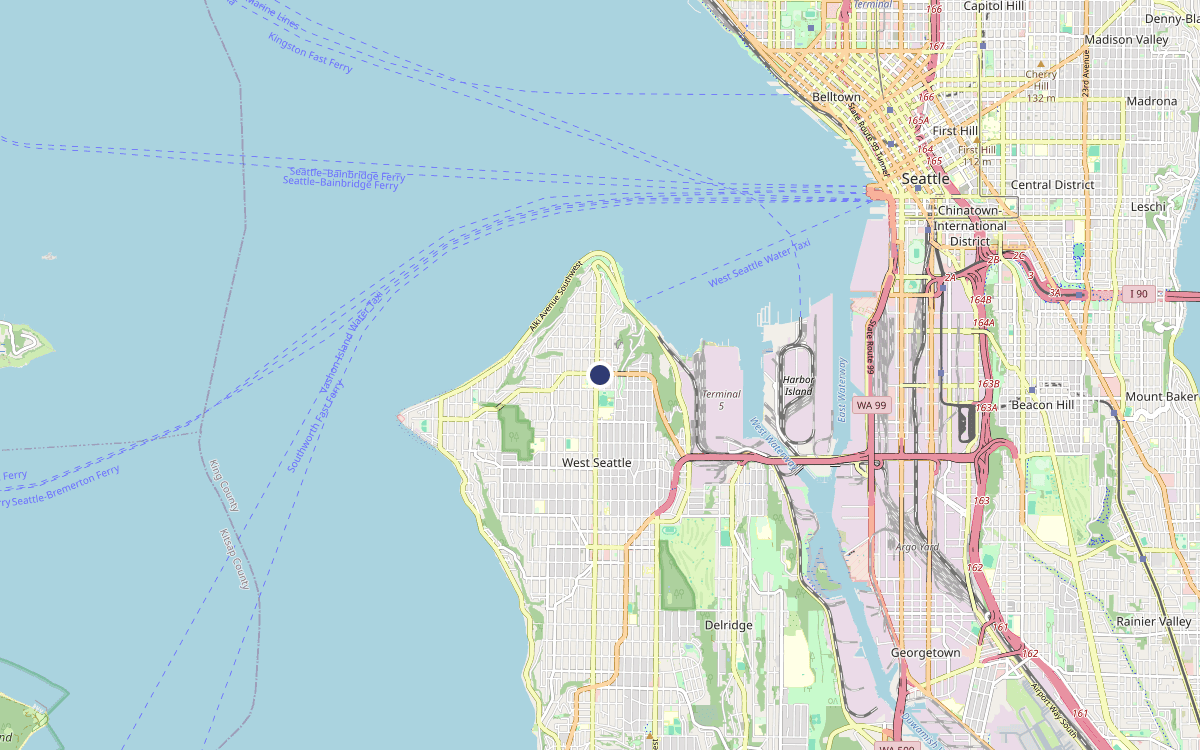
Service-area map — Admiral, Seattle. Map data © OpenStreetMap contributors.
HistoryLink dates the first plat of the town of West Seattle to 1885, in what is now the Admiral district, and records that a land company took it over in 1888; that made Admiral the peninsula's first commercial center after Alki. Wikipedia's North Admiral article calls it the oldest neighborhood in West Seattle and places West Seattle High School beside Hiawatha Playfield. In the geology chapter of Seattle's landslide study, Longfellow Creek runs between the peninsula's two long glacial ridges. Admiral lies toward the north end of the peninsula, and the study's slide records cluster on its steep margins toward Harbor Avenue and Fairmount Gulch.
The sidewheel ferry City of Seattle began crossing Elliott Bay on December 24, 1888, in about eight minutes. From September 1890 a two-mile cable railway hauled commuters up the bluff, until the line shut in 1897. West Seattle incorporated in 1902 by a vote of 97 to 68, reincorporated in 1904 with more than 1,500 residents, and on December 28 of that year opened a one-mile electric streetcar line that HistoryLink calls the first municipally owned system in the country.
Brick arrived early. An eight-room, three-story brick schoolhouse opened in September 1893 and was renamed Lafayette School in 1918. From 1902, by the Alki Elementary nomination's account, the brick West Seattle Central School at California Avenue SW and SW Lander Street taught every grade through high school.
Seattle Parks credits the Olmsted Brothers with the design of Hiawatha Playfield in 1911, when it was the city's largest public playfield. The Admiral Theater building opened in 1919 as the Portola, reopened under its present name in January 1942 to a design by B. Marcus Priteca, and was designated a landmark in 1998, per Wikipedia. In 1943 a viaduct tied the Spokane Street bridge straight into California Avenue at Admiral Way.
Not every old storefront survived intact. The city's 2002 survey of commercial districts found the buildings at California Avenue SW and SW Admiral Way heavily modernized, with only one row, 2344 to 2352 California Avenue SW, keeping its original character. The same survey recommended a future inventory of West Seattle's significant homes, which no source we read shows was carried out. That is the honest state of knowledge: nobody has catalogued Admiral's houses, so nobody can tell you from an address what kind of chimney stands on yours.
Schmitz Preserve Park, off SW Admiral Way, came to the city between 1908 and 1912 to protect a stand of old-growth forest, and its stumps still show the springboard notches of earlier loggers. The concrete Schmitz Park Bridge replaced a timber truss over its ravine in December 1936.
The neighborhood's margins are where the ground is restless. Along Admiral Way, where the slope faces east, slides have been on file since 1917, two dozen and more, and the soil on either side of the roadway is still creeping. Fairmount Gulch adds its own string of failures, and the Harbor Avenue area below has 61 on record since 1916, including a large one in the 1996-97 storm that closed California Way for months. Houses near those edges are a minority, but for them a chimney's plumb line is worth watching.
Admiral's earthquake record is unusually concrete. HistoryLink's history of Lafayette School tells how the shaking of April 13, 1949 wrecked the 1893 brick building: three of its gables crumbled, bricks fell onto the sidewalk, and parts of its walls came out. The quake came during spring vacation. Only the gymnasium addition could be kept, and the younger pupils spent the next year at the new Genesee Hill School.
Fifty-two years later the neighborhood moved again. Writing up the 2001 Nisqually quake, a USGS open-file report describes soil shifting on the north side of SW Admiral Way, enough to disturb the piles some houses there rest on. And when Booth, Wells and Givler published their 2004 paper after surveying some 60,000 chimneys around Seattle block by block, they reported the damage tightly clustered, with West Seattle the clearest case.
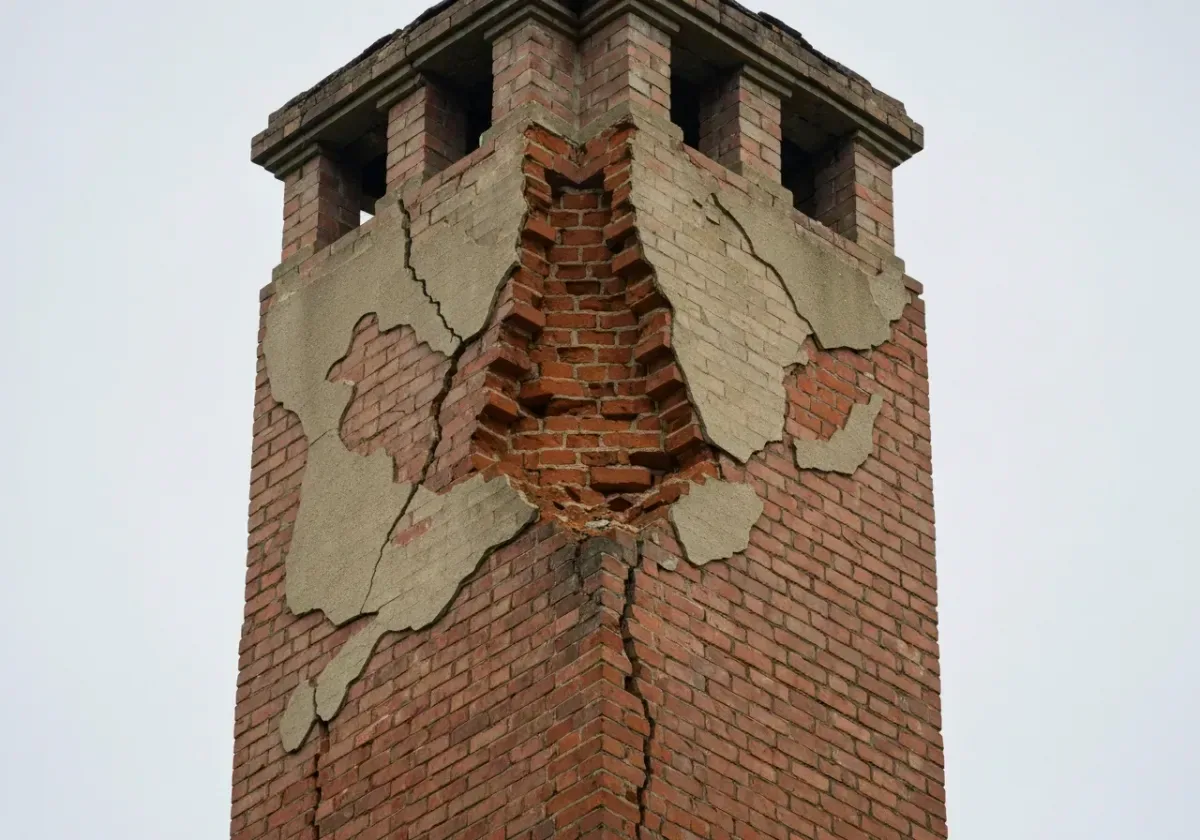
The gables of a brick school and the top of a brick chimney fail for the same reason: they are tall, heavy and held only by mortar at the top. In Admiral we treat the upper courses and the flue tiles as the first places to look after any shaking, and we say plainly when what we see calls for a rebuild instead of a patch.
More designated landmarks stand in Admiral than in most of the peninsula. The 2022 Alki Elementary nomination lists Hiawatha Playfield, the Admiral Theater, the Sixth Church of Christ Scientist on 42nd Avenue SW and West Seattle High School, and names the 1910 Carnegie library nearby as historically significant. Changing the outside of a designated building, a chimney included, first takes the Department of Neighborhoods' Certificate of Approval, whether or not SDCI wants a permit.
For an ordinary house, the starting point is the 2021 Seattle Residential Code, which SDCI applies to houses, duplexes and townhouses up to three stories. Its R105.2 list exempts chimney repointing when the envelope is left alone, and small repairs whose combined value over six months stays under the threshold the section sets, provided no loadbearing support is touched. Beyond those cases we do not guess. Where a job may need a permit, we ask SDCI about your address first and put the answer in the quote.
West Seattle filled up fast in the 1940s. By HistoryLink's account, the war plants on Harbor Island drew so many workers that West Seattle had twice its prewar population, upward of 70,000 people, when the fighting ended. Schools show the pressure: in January 1945 Genesee Hill parents asked for a new building because Lafayette, Jefferson and Alki were overcrowded, and the rebuilt Lafayette, a 20-room brick school by John Graham & Co., opened in 1950, gained a wing in 1953 and reached 1,240 pupils in 1958-59.
Census figures for the ZIP code area that covers Admiral along with Alki, Genesee and north Seaview put about 16 percent of its housing units in the two decades from 1940 to 1959, on top of some 23 percent built earlier. Close to 5 percent of occupied homes in that area still burn oil as their primary heat, against under 3 percent citywide.
Fireplaces and furnace flues from those decades are now seventy years old or more. Clay tile that old may be cracked, and a flue built for an oil furnace is often too wide for whatever replaced it. When an insert goes into such a fireplace, Seattle's 2021 mechanical rules require the insert to be UL 1482 listed, with its label in place, and set by the book its maker supplies, and the liner we fit is sized to that unit, not to the old opening.
The grid we quote from for Admiral homes — the $99 inspection comes first, the written quote before any work.
| Service | Price in Admiral | What that covers |
|---|---|---|
| Chimney Sweep | $189–$449 | Full flue swept, Level 1 inspection included |
| Chimney Inspection | $99 plus tax | Level 1 visual; Level 2 adds a full camera scan |
| Chimney Relining | From $1,900 | Full-length stainless liner, sized to the appliance |
| Chimney Repair | From $425 | Masonry repair — brick and mortar, scoped after diagnosis |
| Chimney Cap Installation | $235–$850 | Stainless cap fitted; multi-flue and custom at the top |
| Masonry Repair (Crown / Repointing) | From $475 | Crown work, repointing and tuckpointing by surface area |
| Chimney Waterproofing | $320–$795 | Breathable sealer — reapplied every 3–5 years in this climate |
| Chimney Flashing Repair | $375–$1,500 | Reseal at the low end, full flashing replacement at the high |
| Gas Fireplace Service | $189–$475 | Annual service and tune-up; repairs quoted after diagnosis |
| Creosote Removal | From $245 | Priced by creosote stage — glazed stage 3 is the heavy end |
| Dryer Vent Cleaning | $105–$295 | Full run cleaned; roof or upper-floor terminations at the top |
| Air Duct Cleaning | From $535 | Whole HVAC system — trunks, branches and every register |
Ranges are what these jobs are quoted at in Admiral. The exact figure is set on site after a $99 inspection (credited toward the job if you go ahead), and you approve it before any work starts.
Before and after
Illustrations of what each repair changes on a typical chimney — not photos of a specific job.
 Before
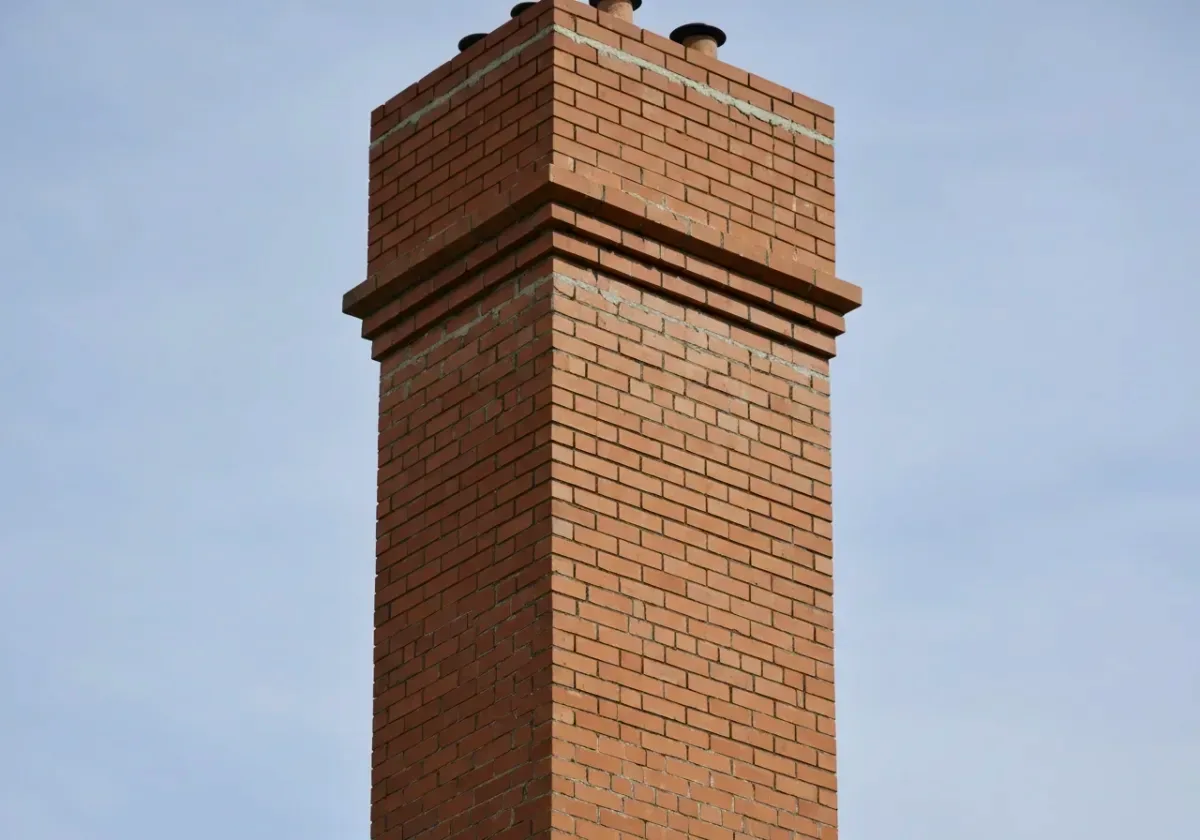 After
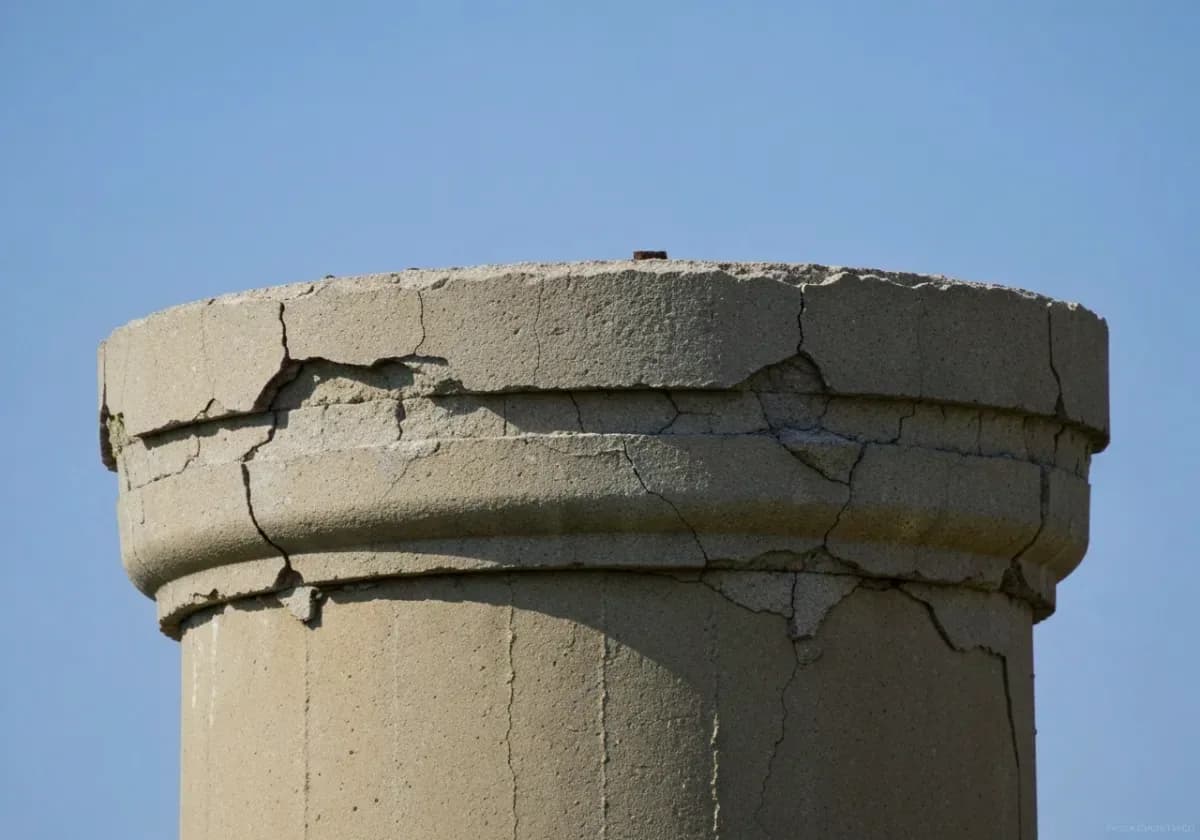 Before
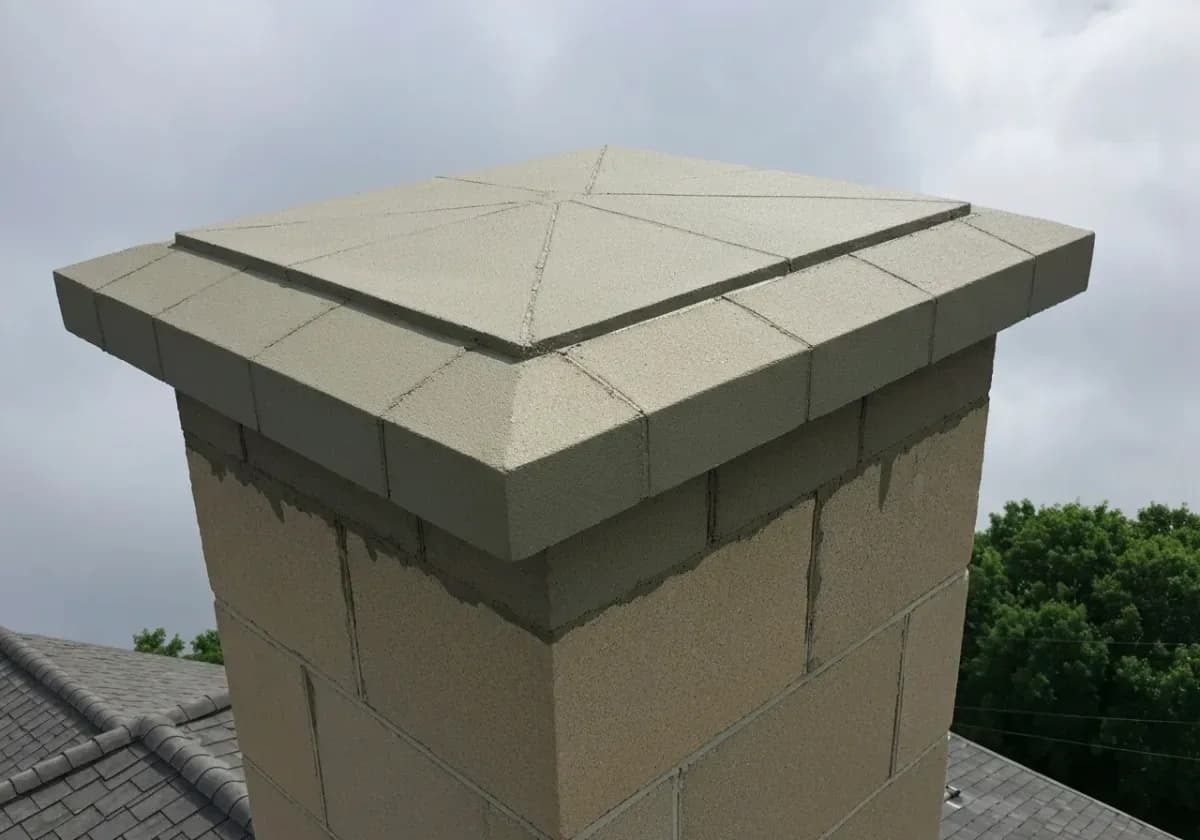 After
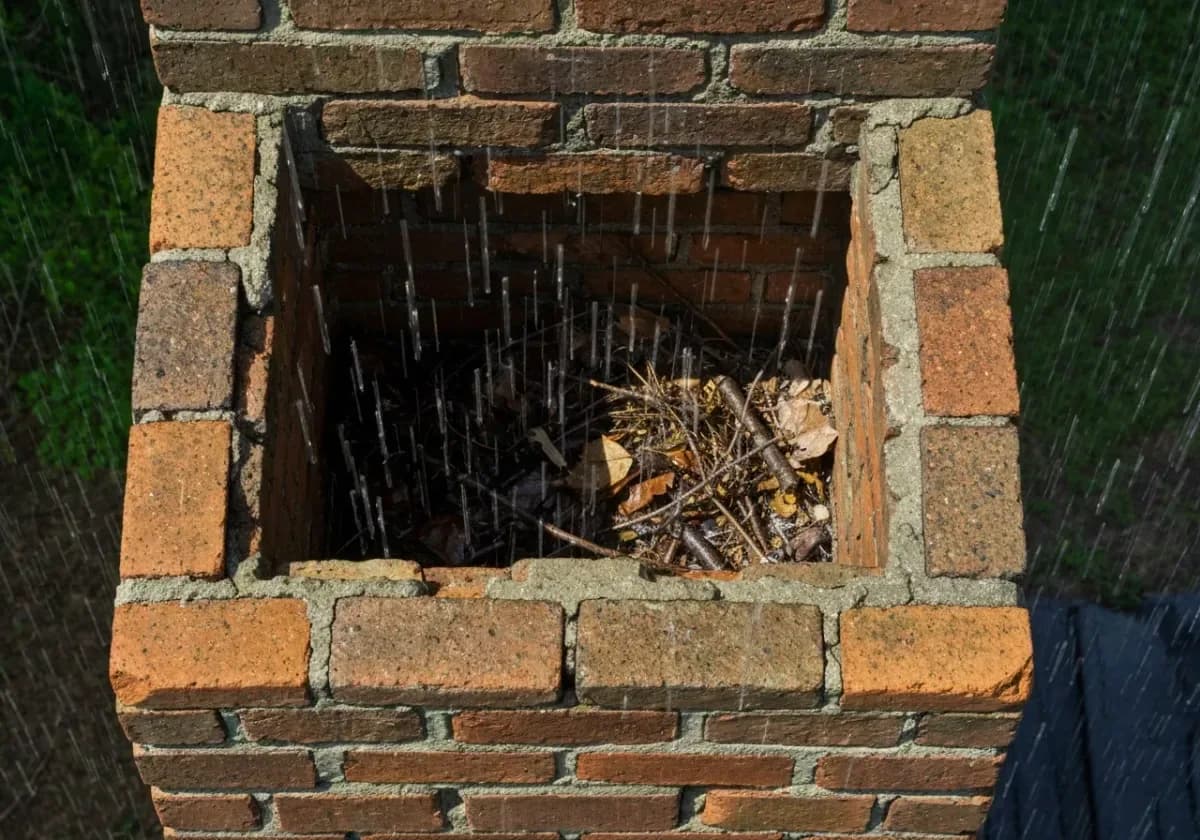 Before
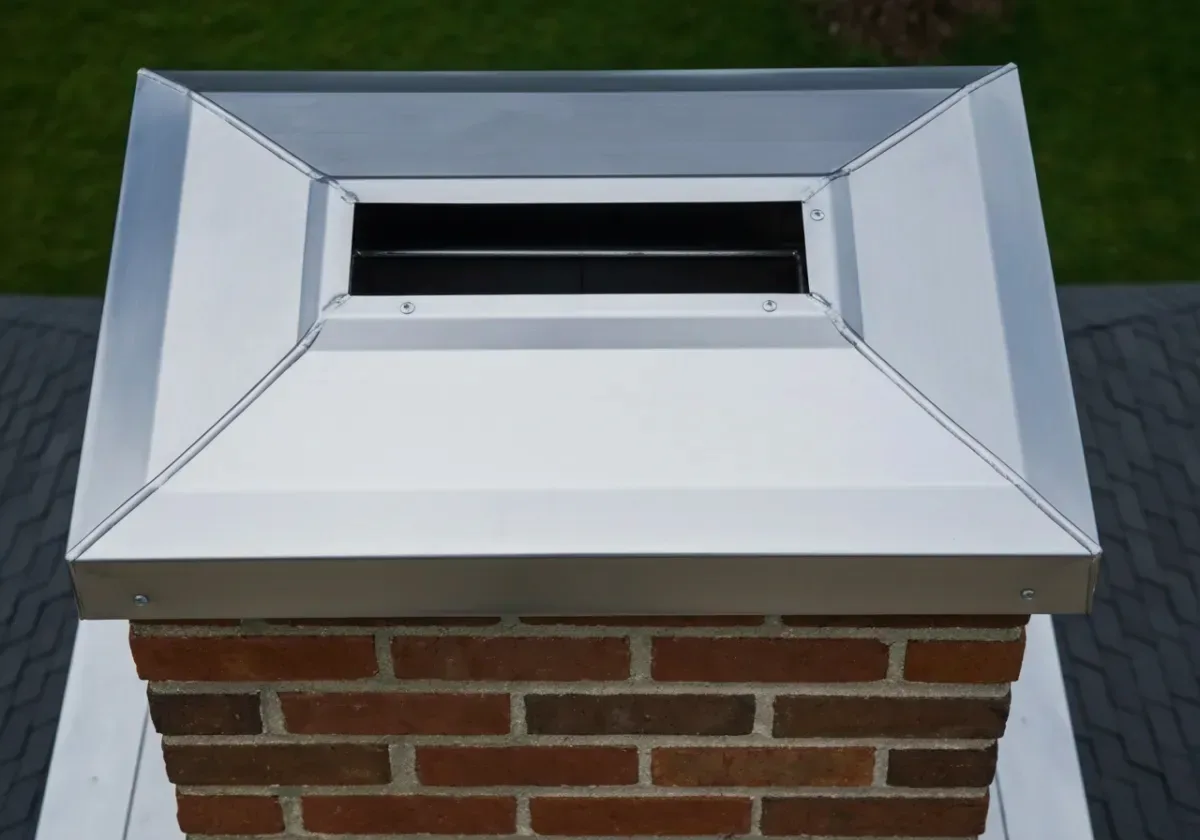 After

Four steps, each one on paper — so you always know what happens next.
Choose a genuine opening on the crew's calendar. Confirmation is immediate.
Liner, crown, cap, flashing and masonry examined in order — each finding photographed.
One document, plain numbers, covering only the work your chimney genuinely needs.
The repair is completed, then handed over with before-and-after photos of every item.
$99 plus tax per chimney, with camera footage and photos. When you approve a quote from us afterward, that $99 is subtracted from the work. If you choose not to proceed, the fee is kept.
Not necessarily. No survey we could find records chimney types on Admiral streets, and many older houses have had their fireplaces altered, capped or fitted with inserts over the years. We find out on site.
Not by itself. Seattle's residential code puts chimney repointing on its list of exempt minor jobs, provided the job leaves the walls and roof that enclose the house as they were. Bigger work is a different question, and SDCI hears it from us, with your address, before any work is scheduled.
Worry, no; check, yes. If you felt the shaking indoors, a look at the top courses and a camera pass through the flue will tell you whether anything shifted.
Choose a genuine opening on the crew's calendar. We inspect, quote in writing, and hand over a photo record of every repair.