Delridge, King County
Delridge is the valley in the middle of West Seattle, the low ground between the two ridges where Longfellow Creek follows the valley floor. It grew up around a sawmill and then a steel mill, filled in with workers' houses, took in wartime housing, and has been building again at a fast pace this century. Each of those chapters left chimneys behind, of different ages and kinds, on ground that is often wet and in places unstable. This page sets out what the public record says about the valley and what it means for a chimney here, with each source named.
Book an inspection
Book your $99 inspection
$99 plus tax, deducted when you approve the repair
Not sure where to start
Pick what you're seeing at your Delridge home — we'll point you to the right fix.
What we do
The same crew, the same written quote — for Delridge homes.
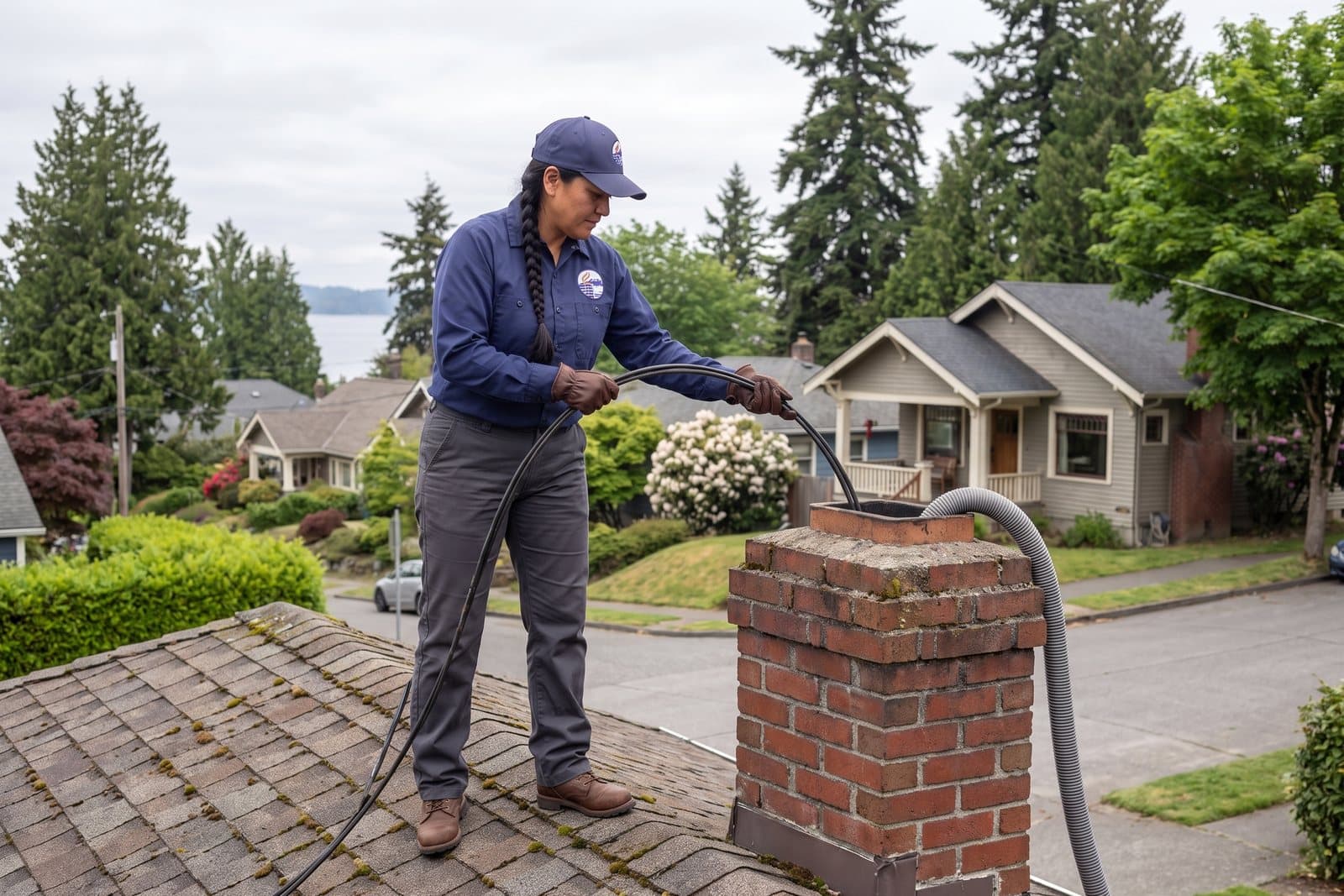
Full-height brushing of the flue with a head sized to its shape and material
Learn more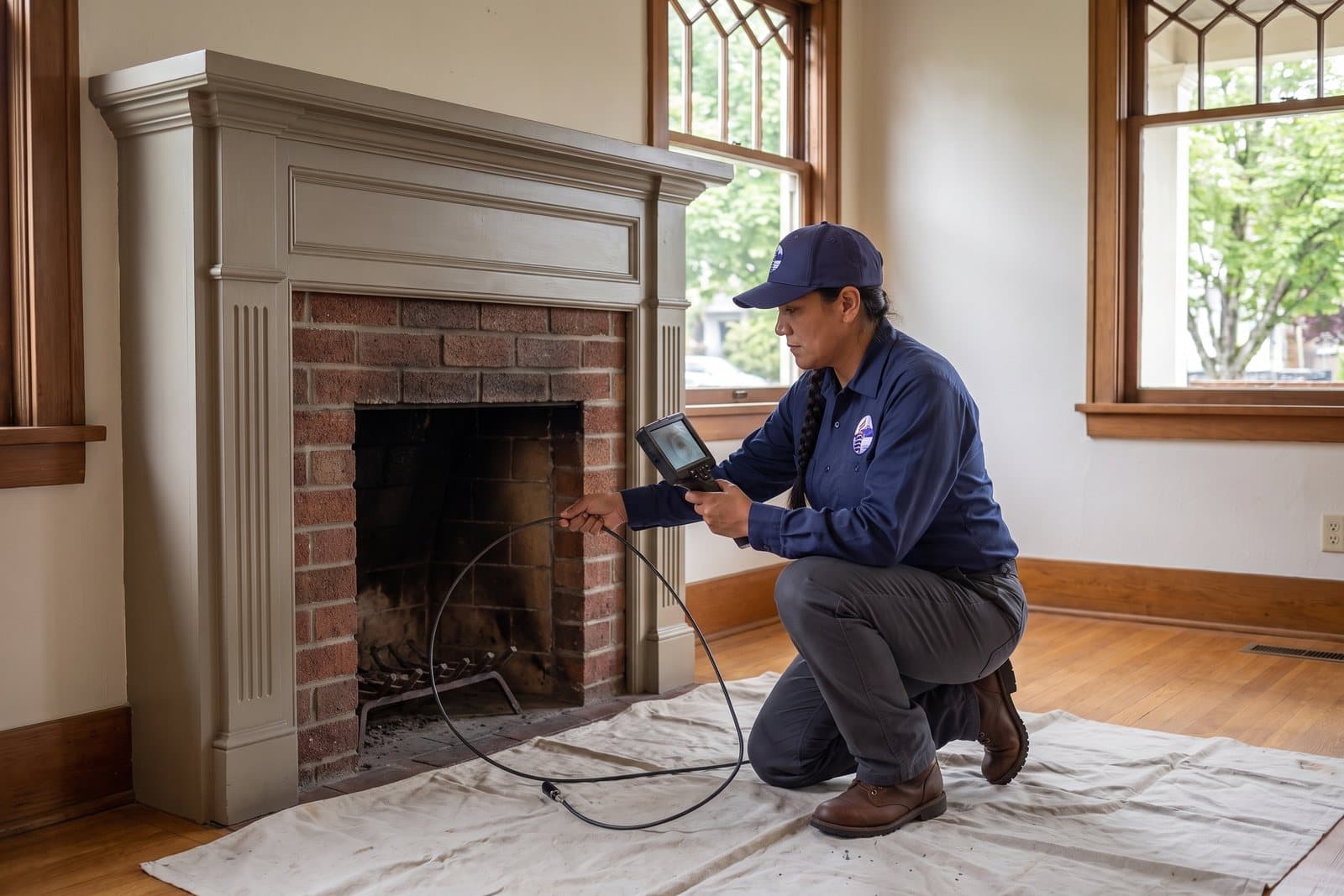
Level 1 examination of everything reachable, with a Level 2 camera pass when the reachable parts leave a question open
Learn more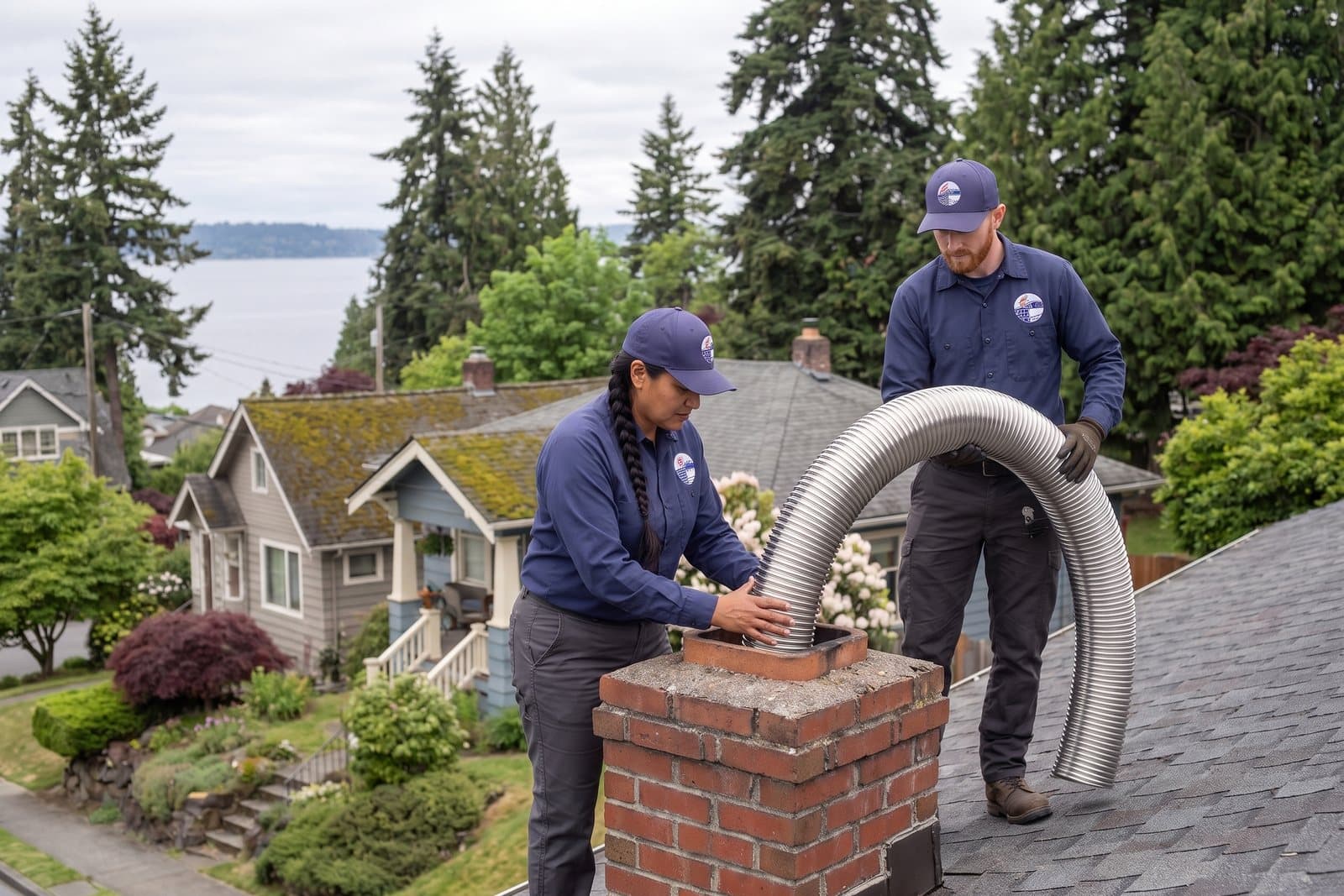
Camera survey and measurement of the existing flue before anything is ordered
Learn more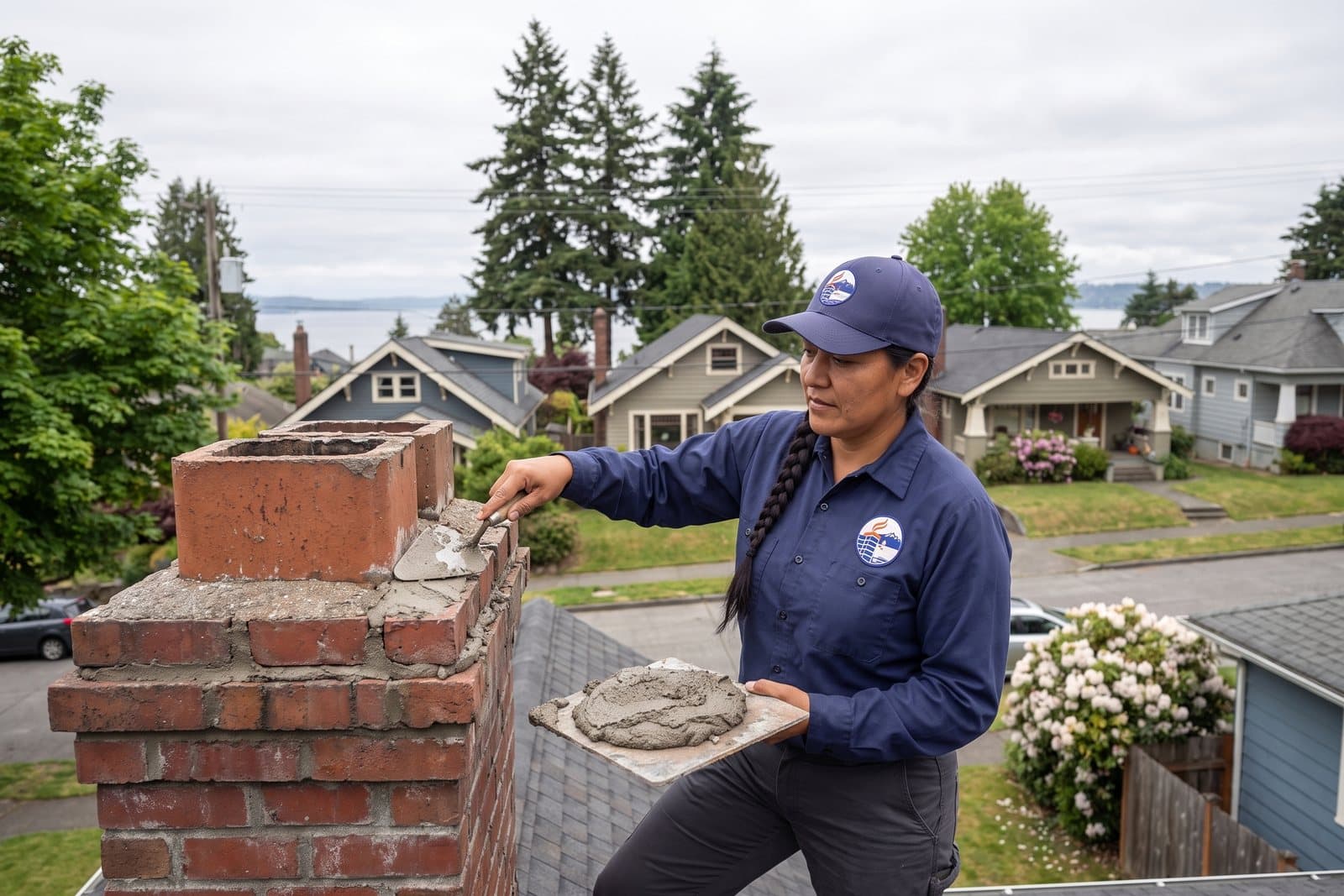
Assessment of the stack from roofline to crown, with a photo of each defect
Learn more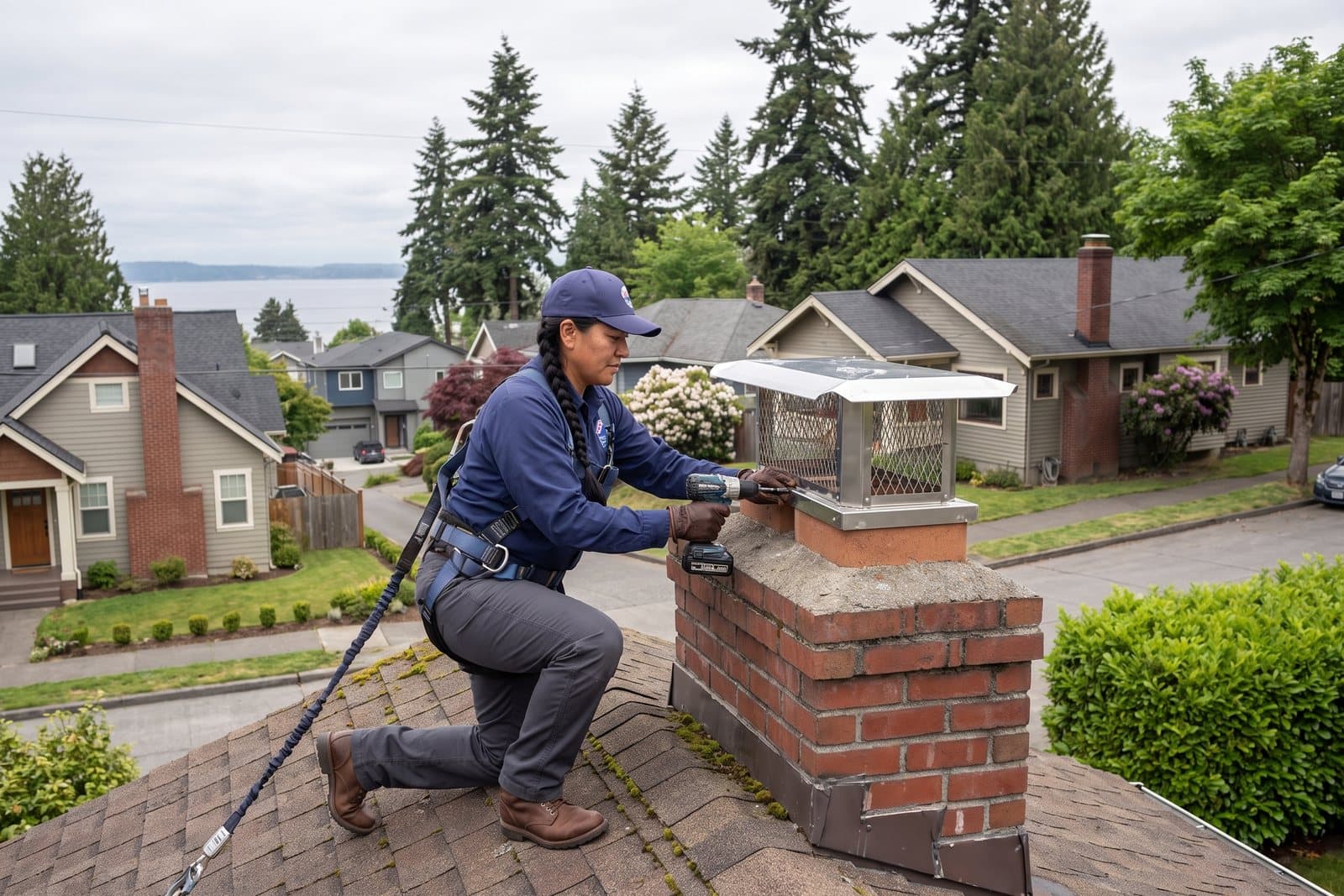
Measurement of each flue tile, or of the whole crown for a multi-flue cap
Learn more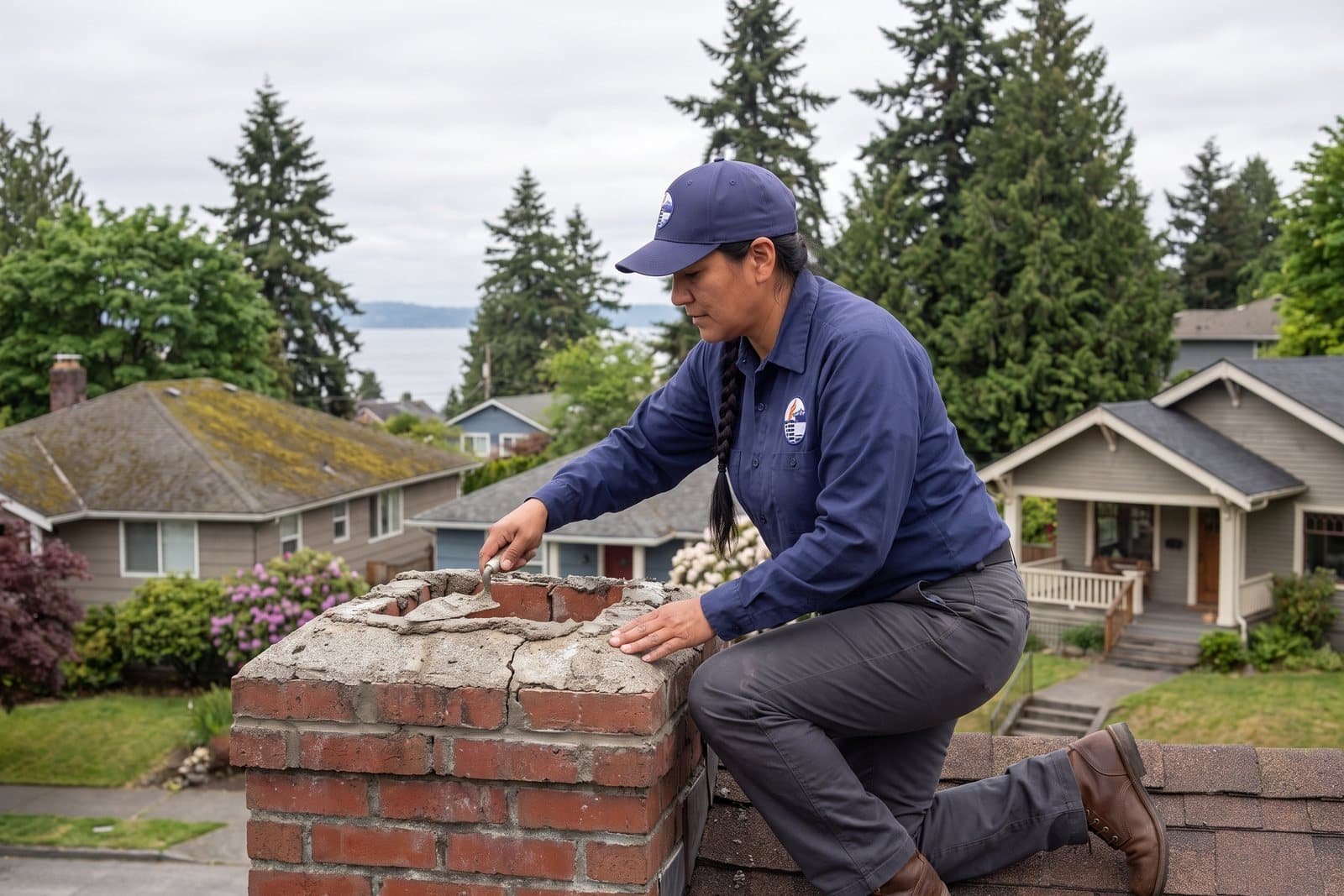
Joints cut back to firm mortar and repointed (tuckpointing) to match the existing profile
Learn more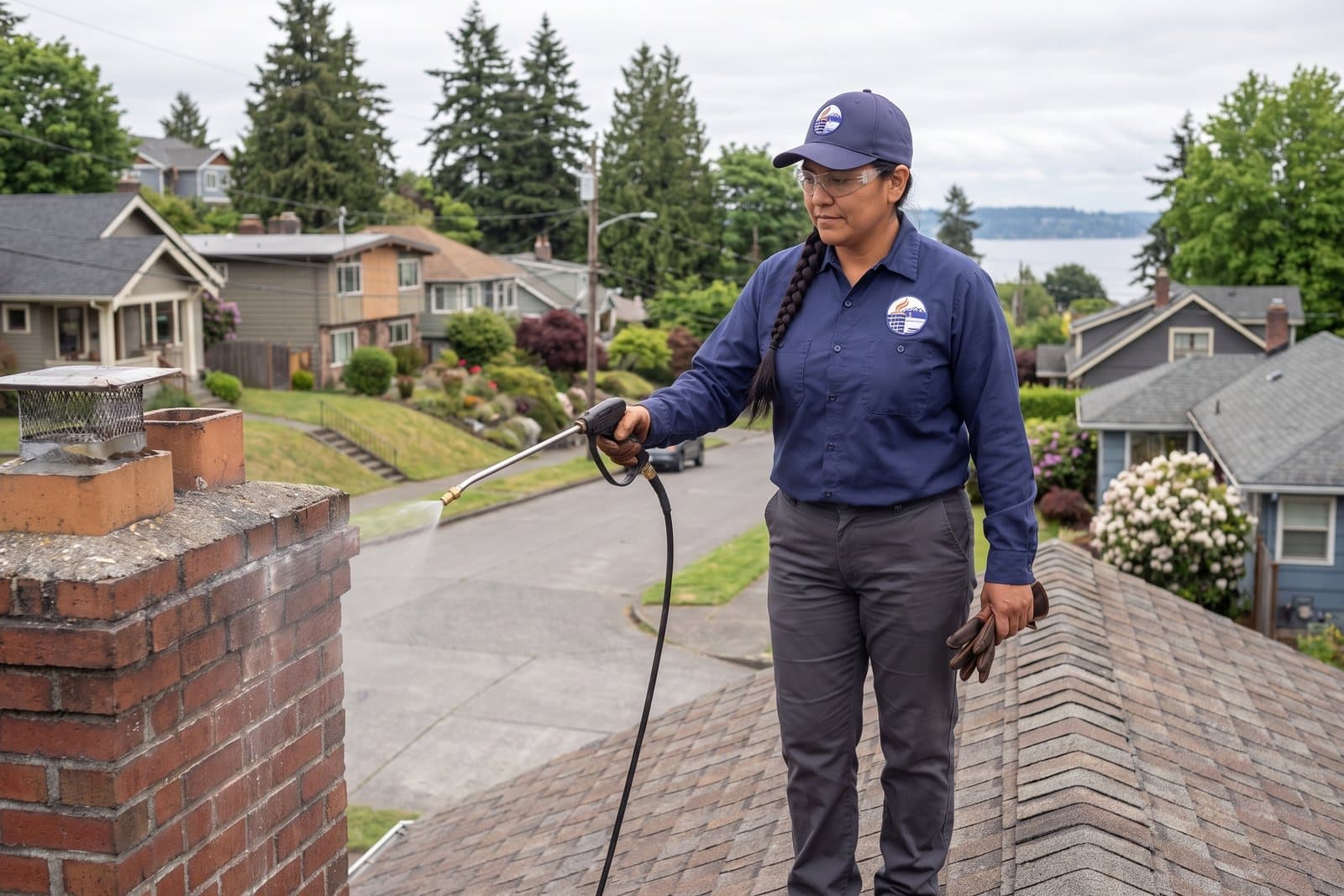
A check of joints, crown and flashing first; defects are repaired before any treatment
Learn more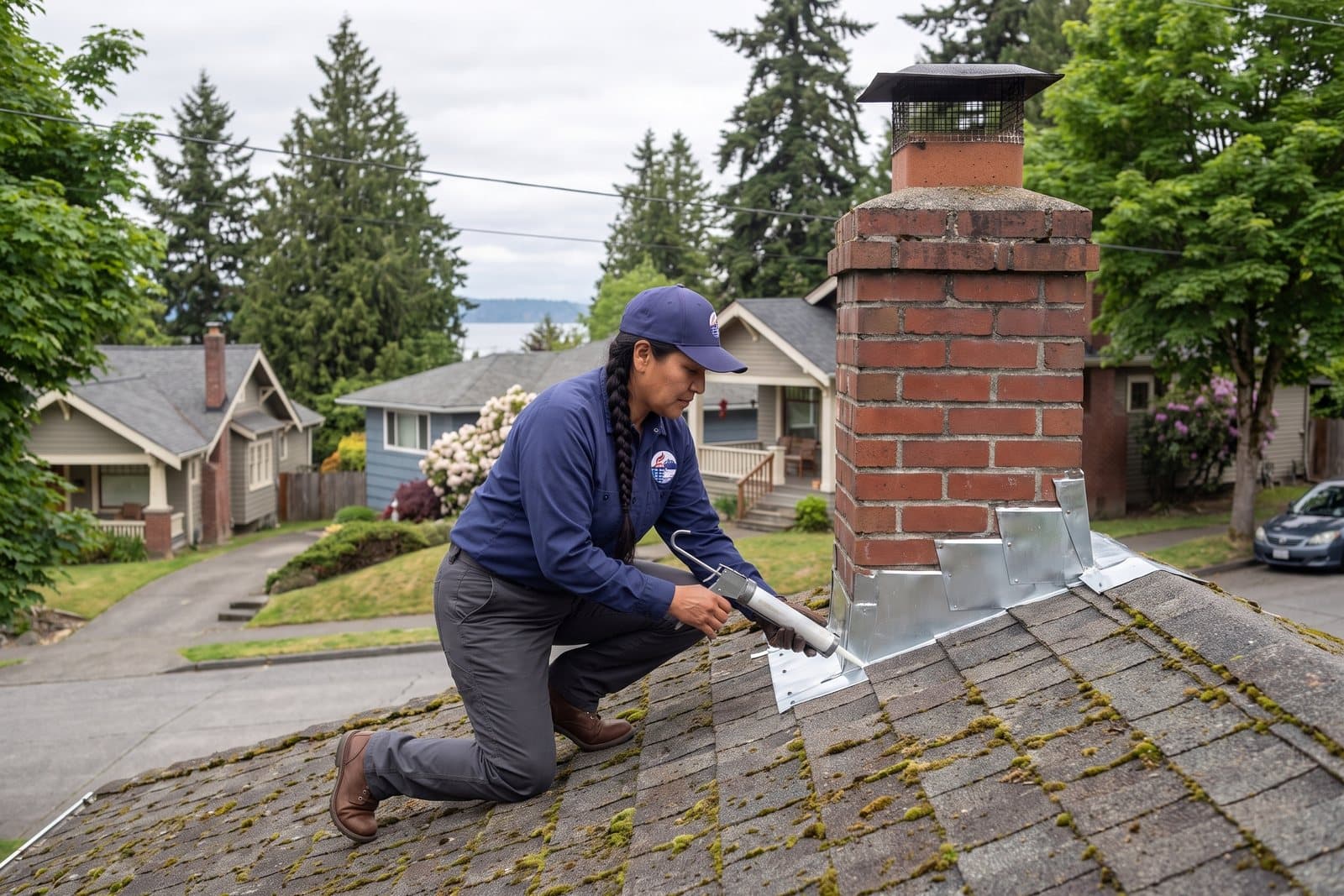
Leak tracing from the attic or the ceiling stain up to the roof
Learn more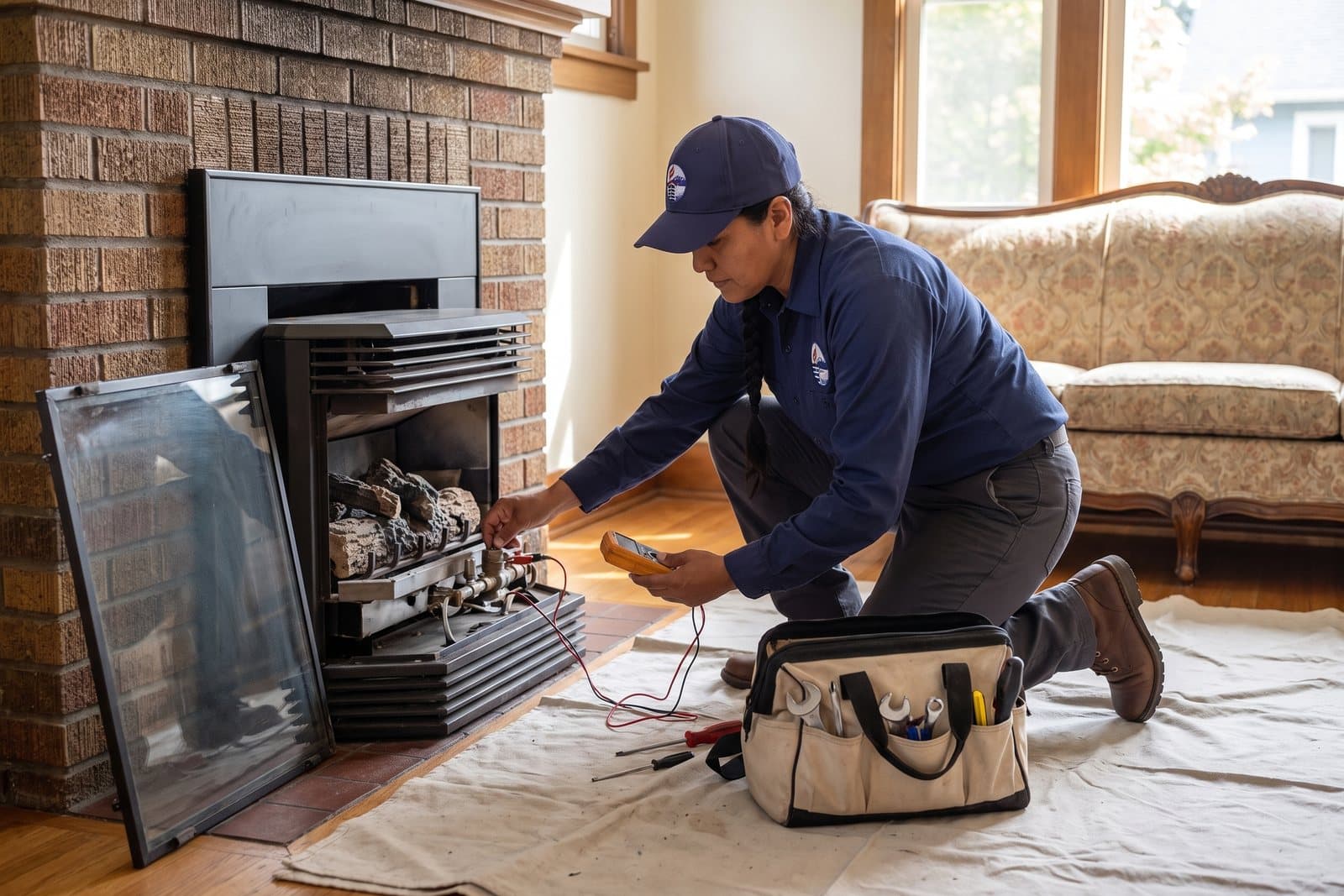
Burner, pilot assembly and firebox cleaned; logs or media put back in the layout the manual shows
Learn more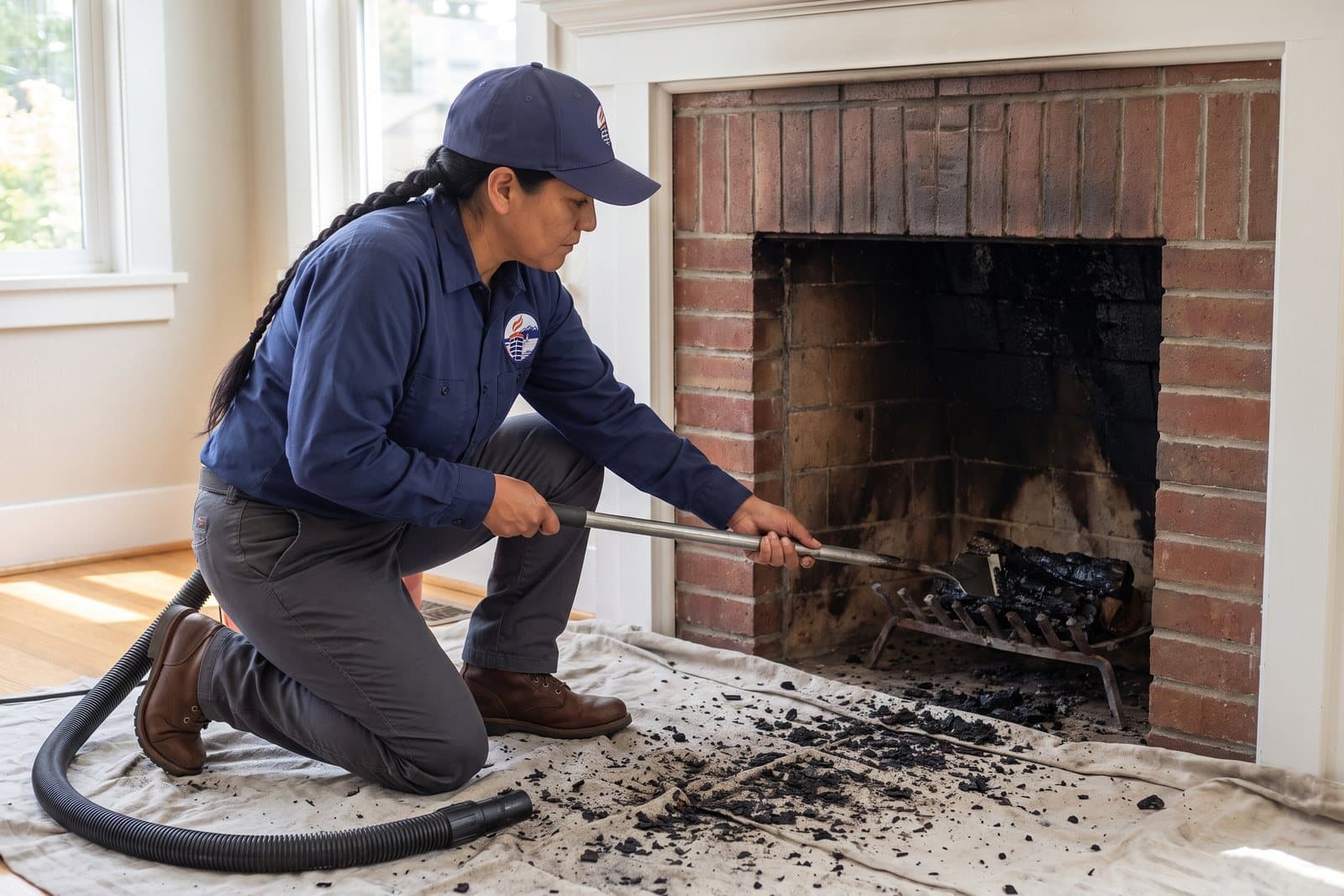
Camera survey to grade the deposit and check the liner beneath it
Learn more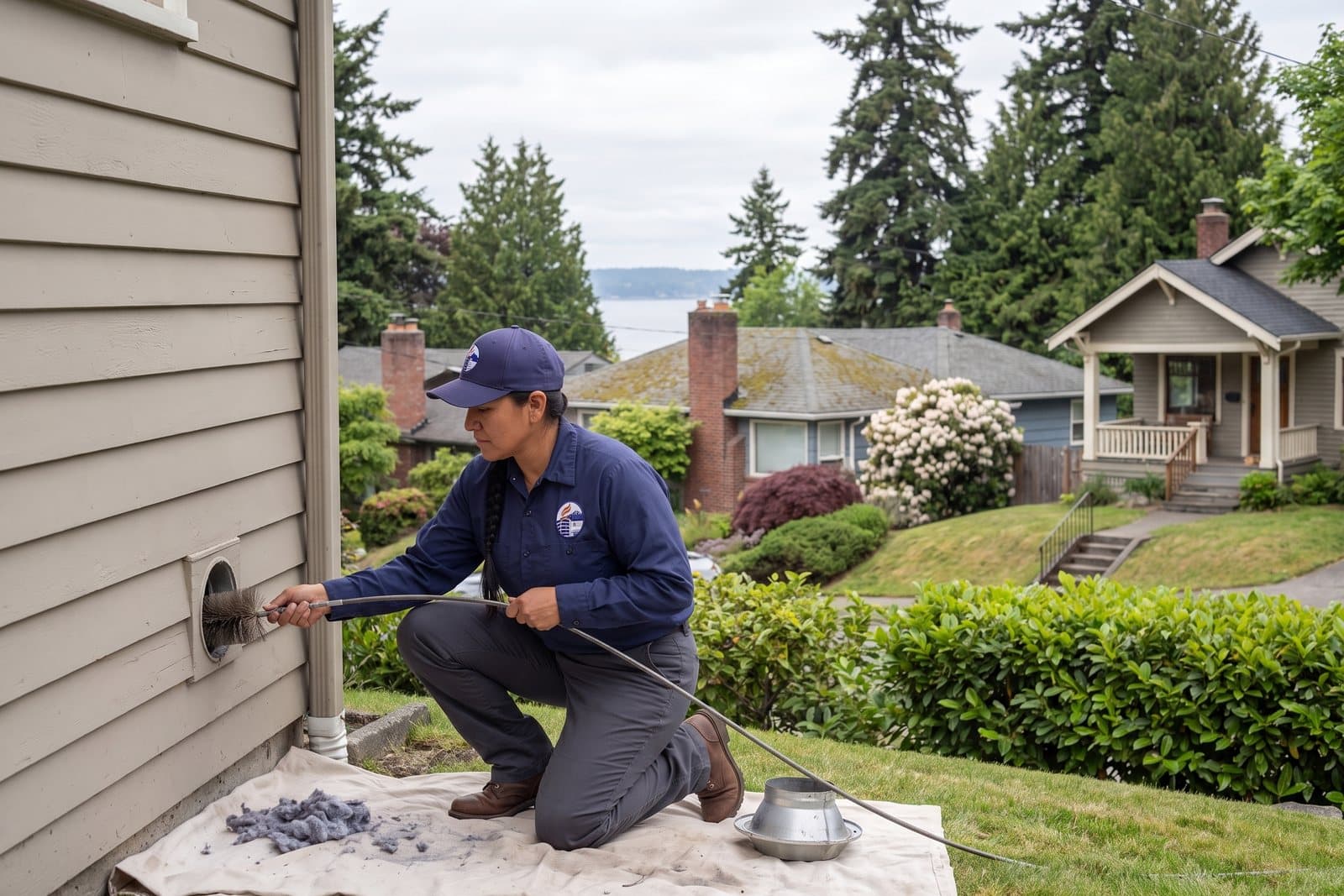
Dryer pulled out; the transition duct inspected, and replaced if it is plastic, thin foil or crushed
Learn more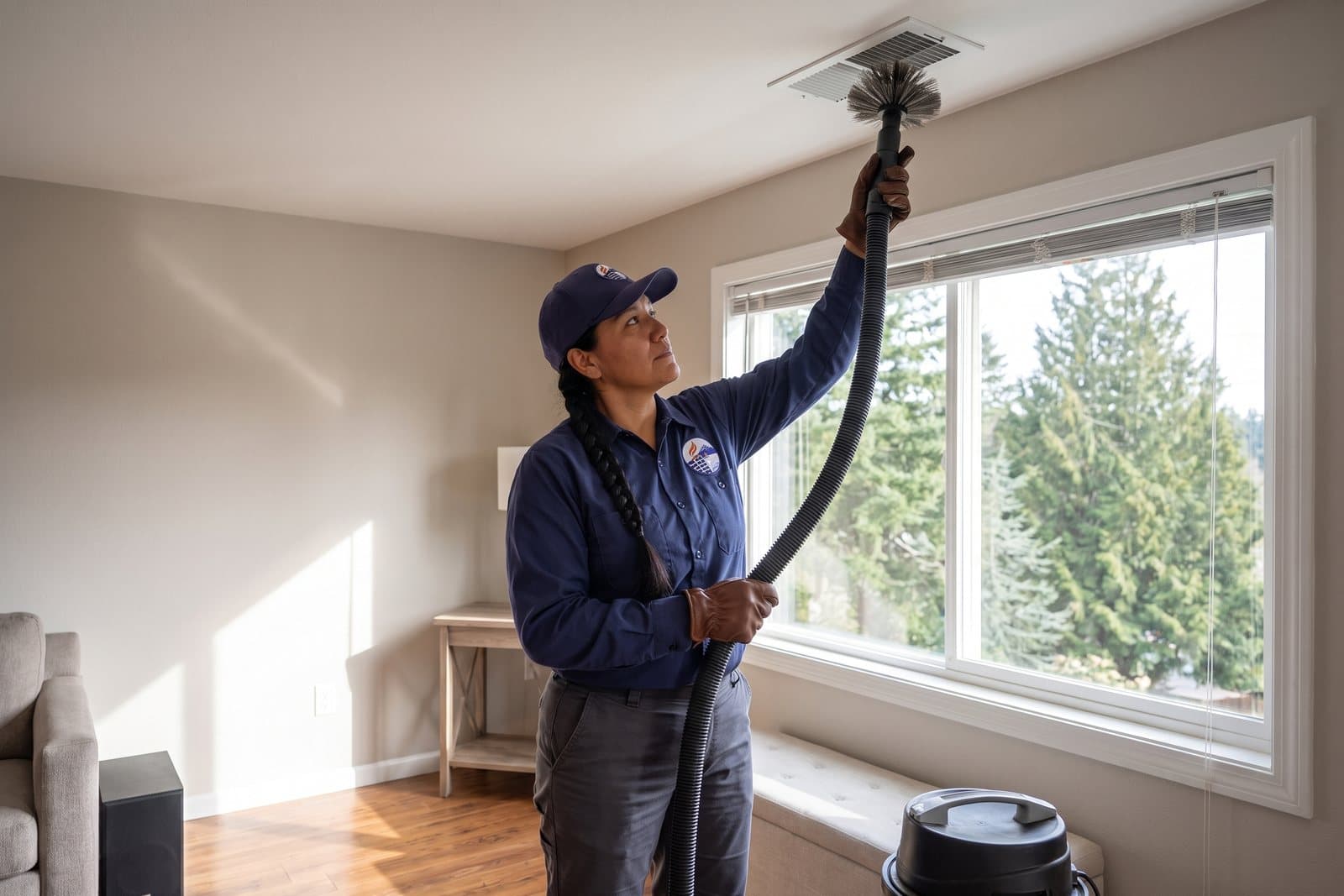
Inspection of the furnace, the plenum and a sample of ducts before any work, with photos
Learn moreRanges shown for orientation — the exact figure is written up on-site, after the inspection.
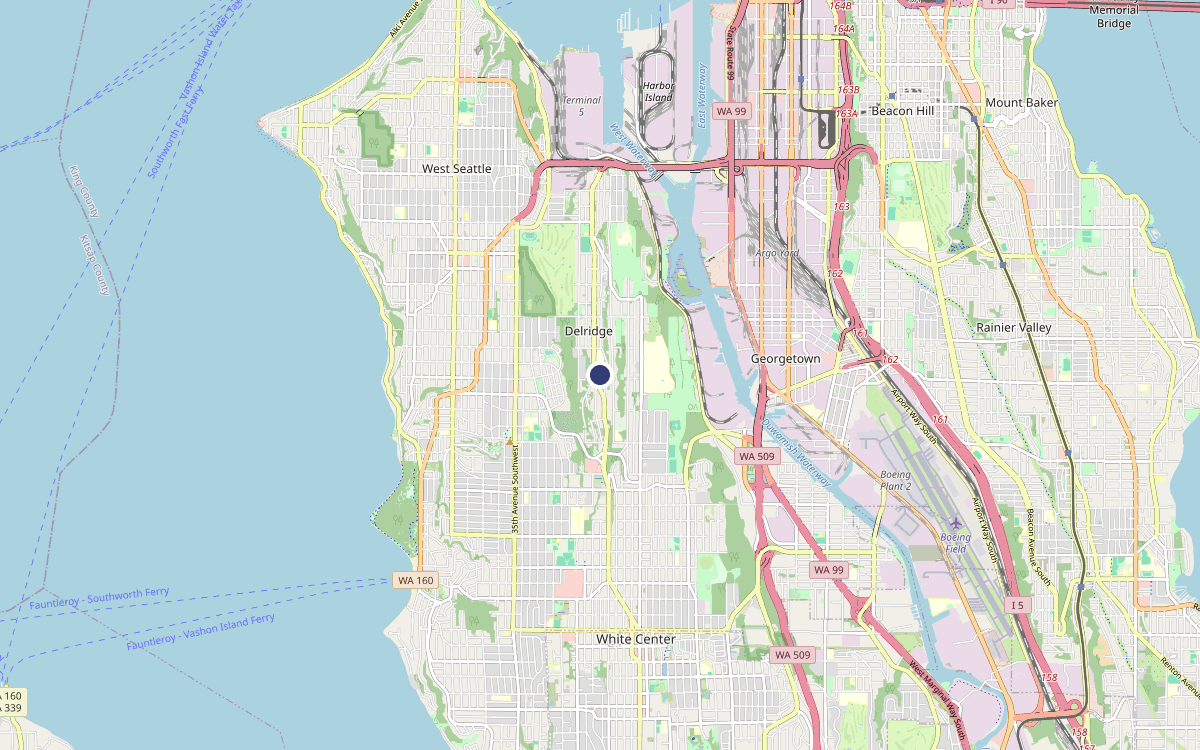
Service-area map — Delridge, Seattle. Map data © OpenStreetMap contributors.
Wikipedia groups several smaller neighborhoods under the Delridge name: Pigeon Point, Youngstown, Cottage Grove, Puget Ridge, Riverview, Snake Hill and High Point, which this site treats as a neighborhood of its own. The name itself came from the residents. According to the Southwest Seattle Historical Society, they persuaded the city to pave 24th Avenue and rename it Delridge Way, and the name spread to cover the old Humphrey settlement, Youngstown and Pigeon Point. Seattle Fire Station 36, listed as Delridge and Harbor Island, stands at 3600 23rd Avenue SW and houses Engine 36 and Marine 1.
Settlement west of Pigeon Point began in the 1880s around a Puget Mill Company sawmill on Young's Cove, near the mouth of Longfellow Creek, and a post office called Humphrey opened around 1903, as the Cettolin House nomination recounts. Then industry arrived. HistoryLink records that Seattle Steel Company, incorporated in 1903 on 55 acres of tideflats, made its first steel on May 4, 1905 with a crew of 140, and the settlement took the name Youngstown after the steel city in Ohio.
The mill passed through several owners: Pacific Coast Steel from 1913, Bethlehem Steel from 1930 by HistoryLink's account, and today Nucor, as the nomination notes. By 1927 it employed more than 500 people. Its workers lived in rooming houses, in company-supplied homes or in houses they built themselves, which is why the nomination describes the blocks around the mill as effectively a company town.
Youngstown, like Alki, turned down an offer of annexation from the town of West Seattle in 1906. HistoryLink records that both were annexed to West Seattle on May 25, 1907, and that June the enlarged town joined Seattle, so Youngstown changed jurisdictions twice inside five weeks. Residents had already organized: the Youngstown Improvement Club existed by 1906, and its hall on Delridge Way SW, dated to 1914 by the historical society, survives in altered form as a veterans' hall.
Through the 1920s and 1930s, both the historical society and the Cettolin nomination describe Youngstown and Delridge as a working-class district, set apart from the middle-class growth along California Avenue on the hill to the west. Wikipedia adds that the Puget Mill Company platted Cottage Grove between 1918 and 1923.
HistoryLink's history of the school shows the valley's growth in miniature. Classes began with 70 pupils in a building lent by the steel company, moved into a wooden schoolhouse of five rooms once voters passed a 1908 levy, and in 1917 into Edgar Blair's brick building, which was enlarged in November 1929. Renamed for Frank B. Cooper in 1939, the school closed in June 1989, became a Seattle landmark in 2002, joined the National Register in 2003, and reopened in 2006 as the Youngstown Cultural Arts Center at 4408 Delridge Way SW.
Landmarks are scarce in the valley. The Cettolin nomination points out that most of West Seattle's dozen-plus designated landmarks sit along California Avenue SW or near the western waterfront, and that Cooper School was the only one within half a mile of the Cettolin site. A community college opened on top of Puget Ridge in 1969, and the Delridge Branch of the Seattle Public Library opened on June 29, 2002; HistoryLink describes the neighborhood around it as historically home to steelworkers, shipbuilders and immigrants.
Shannon & Wilson's landslide study for the city describes West Seattle as two glacier-shaped ridges running north and south, split by Longfellow Creek, which it calls one of Seattle's longest and lowest-gradient streams. The historical society names what that geography brought: landslide potential, periodic flooding, ravines and creeks, the reasons it gives for Delridge's slow development. It also credits a decade-long city effort with restoring the creek and adding a trail along it.
The study is specific about the eastern side of the valley. Two dozen slides are on record for the hillside rising east of Delridge Way SW toward 21st Avenue SW, the earliest trouble noted in 1914, and names Pigeon Point among the city's chronic slide areas. Beneath that hillside, the engineers describe deep, loose silty clay resting on firmer clay, wet most of the year.
Citywide, the engineers judged that water had a hand in almost all the slides on file. For chimneys that means two things: water attacking the stack from above through the long wet season, and ground that can shift beneath it after a soaked winter. Both show up first as small cracks, which is why we look closely at the masonry and the plumb of every stack we inspect in the valley.
World War II brought thousands of defense workers to the Harbor Island plants, and by 1945, HistoryLink writes, the peninsula had twice its prewar headcount, upward of 70,000 people. Delridge's share was a stopgap project of 450 homes for those workers, put up in 1943 and turned over to low-income tenants by 1953, according to HistoryLink's history of the Seattle Housing Authority. The historical society remembers temporary war-worker housing crowding onto playfields and vacant lots, and a high rate of home ownership through the 1950s that later gave way to more renting.
Present-day Census tallies for the valley's ZIP area, a zone that spills south beyond the city line, show the layers: about 13 percent of units built before 1940, 21 percent from 1940 to 1959, and nearly 32 percent in 2000 or later, so the middle house dates from 1981, later than in any other part of West Seattle. Masonry flues from the first half of the century, prefabricated fireplaces and metal chimneys from its second half, and gas units from the recent wave may sit within a few blocks of each other, so we identify the system before we recommend anything.
After the 2001 Nisqually earthquake, Booth, Wells and Givler surveyed about 60,000 chimneys block by block across the greater Seattle area and found 1,556 visibly damaged. Their 2004 paper, published through the USGS, says the damage was strongly clustered, with West Seattle the leading cluster, where damage had also been mapped after 1965. What they found runs against intuition for anyone on a wet lot. Neither epicentral distance, nor soft soil, nor the lay of the land or the way a slope faced predicted the broken chimneys; the worst blocks traced strands of the Seattle fault zone, and a block or two past each strand's end the damage nearly vanished.
So a valley lot is not automatically at greater risk in an earthquake, and a ridge lot is not automatically safe. None of the sources we read places Delridge inside or outside the damage zone. What is clear is how to repair a damaged brick chimney. A 2015 FEMA recovery advisory cautions that putting the same brick column back exactly as before leaves it exposed to the same failure; its preferred paths swap the upper masonry for a metal flue, or replace firebox and chimney altogether. For new or rebuilt masonry chimneys in the D seismic design categories, Seattle's residential code calls for four continuous No. 4 vertical bars and steel straps anchoring the chimney at floor, ceiling and roof lines more than 6 feet above grade.
The grid we quote from for Delridge homes — the $99 inspection comes first, the written quote before any work.
| Service | Price in Delridge | What that covers |
|---|---|---|
| Chimney Sweep | $189–$449 | Full flue swept, Level 1 inspection included |
| Chimney Inspection | $99 plus tax | Level 1 visual; Level 2 adds a full camera scan |
| Chimney Relining | From $1,900 | Full-length stainless liner, sized to the appliance |
| Chimney Repair | From $425 | Masonry repair — brick and mortar, scoped after diagnosis |
| Chimney Cap Installation | $235–$850 | Stainless cap fitted; multi-flue and custom at the top |
| Masonry Repair (Crown / Repointing) | From $475 | Crown work, repointing and tuckpointing by surface area |
| Chimney Waterproofing | $320–$795 | Breathable sealer — reapplied every 3–5 years in this climate |
| Chimney Flashing Repair | $375–$1,500 | Reseal at the low end, full flashing replacement at the high |
| Gas Fireplace Service | $189–$475 | Annual service and tune-up; repairs quoted after diagnosis |
| Creosote Removal | From $245 | Priced by creosote stage — glazed stage 3 is the heavy end |
| Dryer Vent Cleaning | $105–$295 | Full run cleaned; roof or upper-floor terminations at the top |
| Air Duct Cleaning | From $535 | Whole HVAC system — trunks, branches and every register |
Ranges are what these jobs are quoted at in Delridge. The exact figure is set on site after a $99 inspection (credited toward the job if you go ahead), and you approve it before any work starts.
Before and after
Illustrations of what each repair changes on a typical chimney — not photos of a specific job.
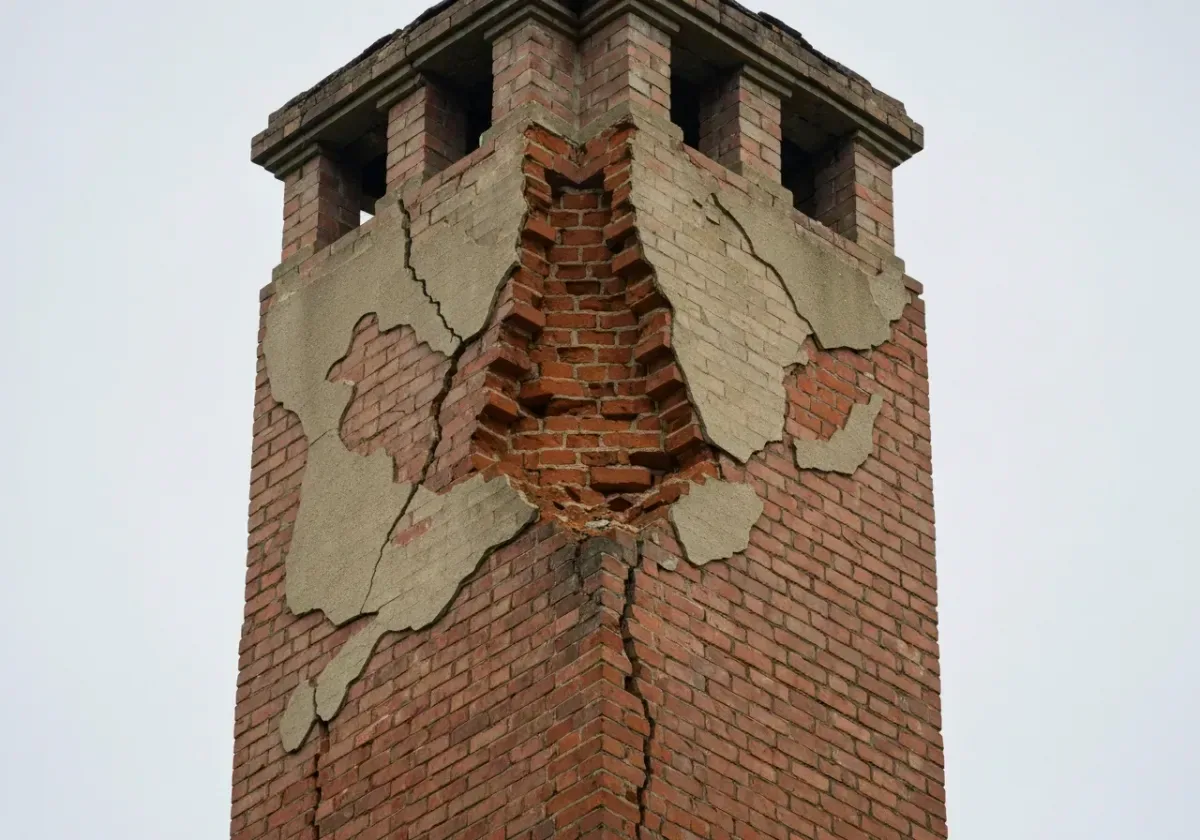 Before
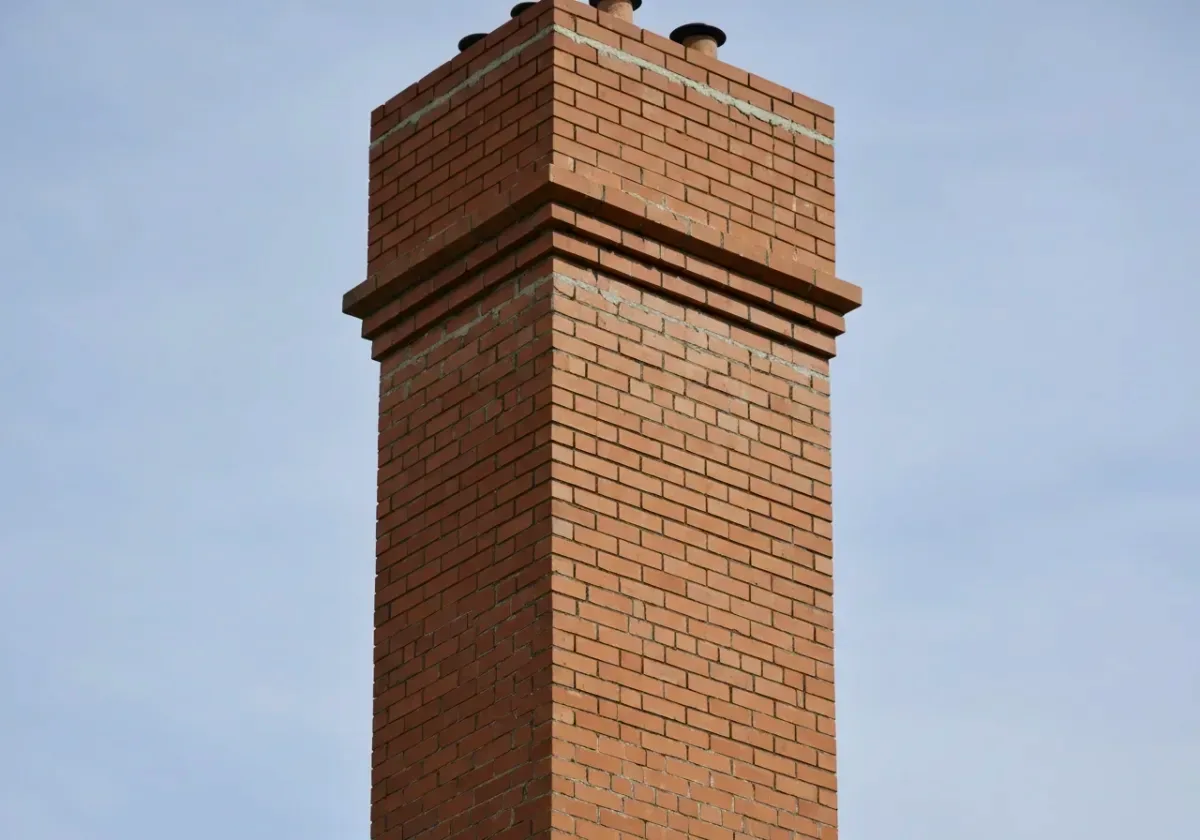 After
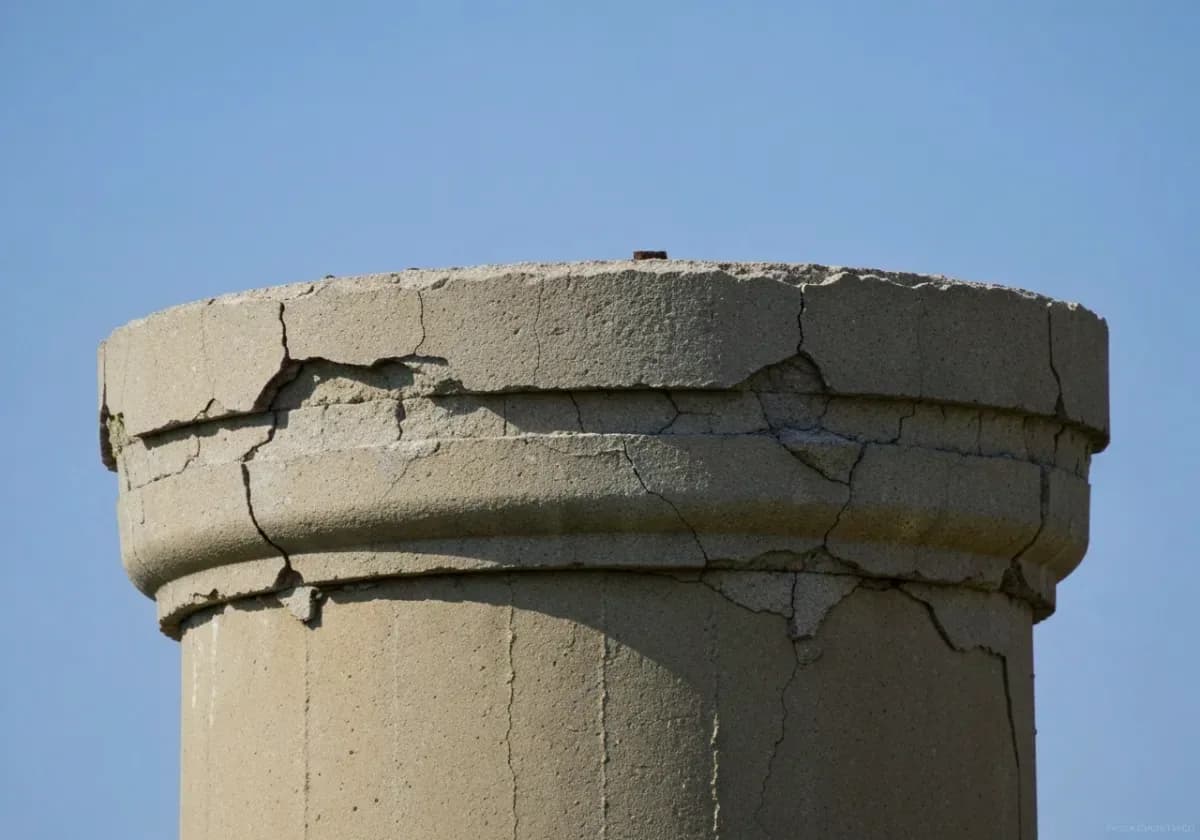 Before
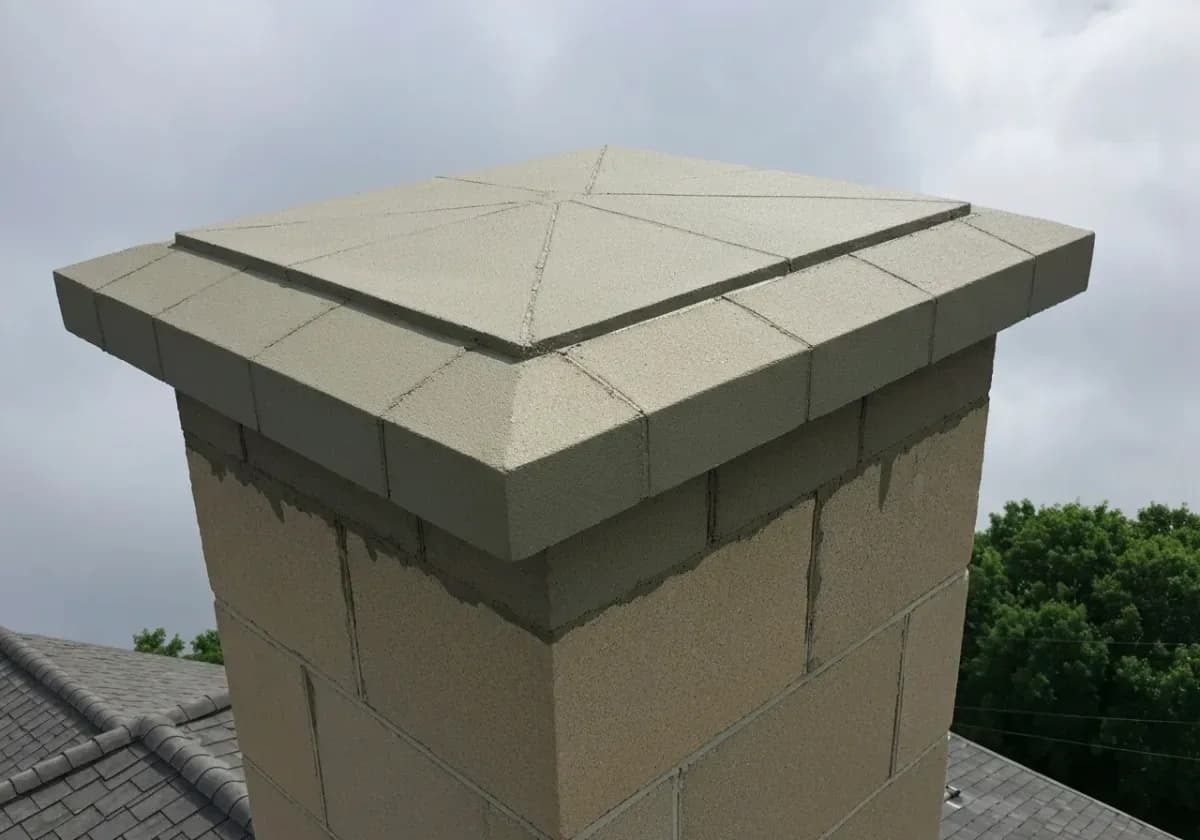 After
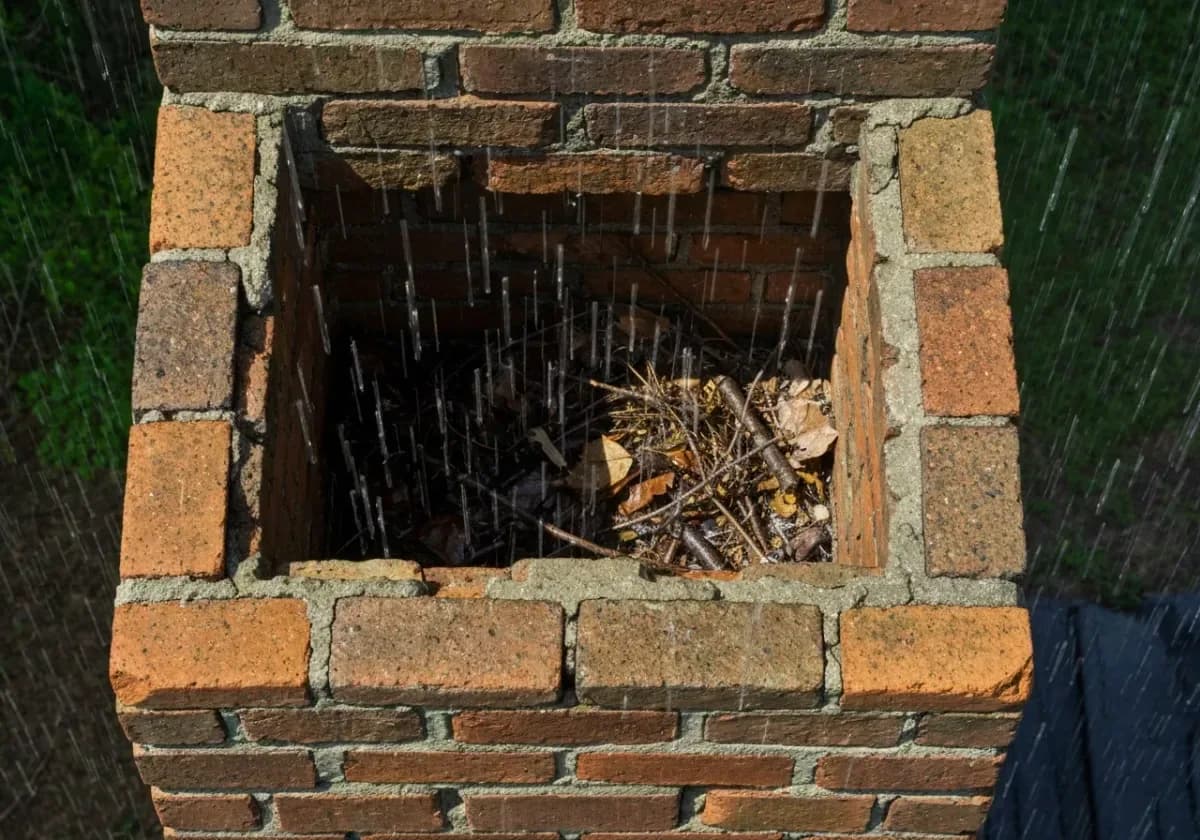 Before
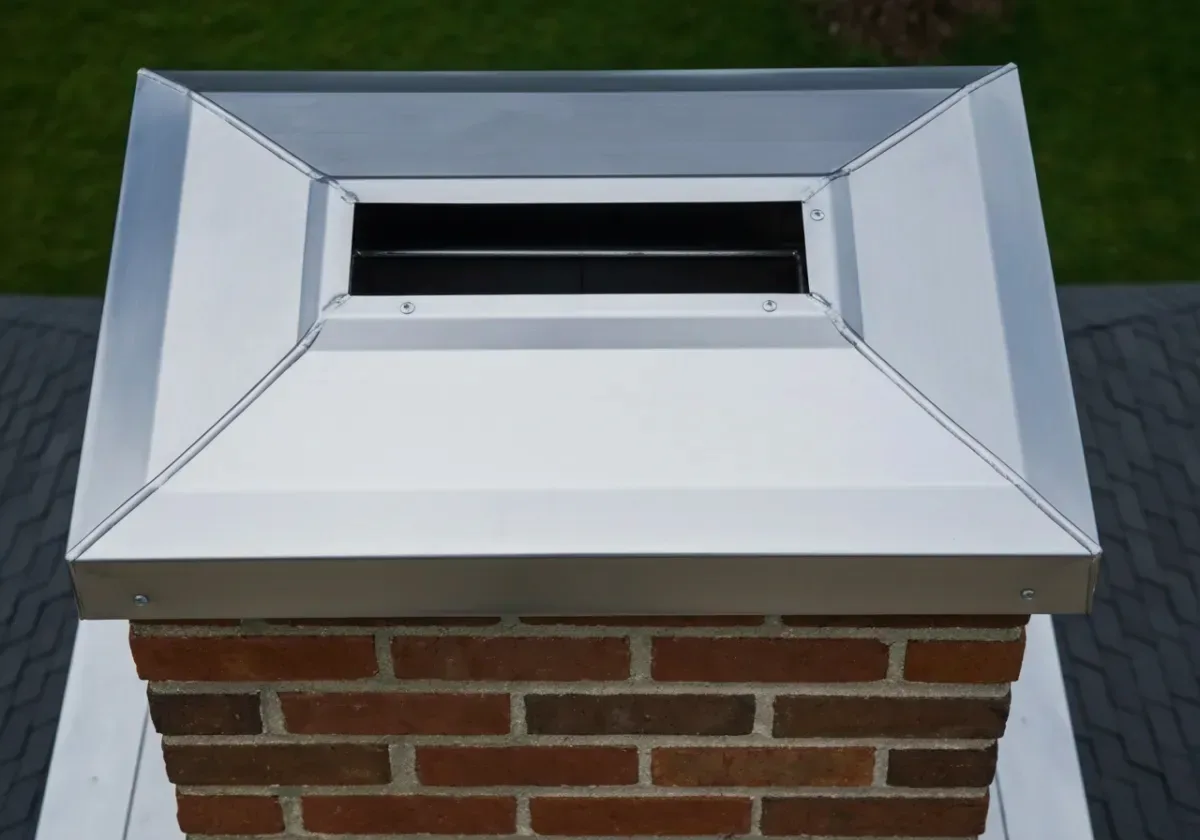 After
Four steps, each one on paper — so you always know what happens next.
Choose a genuine opening on the crew's calendar. Confirmation is immediate.
Liner, crown, cap, flashing and masonry examined in order — each finding photographed.
One document, plain numbers, covering only the work your chimney genuinely needs.
The repair is completed, then handed over with before-and-after photos of every item.
Our inspection runs $99 plus tax per chimney and covers a camera run up the flue, an outside check and a written report with photos. Approve a quote that follows from it and we deduct the $99 from that work.
Not worry, but watch. The city's landslide study records slides on that west-facing slope going back to 1914. A chimney that leans, cracks in a stair pattern or separates from the siding should be looked at before the next fire.
Yes. Factory-built fireplaces, metal chimneys, gas units and their vents are all part of the work, and they are inspected against their manufacturer's listing rather than masonry rules.
Yes. It is a designated Seattle landmark and on the National Register. Exterior changes to a designated landmark need a Certificate of Approval from the city; that requirement applies to designated buildings, not to ordinary houses nearby.
Choose a genuine opening on the crew's calendar. We inspect, quote in writing, and hand over a photo record of every repair.