Alki, King County
Alki is where Seattle almost began and where much of West Seattle goes to look at the water. It is also a low strip of land squeezed between a long beach and a steep, wet bluff, with a history of summer cottages, log lodges and a school that lost its brick wing to an earthquake. Each of those facts bears on the chimneys standing here today. We set them out below with their sources, so that what we tell you about your own chimney rests on something you can read for yourself.
Book an inspection
Book your $99 inspection
$99 plus tax, deducted when you approve the repair
Not sure where to start
Pick what you're seeing at your Alki home — we'll point you to the right fix.
What we do
The same crew, the same written quote — for Alki homes.
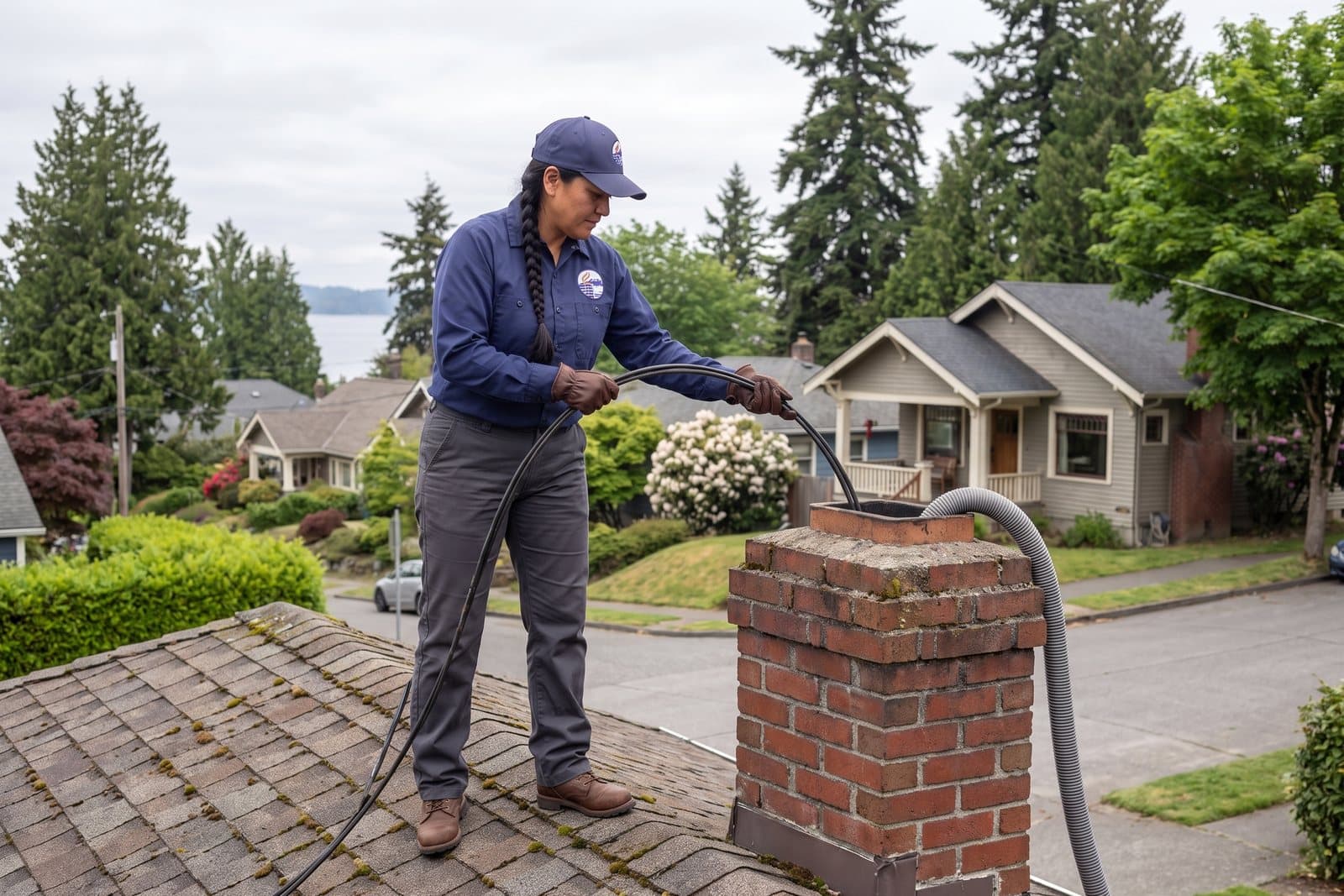
Full-height brushing of the flue with a head sized to its shape and material
Learn more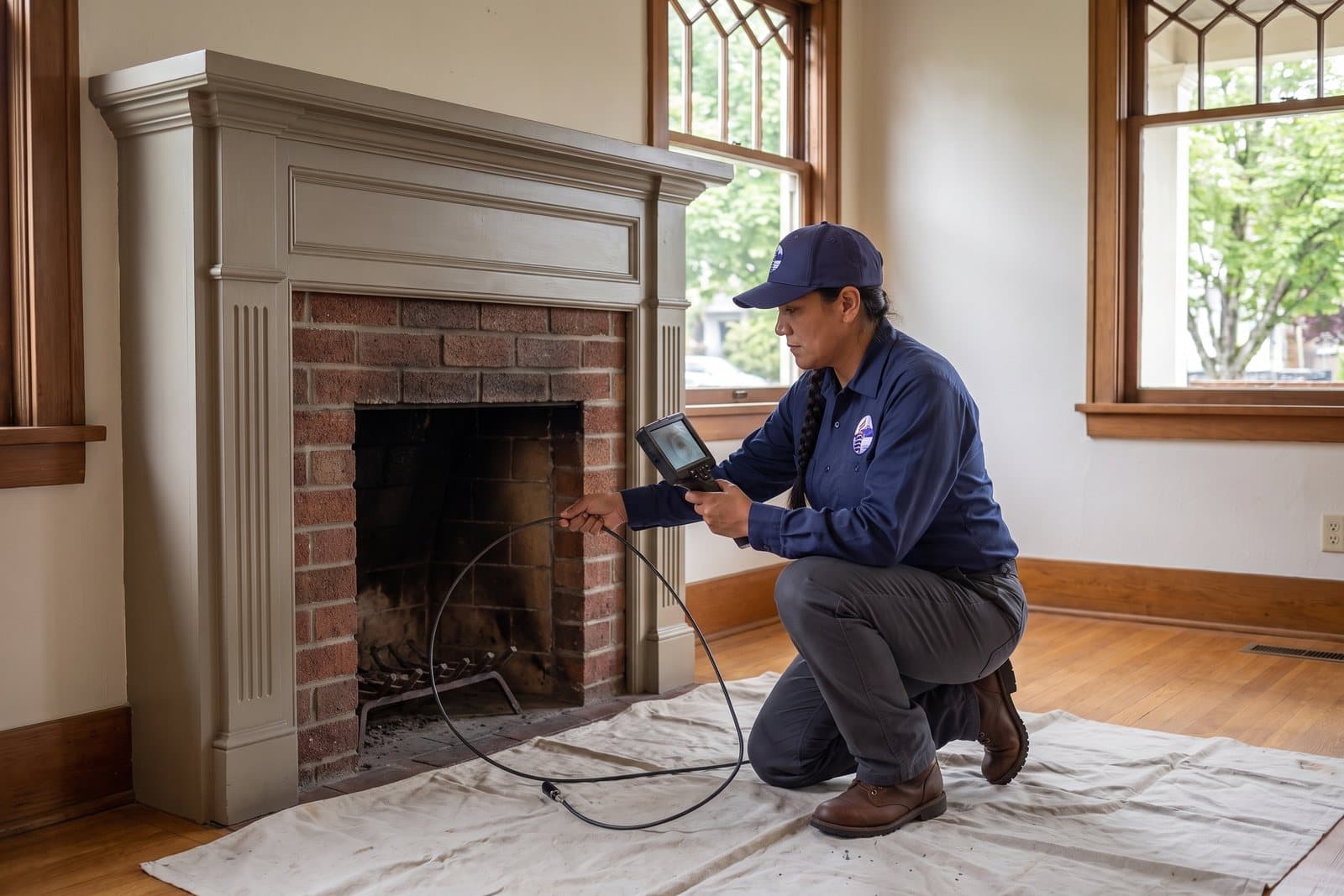
Level 1 examination of everything reachable, with a Level 2 camera pass when the reachable parts leave a question open
Learn more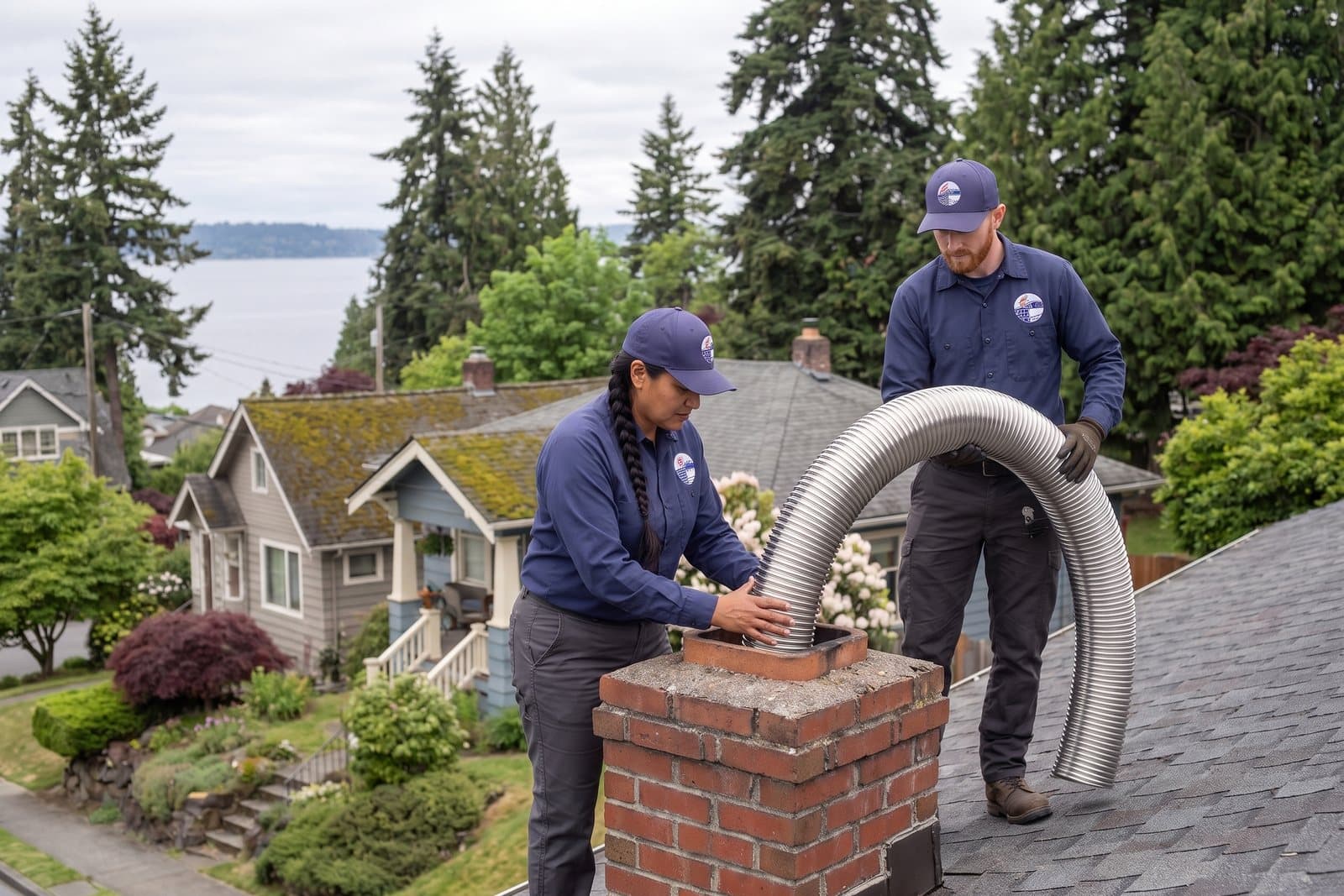
Camera survey and measurement of the existing flue before anything is ordered
Learn more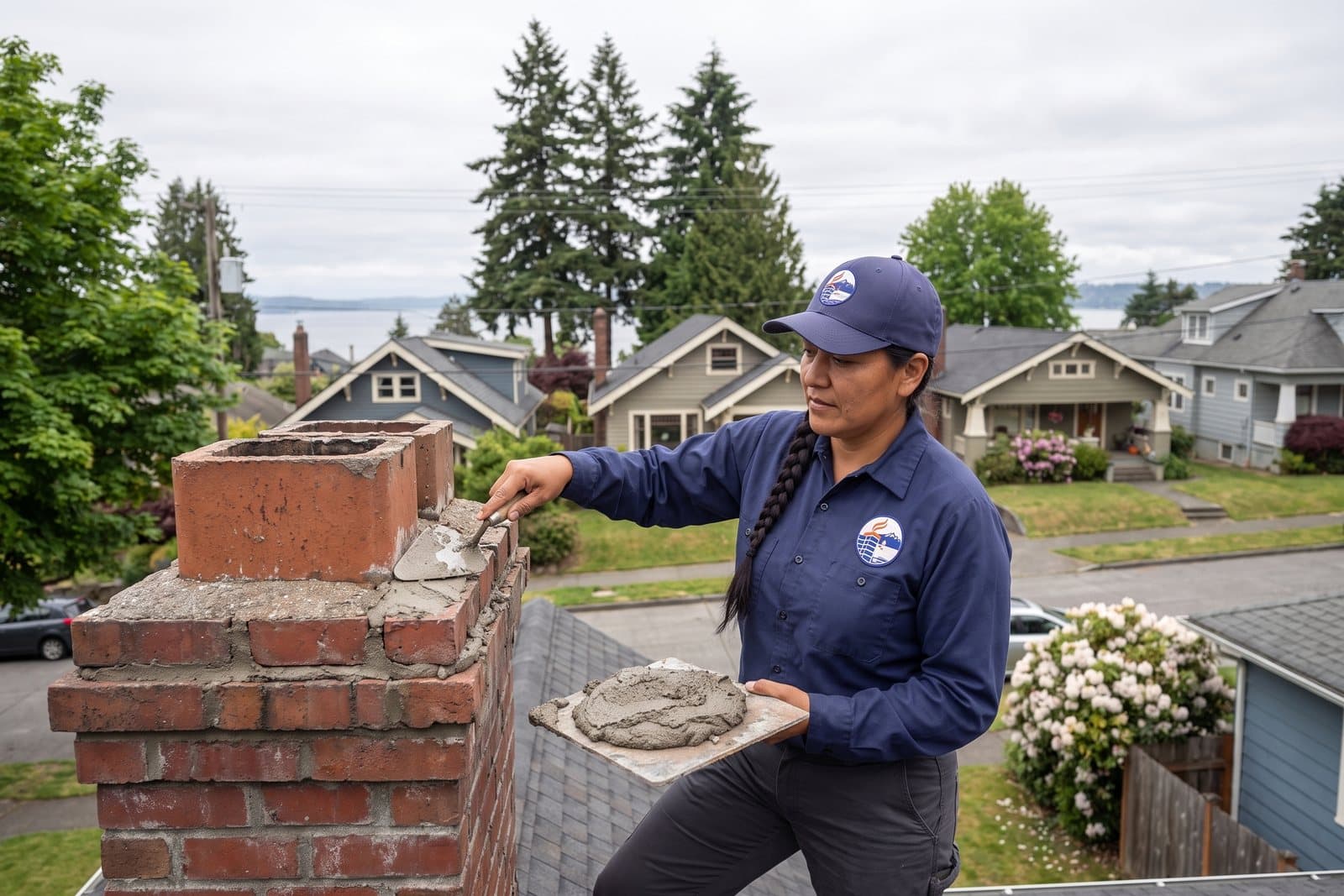
Assessment of the stack from roofline to crown, with a photo of each defect
Learn more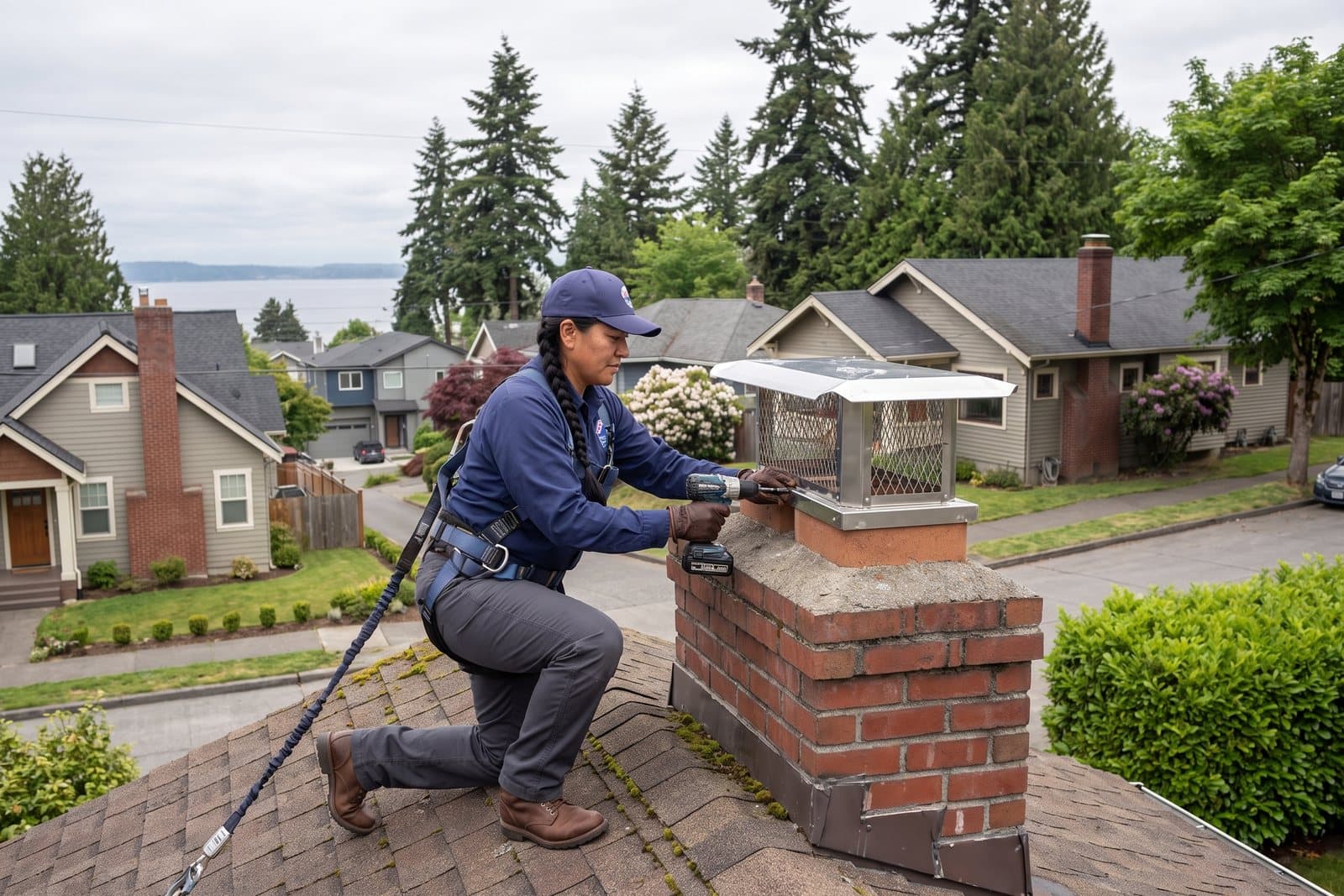
Measurement of each flue tile, or of the whole crown for a multi-flue cap
Learn more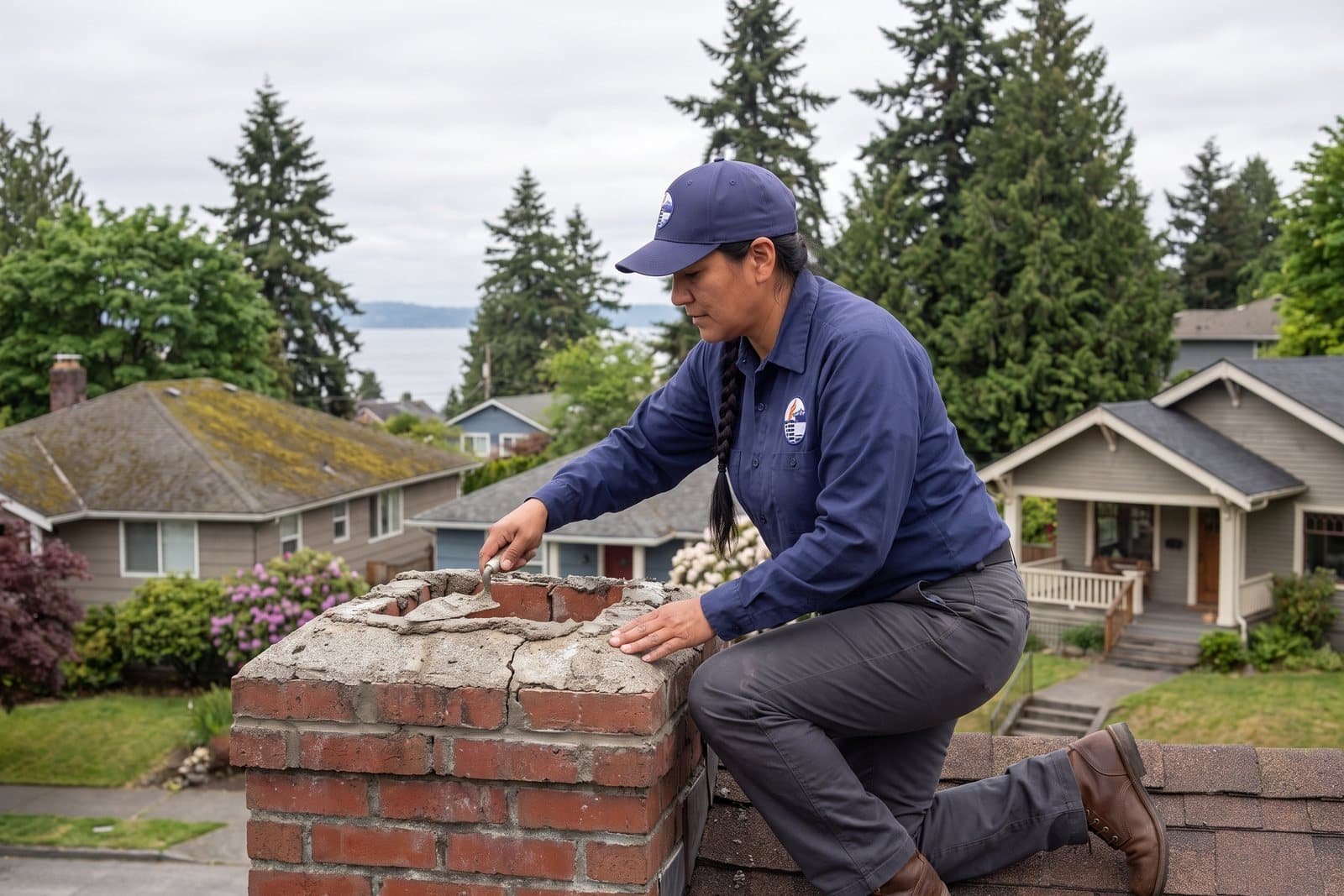
Joints cut back to firm mortar and repointed (tuckpointing) to match the existing profile
Learn more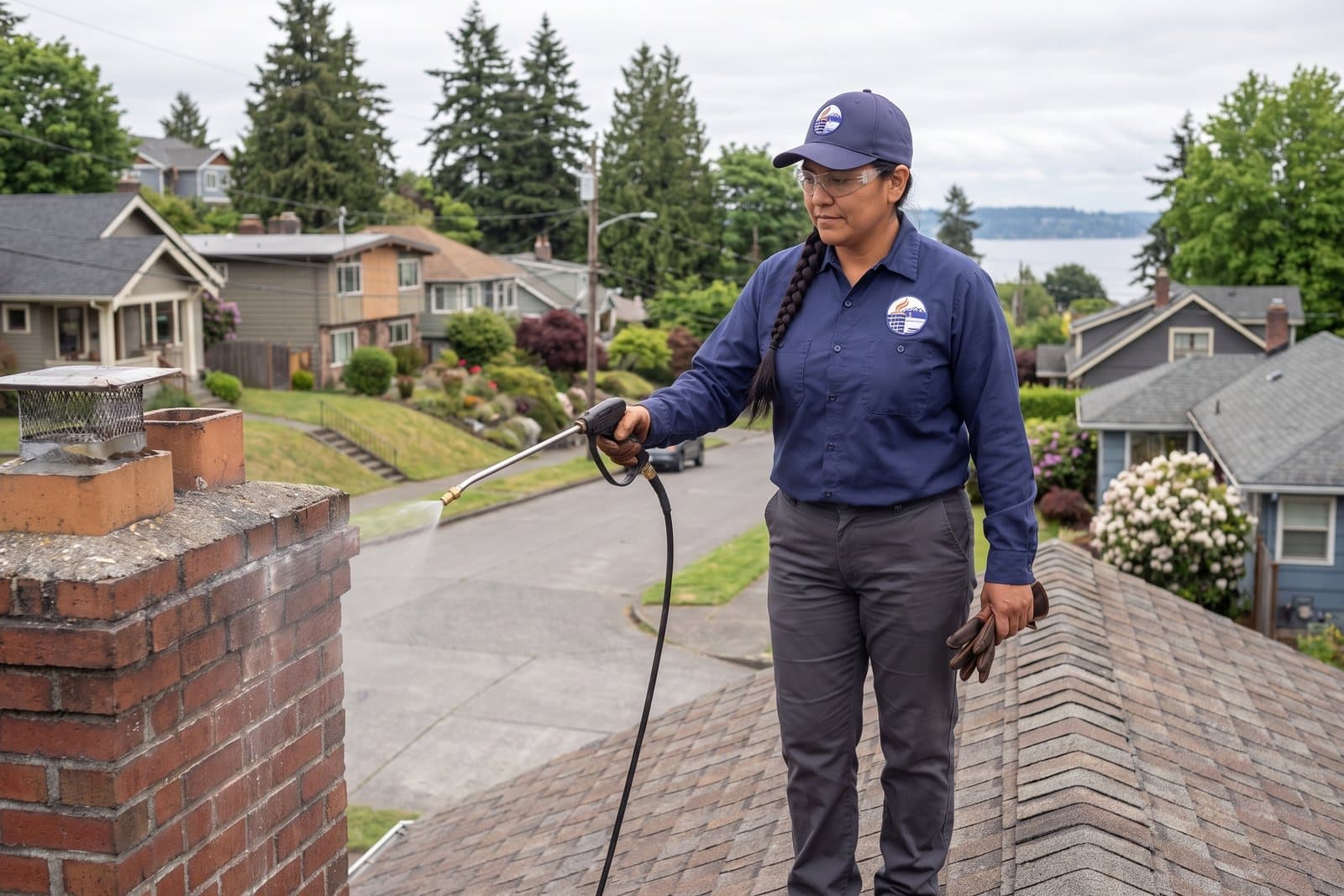
A check of joints, crown and flashing first; defects are repaired before any treatment
Learn more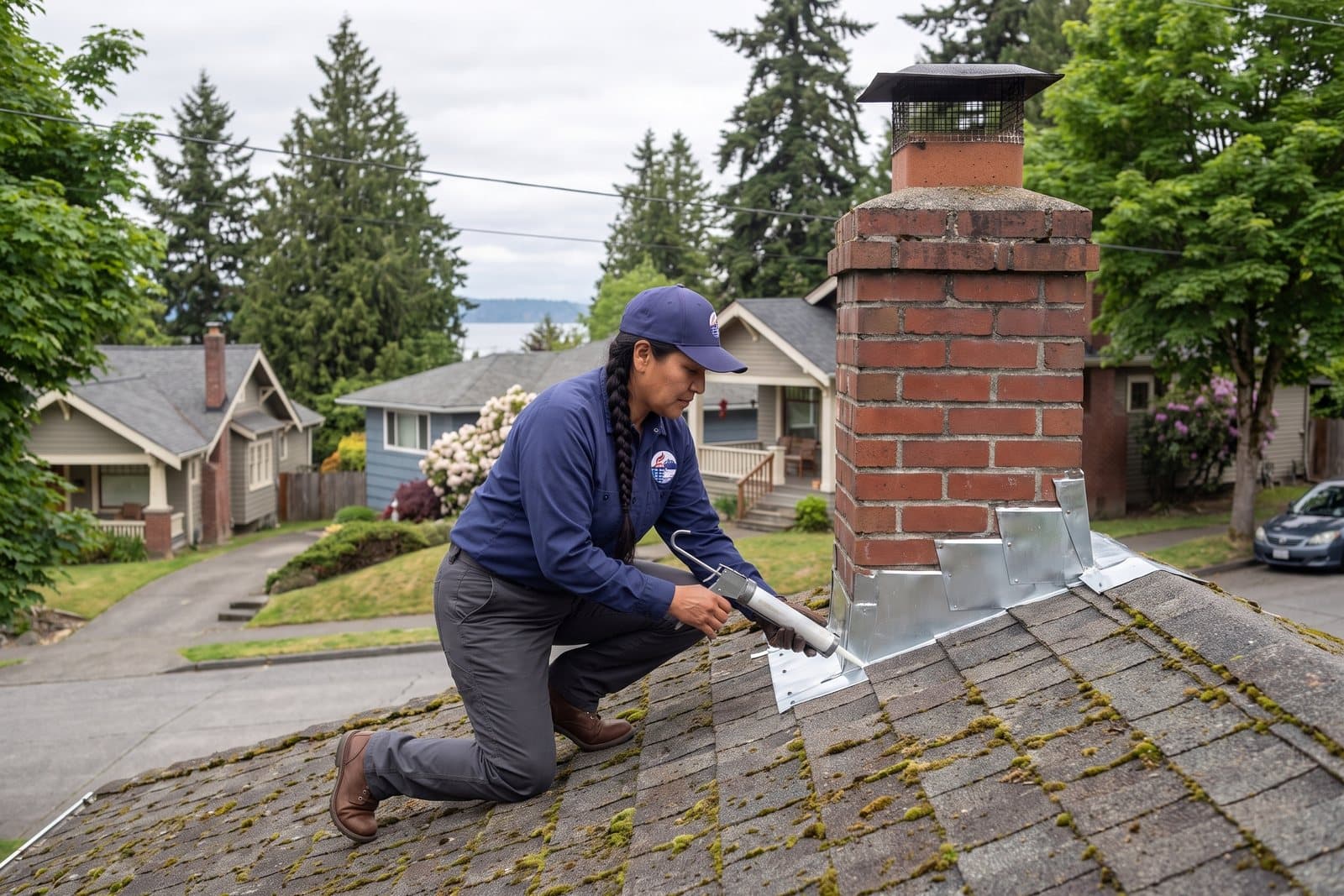
Leak tracing from the attic or the ceiling stain up to the roof
Learn more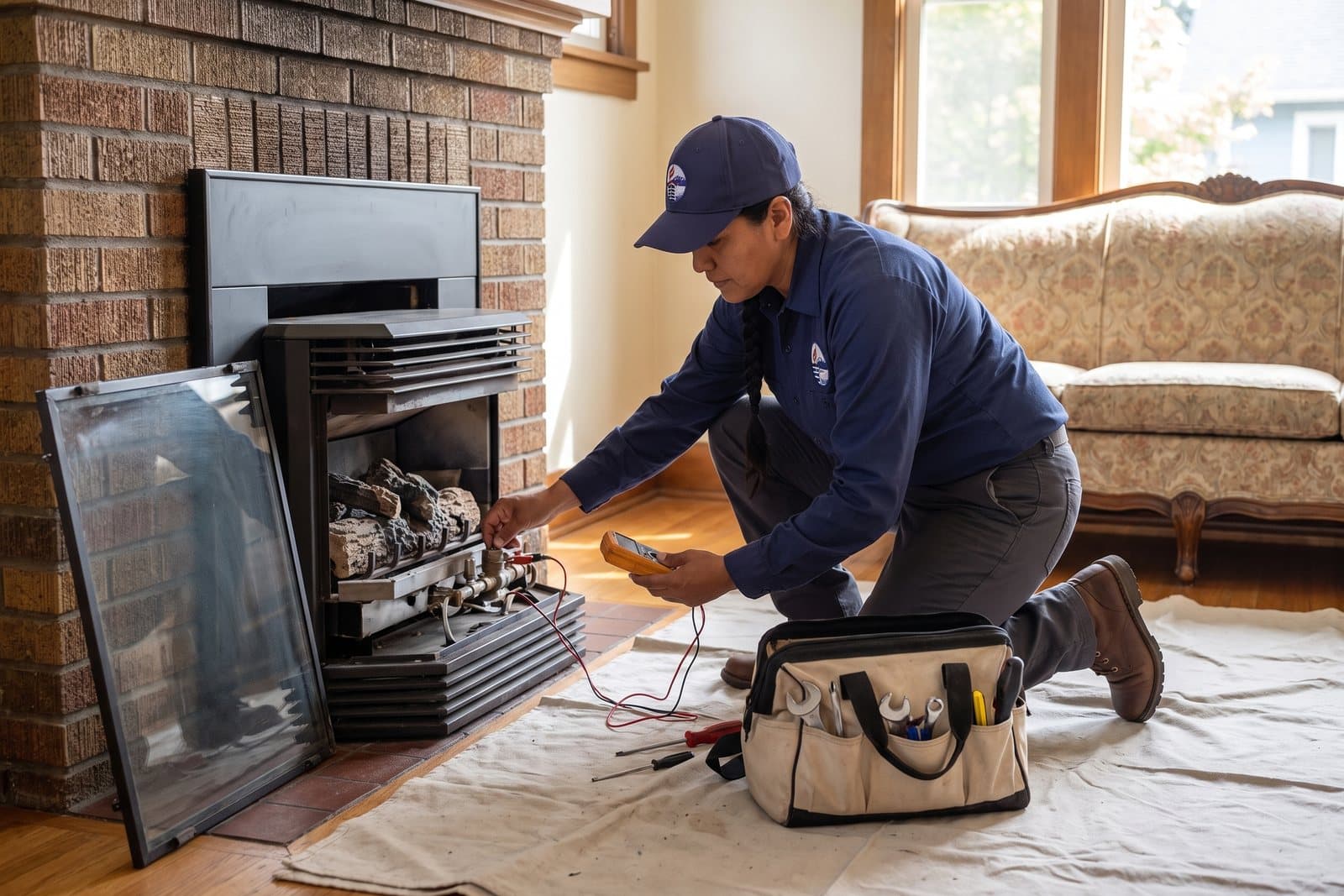
Burner, pilot assembly and firebox cleaned; logs or media put back in the layout the manual shows
Learn more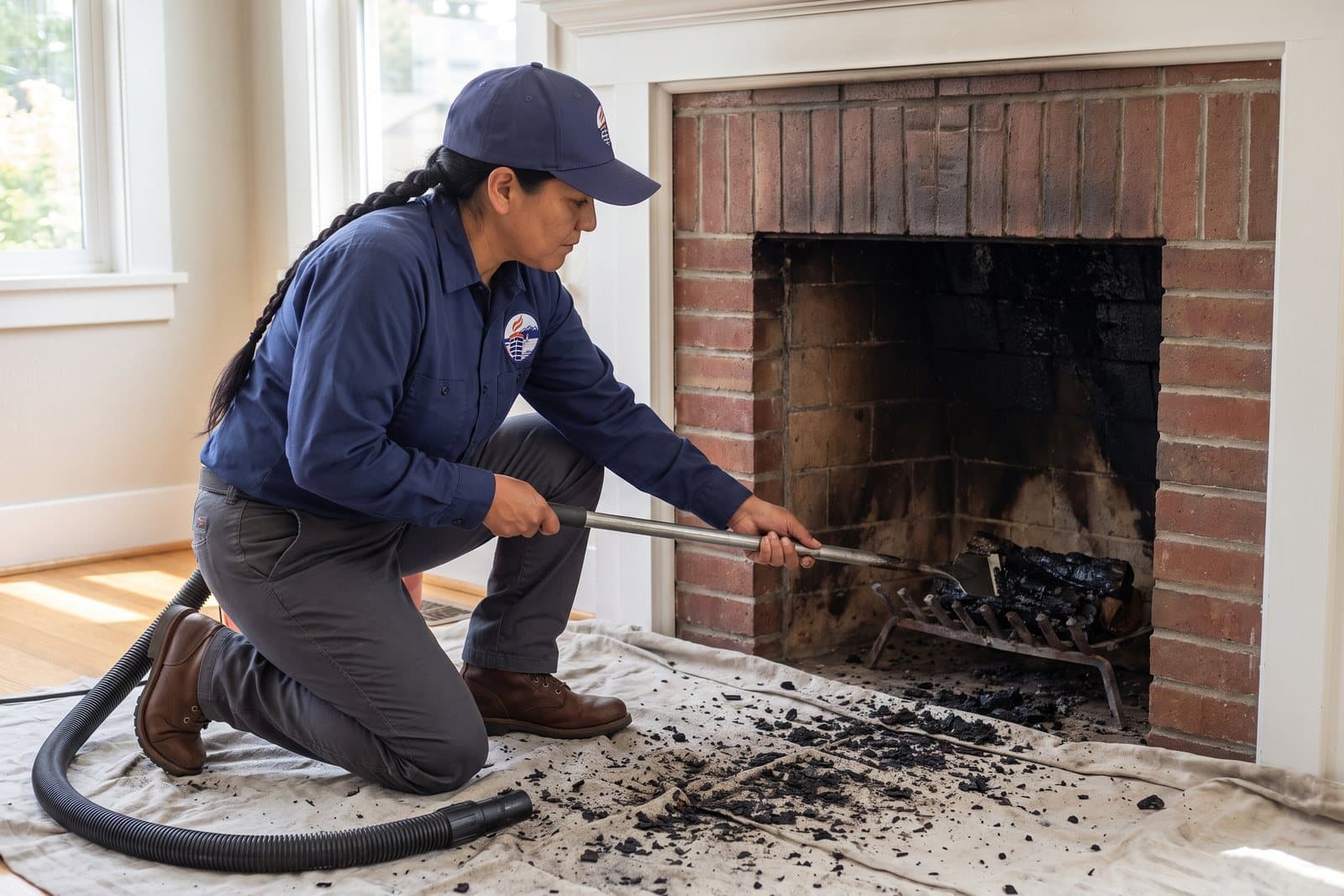
Camera survey to grade the deposit and check the liner beneath it
Learn more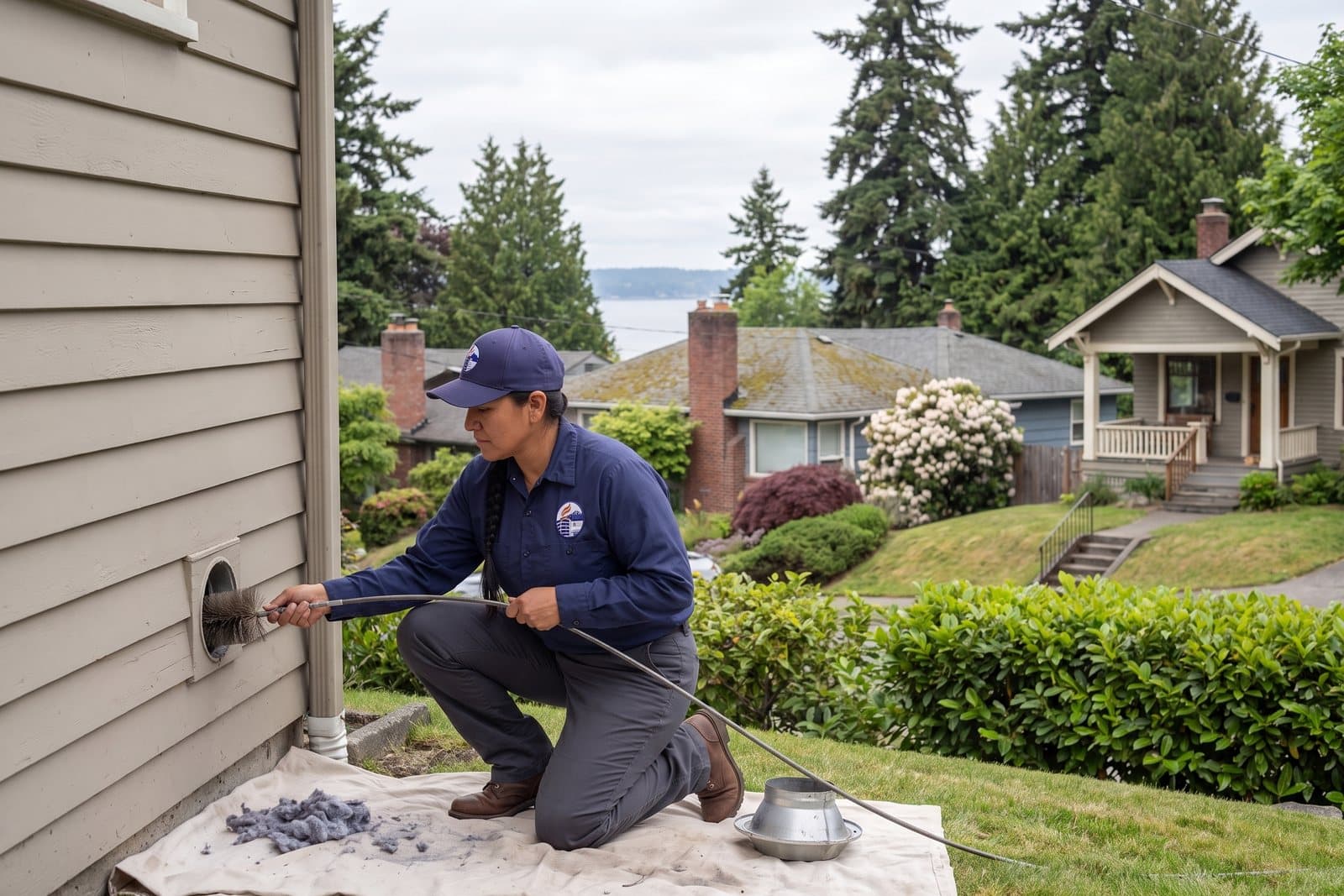
Dryer pulled out; the transition duct inspected, and replaced if it is plastic, thin foil or crushed
Learn more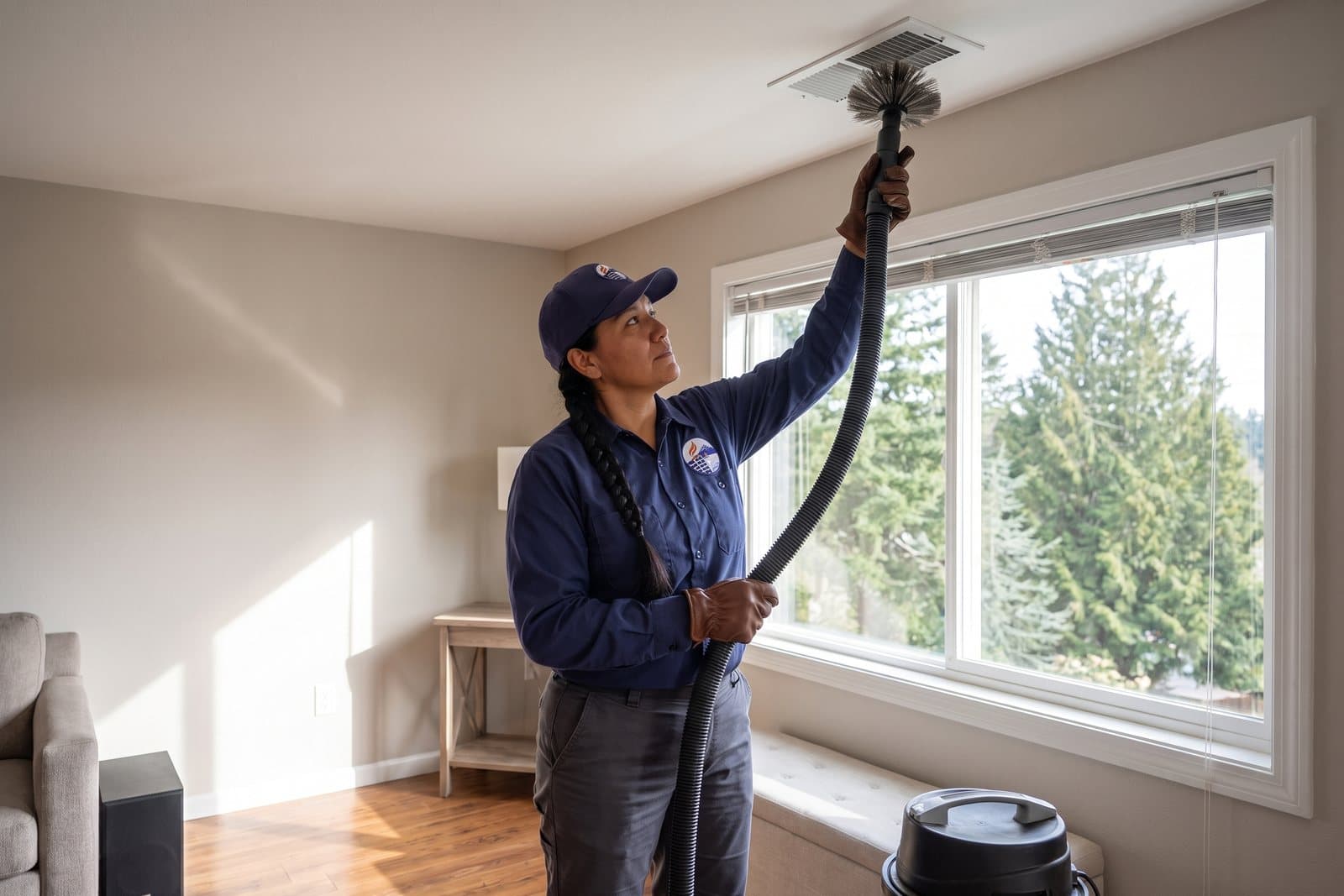
Inspection of the furnace, the plenum and a sample of ducts before any work, with photos
Learn moreRanges shown for orientation — the exact figure is written up on-site, after the inspection.
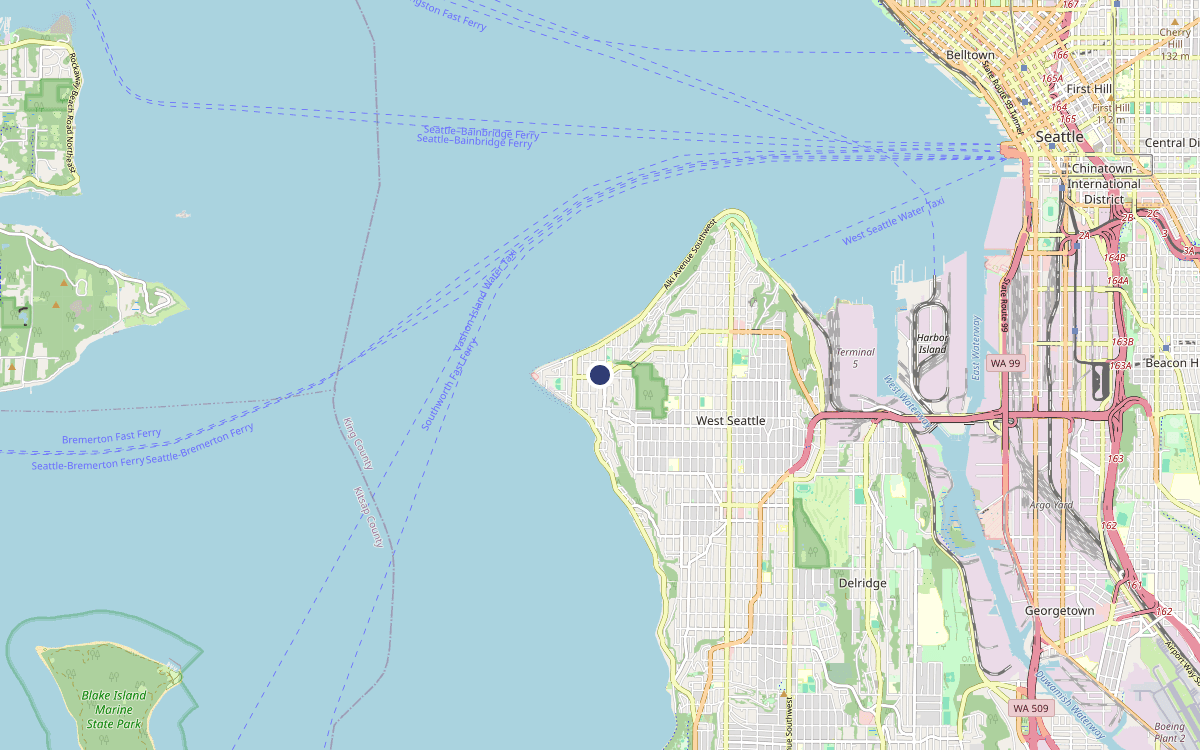
Service-area map — Alki, Seattle. Map data © OpenStreetMap contributors.
The Alki Elementary landmark nomination of 2022 draws the neighborhood's edges: Puget Sound to the west, Elliott Bay to the north and east, SW Edmunds Street to the south, and 51st and 55th Avenues SW on the east, with North Admiral and Genesee beyond. The land is low and flat along the water, and at a low tide, the nomination adds, the sand can stretch as far as 800 feet out from Alki Avenue SW. HistoryLink renders the point's Lushootseed name as 'prairie point'; the nomination describes a low prairie that the Duwamish probably kept open by burning.
The schooner Exact put a party of 10 adults and 12 children ashore at Alki Point on November 13, 1851, under Arthur Denny. Charles Terry platted the settlement on May 28, 1853 and gave it the short name it still carries. It did not hold: by HistoryLink's account the sawmill closed in 1854 and the post office in 1855. Wikipedia's West Seattle article explains why, blaming the wind and tides that batter the peninsula's open west flank, and most of the party crossed Elliott Bay to start again.
Farming families stayed on. Doc Maynard sold his Alki claim in 1868 to two Norwegian settlers, Knud Olson and Hans Martin Hanson, whose families remained for generations; part of their land later held the lighthouse and part the school and playfield.
Around 1900 the beach became a place to spend the summer. A city study of commercial districts, done in 2002, calls Alki a thriving resort by then, its exposed site better for recreation than for settlement, with dozens of summer cottages along the beach. The Southwest Seattle Historical Society's walking tour dates the Stockade Hotel, built of logs set on end, to 1901. Luna Park opened at Duwamish Head on pilings over the water on June 27, 1907, burned in 1931, and was later filled in by the city.
One building from those years shows what an early Alki hearth could look like. Fir Lodge, later the Alki Homestead, went up in 1903 and 1904 from local Douglas fir logs; the society's tour describes an open-hearth fireplace of logs and cobblestone in its living room, river rock in its fireplaces and a brick fireplace in the dining room. It ran as a restaurant from 1950, took fire damage to its roof and windows in 2009, and passed in 2015 to an owner focused on preservation. Its former carriage house is the Log House Museum on 61st Avenue SW.
Alki said no to joining West Seattle in 1906, then was annexed to it on May 25, 1907, weeks before West Seattle itself voted to become part of Seattle. Seattle Parks dates the first section of Alki Beach Park to 1910. A ten-room brick school opened in March 1913; the nomination describes it as unreinforced masonry, with a steep hipped roof, tall ventilators and a chimney.
Two building booms show up around the school, by the nomination's reading: one in the 1920s and another in the 1950s, which produced most of the nearby houses and duplexes, before later infill added townhouses and apartments on lots of a few thousand square feet. Wikipedia's Alki Point article characterizes the present neighborhood as a beach town of mid-century bungalows alongside mid-rise apartment blocks and businesses on the waterfront. Neither source counts chimneys, and no source we read does. So we presume nothing about yours. It might be masonry, a factory-built pipe boxed into the wall, or the vent of a gas unit, and the camera settles it.
Alki's homes stand on a narrow shelf, and the ground behind many of them is among the least settled in Seattle. Since 1916 the Seattle Landslide Study has logged 106 slides in the strip it calls the Alki Avenue area; roughly one in three came off the upper bluff west of Sunset Avenue SW, and around 33 fell during the storm winter of 1996 and 1997. The study records more debris flows per acre here than anywhere else in the city, describes loose slope material as much as 50 to 60 feet thick on a midslope bench, and singles out houses at the bottom of the bluff as vulnerable simply for standing so near it. South of the point, around Boyd Place and Chilberg Place, the city built soldier-pile walls after a 1997 movement broke a water main.
Along the water the risk runs the other way. The same study found no documented high-bluff peel-off slides in West Seattle, because Alki Avenue SW and the other shoreline roads shield the foot of the slopes from waves, and Seattle Parks notes that a seawall protects part of Alki Beach Park.
For a homeowner below that bluff, the chimney works as an early warning. Brick and mortar cannot flex the way a wood frame does, so slow ground movement tends to appear as a stack leaning off true, a widening gap against the siding, or diagonal cracks stepping through the joints. When we visit an Alki house we look for all three and photograph them with the date. Explaining why the ground moved is work for a geotechnical engineer, and we refer it there.
When West Seattle's chimneys were counted after the earthquake of April 29, 1965, Alki was not in the counted blocks. HistoryLink's essay on that morning still has a line for it: nearly every chimney at Alki Beach was reported down. The same quake seriously damaged the 1913 brick section of Alki School, which was taken down that August, and a 60-foot stack fell onto the school's boiler room.
Geology helps explain why this end of the peninsula shakes the way it does. According to the Seattle Landslide Study, the peninsula sits on the south side of the Seattle Fault, so its bedrock is shallow, and that rock surfaces here and there on the shore by Alki Point and to the east of the light station. After the 2001 Nisqually quake, a block-by-block survey by Booth, Wells and Givler found Seattle's chimney damage tightly clustered, and West Seattle stood out most.
What that means for a house chimney is simple. Unreinforced brick that has been through 1949, 1965 and 2001 may carry cracks that no one has looked for, often inside the flue where only a camera can see them. We recommend an inspection after any earthquake you felt indoors, and before relighting a fireplace whose history is unknown.
Alki is one of the few places in Seattle where people burn wood outdoors on purpose. In 2026 Seattle Parks ran the beach fire season from May 22 to September 7: fires only in the pits provided, first come first served, clean bare dry cordwood and nothing else, put out with water by 10 p.m.
The pits answer to the same authority as your fireplace. When the regional Clean Air Agency calls an air quality ban, wood and charcoal fires outdoors are off along with the ones indoors, which is why the beach pits close. Inside the house, the first stage puts out wood-burning fireplaces together with uncertified stoves and inserts; at the next level the ban also sweeps in certified wood appliances and pellet stoves as well. A household may keep burning only with an exemption approved in advance, and the agency's test for one is strict: if another heat source can hold the living area at 70 degrees, three feet above the floor, the exemption does not apply. Even exempt homes may not produce visible smoke while a ban is on.
Bans arrive mostly in the colder months, when still air traps smoke near the ground, so check the agency's status before the first fire of a cold, calm evening.
The grid we quote from for Alki homes — the $99 inspection comes first, the written quote before any work.
| Service | Price in Alki | What that covers |
|---|---|---|
| Chimney Sweep | $189–$449 | Full flue swept, Level 1 inspection included |
| Chimney Inspection | $99 plus tax | Level 1 visual; Level 2 adds a full camera scan |
| Chimney Relining | From $1,900 | Full-length stainless liner, sized to the appliance |
| Chimney Repair | From $425 | Masonry repair — brick and mortar, scoped after diagnosis |
| Chimney Cap Installation | $235–$850 | Stainless cap fitted; multi-flue and custom at the top |
| Masonry Repair (Crown / Repointing) | From $475 | Crown work, repointing and tuckpointing by surface area |
| Chimney Waterproofing | $320–$795 | Breathable sealer — reapplied every 3–5 years in this climate |
| Chimney Flashing Repair | $375–$1,500 | Reseal at the low end, full flashing replacement at the high |
| Gas Fireplace Service | $189–$475 | Annual service and tune-up; repairs quoted after diagnosis |
| Creosote Removal | From $245 | Priced by creosote stage — glazed stage 3 is the heavy end |
| Dryer Vent Cleaning | $105–$295 | Full run cleaned; roof or upper-floor terminations at the top |
| Air Duct Cleaning | From $535 | Whole HVAC system — trunks, branches and every register |
Ranges are what these jobs are quoted at in Alki. The exact figure is set on site after a $99 inspection (credited toward the job if you go ahead), and you approve it before any work starts.
Before and after
Illustrations of what each repair changes on a typical chimney — not photos of a specific job.
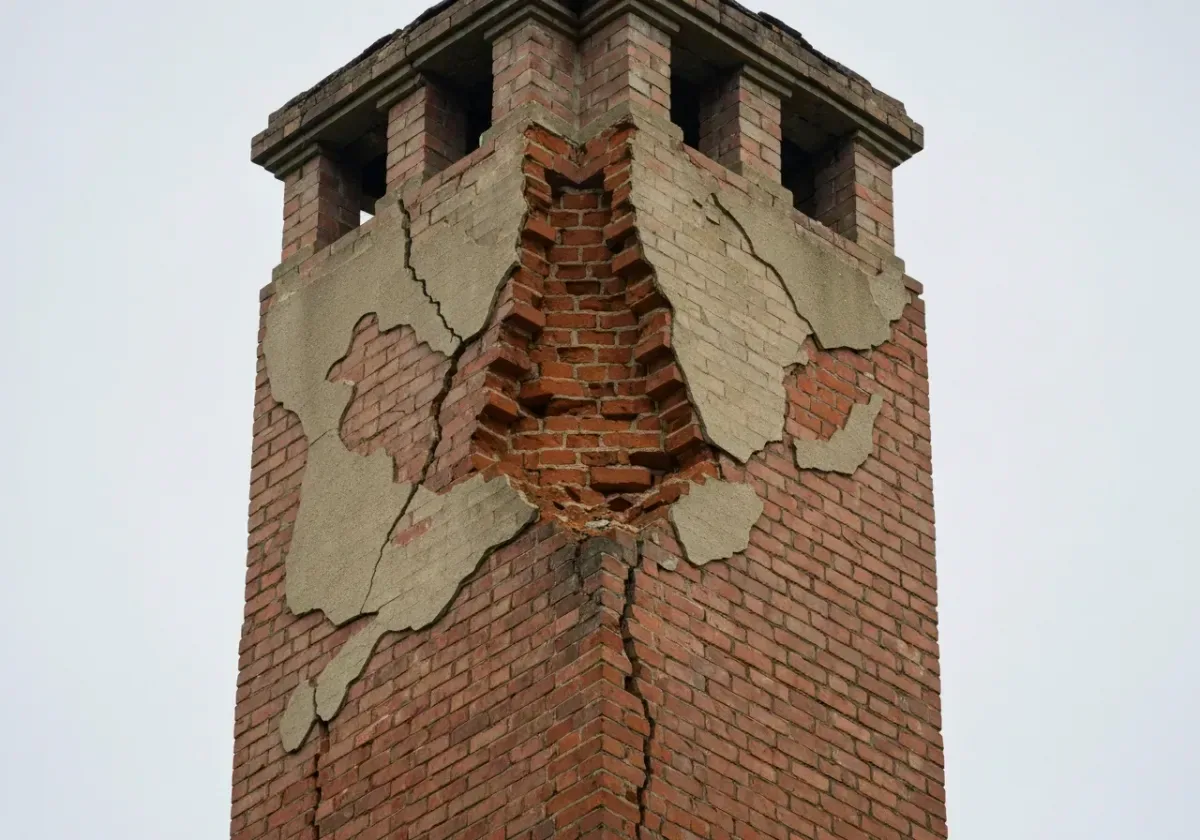 Before
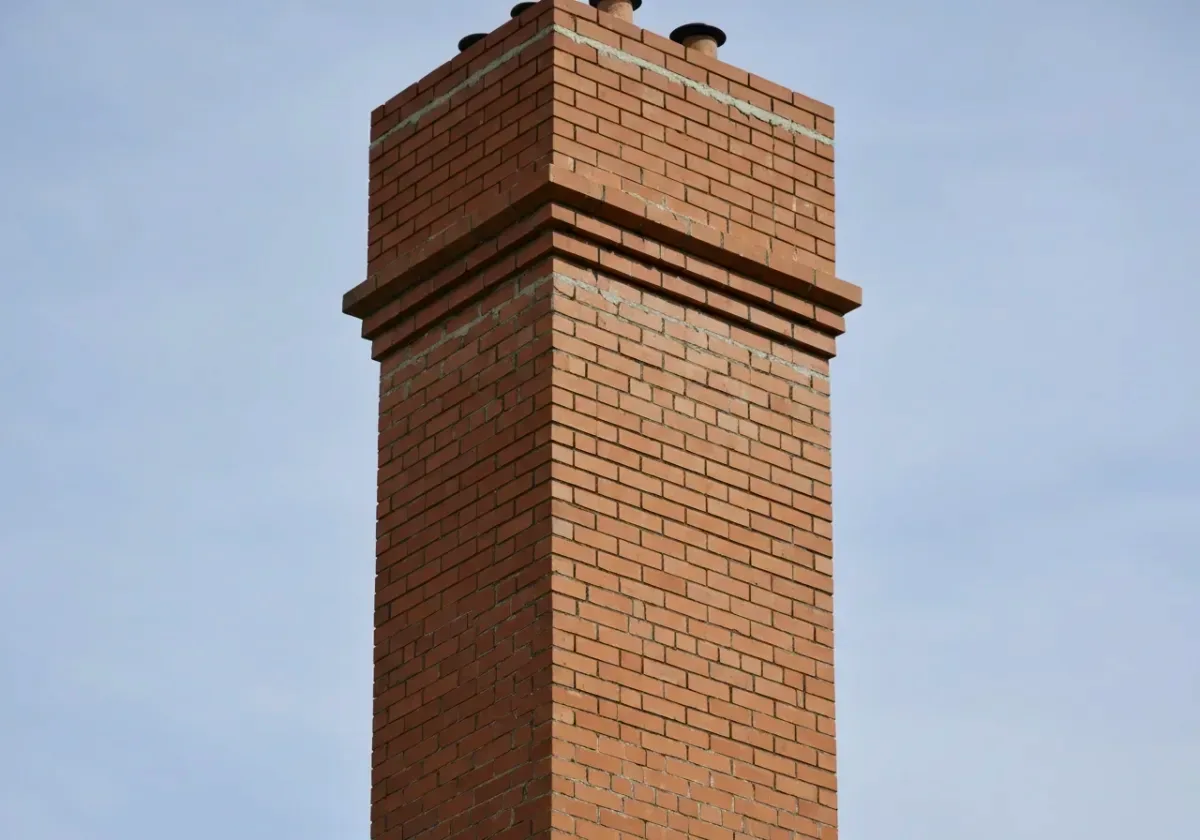 After
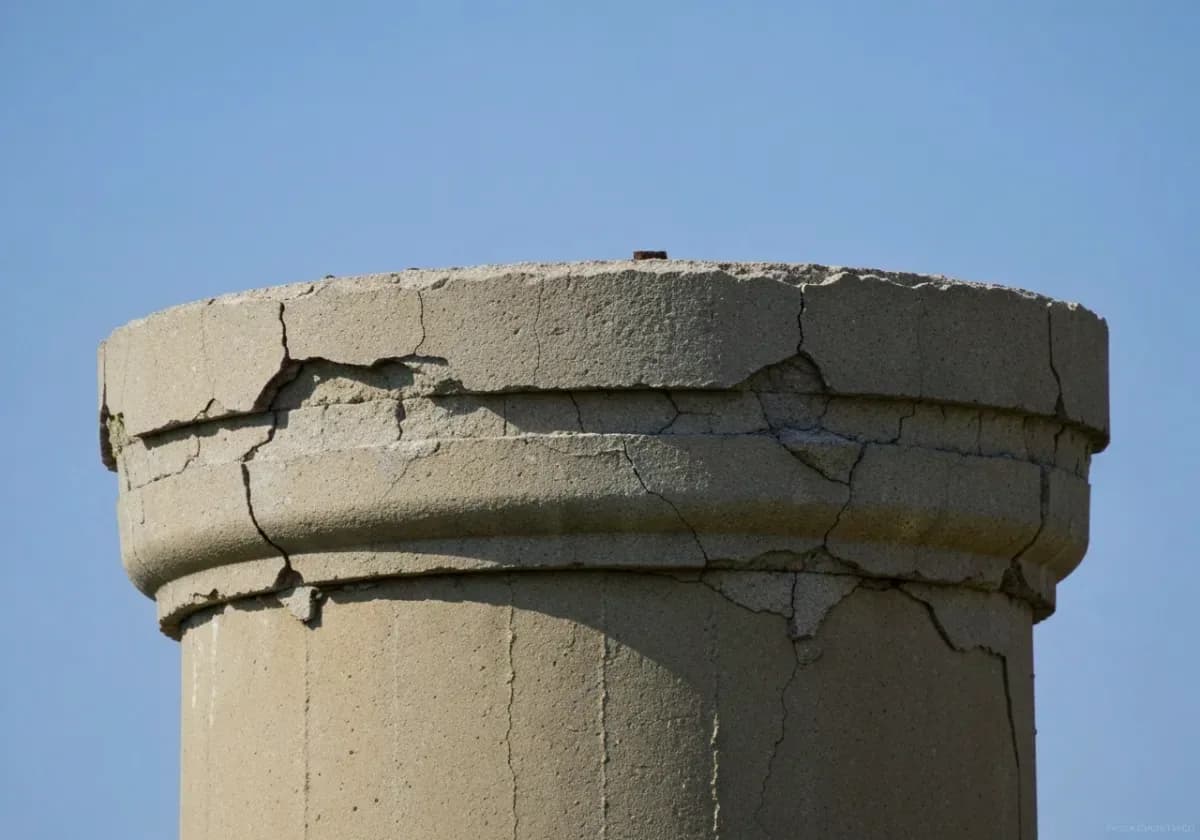 Before
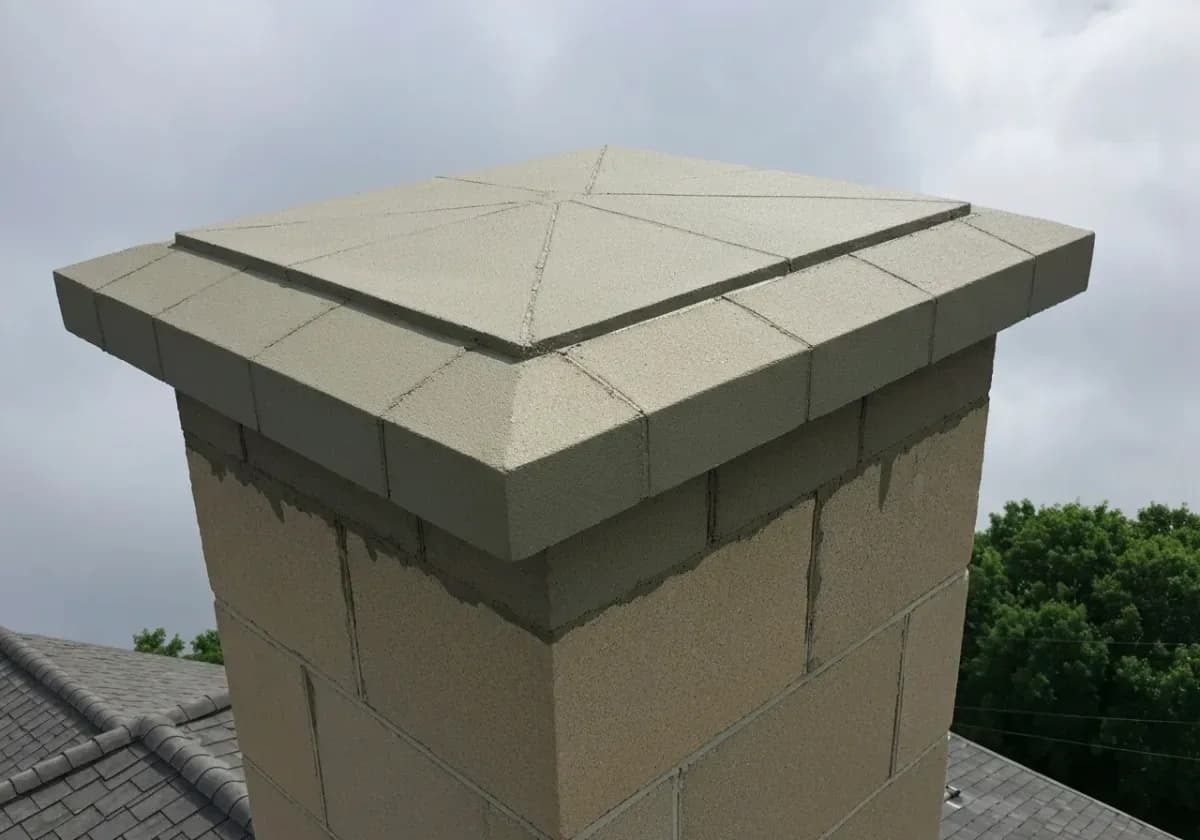 After
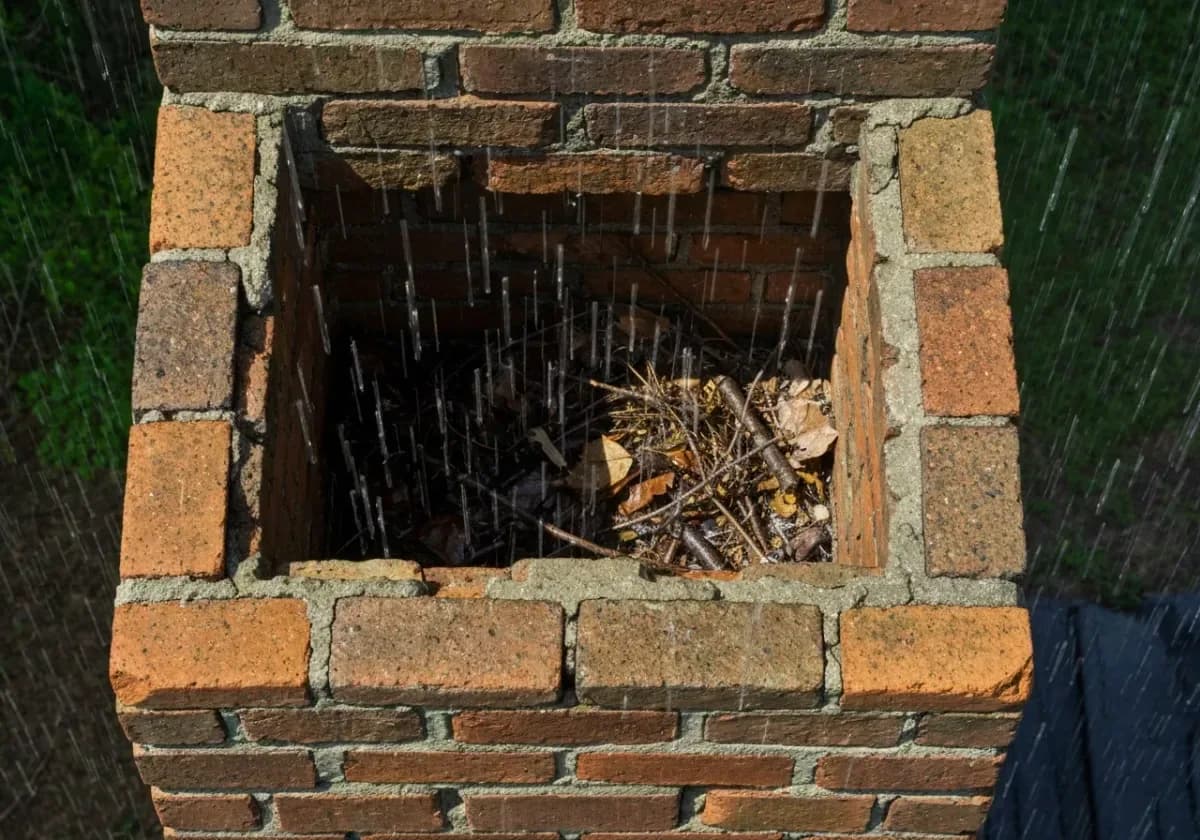 Before
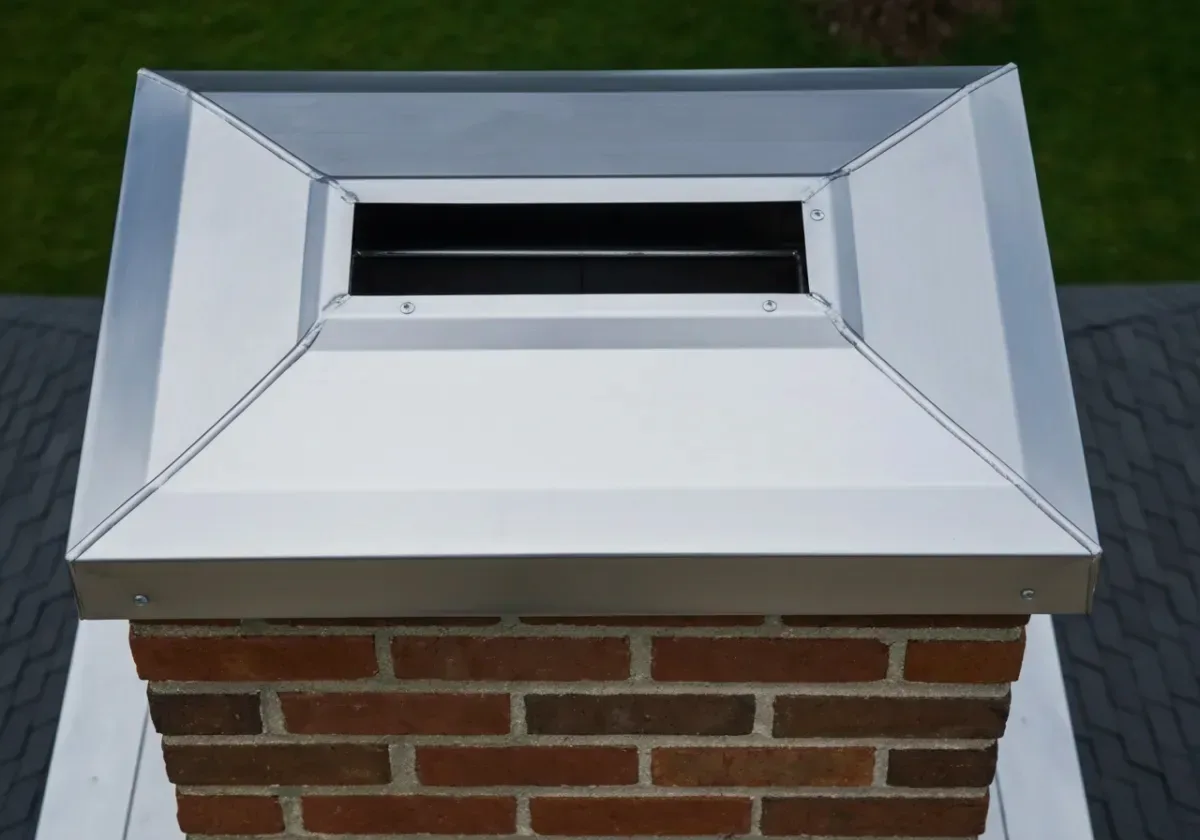 After
Four steps, each one on paper — so you always know what happens next.
Choose a genuine opening on the crew's calendar. Confirmation is immediate.
Liner, crown, cap, flashing and masonry examined in order — each finding photographed.
One document, plain numbers, covering only the work your chimney genuinely needs.
The repair is completed, then handed over with before-and-after photos of every item.
Each chimney costs $99 plus tax to check, and the visit leaves you photos and camera footage of the flue. Should you sign our quote for the work, it is reduced by $99; should you pass on it, the inspection fee stays paid and nothing more is owed.
No. That is a question for a geotechnical engineer and the city. What we can do is note a lean, a gap where the chimney meets the wall, or cracking that suggests movement, and photograph it so a specialist has something to start from.
They get a slower look. River rock and cobblestone fireplaces have more mortar joints and odd-shaped openings, so we spend more time on the firebox and smoke chamber before saying anything about the flue.
Not during an air quality ban: visible smoke is prohibited for everyone while one lasts. Outside a ban, you can burn, provided you use dry seasoned wood or manufactured logs.
Choose a genuine opening on the crew's calendar. We inspect, quote in writing, and hand over a photo record of every repair.