Gatewood, King County
Gatewood sits on top of the hill that rises between California Avenue SW and 35th Avenue SW, and few parts of West Seattle have kept so much of their early housing. A developer's streetcar line opened the area in 1907, a brick school followed in 1910, and the wartime project next door filled its classrooms again in the 1940s. Each of those chapters left chimneys behind. Below we lay out what published records show about the neighborhood's age, its ground and its earthquakes, and how that shapes the way we look at a chimney in Gatewood before we touch it.
Book an inspection
Book your $99 inspection
$99 plus tax, deducted when you approve the repair
Not sure where to start
Pick what you're seeing at your Gatewood home — we'll point you to the right fix.
What we do
The same crew, the same written quote — for Gatewood homes.
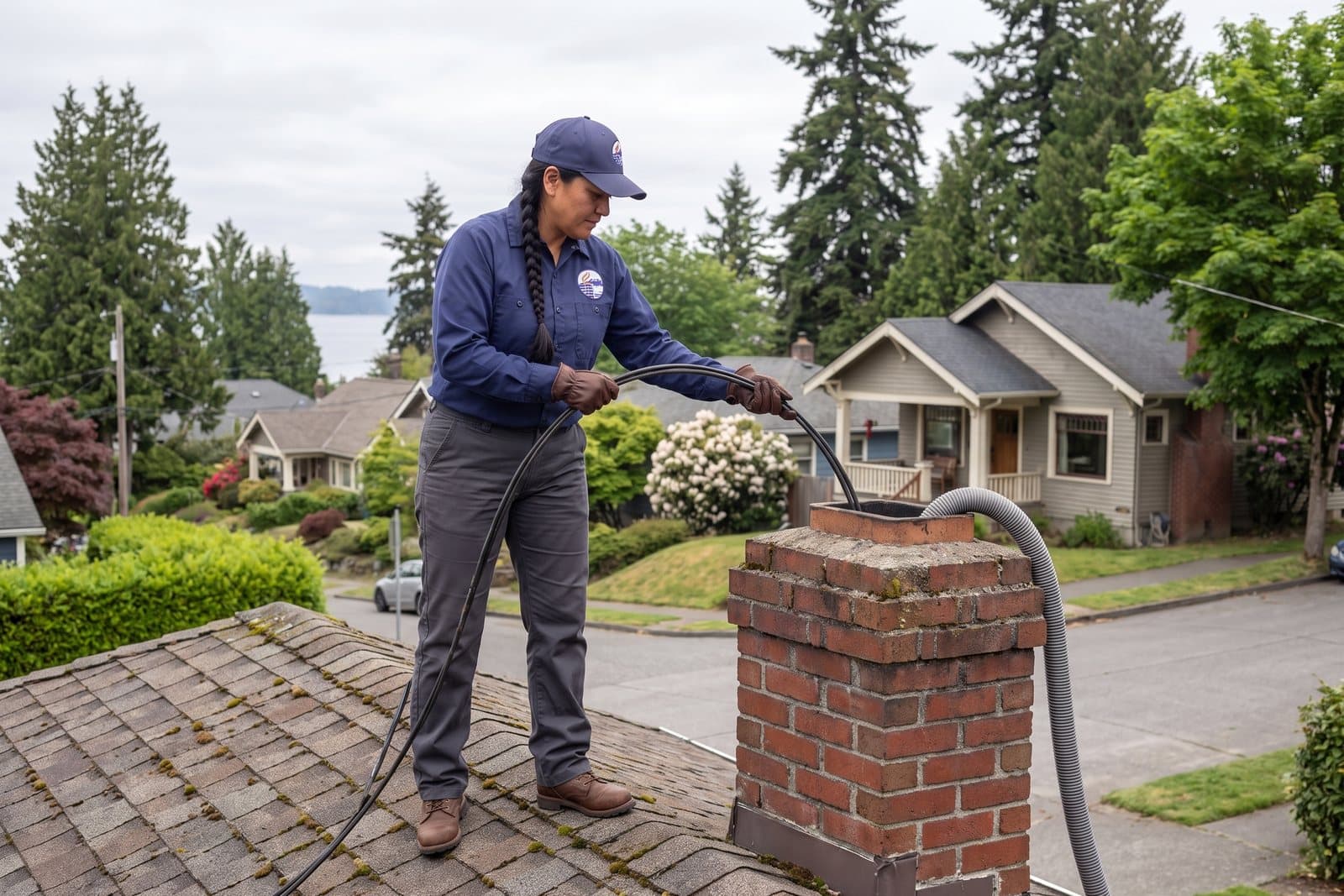
Full-height brushing of the flue with a head sized to its shape and material
Learn more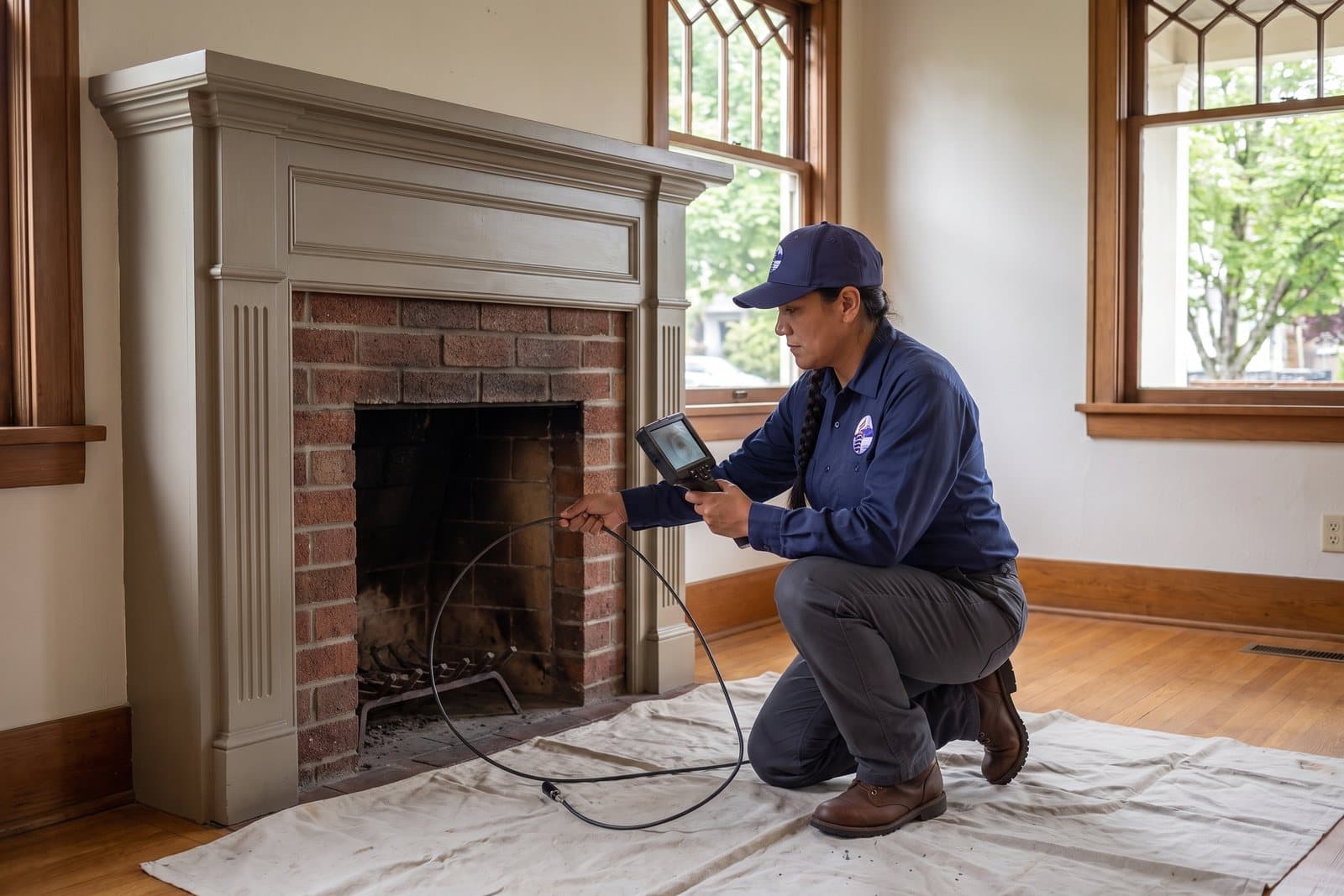
Level 1 examination of everything reachable, with a Level 2 camera pass when the reachable parts leave a question open
Learn more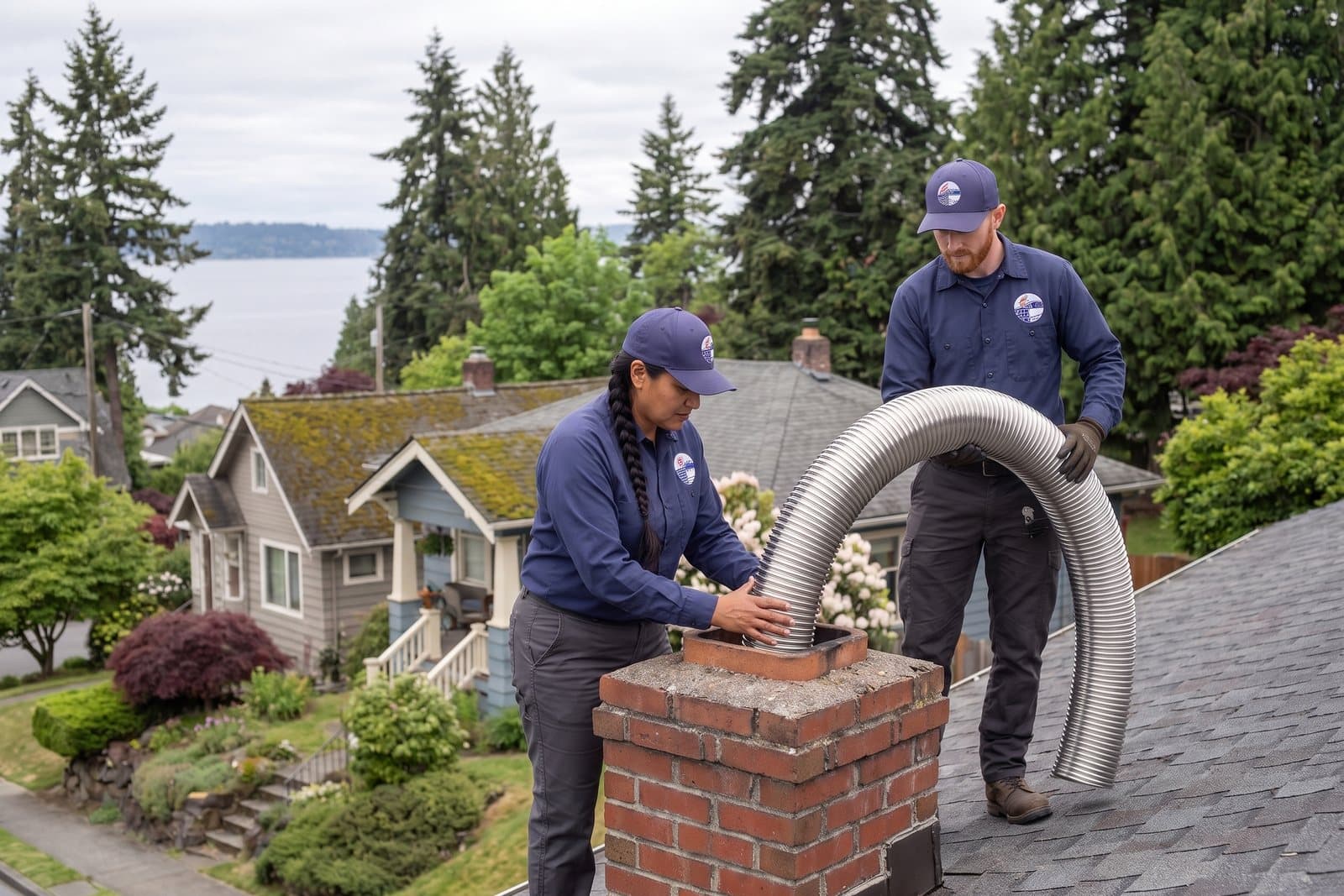
Camera survey and measurement of the existing flue before anything is ordered
Learn more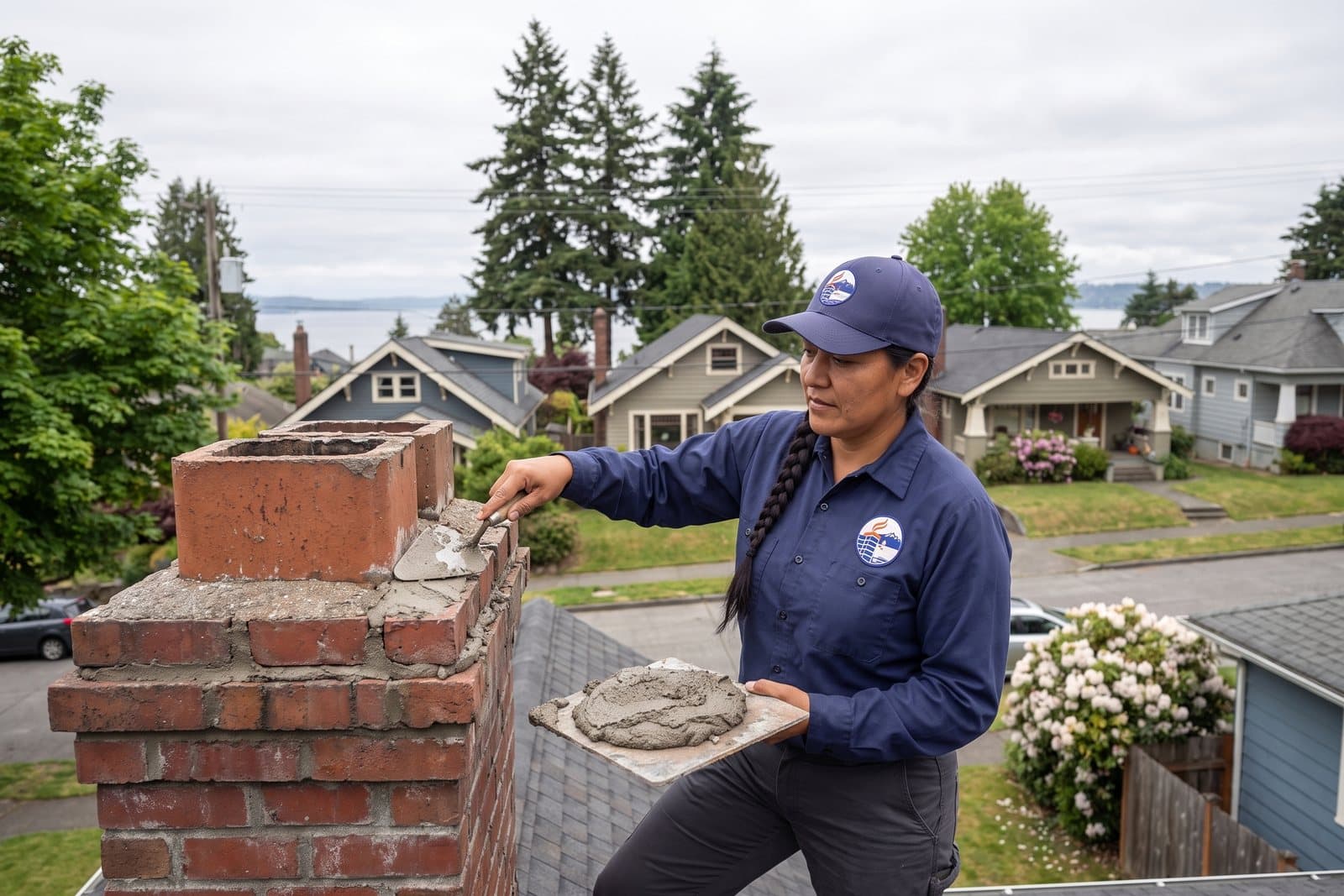
Assessment of the stack from roofline to crown, with a photo of each defect
Learn more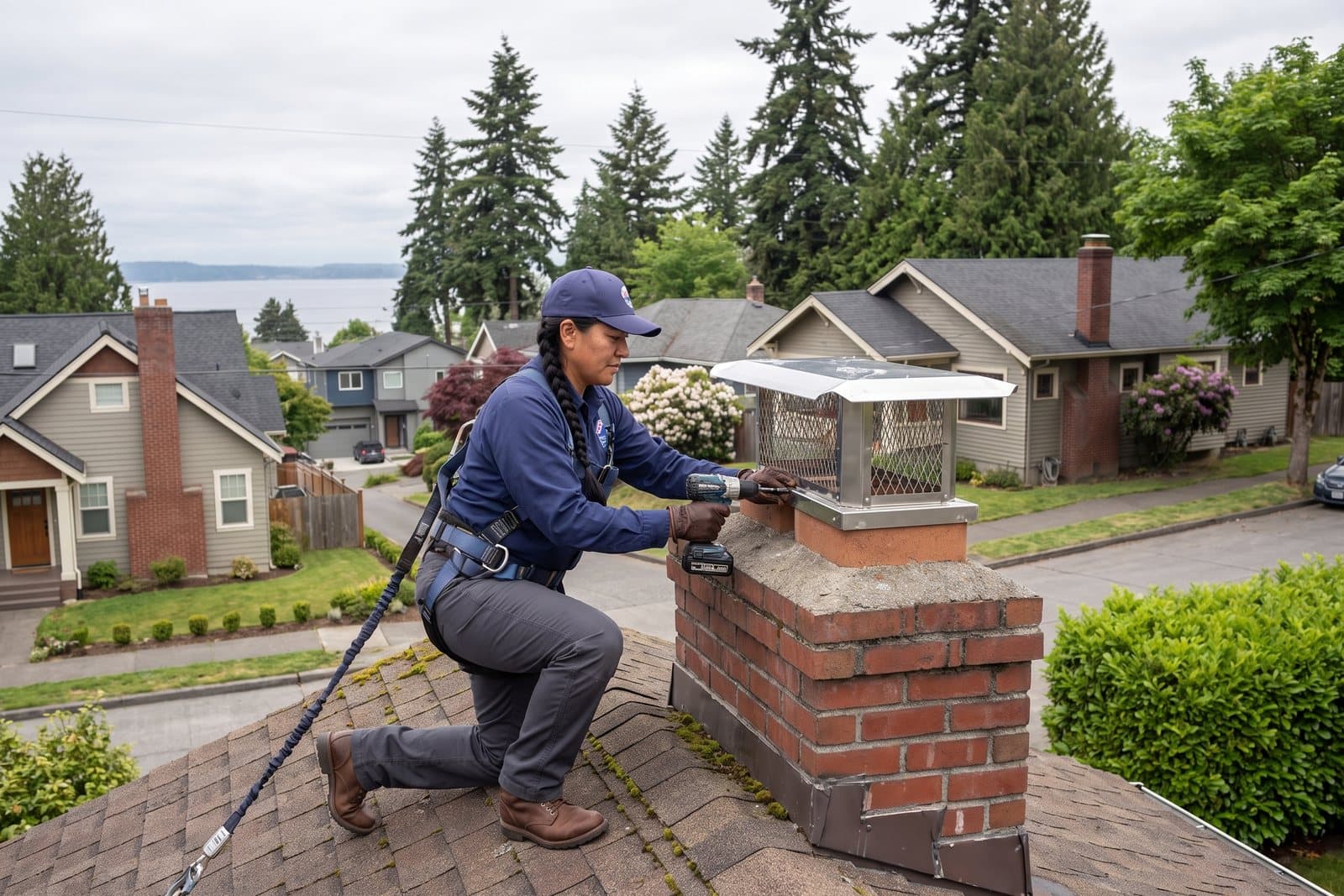
Measurement of each flue tile, or of the whole crown for a multi-flue cap
Learn more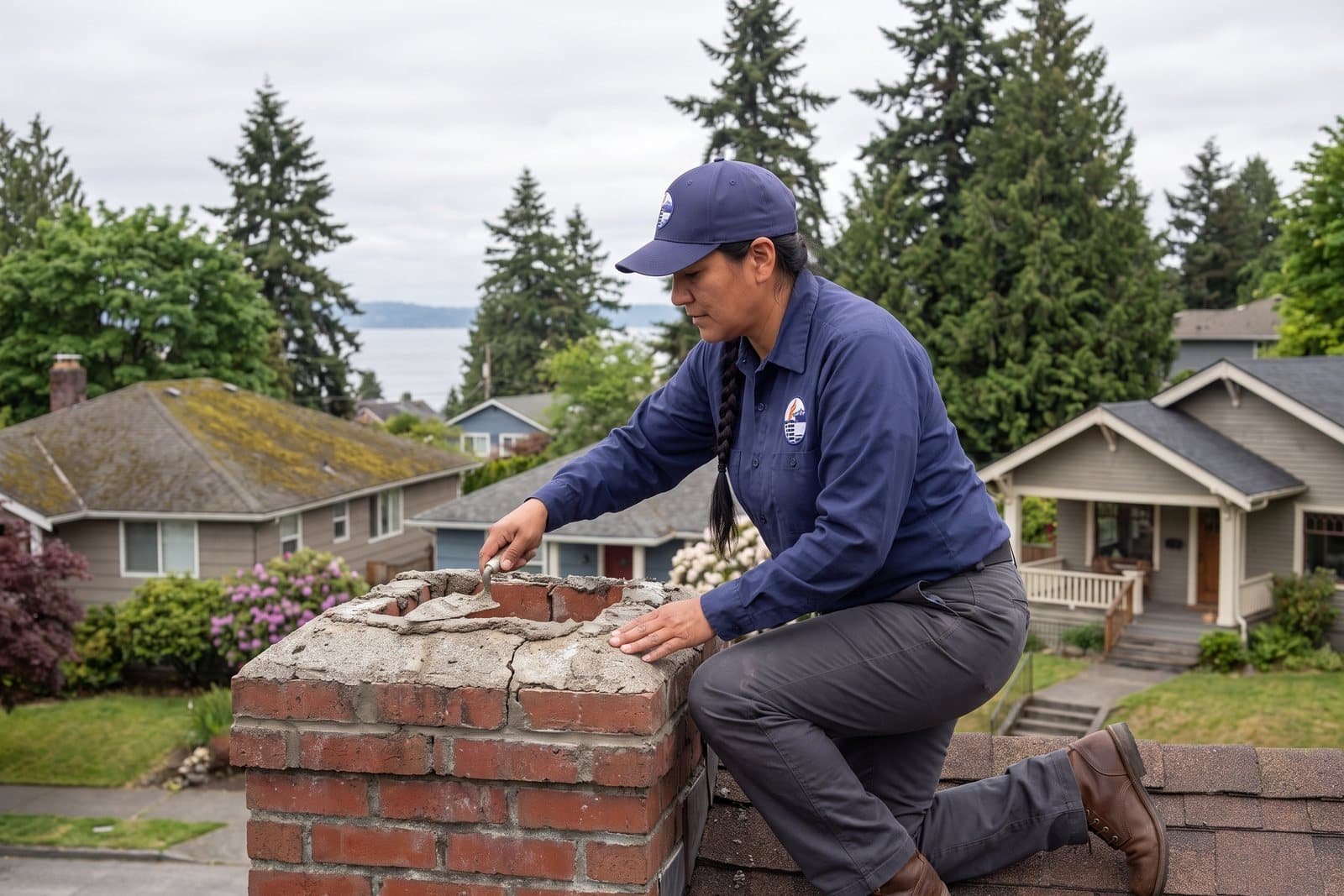
Joints cut back to firm mortar and repointed (tuckpointing) to match the existing profile
Learn more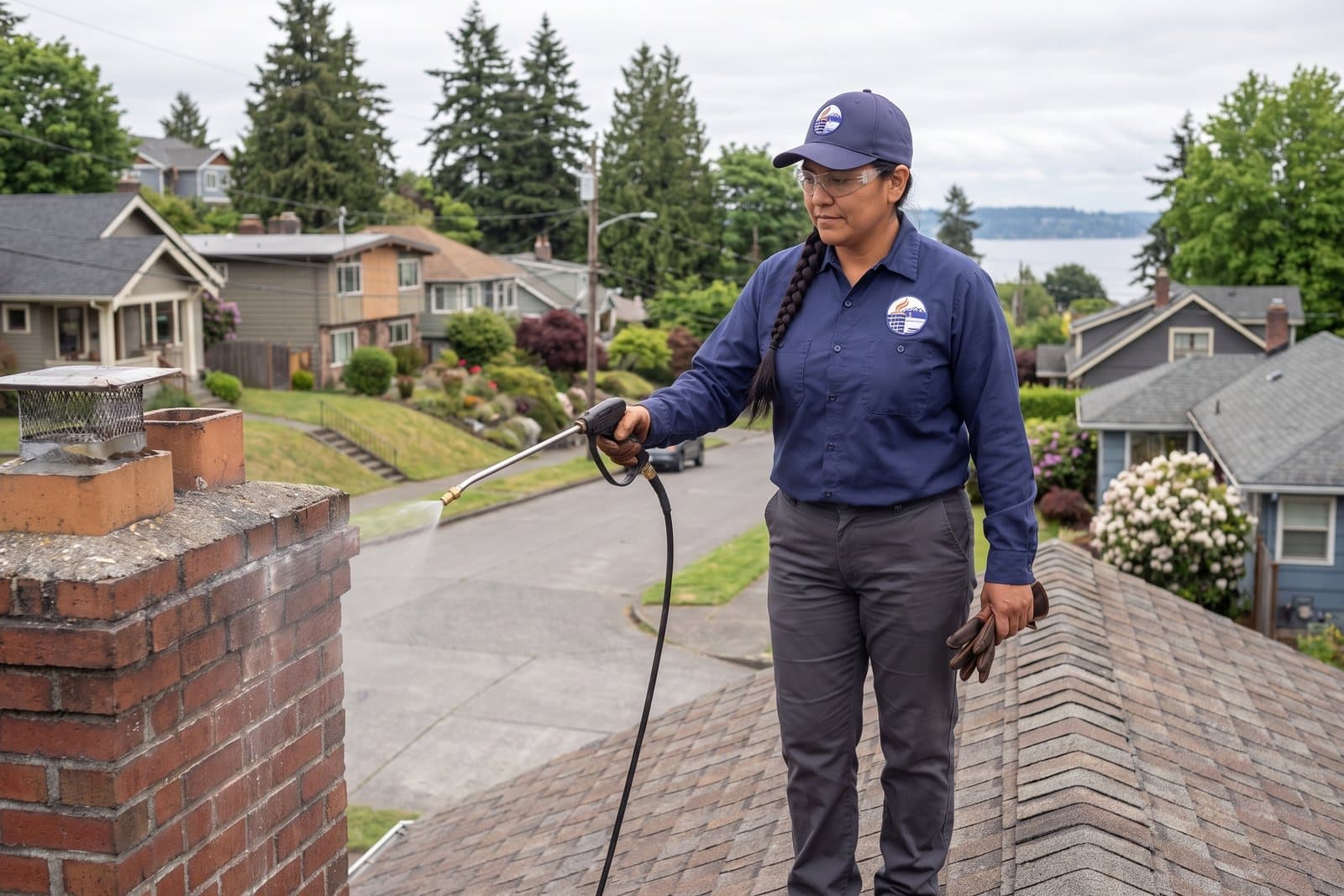
A check of joints, crown and flashing first; defects are repaired before any treatment
Learn more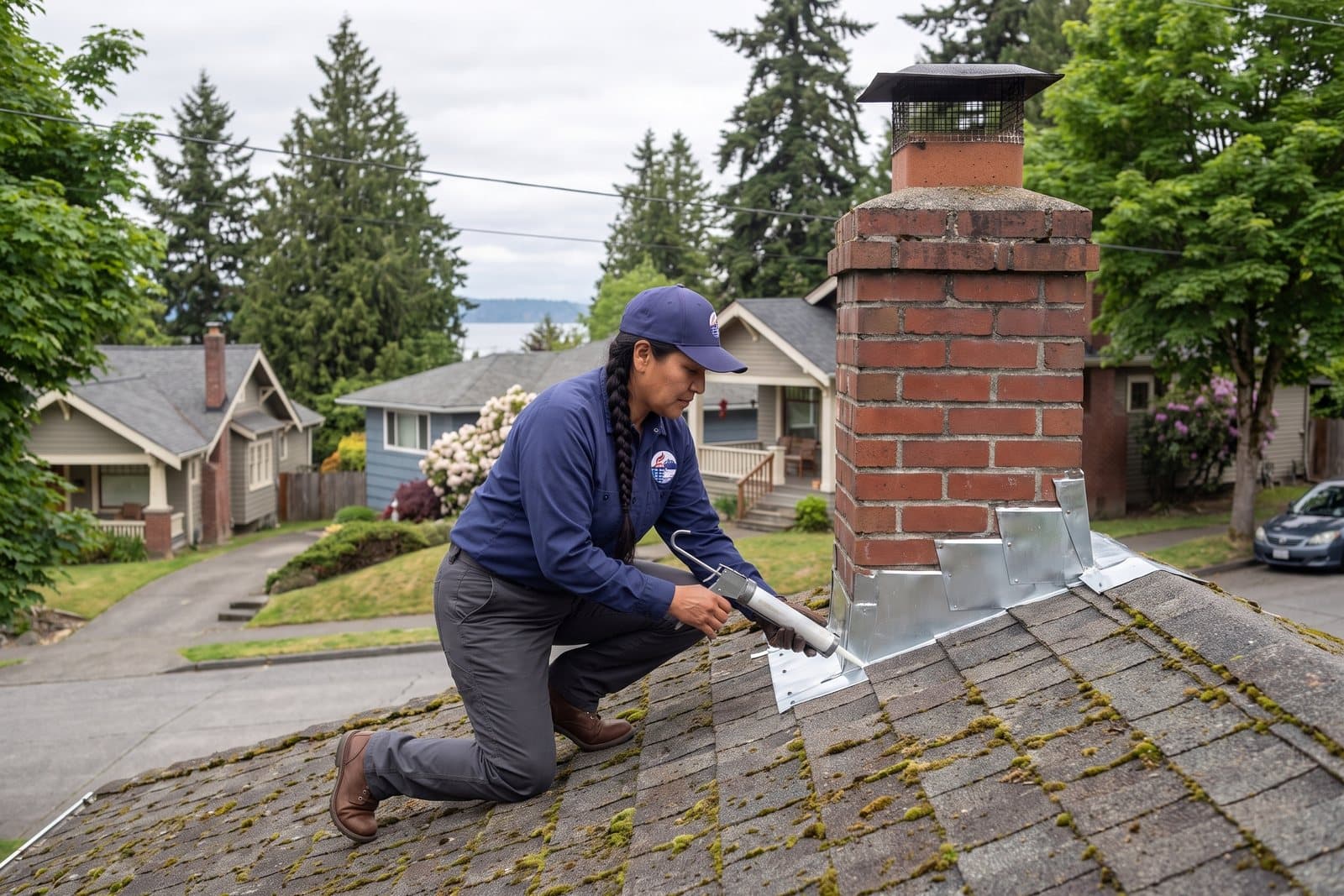
Leak tracing from the attic or the ceiling stain up to the roof
Learn more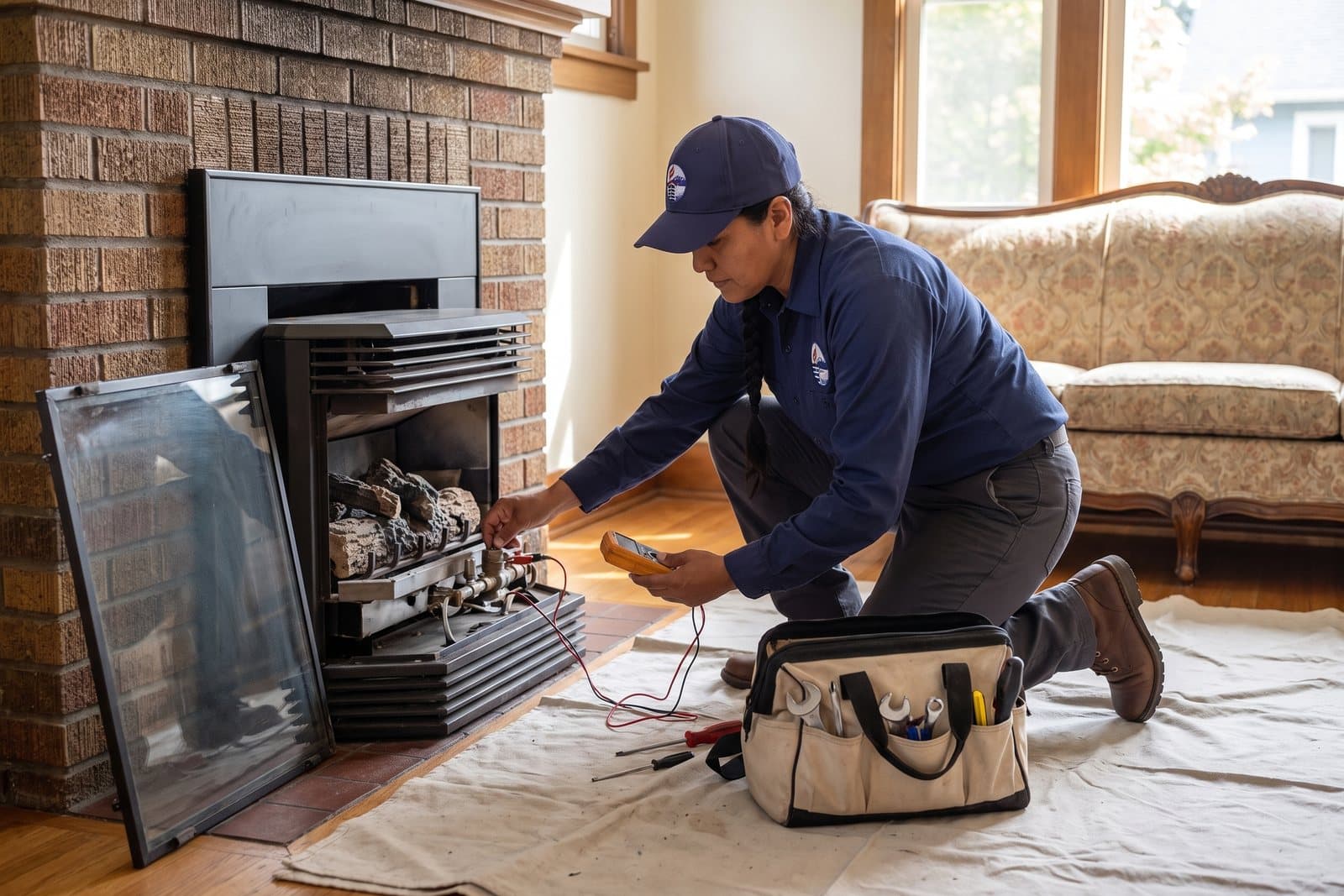
Burner, pilot assembly and firebox cleaned; logs or media put back in the layout the manual shows
Learn more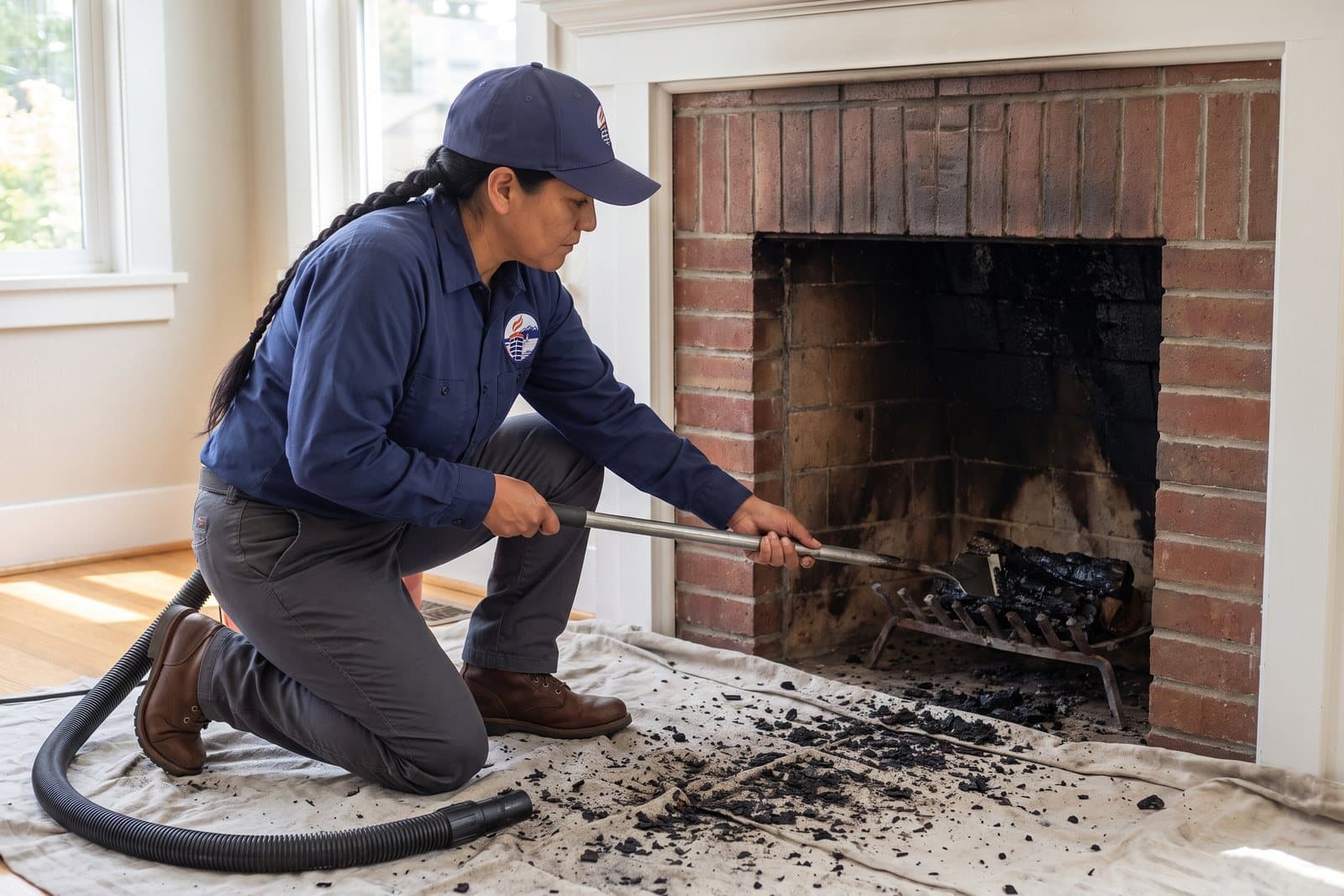
Camera survey to grade the deposit and check the liner beneath it
Learn more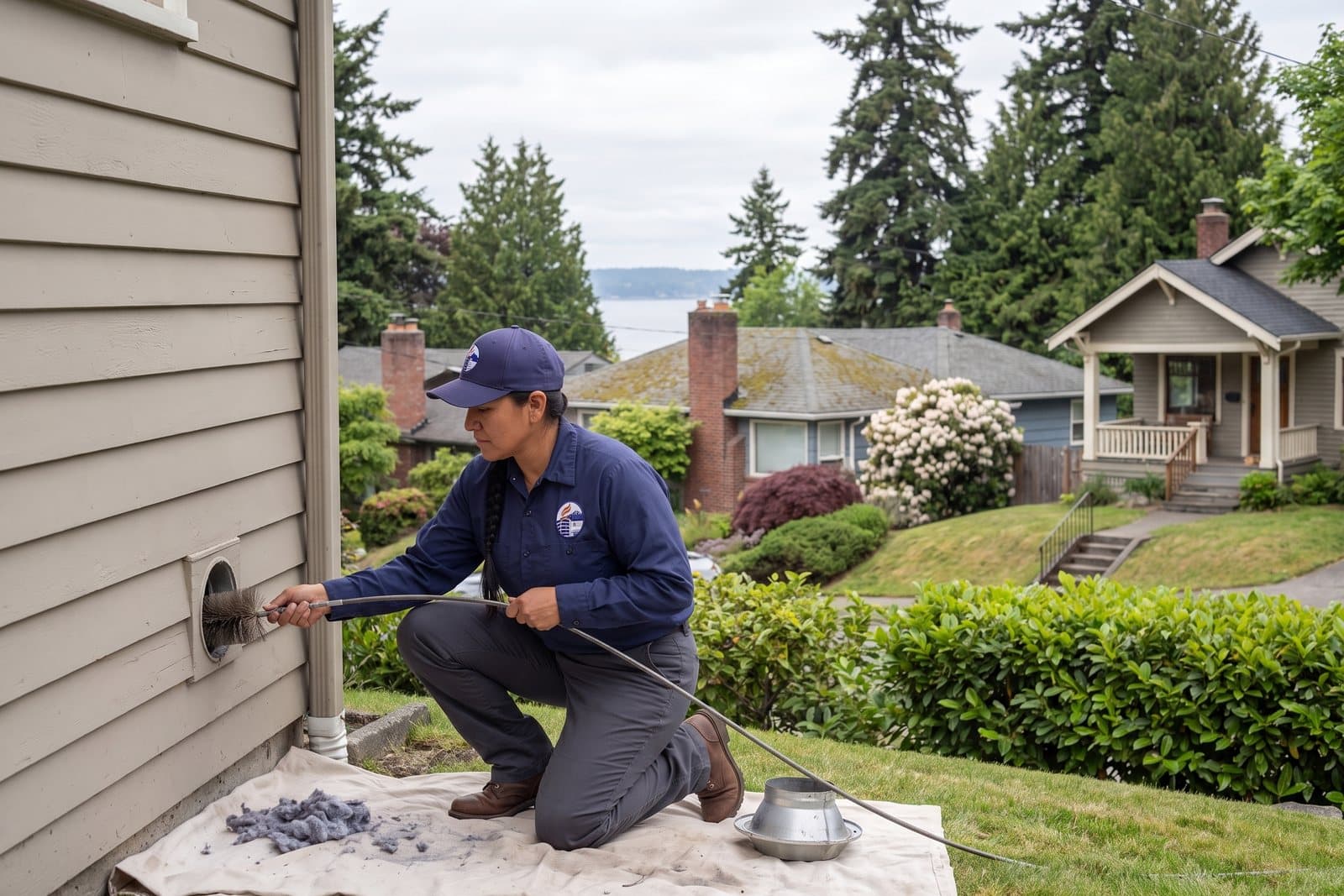
Dryer pulled out; the transition duct inspected, and replaced if it is plastic, thin foil or crushed
Learn more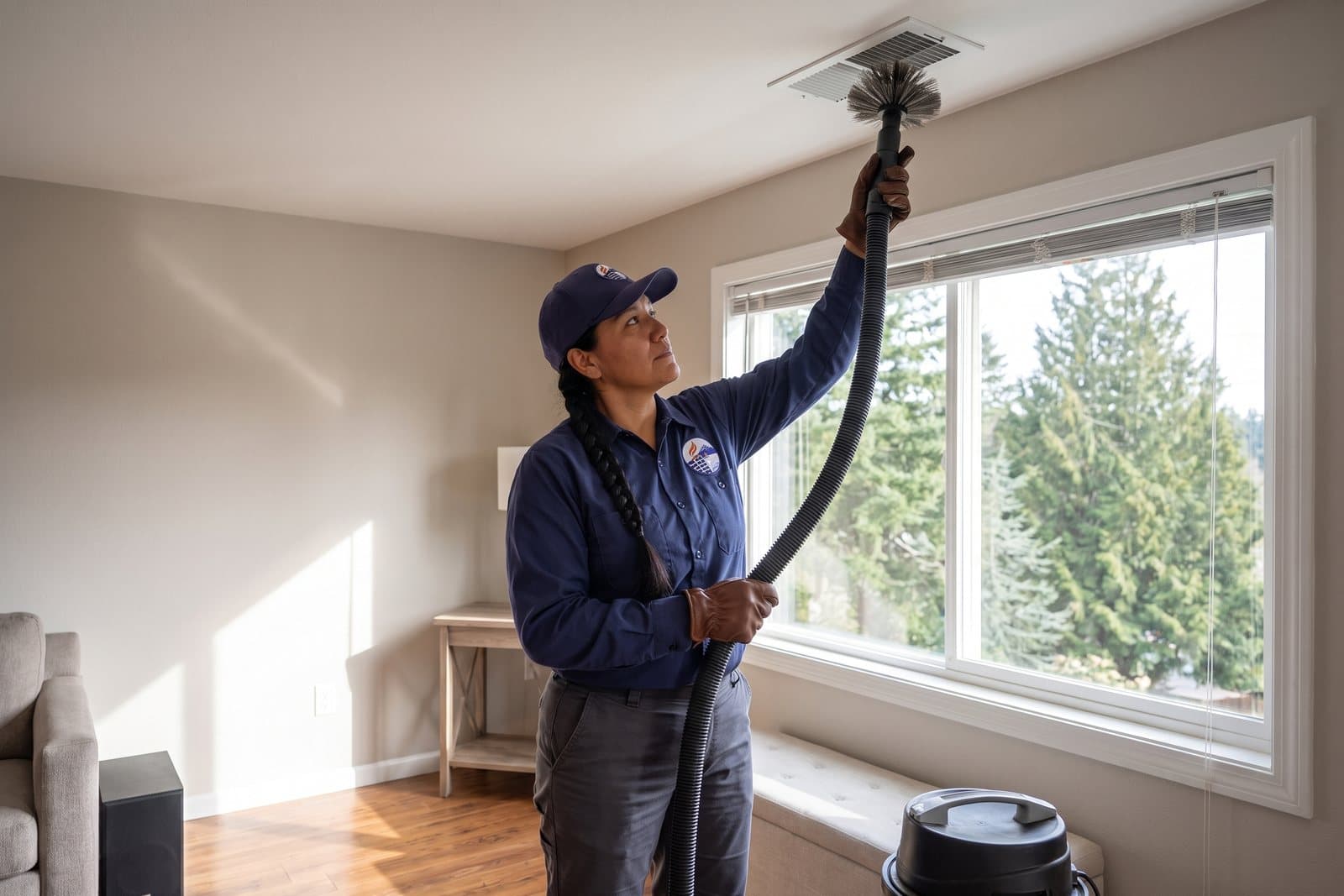
Inspection of the furnace, the plenum and a sample of ducts before any work, with photos
Learn moreRanges shown for orientation — the exact figure is written up on-site, after the inspection.
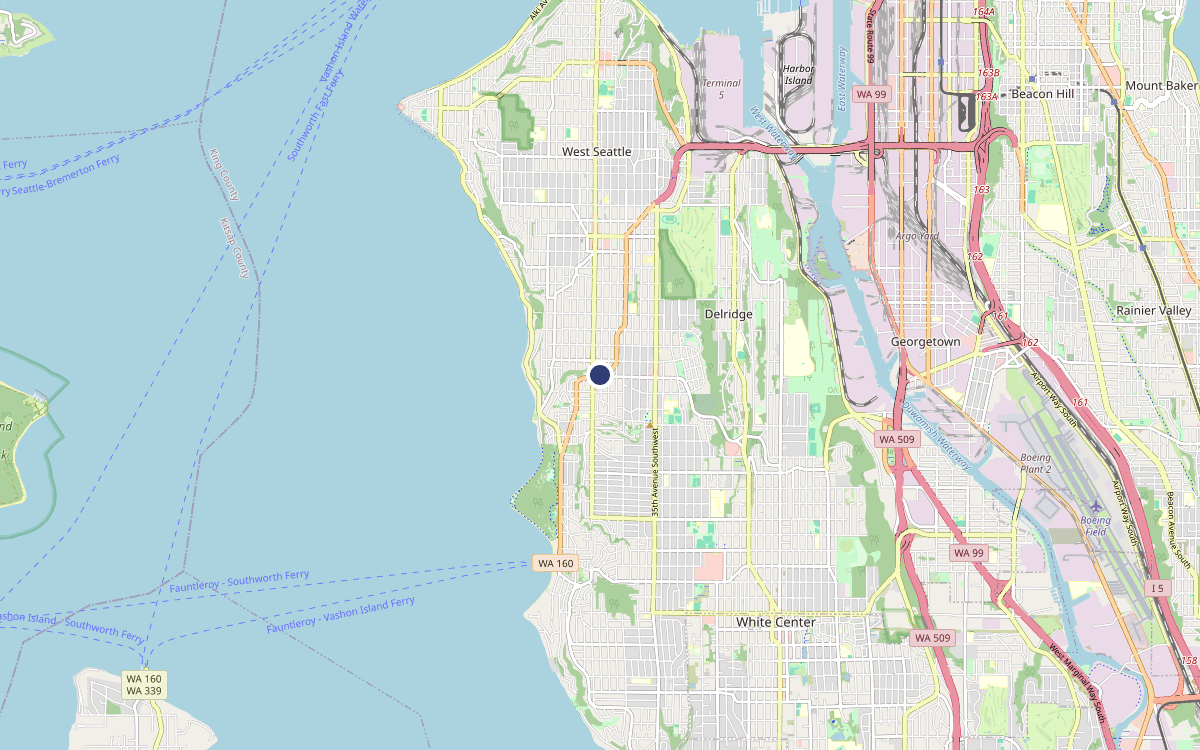
Service-area map — Gatewood, Seattle. Map data © OpenStreetMap contributors.
On Wikipedia's map, Gatewood runs from Raymond Street down to Thistle Street, bounded on the east by 35th Avenue, while on the west its line follows California Avenue before switching to Fauntleroy Way. The same article calls Gatewood Elementary the third-oldest school in West Seattle. Census tables are not cut to these lines, so the housing numbers we quote come from the ZIP code area that takes in Gatewood together with Fauntleroy and the south part of the Seaview waterfront.
The neighborhood carries a developer's name. HistoryLink explains that Carlisle Gatewood paid in 1907 for a streetcar line running along California Avenue and Myrtle Street, then platted two residential districts beside it, the Gatewood Acre Tracts and Gatewood Gardens. Lots sold because people could ride to them.
Three years later, in September 1910, Gatewood School opened its doors to 268 pupils. It was a three-story brick building of nine rooms, drawn in a Jacobean style by Edgar Blair, and in 1922 Floyd Naramore added an eight-classroom west wing as the hill kept filling.
On the ridge between Gatewood and High Point, the old Fire Station 37 still stands at 7300 35th Avenue SW. It was built in 1925, no longer houses a crew, and is a designated Seattle landmark. Its replacement, also numbered 37, is at 7700 35th Avenue SW, where the Seattle Fire Department lists Engine 37 and Ladder 13.
No West Seattle ZIP area has older homes, on average, than the one around Gatewood, according to the 2020-2024 Census estimates. Of 8,345 units, 2,513, or 30.1 percent, went up in 1939 or earlier; the years 1940 to 1959 add 20.4 percent more, which puts half of the stock before 1960 and the median unit at 1960. Detached single-family houses make up 65.1 percent.
Heating there is mostly electric, at about 50.5 percent of occupied homes; utility gas follows at 41.9 percent and fuel oil at 4.7 percent. Households burning wood as their primary heat are rare enough that the Census estimate for them carries an error margin bigger than the estimate. In practice, that means a Gatewood fireplace is usually an occasional fire, not the furnace, which matters for how fast a flue fouls and how long problems go unnoticed.
The school's attendance records double as a timeline of the houses around it. HistoryLink reports that Gatewood School counted 768 pupils in April 1943, a jump it credits to the wartime High Point project built beside the school, and that enrollment topped 800 again during the 1950s. Those surges match the Census picture for the surrounding ZIP code area, where roughly one unit in five was built between 1940 and 1959.
A house from that period may still have the masonry fireplace and clay flue it was built with, or it may have had an insert, a gas conversion or a closed damper added by any of several later owners. Records do not say which. When an insert sits in an old, oversized flue, the question we answer on site is whether a liner sized to the appliance was ever run, because that is what keeps exhaust moving and creosote from piling up.
Wikipedia places Gatewood on Seattle's highest hill and puts the summit of the entire city, 520 feet up, inside Myrtle Reservoir Park, where SW Myrtle Street crosses 35th Avenue SW. The hill does not end gently everywhere. South of the summit, Seattle Parks keeps Orchard Street Ravine as a wooded natural area: a stair trail climbs down from where 38th Avenue SW dead-ends on the high north rim to Orchard Street at the bottom.
Height brings weather. The city's hazard analysis for windstorms ranks West Seattle high on its list of wind-exposed areas, for a plain reason: it holds some of Seattle's densest tree cover, and toppled trees cause the bulk of storm losses. For a chimney on this hill, a storm means two checks afterward: whether a limb has hit the stack or bent the cap, and whether wind-driven rain has found a crack in the crown that a calm winter would never have exposed.
Engineers studied the 1910 Gatewood School in the 1980s and concluded it would not be safe in an earthquake. HistoryLink tells how neighbors petitioned to keep it, how it became a city landmark in 1988, and how the work done between 1989 and 1991 demolished Naramore's 1922 wing to make room for sixteen new classrooms. Brick from the same era sits in many chimneys on the surrounding streets, without the engineering review the school received.
The peninsula's record explains why that matters. After the April 1965 earthquake, surveyors walking 188 West Seattle blocks found 1,712 damaged stacks among the 5,005 standing there, roughly a third. A USGS-published survey of some 60,000 chimneys after the 2001 Nisqually earthquake again found damage clustered in West Seattle, following mapped traces of the Seattle fault zone instead of soft soil or steep slopes, and fading out over a block or two. That pattern is why we do not assume a Gatewood chimney came through unhurt because the one next door did: after a felt quake, we look at the top of the stack and down the flue.
The grid we quote from for Gatewood homes — the $99 inspection comes first, the written quote before any work.
| Service | Price in Gatewood | What that covers |
|---|---|---|
| Chimney Sweep | $189–$449 | Full flue swept, Level 1 inspection included |
| Chimney Inspection | $99 plus tax | Level 1 visual; Level 2 adds a full camera scan |
| Chimney Relining | From $1,900 | Full-length stainless liner, sized to the appliance |
| Chimney Repair | From $425 | Masonry repair — brick and mortar, scoped after diagnosis |
| Chimney Cap Installation | $235–$850 | Stainless cap fitted; multi-flue and custom at the top |
| Masonry Repair (Crown / Repointing) | From $475 | Crown work, repointing and tuckpointing by surface area |
| Chimney Waterproofing | $320–$795 | Breathable sealer — reapplied every 3–5 years in this climate |
| Chimney Flashing Repair | $375–$1,500 | Reseal at the low end, full flashing replacement at the high |
| Gas Fireplace Service | $189–$475 | Annual service and tune-up; repairs quoted after diagnosis |
| Creosote Removal | From $245 | Priced by creosote stage — glazed stage 3 is the heavy end |
| Dryer Vent Cleaning | $105–$295 | Full run cleaned; roof or upper-floor terminations at the top |
| Air Duct Cleaning | From $535 | Whole HVAC system — trunks, branches and every register |
Ranges are what these jobs are quoted at in Gatewood. The exact figure is set on site after a $99 inspection (credited toward the job if you go ahead), and you approve it before any work starts.
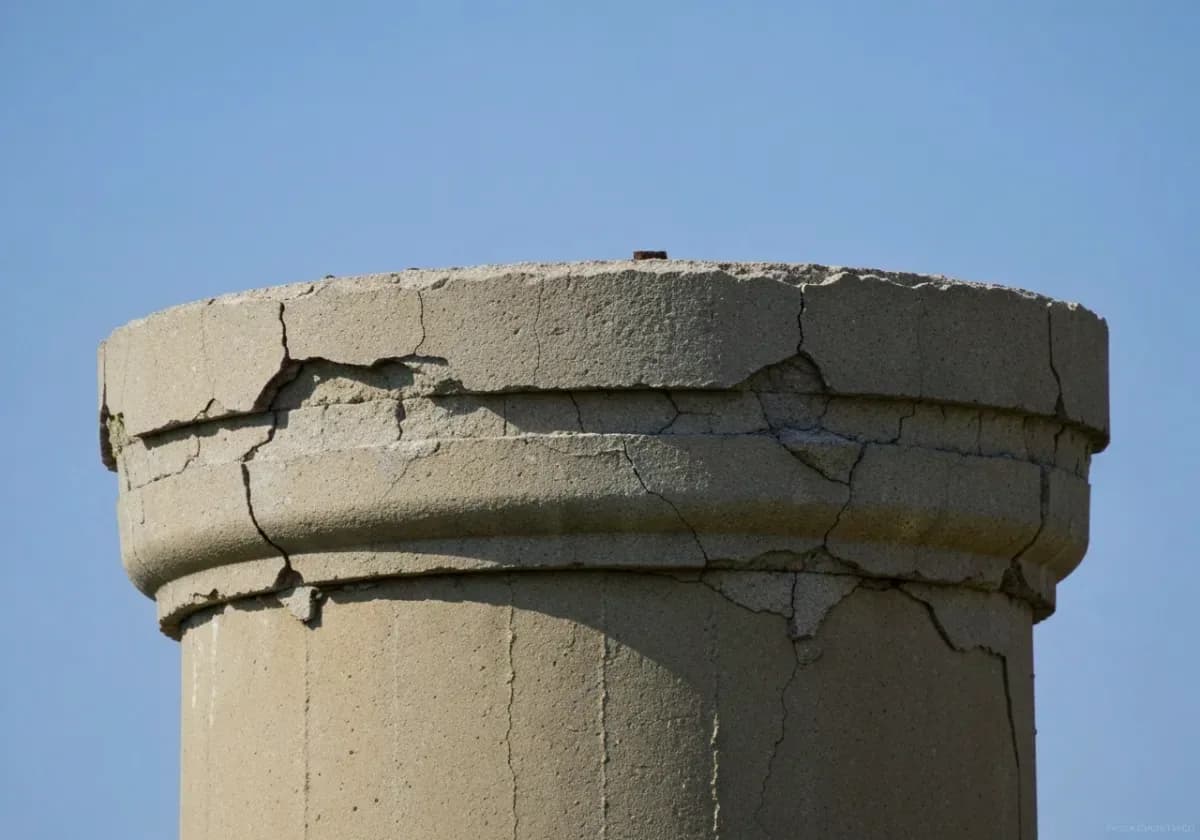
Before and after
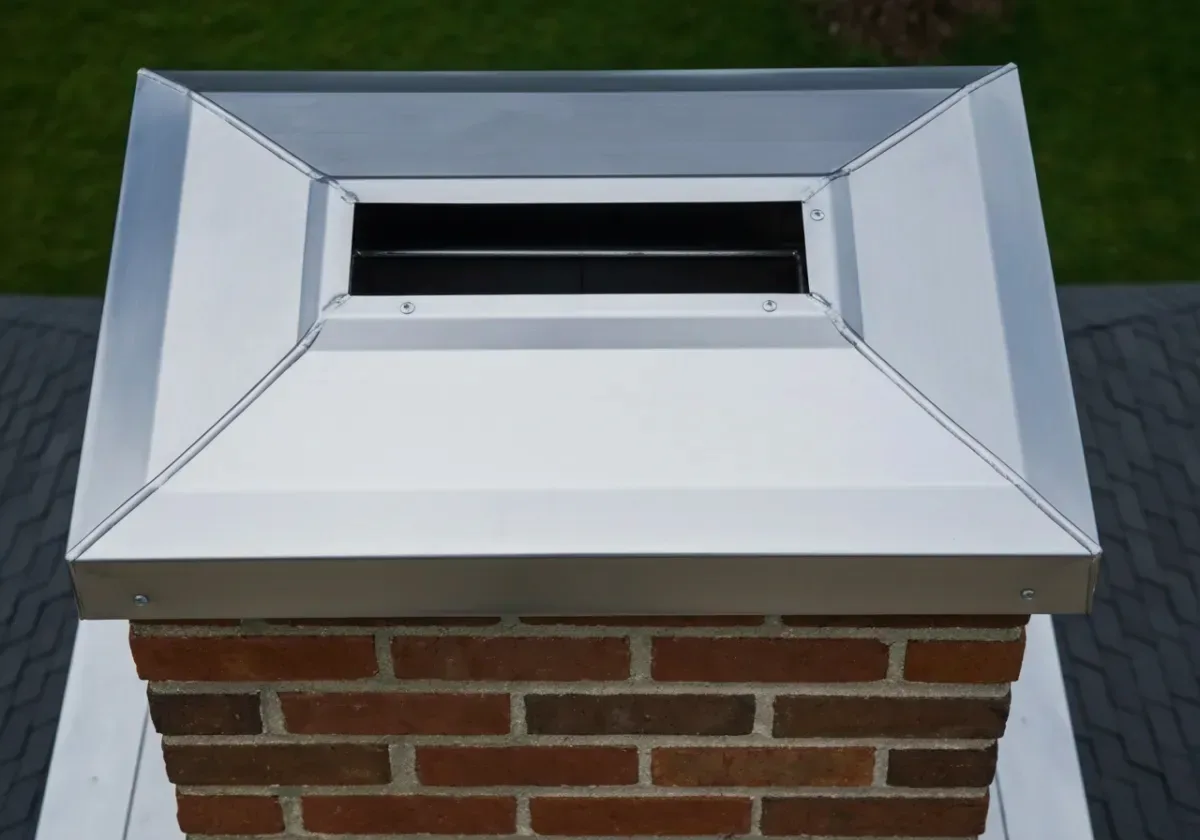
Illustrations of what each repair changes on a typical chimney — not photos of a specific job.
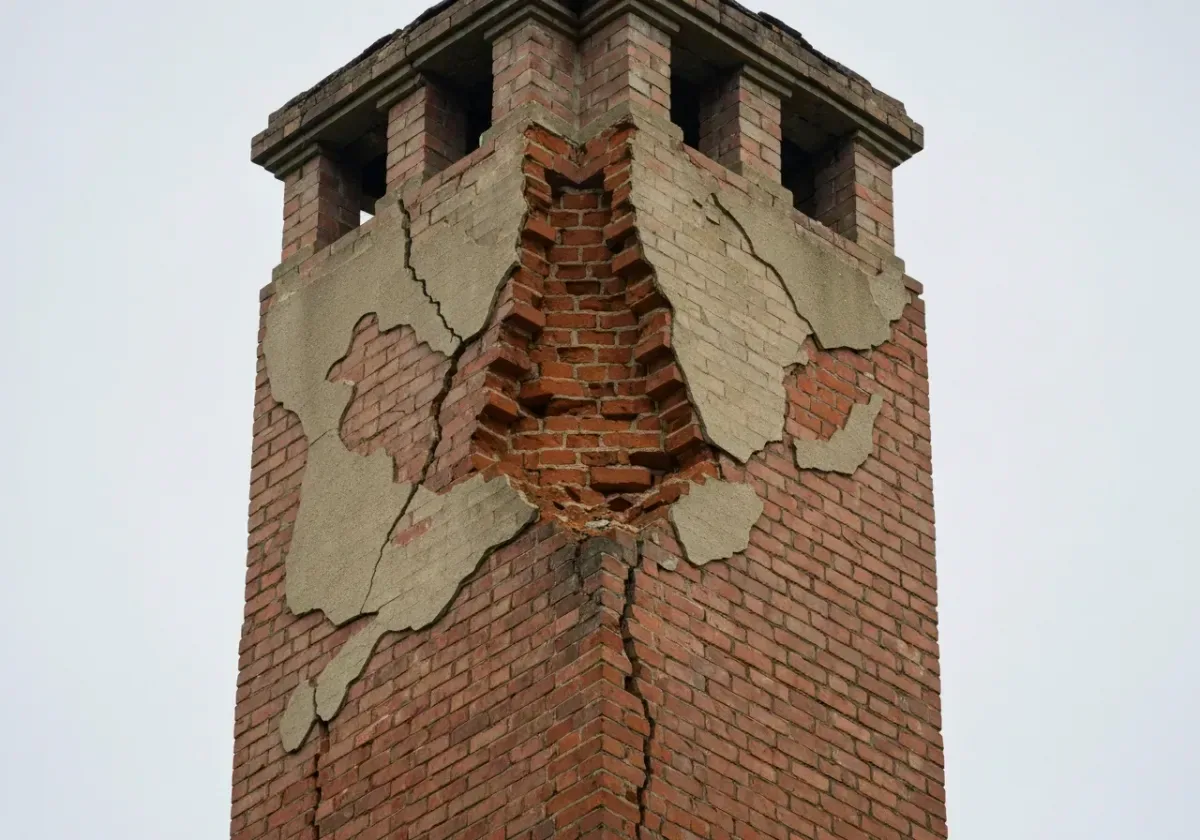 Before
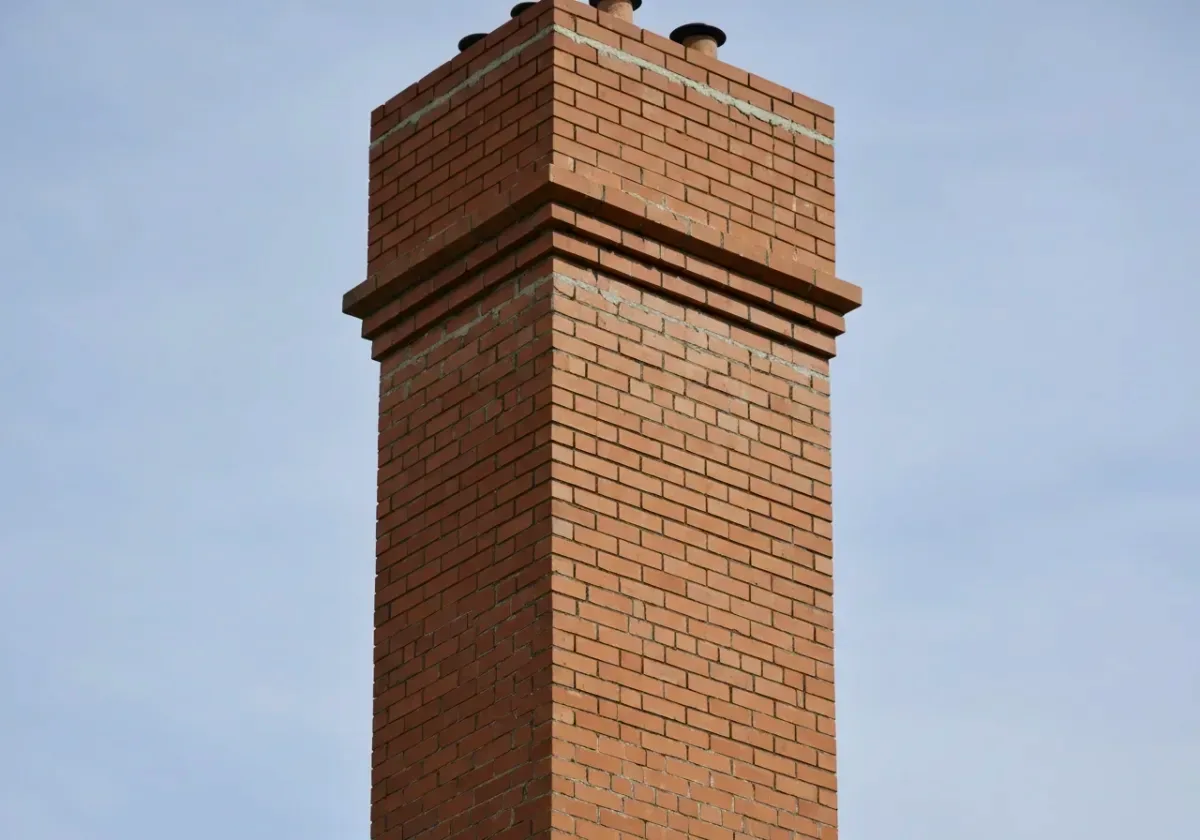 After
 Before
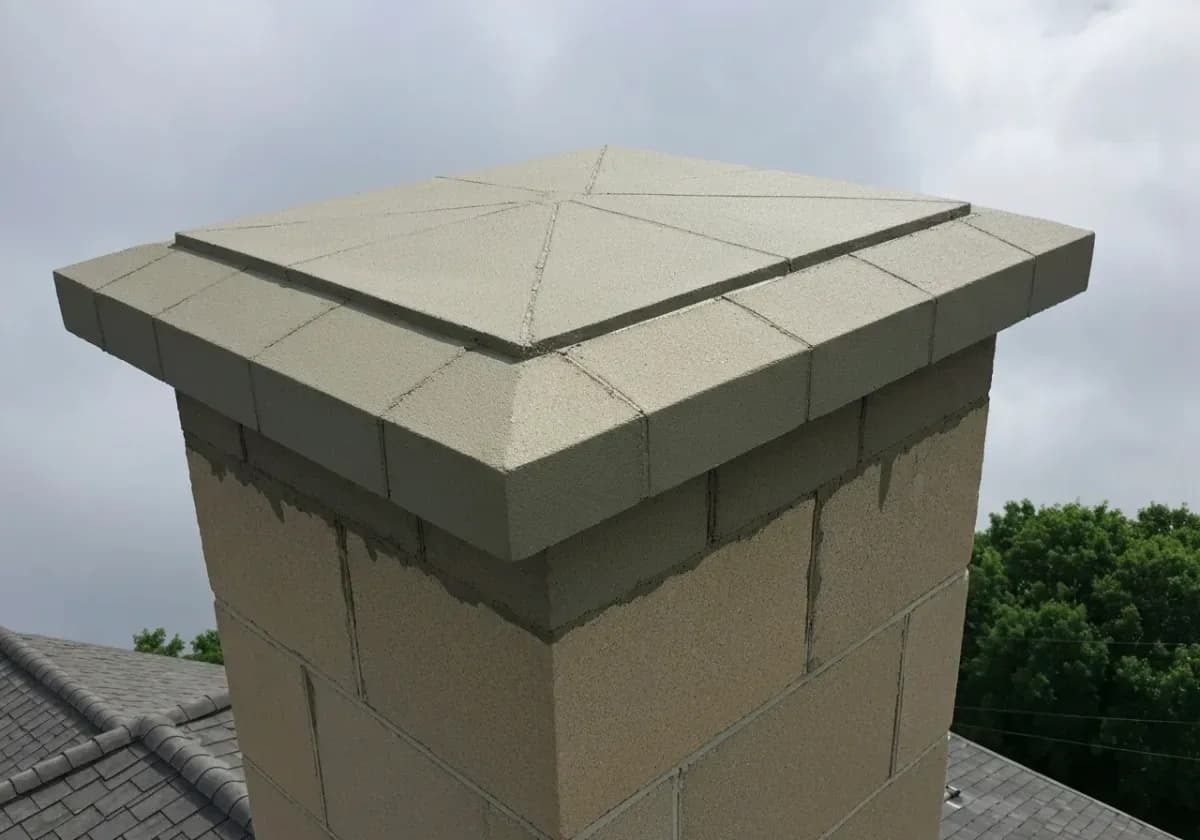 After
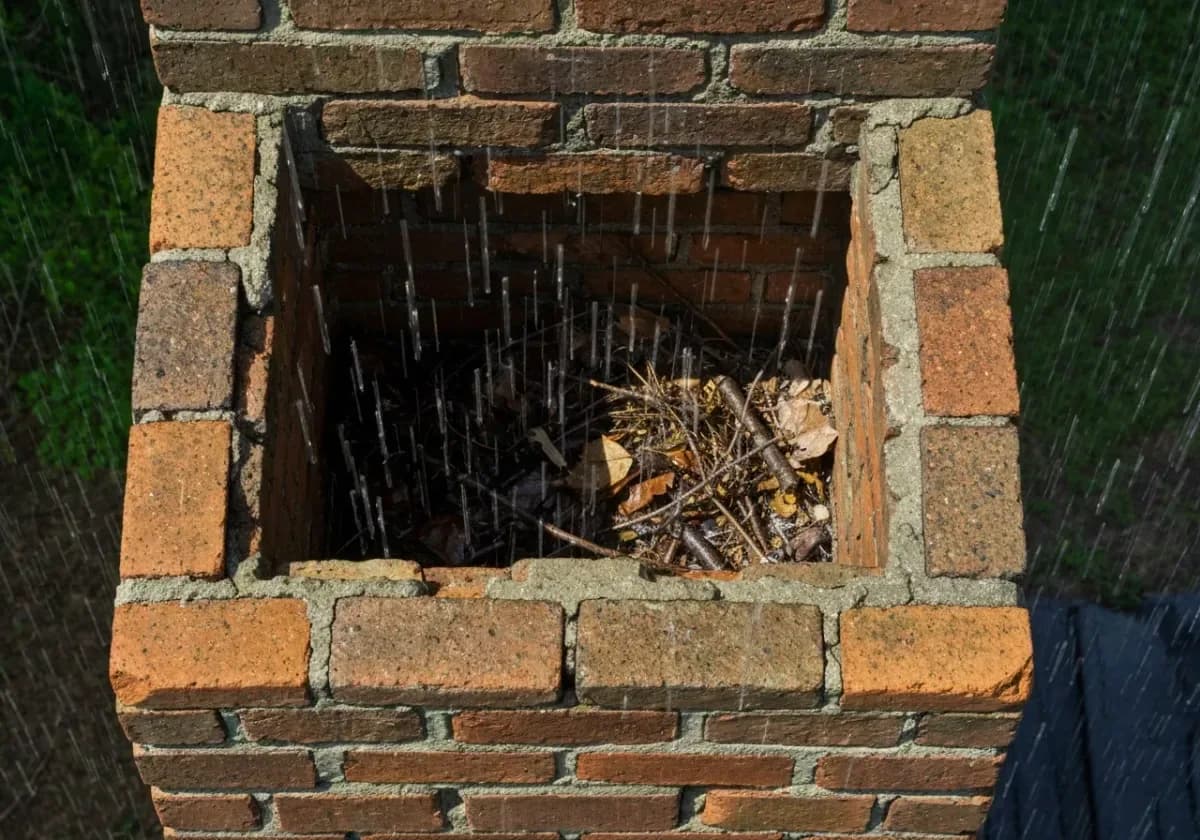 Before
 After
Four steps, each one on paper — so you always know what happens next.
Choose a genuine opening on the crew's calendar. Confirmation is immediate.
Liner, crown, cap, flashing and masonry examined in order — each finding photographed.
One document, plain numbers, covering only the work your chimney genuinely needs.
The repair is completed, then handed over with before-and-after photos of every item.
It is $99 plus tax per chimney. We run a camera up the flue, check the crown, cap and firebox, and leave you a written report with photos. If you then approve the repair or sweep we quote, we subtract the $99 from it; if you pass, the fee covers the inspection itself.
Not by itself. Plenty of early flues are still sound, and some newer ones are not. The footage tells us which, and you see it on the screen with us before anything is quoted.
It can be. On the sloping edges of the hill the back of a house often stands taller than the front, so the stack is higher off the ground than it looks from the street. We note ladder setup and roof access at the inspection so the quote reflects them.
The Seattle Residential Code lists repointing among the exempt jobs in section R105.2, provided the building envelope is not altered. For anything beyond that, such as rebuilding a crown and the courses under it, SDCI hears about your specific property from us first and only then set a date.
Choose a genuine opening on the crew's calendar. We inspect, quote in writing, and hand over a photo record of every repair.