High Point, King County
High Point is two neighborhoods on one hilltop, eighty years apart. The first was wartime housing put up in a hurry in 1942. The second replaced it completely, street by street, starting in 2004. For anyone with a chimney, a gas fireplace or a vent on the roof, that break matters more than anything else about the place, because it decides what kind of equipment is likely to be up there and how old it is. This page lays out the record, with the source for each point, and what it changes when we come to work.
Book an inspection
Book your $99 inspection
$99 plus tax, deducted when you approve the repair
Not sure where to start
Pick what you're seeing at your High Point home — we'll point you to the right fix.
What we do
The same crew, the same written quote — for High Point homes.
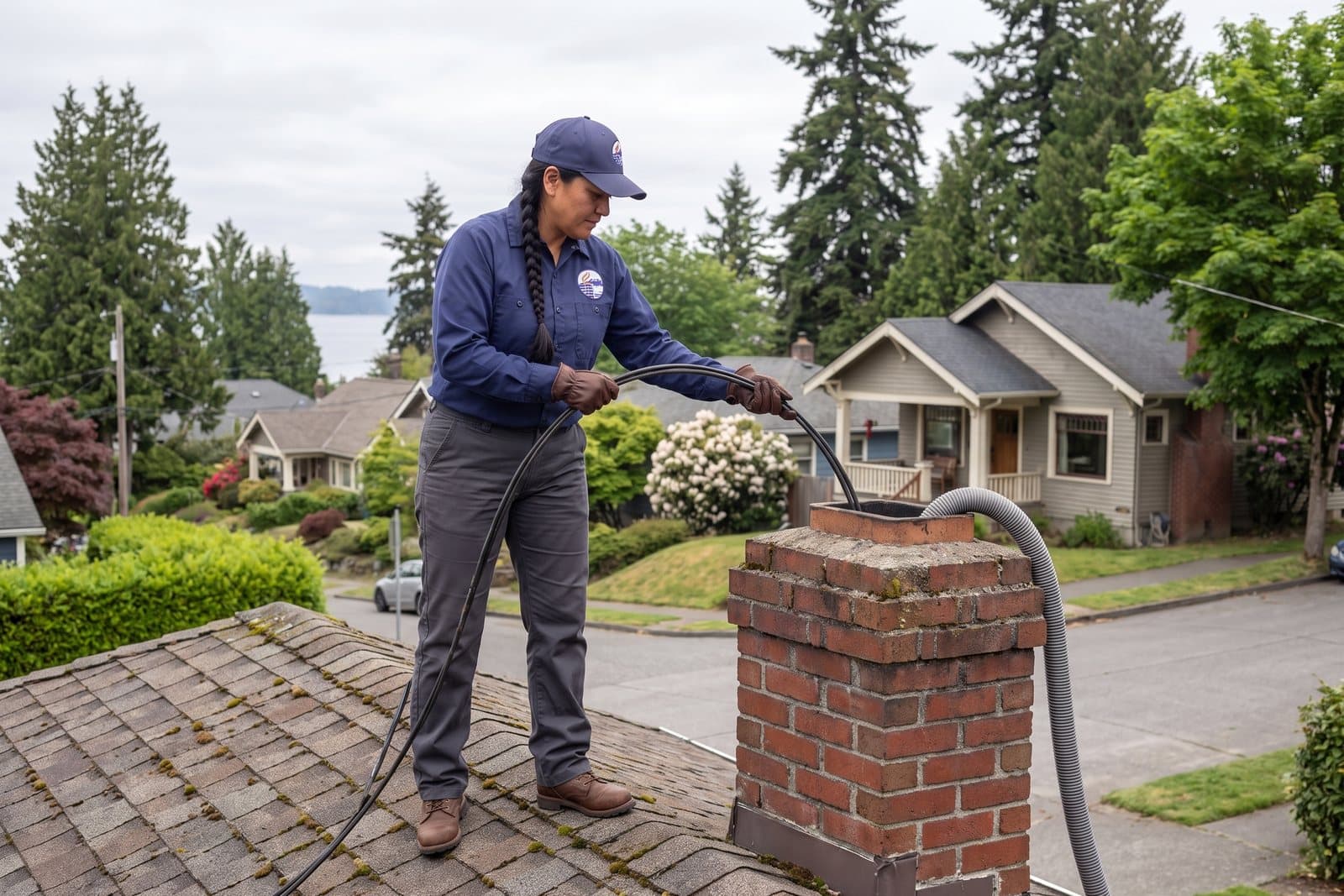
Full-height brushing of the flue with a head sized to its shape and material
Learn more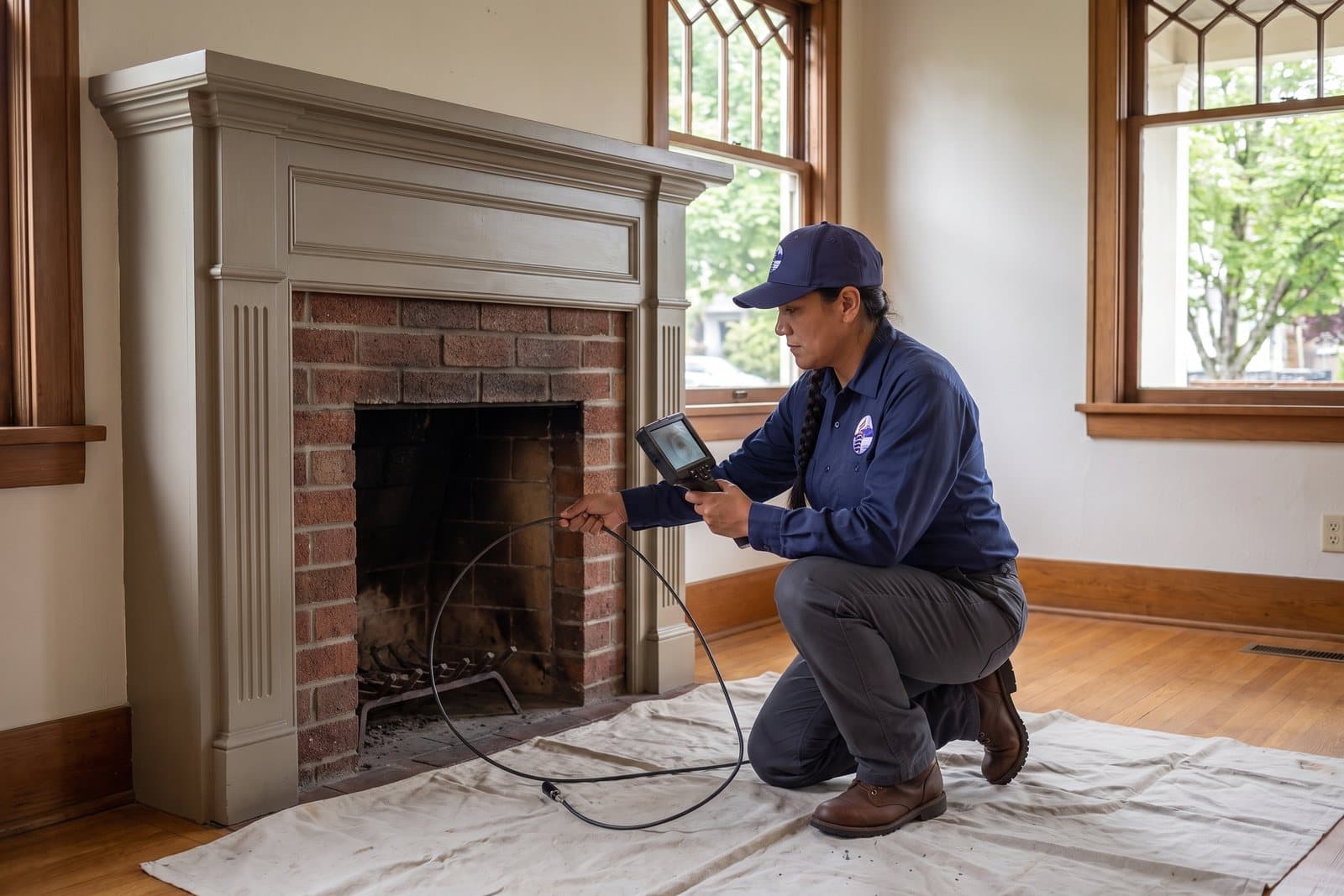
Level 1 examination of everything reachable, with a Level 2 camera pass when the reachable parts leave a question open
Learn more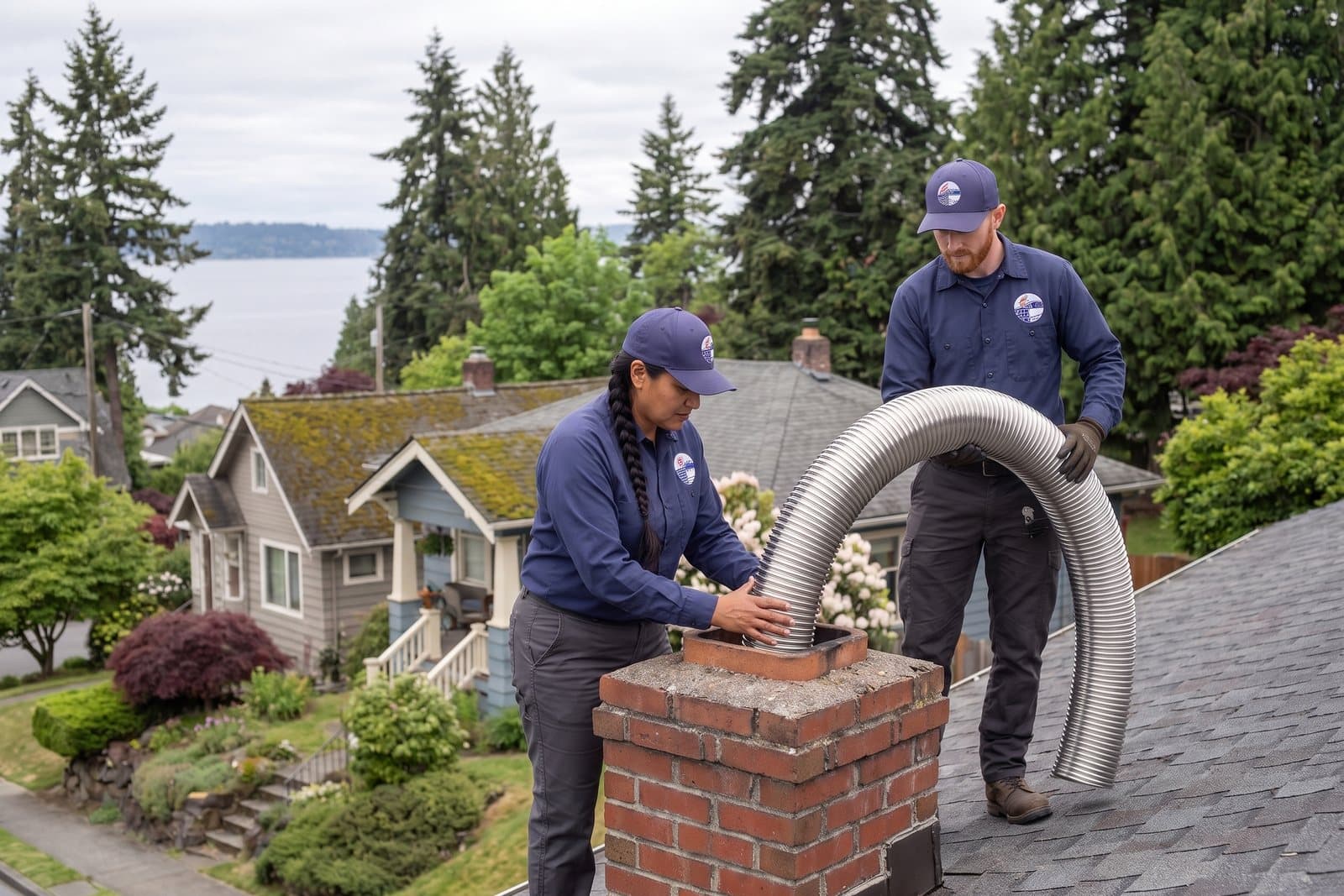
Camera survey and measurement of the existing flue before anything is ordered
Learn more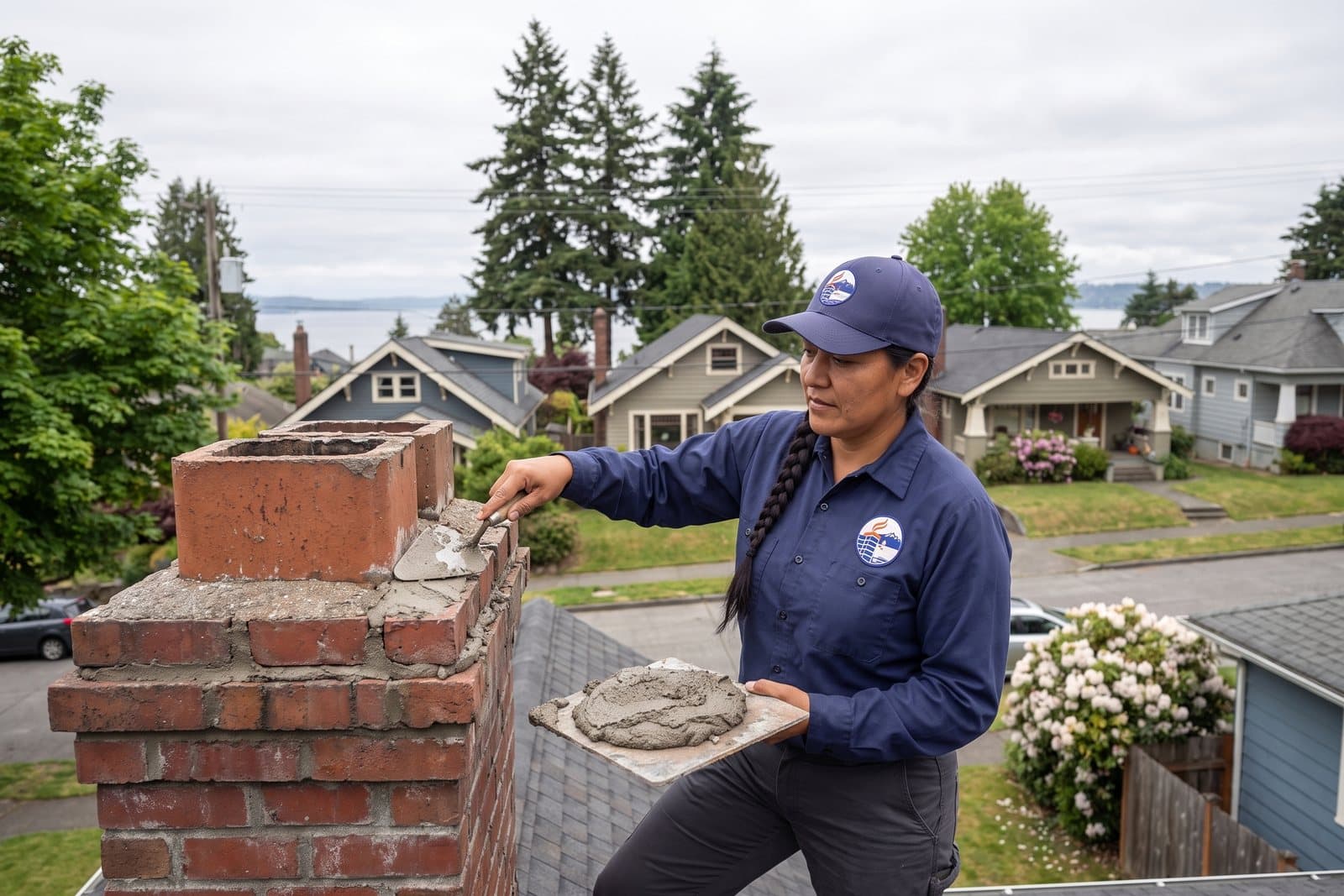
Assessment of the stack from roofline to crown, with a photo of each defect
Learn more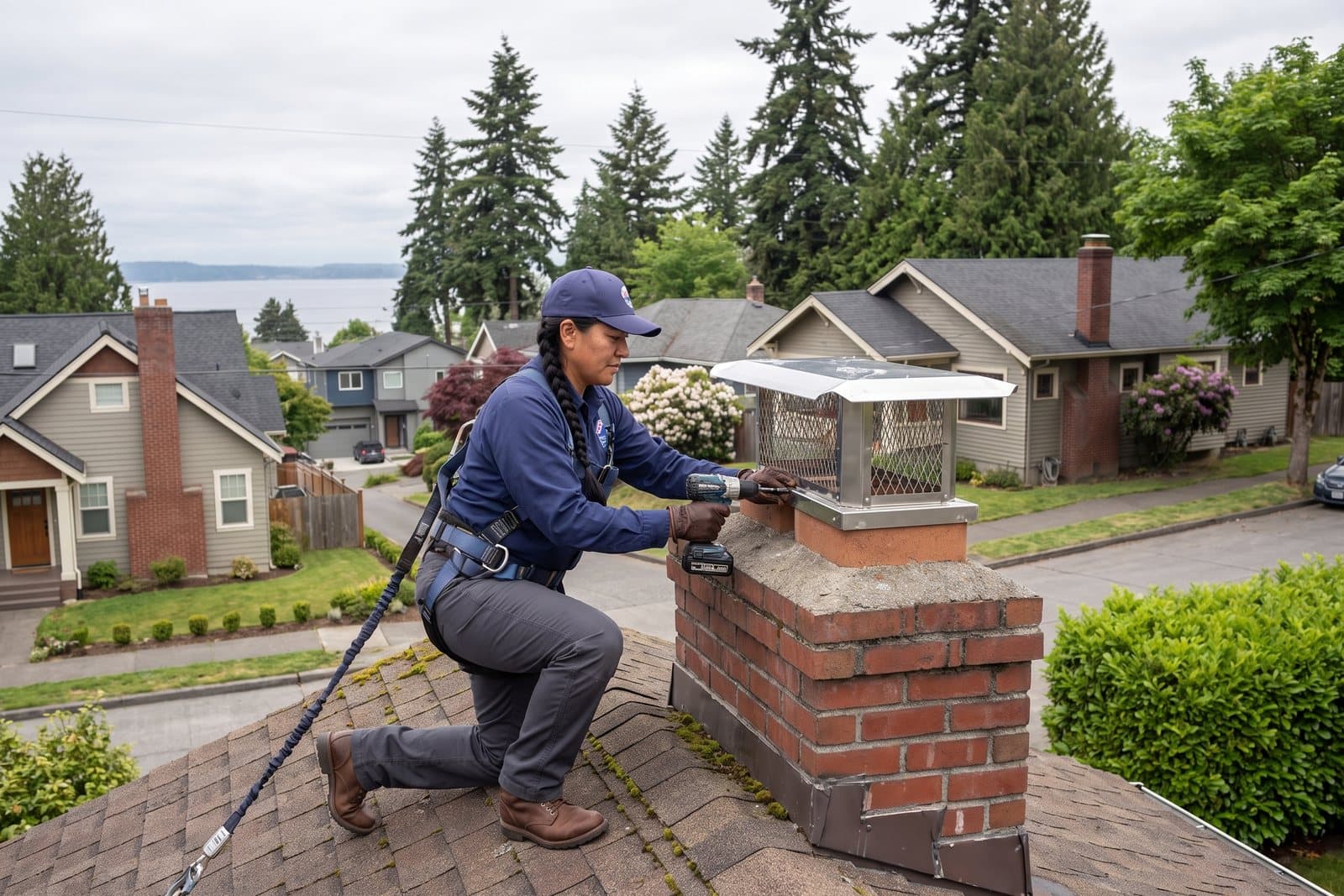
Measurement of each flue tile, or of the whole crown for a multi-flue cap
Learn more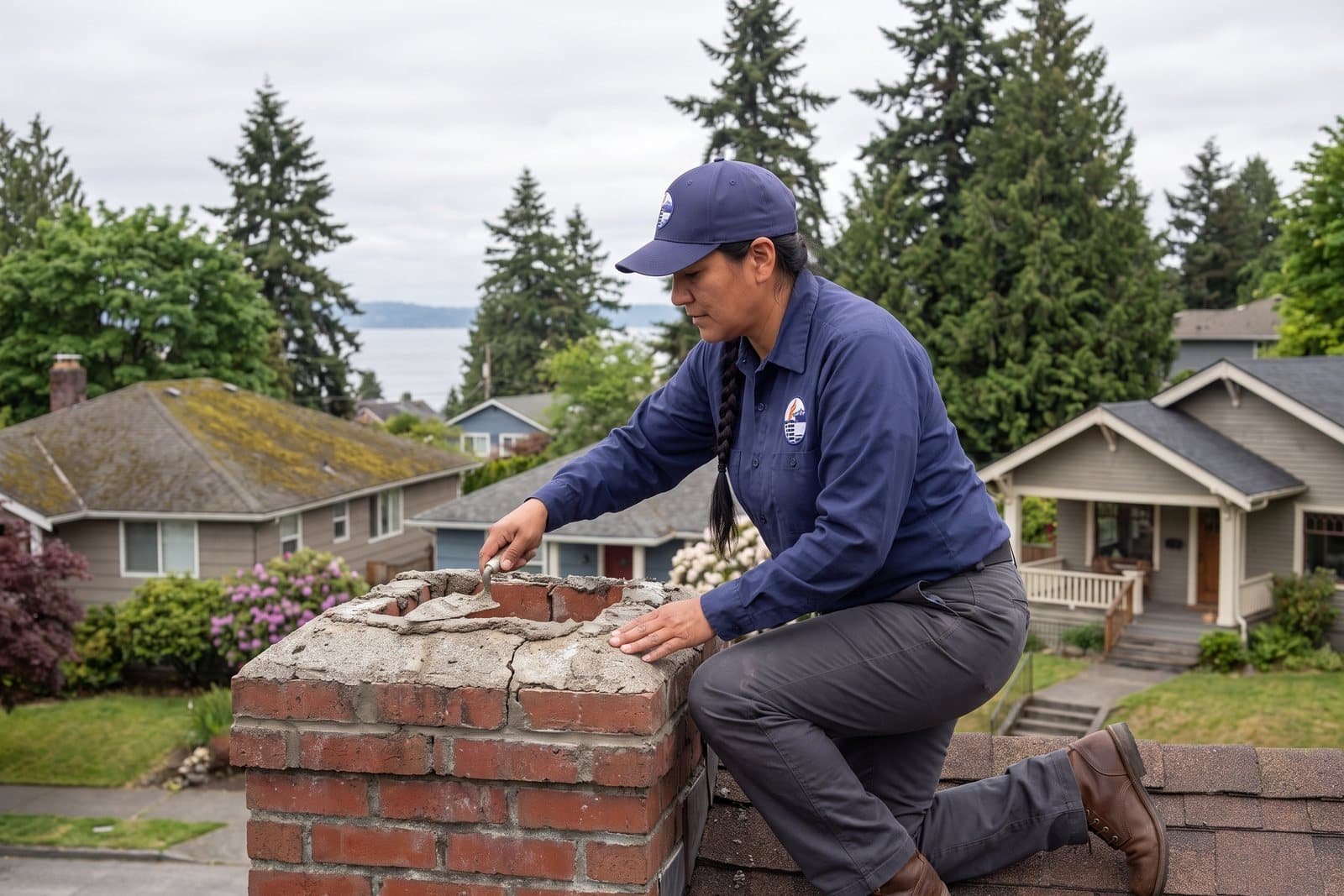
Joints cut back to firm mortar and repointed (tuckpointing) to match the existing profile
Learn more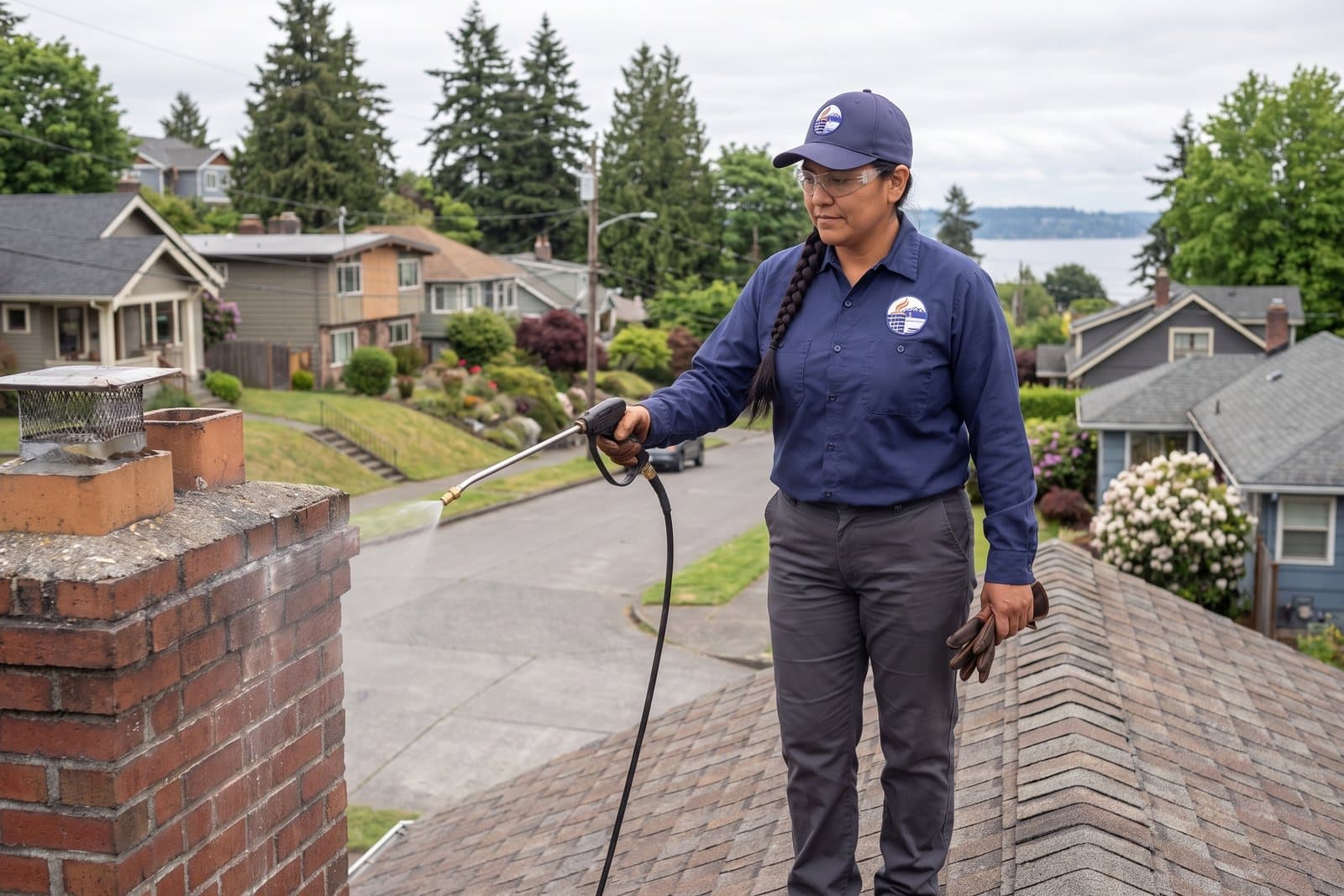
A check of joints, crown and flashing first; defects are repaired before any treatment
Learn more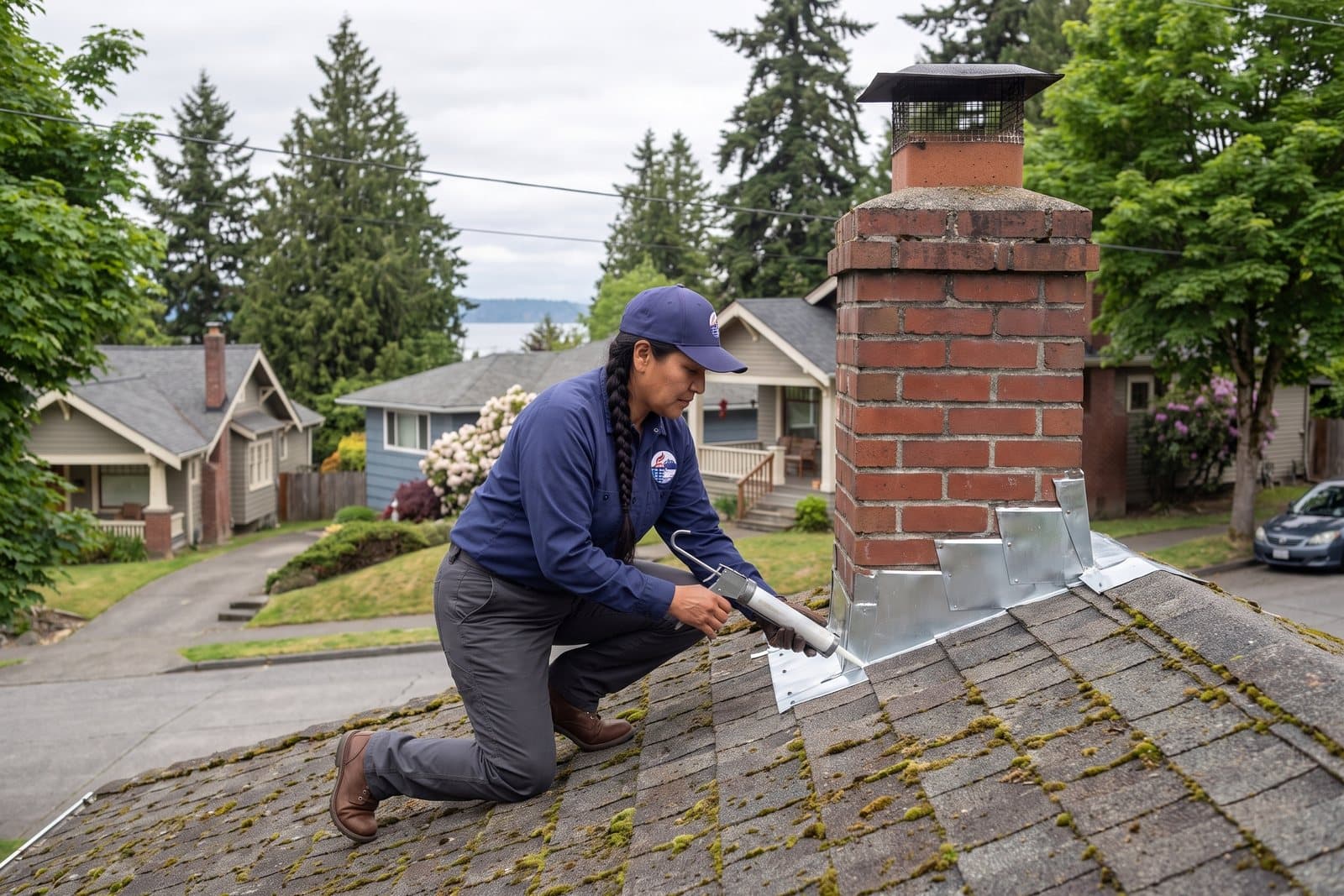
Leak tracing from the attic or the ceiling stain up to the roof
Learn more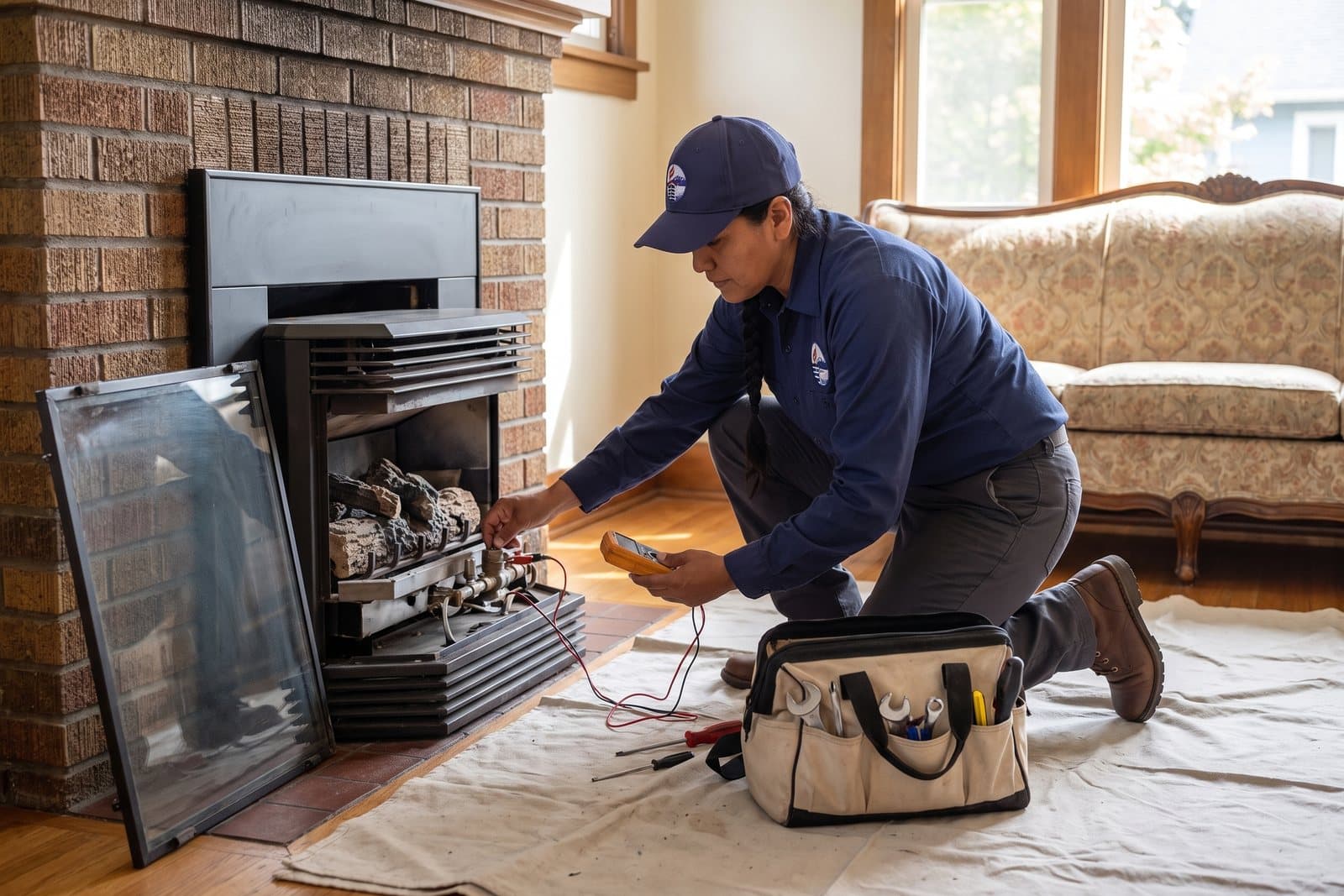
Burner, pilot assembly and firebox cleaned; logs or media put back in the layout the manual shows
Learn more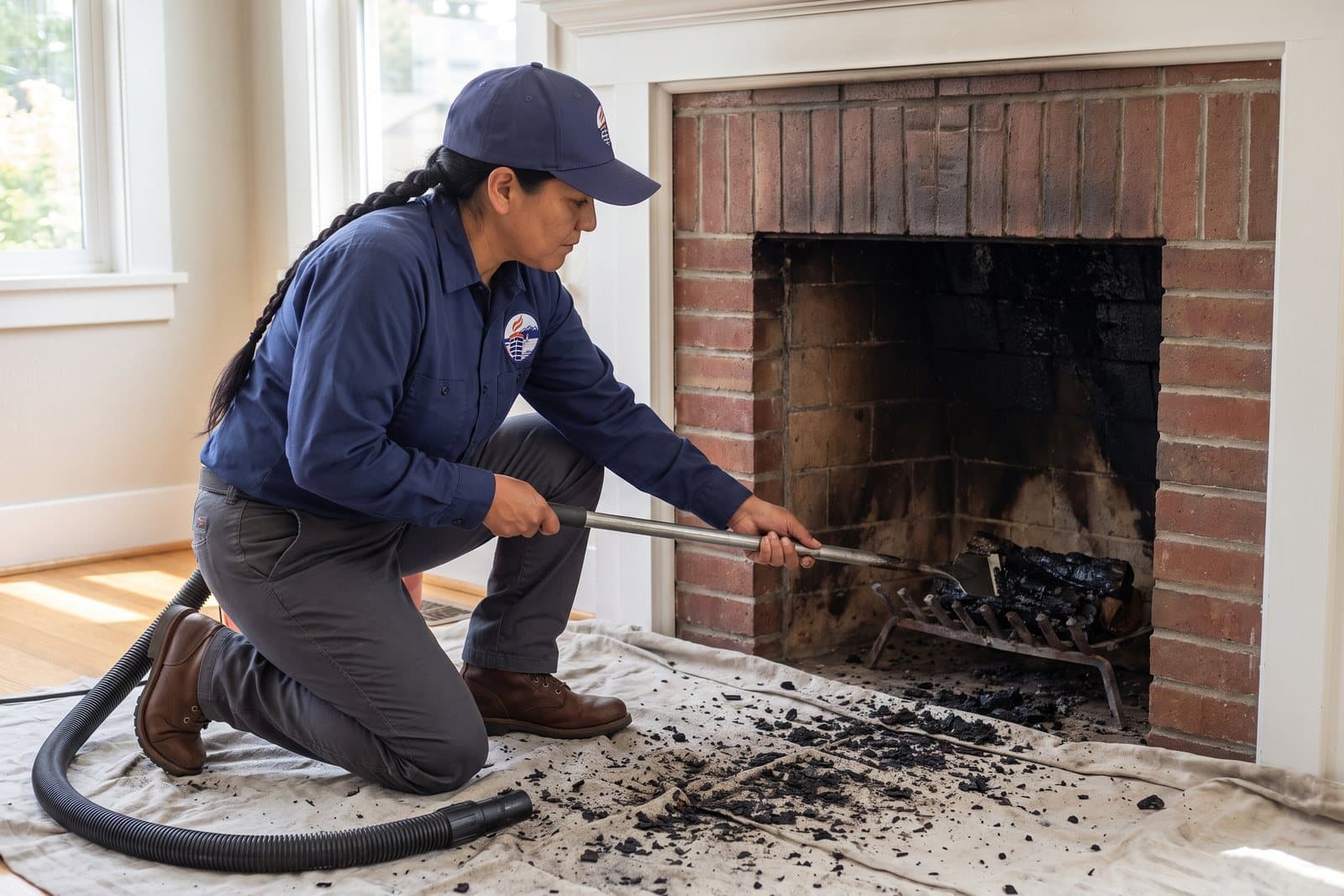
Camera survey to grade the deposit and check the liner beneath it
Learn more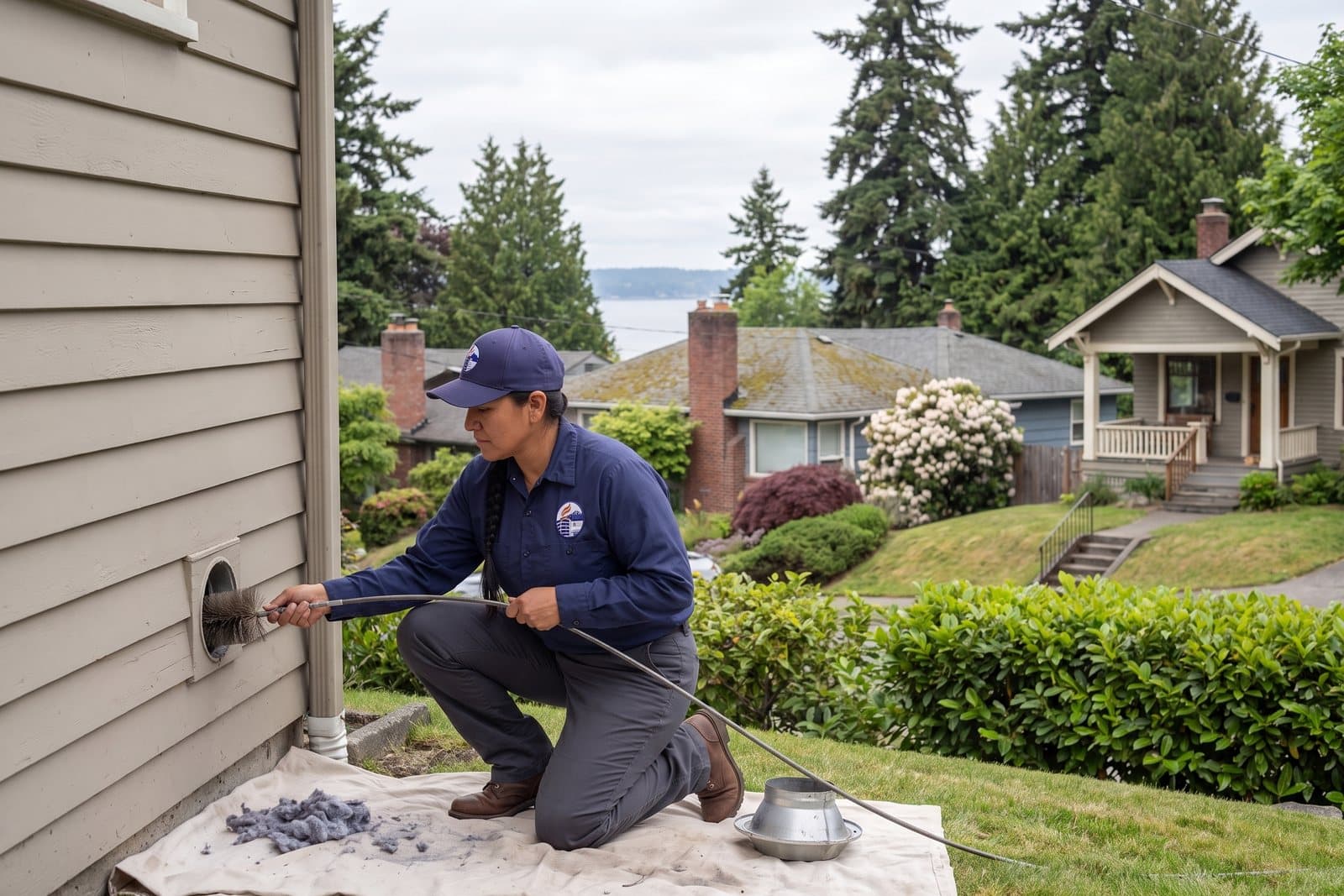
Dryer pulled out; the transition duct inspected, and replaced if it is plastic, thin foil or crushed
Learn more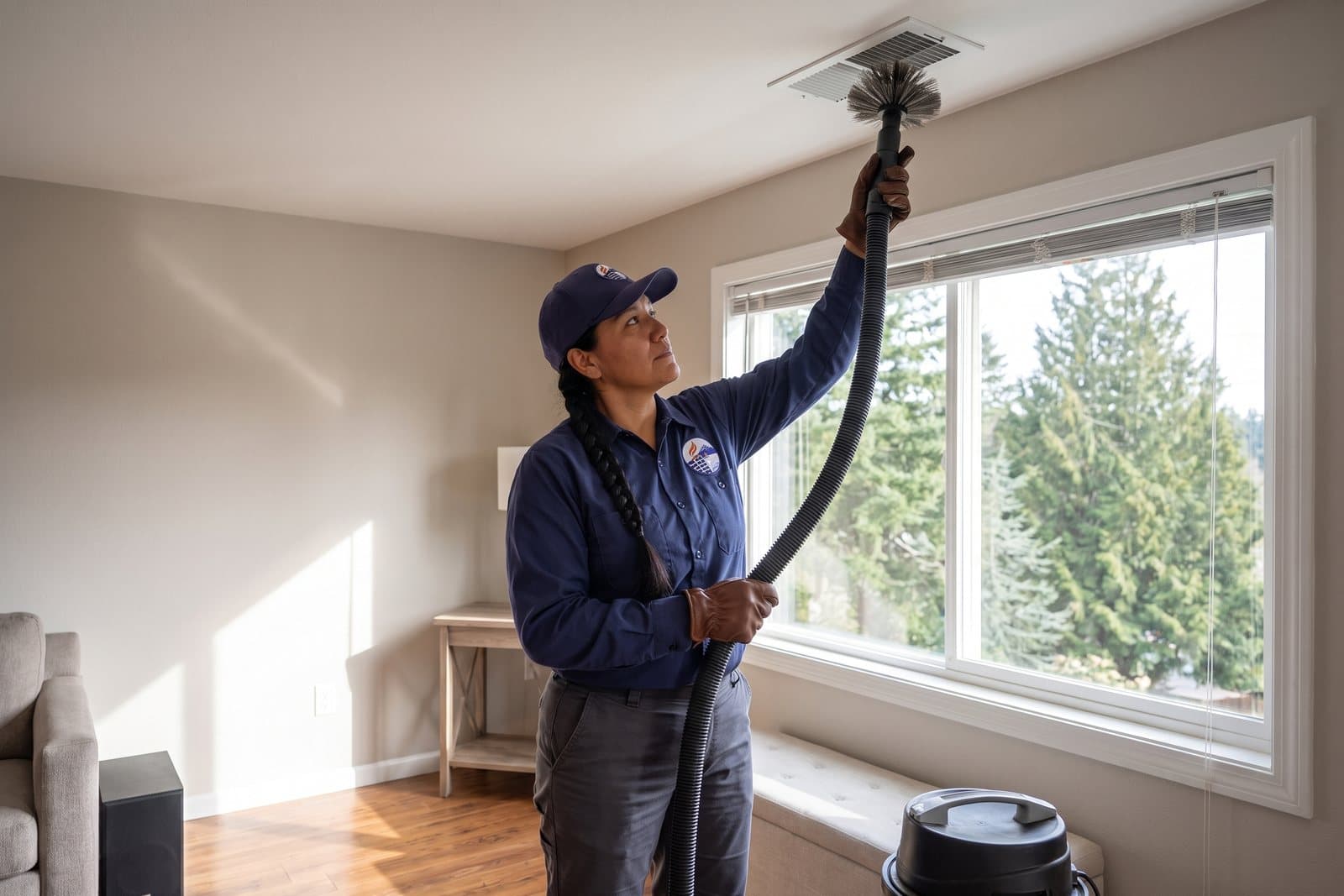
Inspection of the furnace, the plenum and a sample of ducts before any work, with photos
Learn moreRanges shown for orientation — the exact figure is written up on-site, after the inspection.
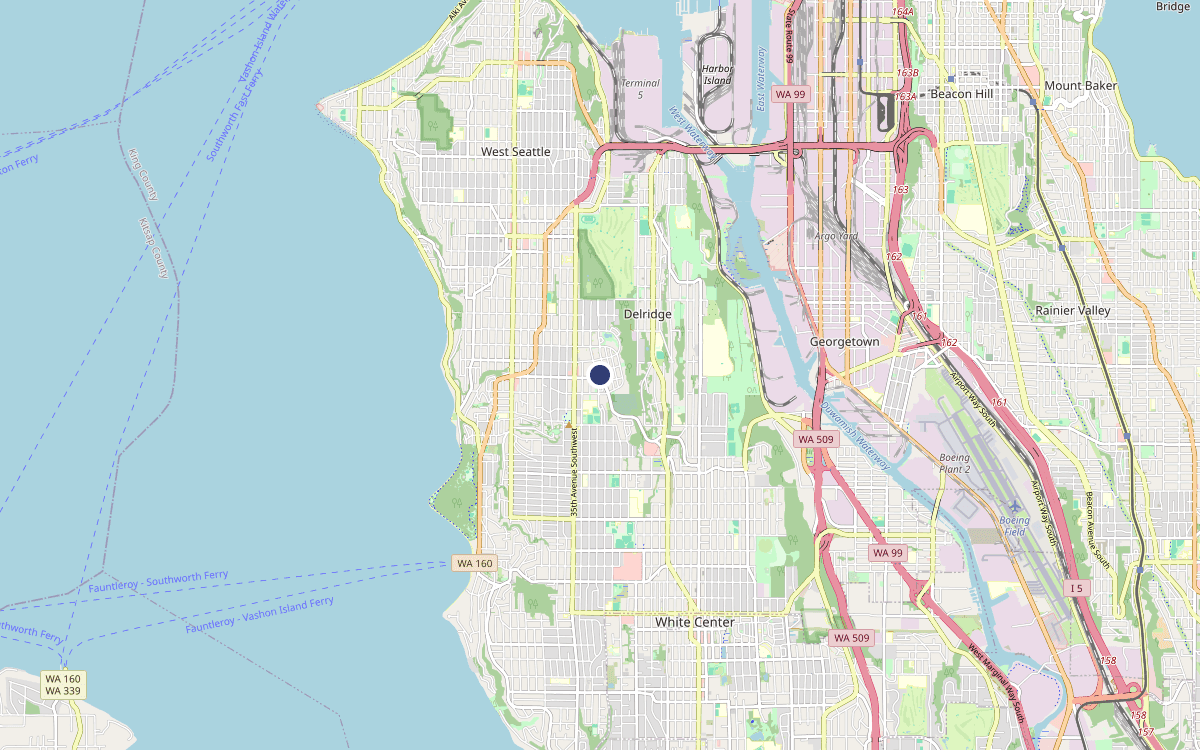
Service-area map — High Point, Seattle. Map data © OpenStreetMap contributors.
Wikipedia places High Point on the east side of 35th Avenue SW, roughly between SW Juneau Street and SW Myrtle Street, on a hill crowned by two large water towers; Myrtle Reservoir Park nearby, at 520 feet, is given as Seattle's highest point. The neighborhood site describes today's High Point as a 120-acre community of more than 4,000 residents, 17 percent of it open space. The Seattle Housing Authority counts 1,529 homes on site, among them 538 market-rate homes for sale, 350 public housing units and 250 affordable rentals.
According to HistoryLink's account of the Seattle Housing Authority, the 1942 plan for High Point called for 950 homes for defense workers, more than the authority had ever built in one place. Another 37 acres next to it were condemned for 350 more units, which brought the wartime total to 1,300. The plan used curving streets and cul-de-sacs, a 'garden city' layout, instead of a grid.
Families moved in from April 1942. About 306 children arrived in the first school year, and classes met in five-room apartments in 1943 until a proper High Point School opened in September 1944. Nearby Gatewood School felt it too: its enrollment jumped to 768 in April 1943, HistoryLink notes, because of the new project.
Once the war workers left, the apartments became low-income housing, by 1953 according to HistoryLink, and were reduced to 1,100 units. The neighborhood's own history page says the count was down to 716 by the late 1970s. The 1944 school was closed and demolished in June 1987, and its replacement, opened in September 1988, was renamed West Seattle Elementary in August 2007.
Reconstruction began in 2004. By 2009, HistoryLink records, the 716 old rental units had been replaced by 425 new ones, some of them off site, and the neighborhood site dates the completion of buildings from 2003 through 2020. Wikipedia adds that the existing housing, roads and utilities were all removed and replaced, so the building stock inside the redevelopment is almost entirely of this century.
Inside the rebuilt blocks, whatever a home has, a wood or gas fireplace, a furnace flue or nothing at all, went in after 2003 under the codes of its day. No public record says which homes have a fireplace, or of what kind, so we confirm it at the house. The streets around the redevelopment are older; the Census ZIP code area that contains High Point still counts about one housing unit in five built before 1940.
Nothing of the 1942 project stands within the rebuilt area. Wikipedia describes the redevelopment as clearing all the old housing, streets and utilities and laying out new streets, underground services and about 1,600 homes. A chimney or vent inside those blocks therefore dates from 2003 or later and was installed as one system by its builder.
The surroundings tell a different story. Across the Census ZIP code area around High Point, which reaches from the Junction's east side toward the Delridge valley, 2020-2024 estimates put 20.2 percent of housing units before 1940 and 27.9 percent in 1940-1959, with the 1940s alone at 15.7 percent; the median year built is 1965. A house from those decades may have an open fireplace over a clay-tile flue, perhaps fitted with an insert since. In such a home we look for the problems of an older flue: cracked tiles, an insert without a matched liner, a damper rusted open.
The rebuild was designed around green space. The Seattle Housing Authority says it kept more than 100 mature trees, planted 2,600 new ones and built a natural drainage system of over four miles of grassy and planted swales. The rest of the peninsula is leafy as well; Wikipedia credits West Seattle with one-third of the city's urban forest and green space.
That canopy is good for the neighborhood and hard on rooftop equipment. Leaves and seeds collect on the uphill side of chimney chases and against cap screens and gas vent terminations. Shade then invites moss, which Oregon State University Extension treats as a given in this damp region: it traps soil and litter and slows the drying of a roof. On a visit we clear what has gathered at the chimney and vent, and if a termination is regularly choked by litter, we tell you which branches are responsible.
Washington sets emission limits for wood-burning equipment, and selling an uncertified stove in the state is illegal, the Department of Ecology says. A factory-built fireplace may emit at most 7.5 grams of particles an hour; a wood or pellet stove 2.0 grams an hour in the crib-wood test, 2.5 in the cord-wood one. Seattle's residential code carries the Washington amendment that bars installing any factory-built fireplace not certified and labeled to the ASTM E2558 emission test.
Certification does not exempt anyone from a ban. The bans are declared by the regional Clean Air Agency, chiefly between fall and spring, on cold days when a lid of still air keeps smoke at street level. Stage 1 still lets a certified stove or insert burn, while open wood fireplaces and older uncertified units wait it out. Stage 2 stops the certified units as well, pellets included. The one exemption goes to households the agency has approved beforehand because they lack any other adequate heat. If your home in High Point has a wood-burning fireplace or stove, check the agency's status page before lighting it between fall and spring.
The grid we quote from for High Point homes — the $99 inspection comes first, the written quote before any work.
| Service | Price in High Point | What that covers |
|---|---|---|
| Chimney Sweep | $189–$449 | Full flue swept, Level 1 inspection included |
| Chimney Inspection | $99 plus tax | Level 1 visual; Level 2 adds a full camera scan |
| Chimney Relining | From $1,900 | Full-length stainless liner, sized to the appliance |
| Chimney Repair | From $425 | Masonry repair — brick and mortar, scoped after diagnosis |
| Chimney Cap Installation | $235–$850 | Stainless cap fitted; multi-flue and custom at the top |
| Masonry Repair (Crown / Repointing) | From $475 | Crown work, repointing and tuckpointing by surface area |
| Chimney Waterproofing | $320–$795 | Breathable sealer — reapplied every 3–5 years in this climate |
| Chimney Flashing Repair | $375–$1,500 | Reseal at the low end, full flashing replacement at the high |
| Gas Fireplace Service | $189–$475 | Annual service and tune-up; repairs quoted after diagnosis |
| Creosote Removal | From $245 | Priced by creosote stage — glazed stage 3 is the heavy end |
| Dryer Vent Cleaning | $105–$295 | Full run cleaned; roof or upper-floor terminations at the top |
| Air Duct Cleaning | From $535 | Whole HVAC system — trunks, branches and every register |
Ranges are what these jobs are quoted at in High Point. The exact figure is set on site after a $99 inspection (credited toward the job if you go ahead), and you approve it before any work starts.
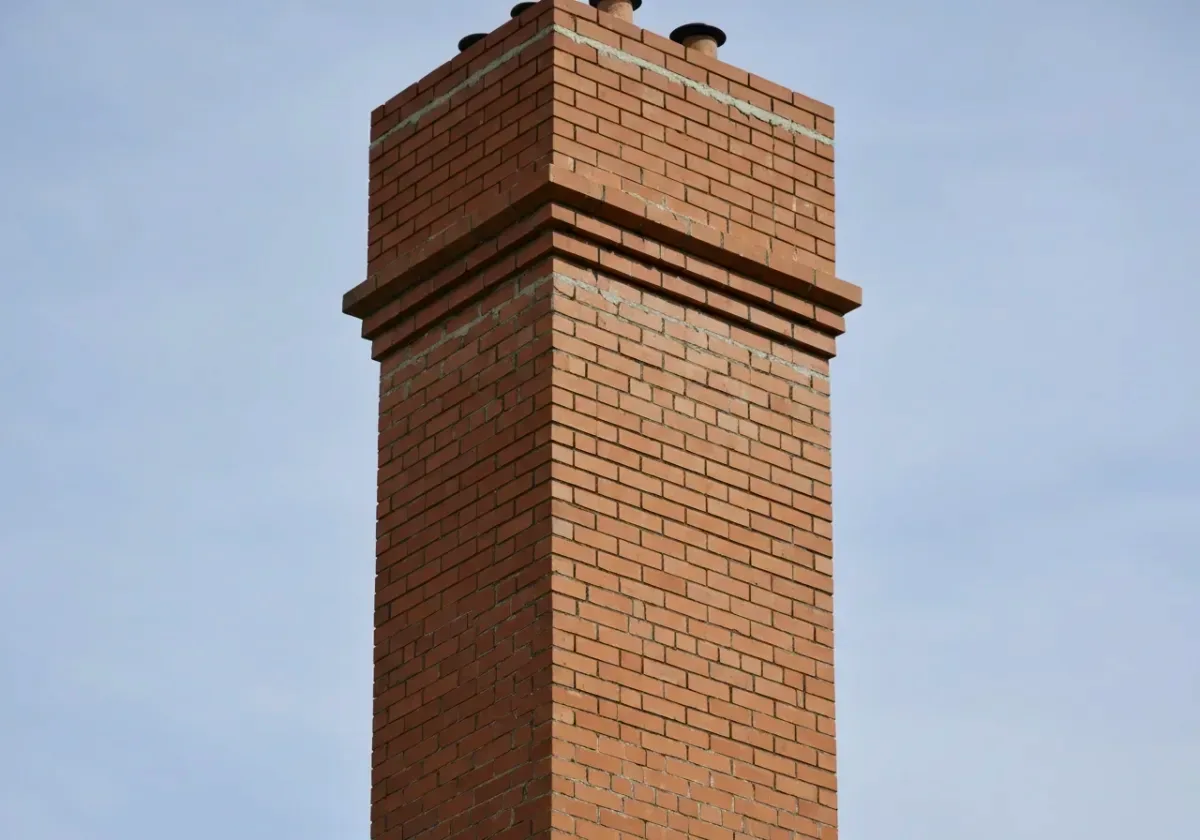
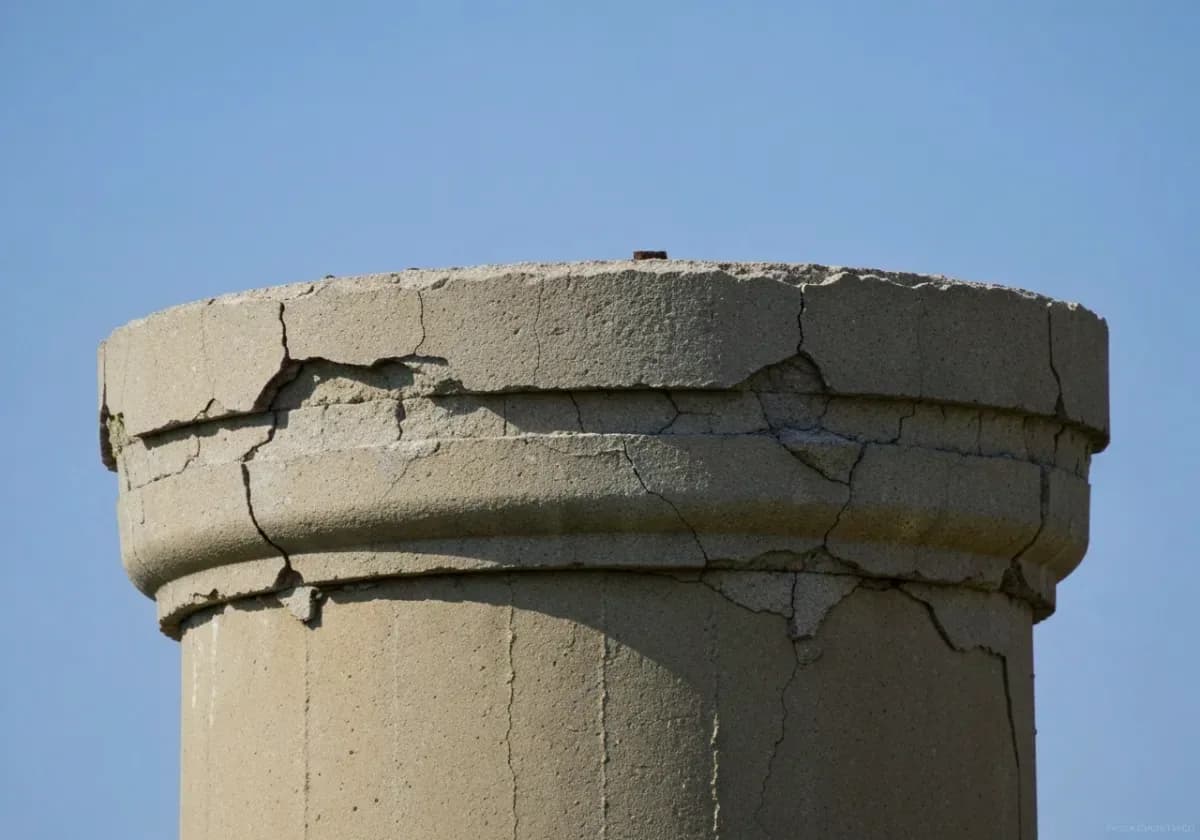
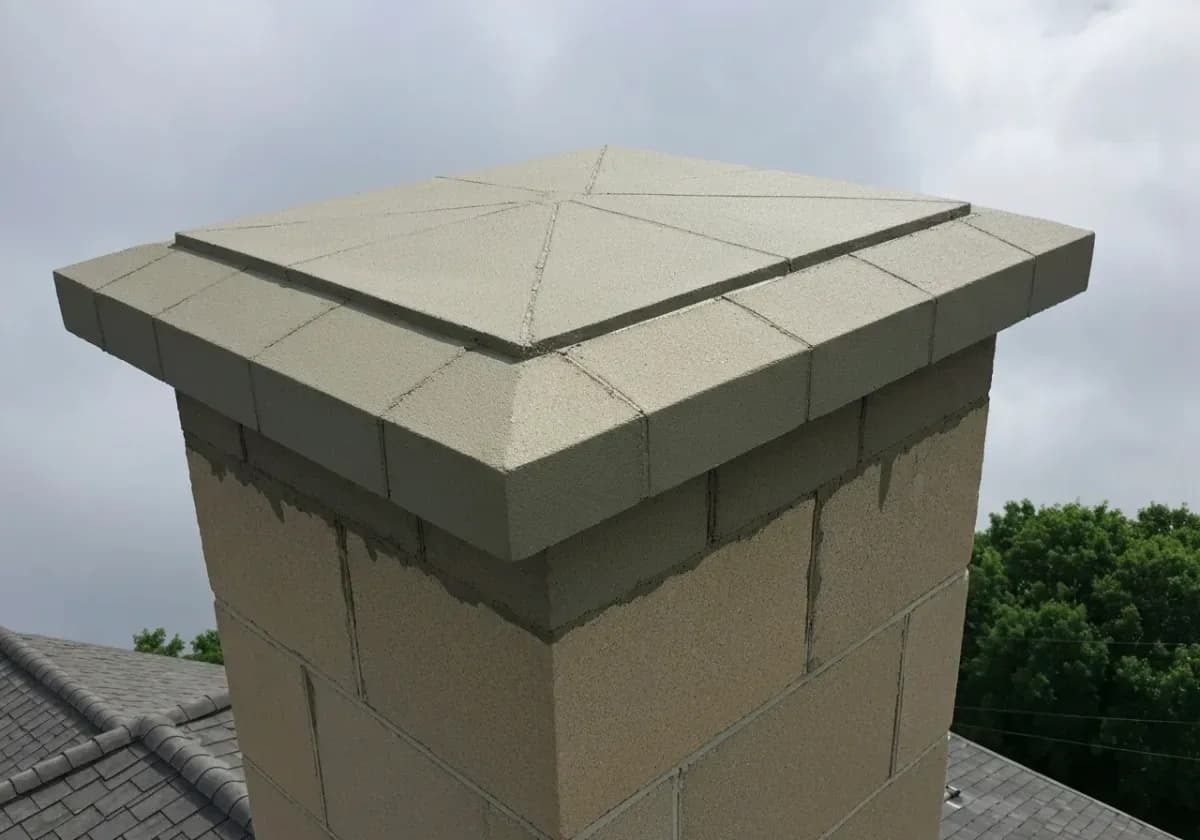
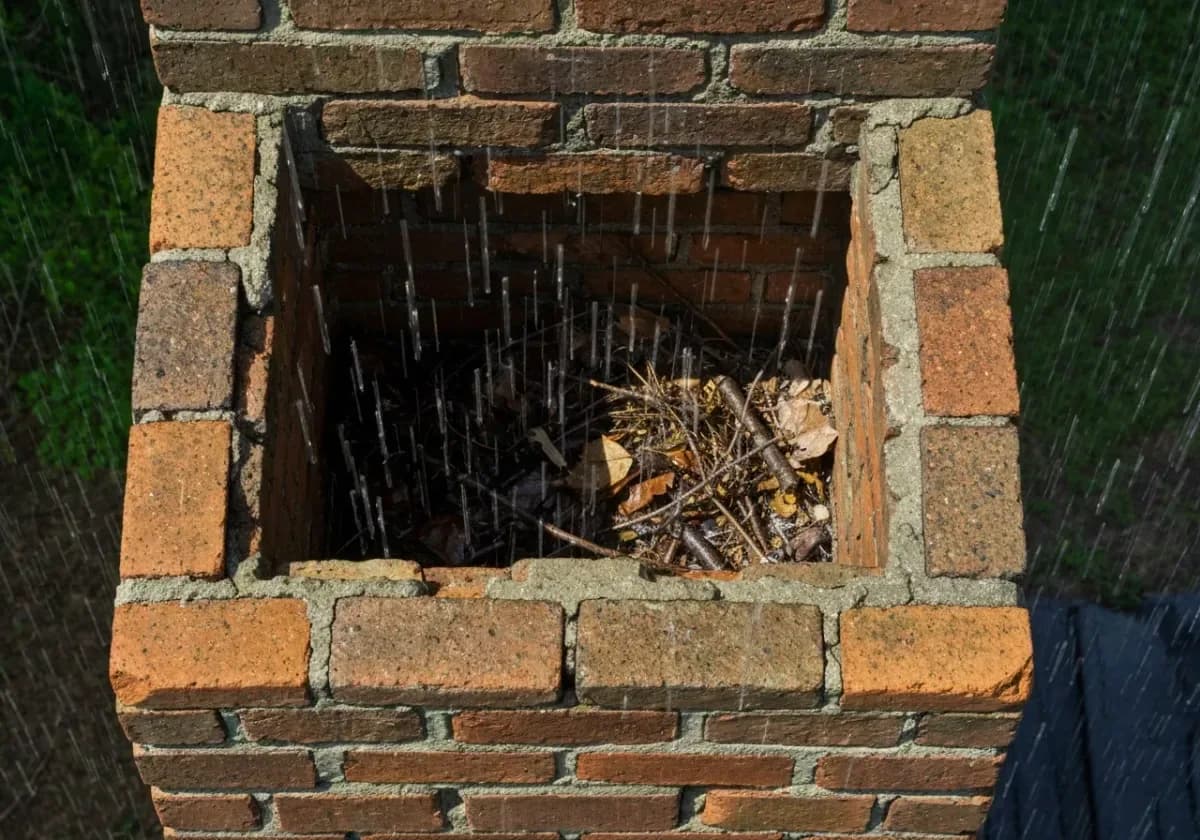
Before and after
Illustrations of what each repair changes on a typical chimney — not photos of a specific job.
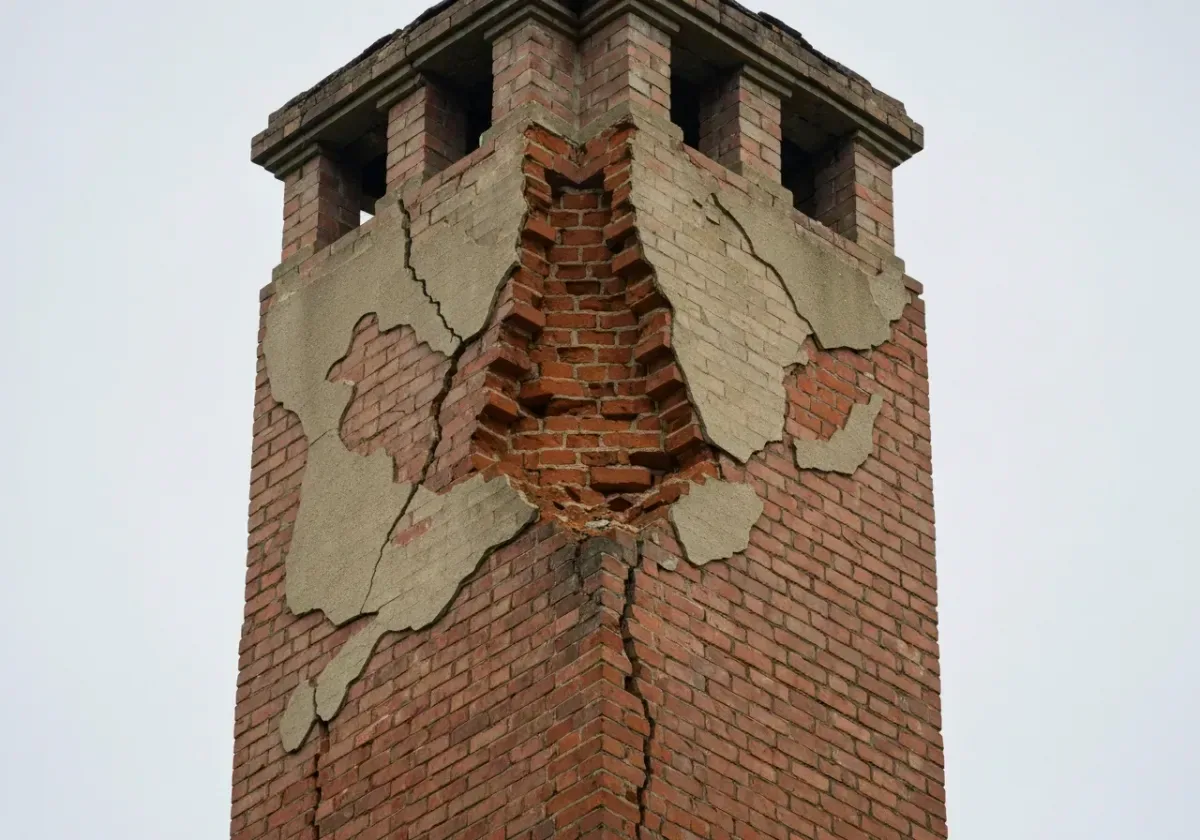 Before
 After
 Before
 After
 Before
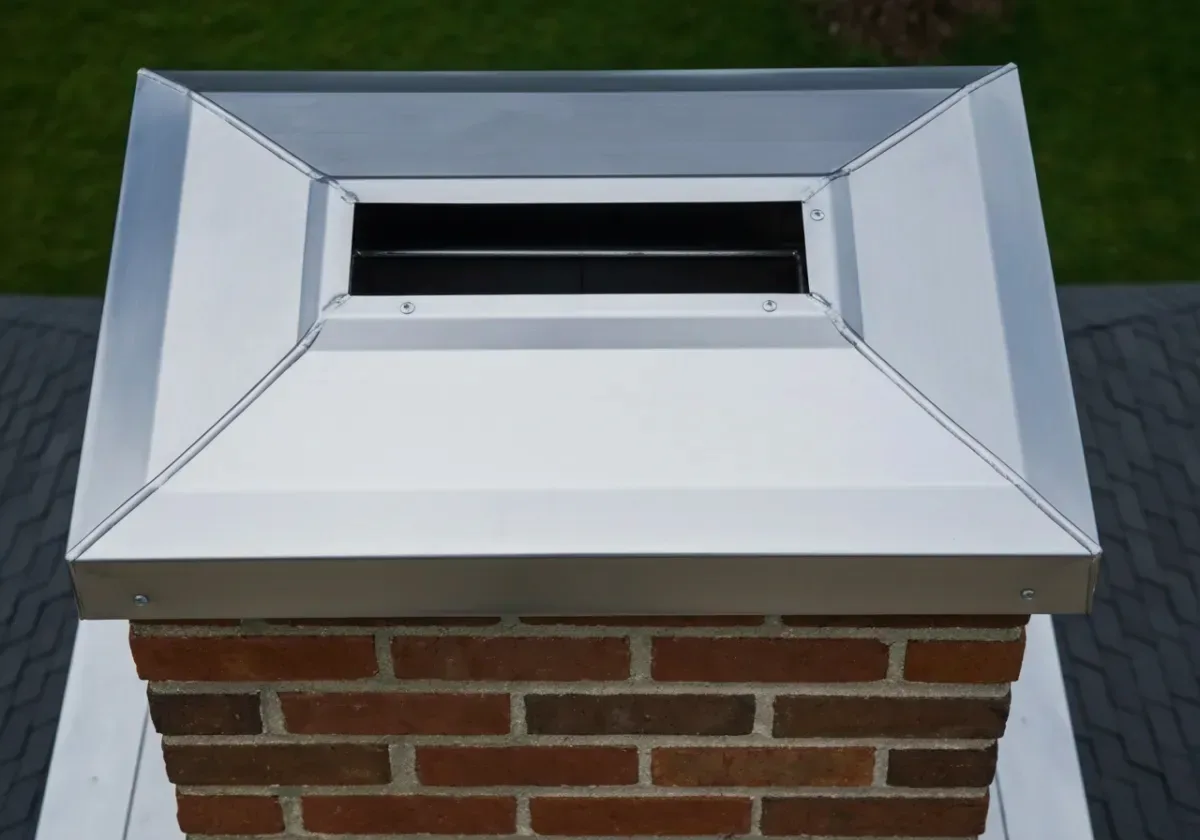 After

Four steps, each one on paper — so you always know what happens next.
Choose a genuine opening on the crew's calendar. Confirmation is immediate.
Liner, crown, cap, flashing and masonry examined in order — each finding photographed.
One document, plain numbers, covering only the work your chimney genuinely needs.
The repair is completed, then handed over with before-and-after photos of every item.
Yes. A newer gas or factory-built fireplace still collects dust, its pilot and burner need cleaning, and the outside termination can be blocked by leaves or nests. Once a year is the usual interval.
Usually the landlord or property manager. We will speak to whoever is responsible for the building and send them the report.
Each chimney is $99 plus tax. The visit includes a camera run and a report in writing, and approving our quote for the work afterward takes $99 off that quote. Without an approved quote it is not returned.
Yes. An older house there may have a brick chimney with a clay flue, or may not; the inspection is how we find out what yours has.
Choose a genuine opening on the crew's calendar. We inspect, quote in writing, and hand over a photo record of every repair.