Gatewood, King County
Our dryer vent price in Gatewood sits between $105 and $295. Ten feet of duct straight out through the laundry wall keeps you near $105. Twenty-odd feet hung under a basement ceiling, an exit up on the roof or a second-floor wall, or a bird's nest jammed against the flap pushes the bill toward $295. Brushes go through from the machine to the hood, the flap is freed, and an airflow meter is held at the outlet both before and after, so the improvement is something you can read off a dial.
Typical investment
$105–$295
Book an inspection
Book your $99 inspection
$99 plus tax, deducted when you approve the repair
Not sure where to start
Pick what you're seeing at your Gatewood home — we'll point you to the right fix.
What we do
The same crew, the same written quote — for Gatewood homes.
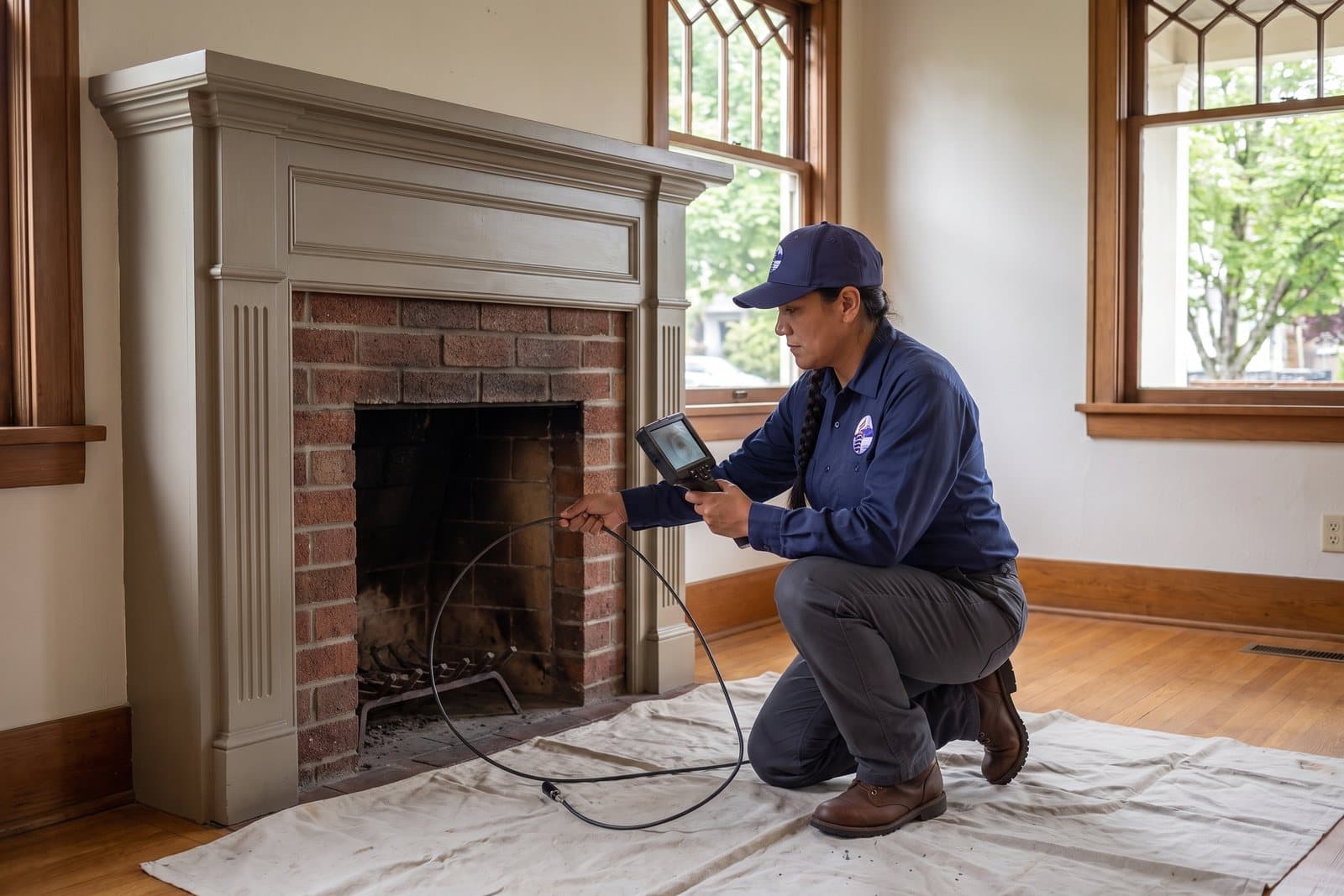
Level 1 examination of everything reachable, with a Level 2 camera pass when the reachable parts leave a question open
Learn more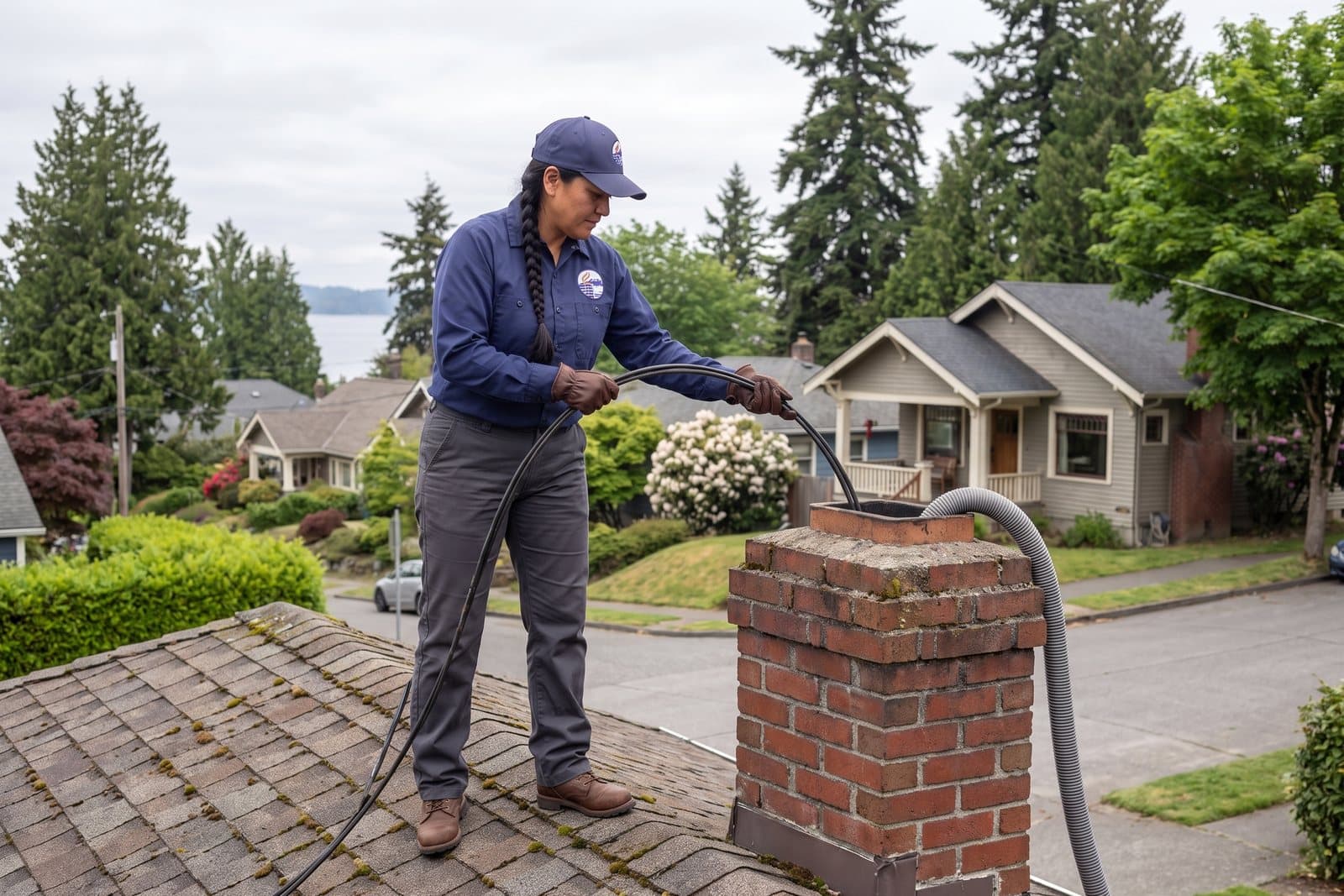
Full-height brushing of the flue with a head sized to its shape and material
Learn more
Assessment of the stack from roofline to crown, with a photo of each defect
Learn more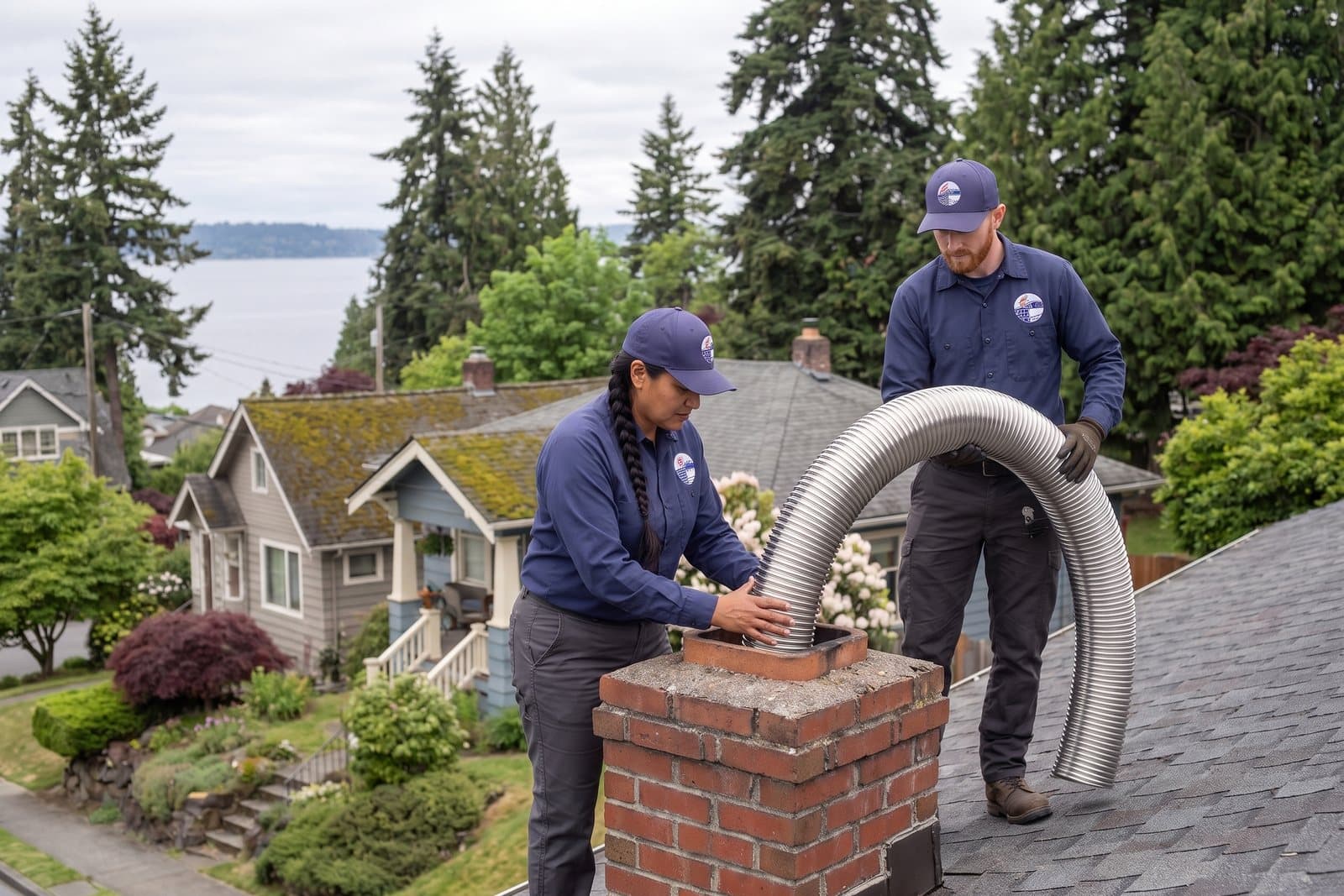
Camera survey and measurement of the existing flue before anything is ordered
Learn more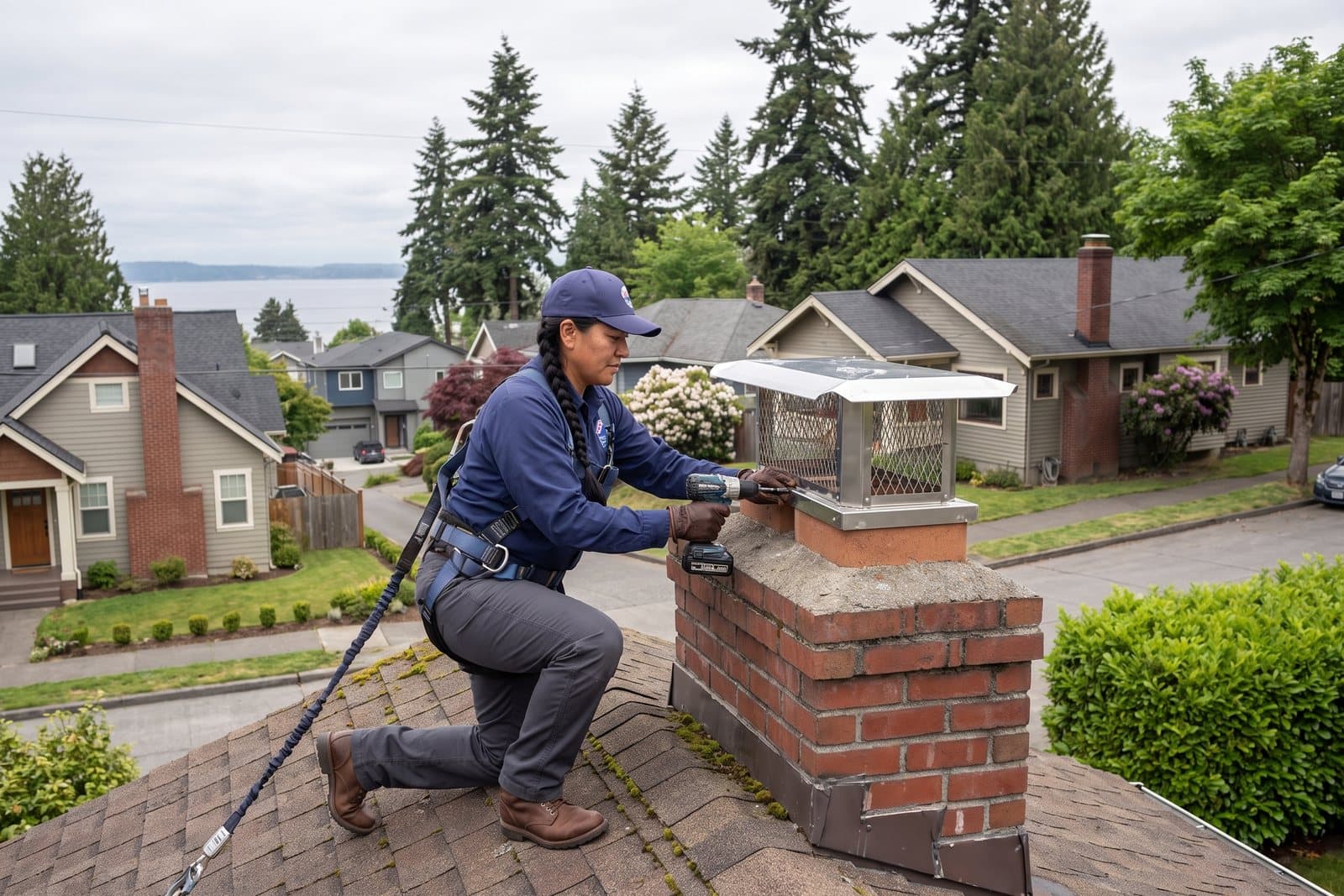
Measurement of each flue tile, or of the whole crown for a multi-flue cap
Learn more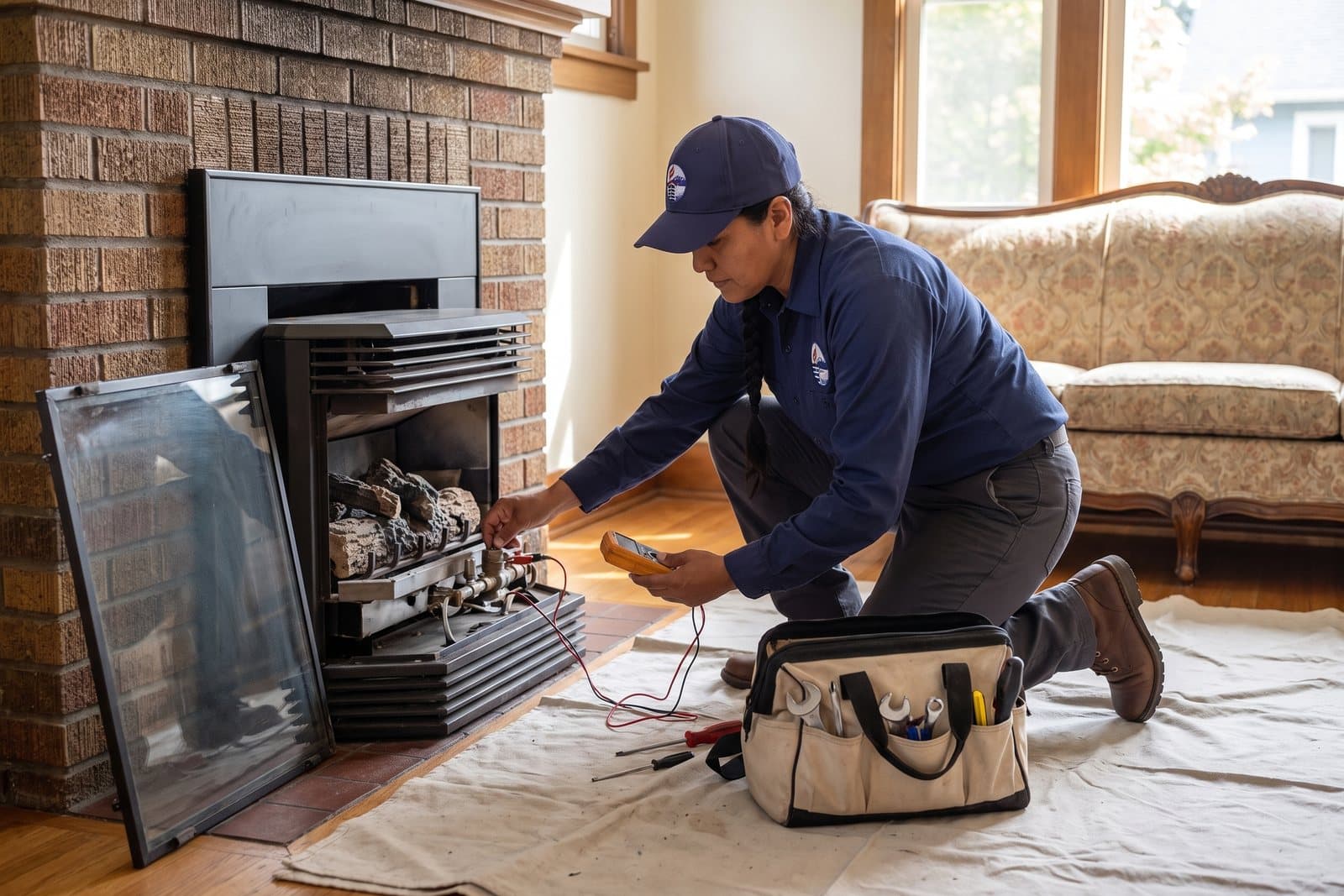
Burner, pilot assembly and firebox cleaned; logs or media put back in the layout the manual shows
Learn moreRanges shown for orientation — the exact figure is written up on-site, after the inspection.
An older house may not have been planned around a laundry room at all. Half the dwellings counted by the Census in Gatewood's ZIP code area were standing by 1960, and close to two in three are detached houses. A house built before electric dryers were common may have had its laundry moved to a basement corner or a back porch decades later, with a vent snaked to the nearest exterior wall. Those improvised runs are long, bend often, and sometimes use foil or plastic duct that would not pass today.
Roughly one housing unit in five in the ZIP code area around Gatewood was built between 1940 and 1959, Census estimates show, on top of the 30 percent that predate 1940. A home from those years may not have been planned with a dryer exhaust in mind, and if so, today's vent was fitted later, wherever it could be made to go.
Current code leaves little room for improvisation. Under M1502 in Washington's 2021 residential code, the exhaust travels through smooth metal duct, 4 inches nominal, and ends outdoors behind a backdraft damper that may never be swapped for a screen. The outlet keeps 3 feet away from windows, doors and other openings. Thirty-five feet is the most a run may measure, and that allowance shrinks by five with every 90-degree turn; the flexible connector behind the machine stops at 8 feet, and an inline booster fan is not an approved fix. An old run that breaks those rules gets cleaner when we brush it, but not compliant, and we will tell you which parts fall short.
Every dryer vent cleaning we do in Gatewood includes:
Smoke coming back into the room, or a smell that won't go? Book the inspection first.
Book nowThe classic warning is a dryer that needs two cycles for one load. Lint escapes the trap, settles in the duct, and narrows it a little more every load until the dryer runs hot and long. A clogged hood flap outside, stuck shut with lint or wedged by a nest, does the same from the other end. Restricted airflow wastes energy, wears the dryer's heating element and thermostat, and leaves a flammable layer exactly where the heat is.
Seattle's windier months, by WeatherSpark's count, run from mid-October to late April, with the wind mostly from the south outside midsummer and December the breeziest month. The city's windstorm analysis adds that wind picks up speed passing over hills and ridges, and few spots in Seattle are higher than the Gatewood hill.
A hood on a wall that faces into that weather spends the winter being shoved. A lightweight flap can be pinned shut by gusts, or close onto a ridge of lint and stop sealing, so cold air and rain find their way into the duct. Here we note which way the hood points and whether its damper swings and drops back by itself, and where a sturdier or better-shielded hood would suit the wall, we suggest one.
We slide the machine out, check the flexible transition piece and disconnect it from the wall.
An anemometer reading at the outside hood gives us the airflow before any cleaning.
Rotary brushes on flexible rods work from inside to out, with a vacuum collecting the lint at the far end.
The outdoor hood and its damper are cleaned so the flap opens freely and closes on its own.
A second reading shows the improvement. If the run itself is the problem, too long or the wrong duct, we tell you plainly.
What this work is quoted at for Gatewood homes — the exact figure comes from the $99 on-site inspection, credited toward the work.
| Service | Price in Gatewood | What that covers |
|---|---|---|
| Dryer Vent Cleaning | $105–$295 | Full run cleaned; roof or upper-floor terminations at the top |
| Chimney Sweep | $189–$449 | Full flue swept, Level 1 inspection included |
| Chimney Inspection | $99 plus tax | Level 1 visual; Level 2 adds a full camera scan |
| Chimney Relining | From $1,900 | Full-length stainless liner, sized to the appliance |
| Chimney Repair | From $425 | Masonry repair — brick and mortar, scoped after diagnosis |
Ranges are what these jobs are quoted at in Gatewood. The exact figure is set on site after a $99 inspection (credited toward the job if you go ahead), and you approve it before any work starts.
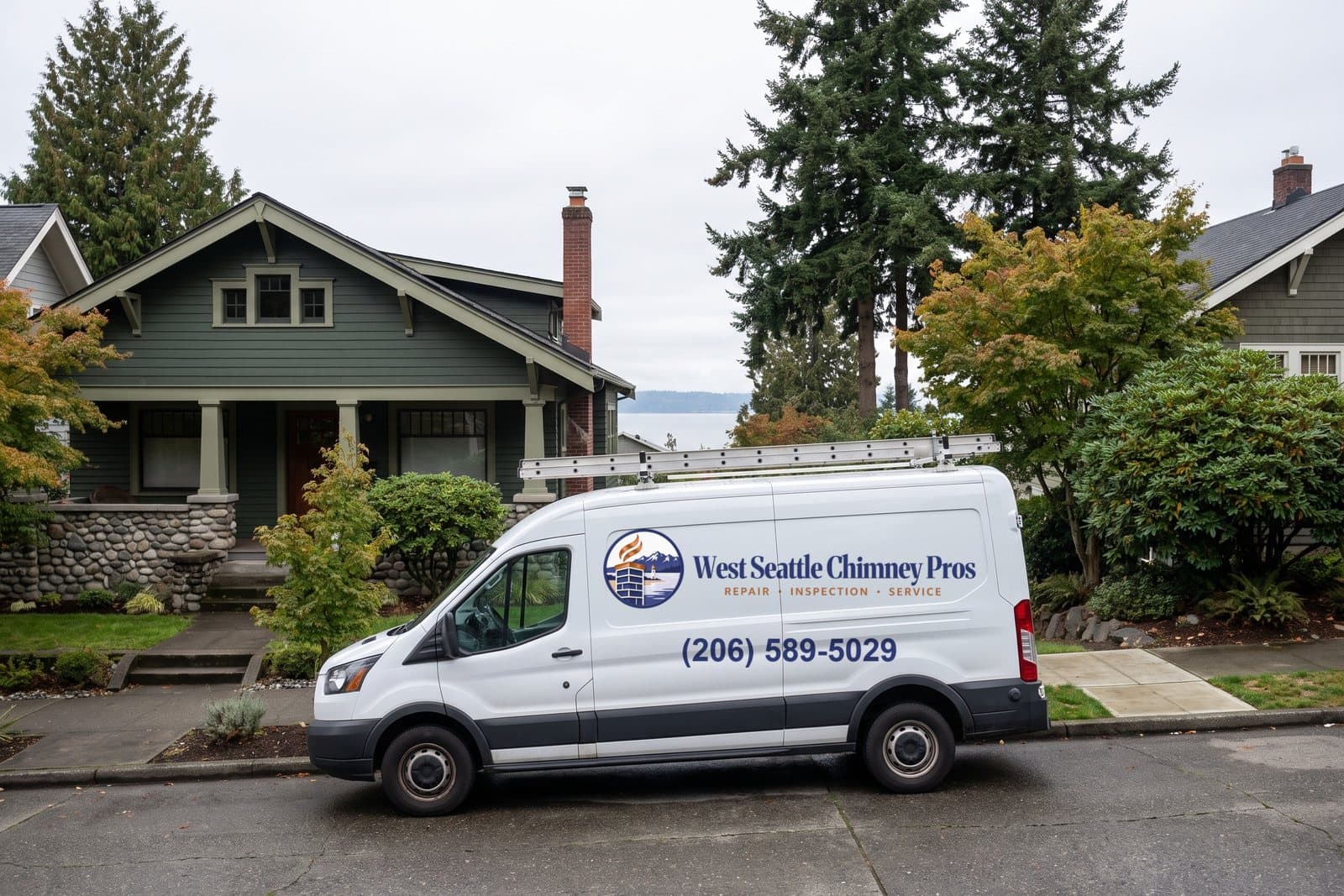
Gatewood is a hilltop neighborhood named for Carlisle Gatewood, the developer who financed its streetcar line in 1907, with older homes, about three in ten of those in its ZIP code area built before 1940 and half before 1960.
GatewoodKing County, WA · 47.545, -122.386
Before and after
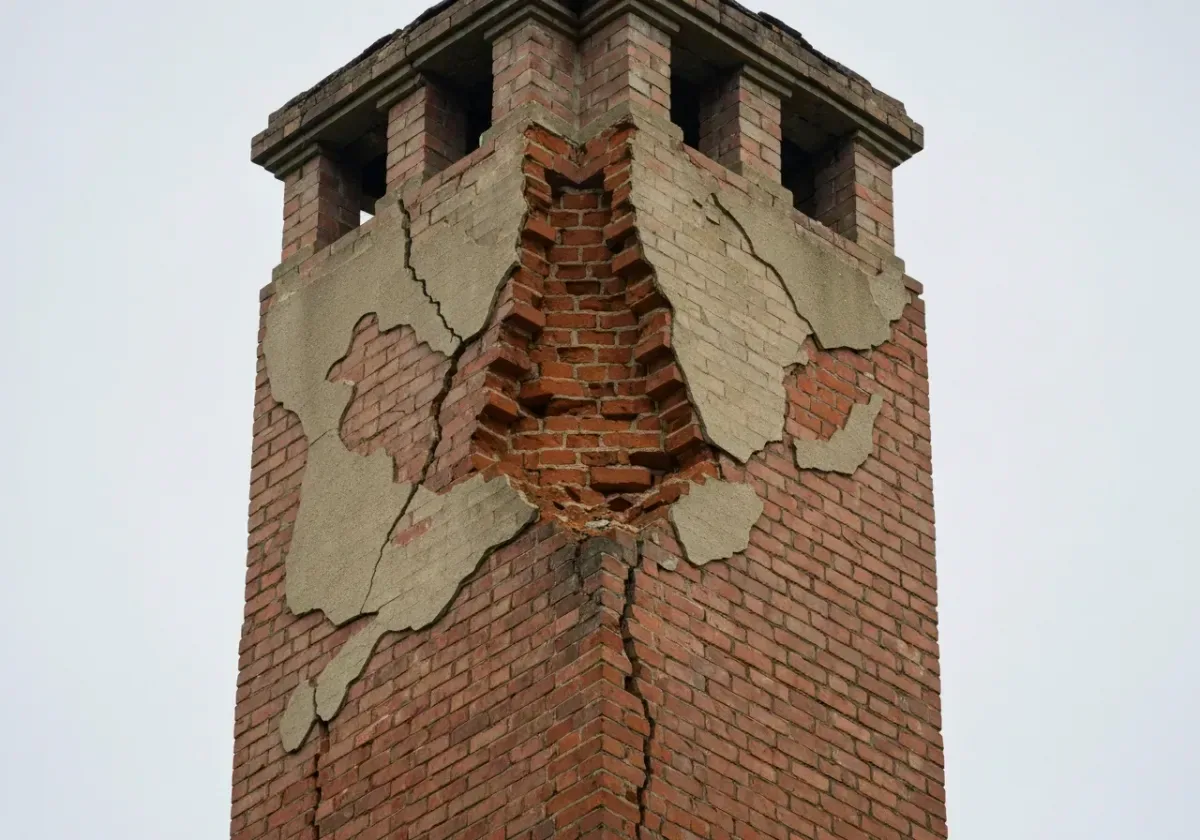
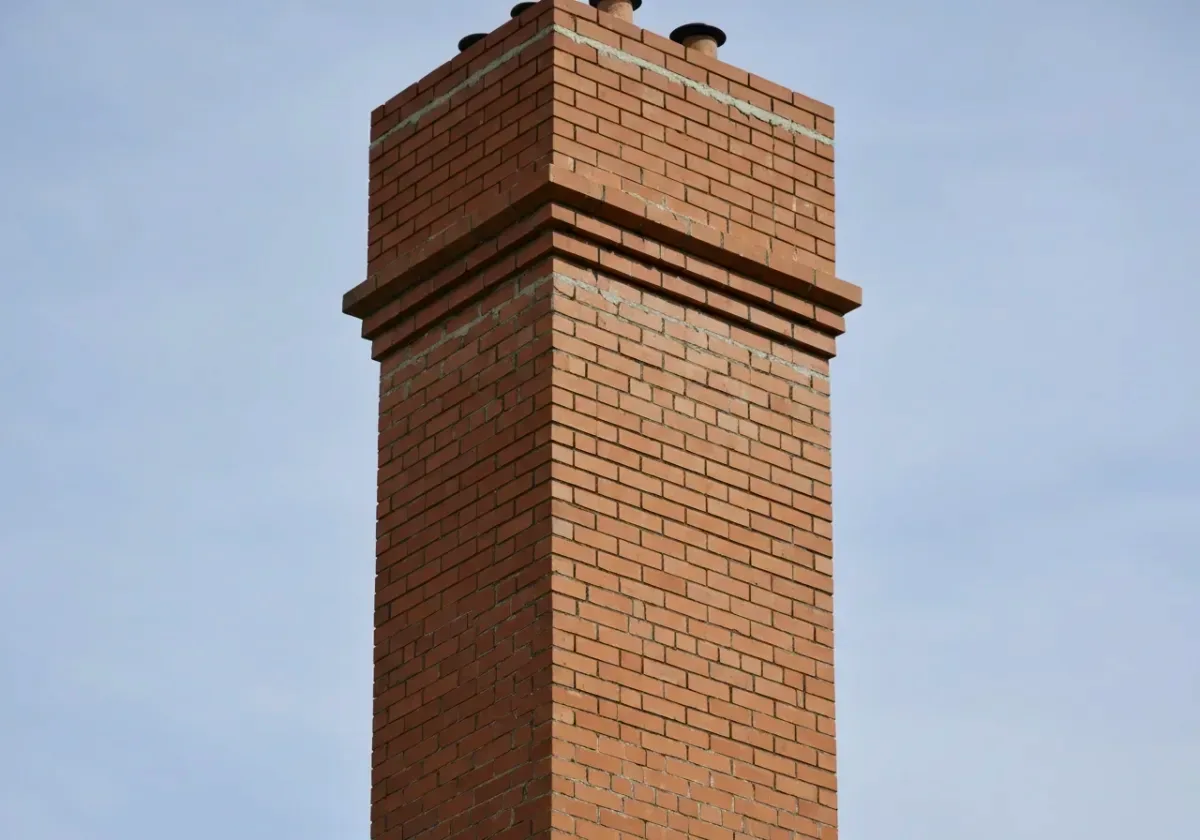
Illustrations of what each repair changes on a typical chimney — not photos of a specific job.
 Before
 After
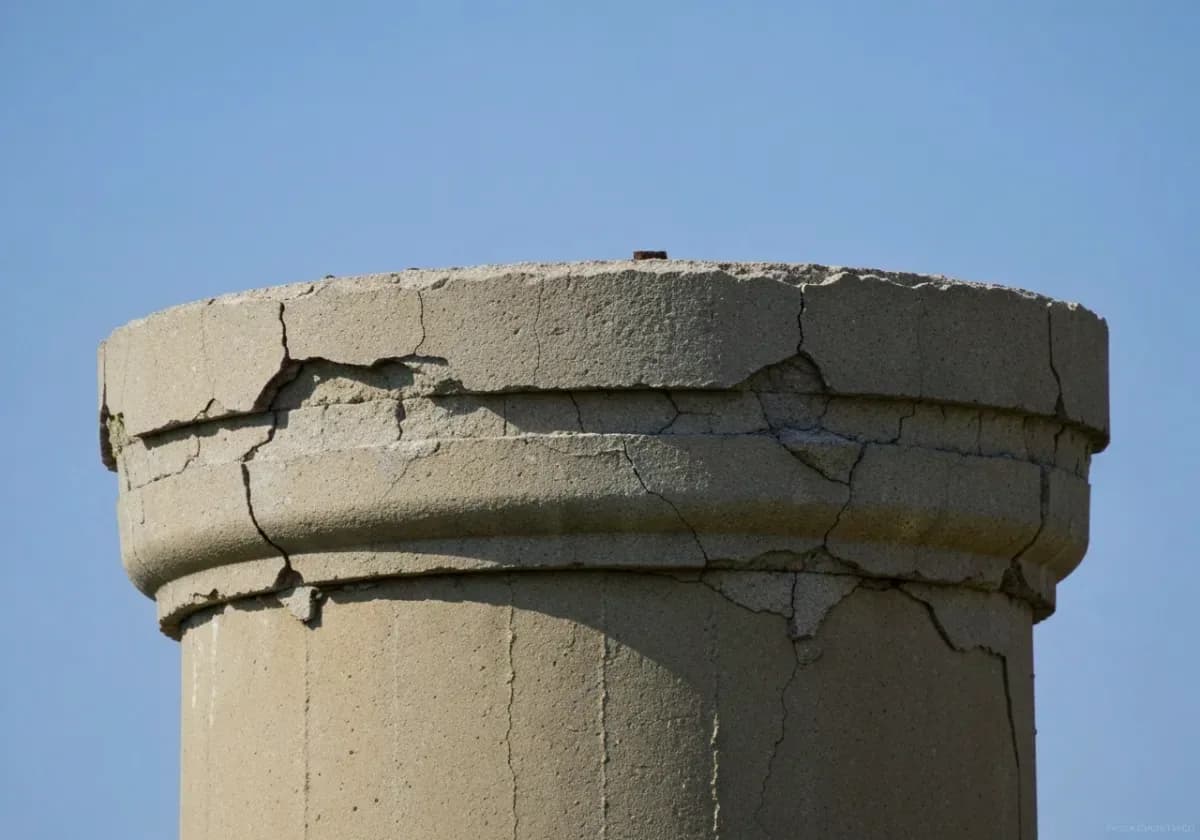 Before
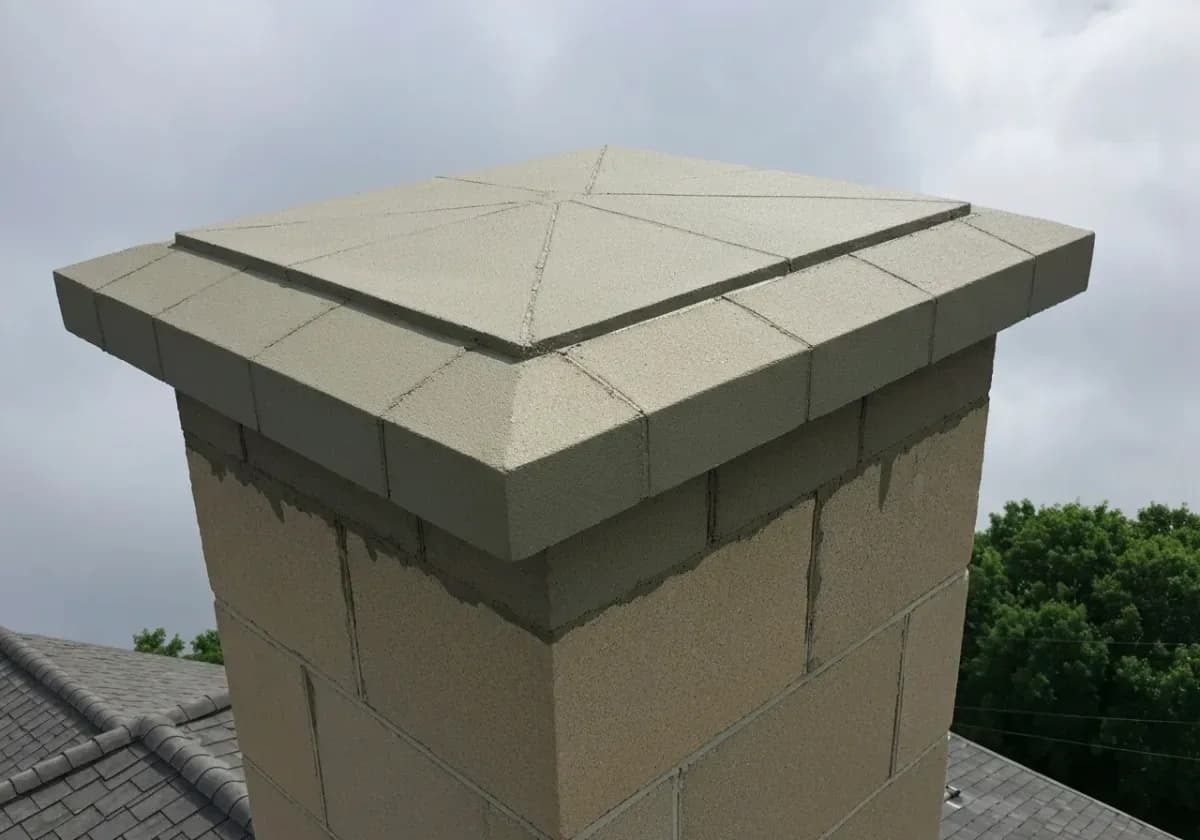 After
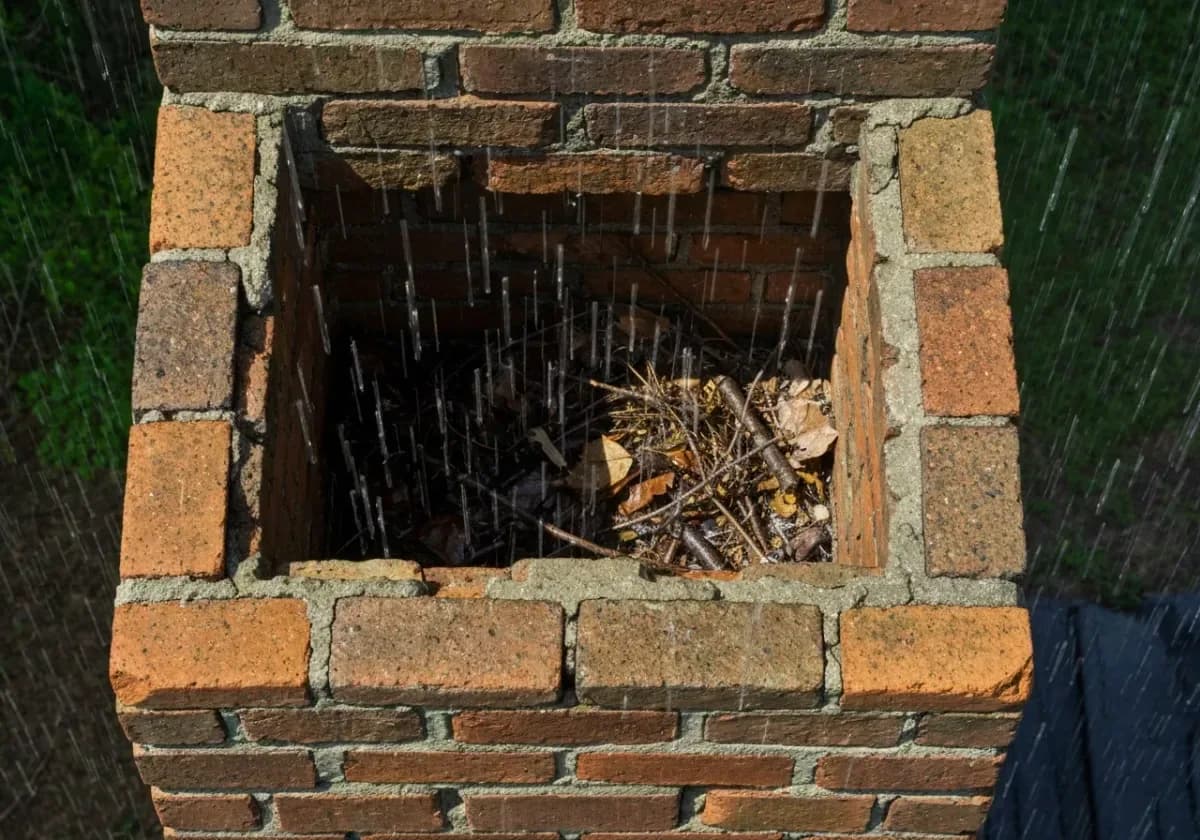 Before
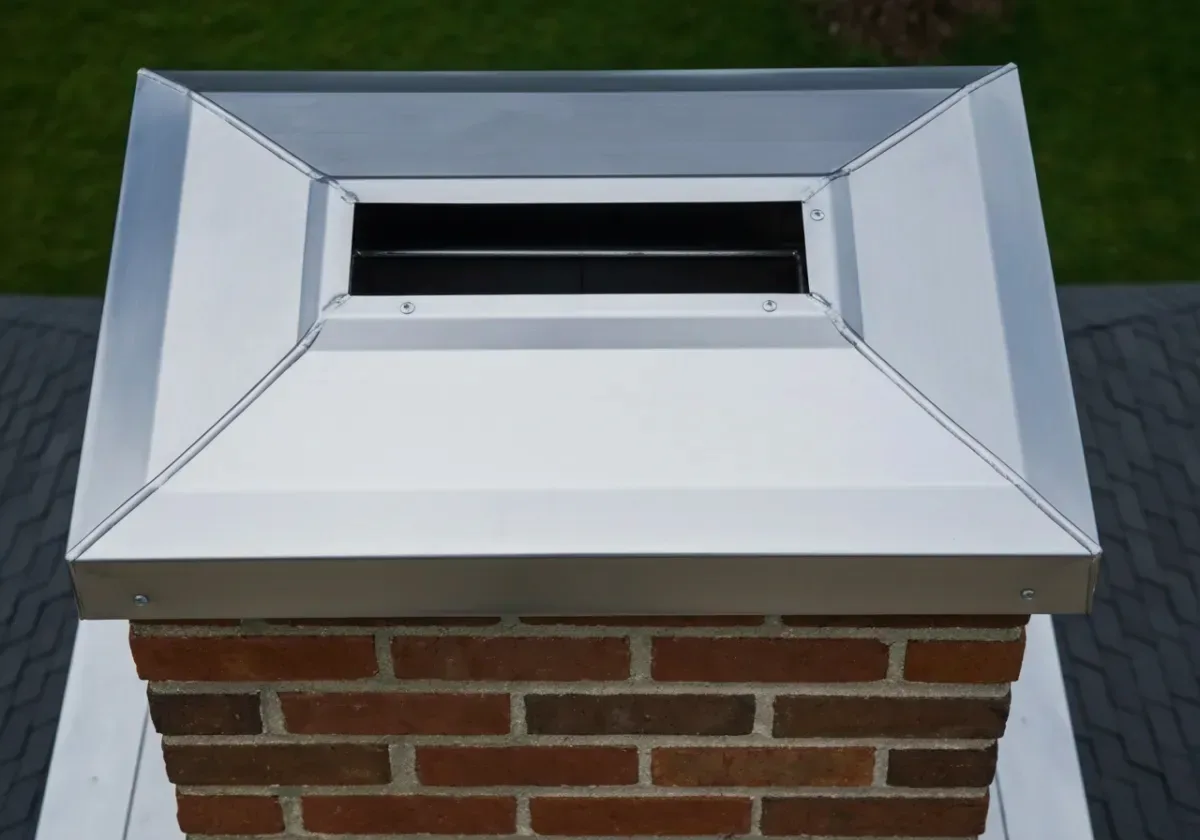 After

Four steps, each one on paper — so you always know what happens next.
Choose a genuine opening on the crew's calendar. Confirmation is immediate.
Liner, crown, cap, flashing and masonry examined in order — each finding photographed.
One document, plain numbers, covering only the work your chimney genuinely needs.
The repair is completed, then handed over with before-and-after photos of every item.
$105 to $295, depending on run length, where the vent exits, and whether there is a blockage such as a nest.
For a typical household, every twelve months. A big family running loads daily, or a duct that wanders, may clog faster; the meter reading is how we judge it.
Not for cleaning, only for price. A rooftop hood takes more setup and lands near the top of the range.
Only on request. Chimney inspections are booked separately, $99 plus tax per chimney, with the fee credited against work you approve.
A $99 on-site inspection, a written quote before any work, and photos of every item we touch.