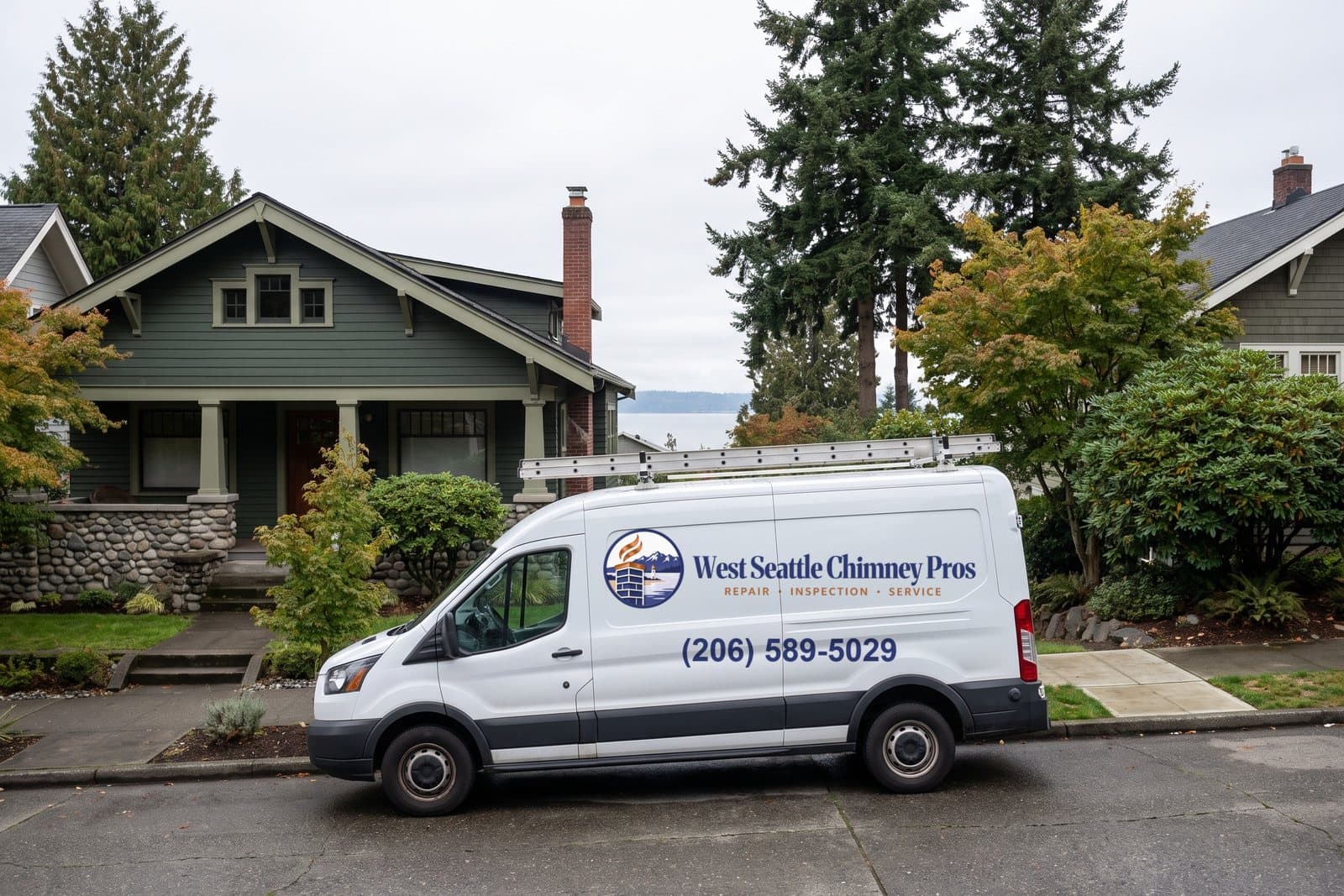
Seaview, King County
Smoke that cools on its way up leaves a residue on the flue walls, and that residue is creosote. The first stage brushes away. The second is crunchy and flaky and needs more work. The third is a hard, shiny glaze, like dried tar poured down the walls, and it is the one that fuels chimney fires. Removing it from a Seaview chimney starts at $245 with us; heavy glaze calling for a chemical treatment or repeated rotary passes is priced higher, after the camera has shown us its stage.
Typical investment
From $245
Book an inspection
Book your $99 inspection
$99 plus tax, deducted when you approve the repair
Not sure where to start
Pick what you're seeing at your Seaview home — we'll point you to the right fix.
What we do
The same crew, the same written quote — for Seaview homes.
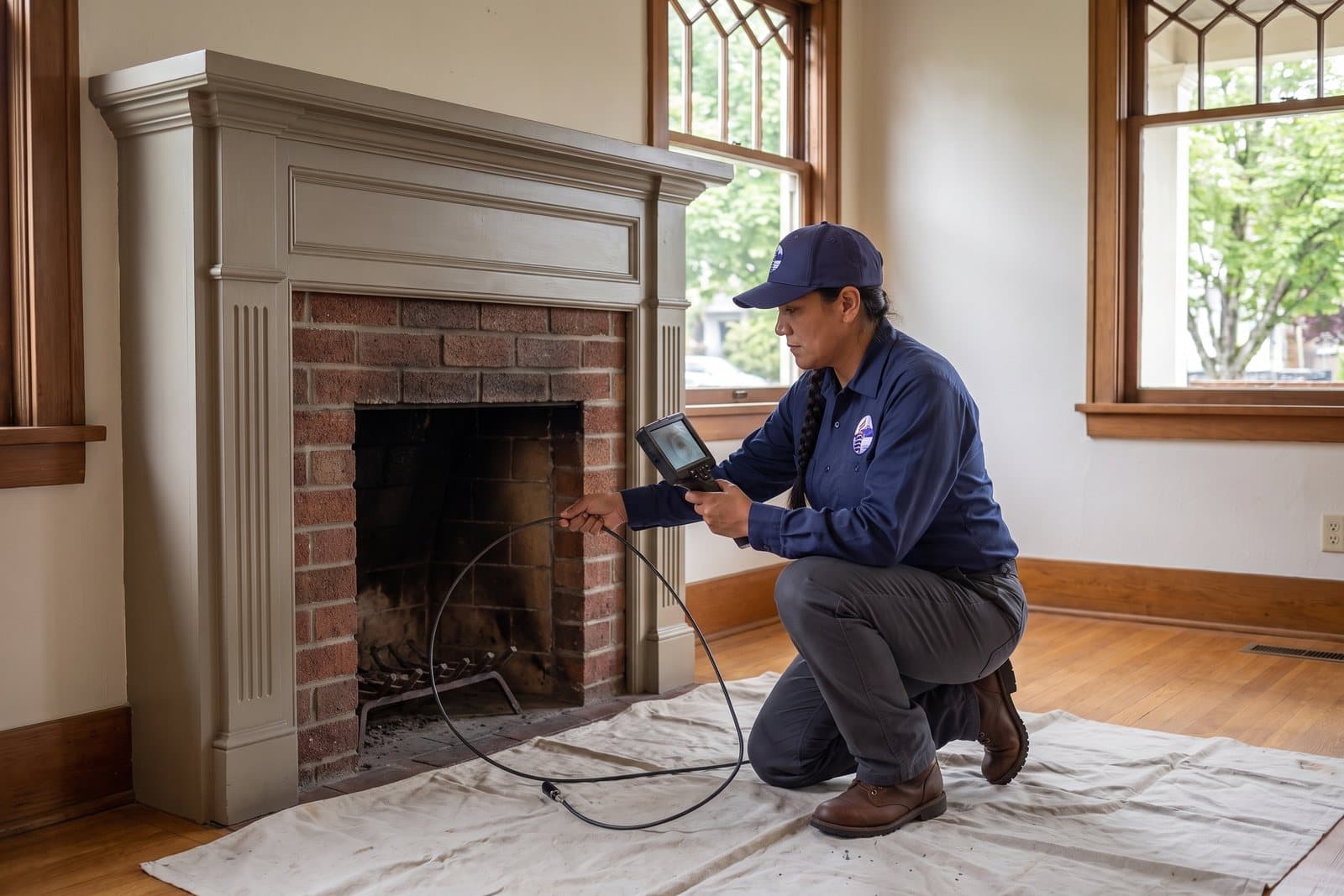
Level 1 examination of everything reachable, with a Level 2 camera pass when the reachable parts leave a question open
Learn more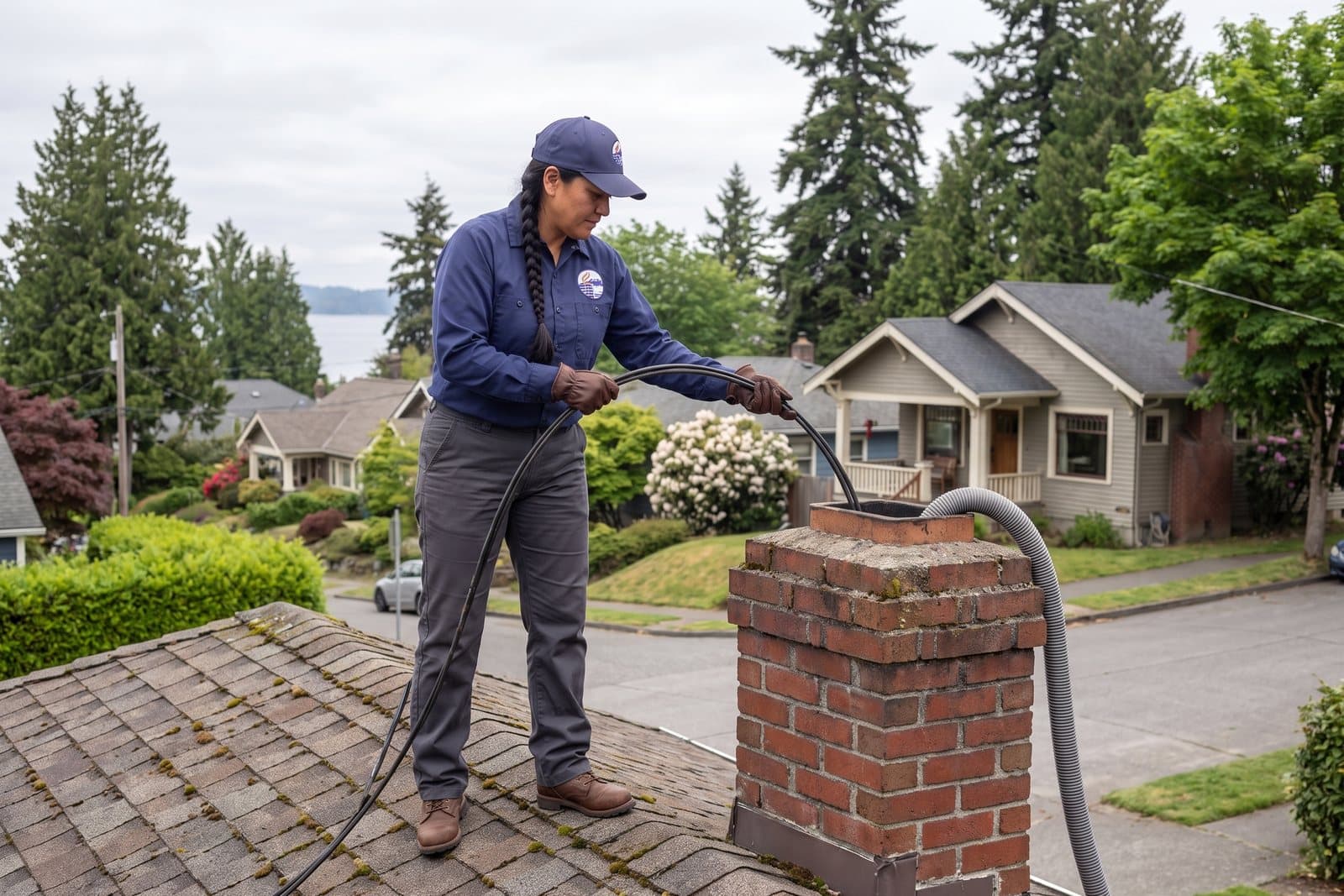
Full-height brushing of the flue with a head sized to its shape and material
Learn more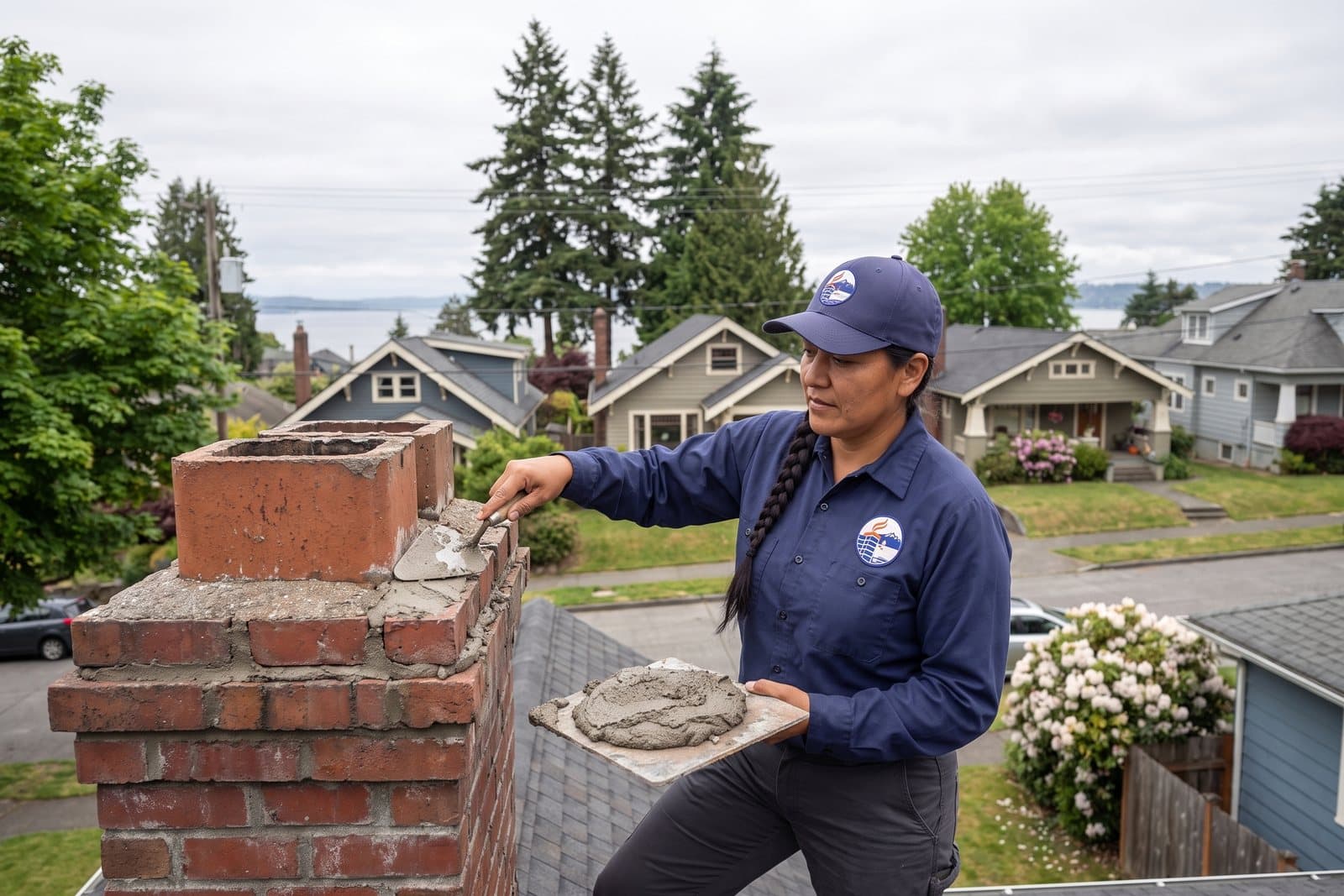
Assessment of the stack from roofline to crown, with a photo of each defect
Learn more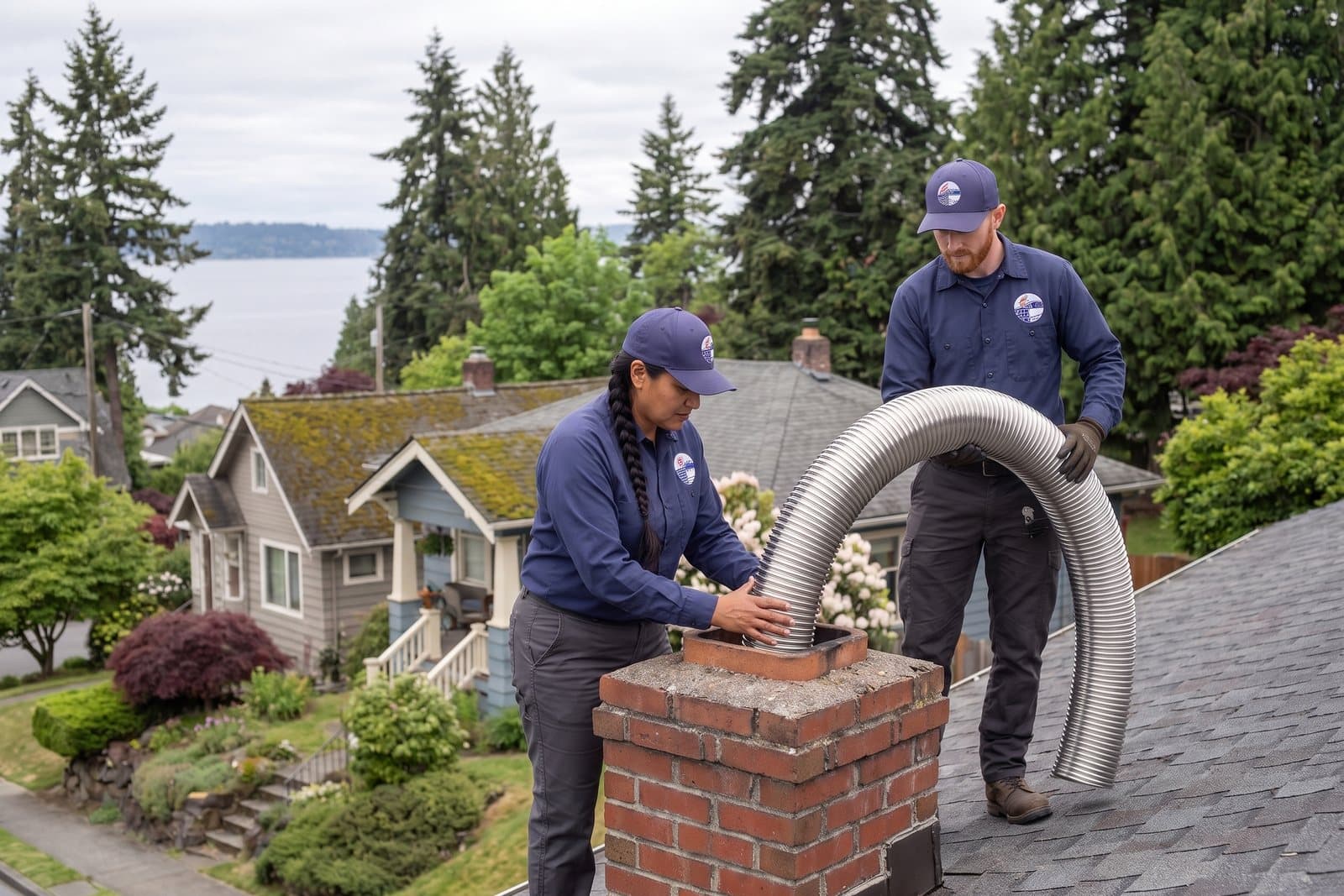
Camera survey and measurement of the existing flue before anything is ordered
Learn more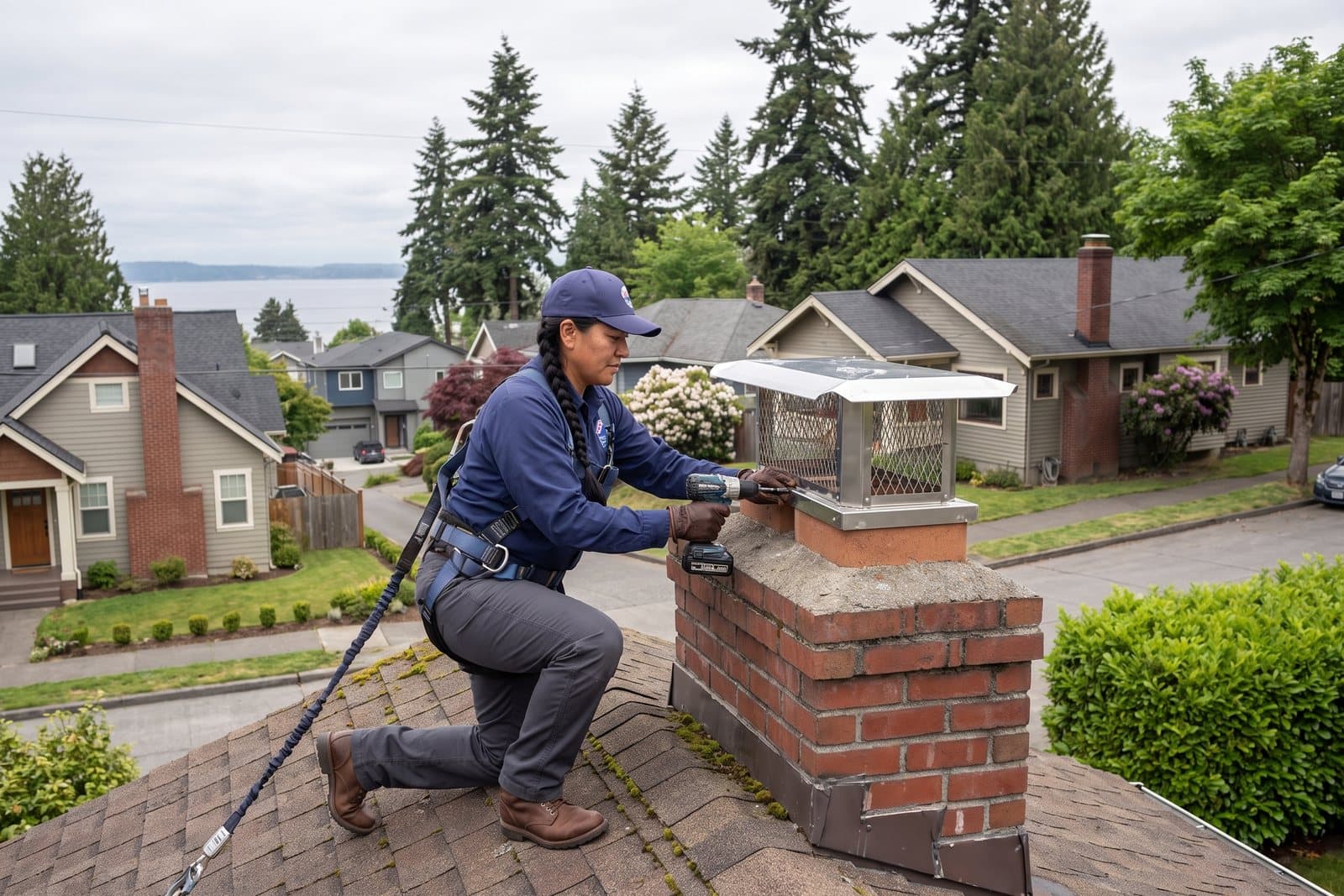
Measurement of each flue tile, or of the whole crown for a multi-flue cap
Learn more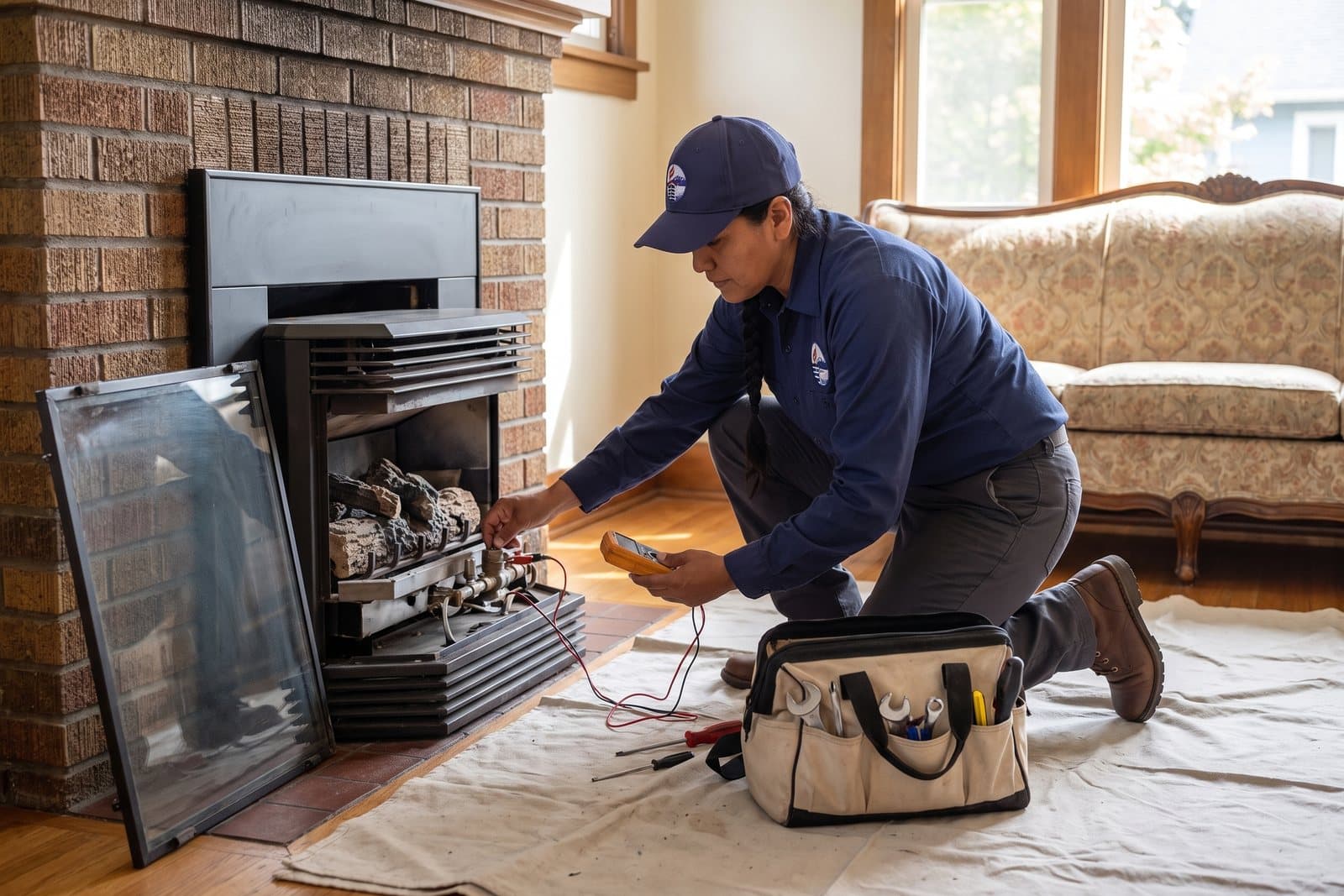
Burner, pilot assembly and firebox cleaned; logs or media put back in the layout the manual shows
Learn moreRanges shown for orientation — the exact figure is written up on-site, after the inspection.
On this side of West Seattle, a fireplace is usually an extra rather than the furnace. Census estimates put wood as the main heat in almost no homes in either ZIP code area that covers Seaview, and in the southern one the estimate is smaller than its own margin of error. Occasional fires are not harmless, though. A fire lit on a raw evening in a cold chimney, damped down to make it last, is close to the worst case for creosote, because the smoke crawls up a cold flue and condenses on the way.
When the 1851 landing party looked at this western side of the peninsula, Wikipedia's West Seattle article says, most of them judged it too exposed, with high winds and tides, and moved across Elliott Bay. Seaview faces that same open water. WeatherSpark's Seattle profile gives December an average high of 47 and a low of 38 degrees Fahrenheit, inside a cool stretch of about three and a half months that ends on March 1.
A chimney on an exposed wall loses heat to the wind all winter. The colder the flue, the sooner smoke condenses in it, and condensed smoke is creosote. That is why we pay attention to the outside faces of a Seaview stack, not only the inside: a chimney standing on the weather side of the house, or rising far above the roof, will usually collect deposits faster than a sheltered interior one burning the same wood.
Every creosote removal we do in Seaview includes:
Smoke coming back into the room, or a smell that won't go? Book the inspection first.
Book nowThe Puget Sound Clean Air Agency's daily rules point in the same direction as good creosote prevention. Its legal overview limits chimney smoke to 20 percent opacity over any six consecutive minutes of an hour, and allows only seasoned, dry firewood or manufactured logs. Wet wood makes thick smoke and thick deposits. If your fires smoke a lot, that is usually the wood, and a moisture meter is a cheaper fix than a glazed flue.
Before quoting we film the flue, so the price reflects what is really on the walls, not a guess from the firebox.
Flaky deposits are cut with rotary heads; glaze is treated with a modifier that turns it brittle over one or more visits.
Whatever falls lands in the smoke chamber or firebox; we vacuum it up, bag it and carry it out to the van.
Thick creosote can hide damage, so the camera goes up again once the walls are bare.
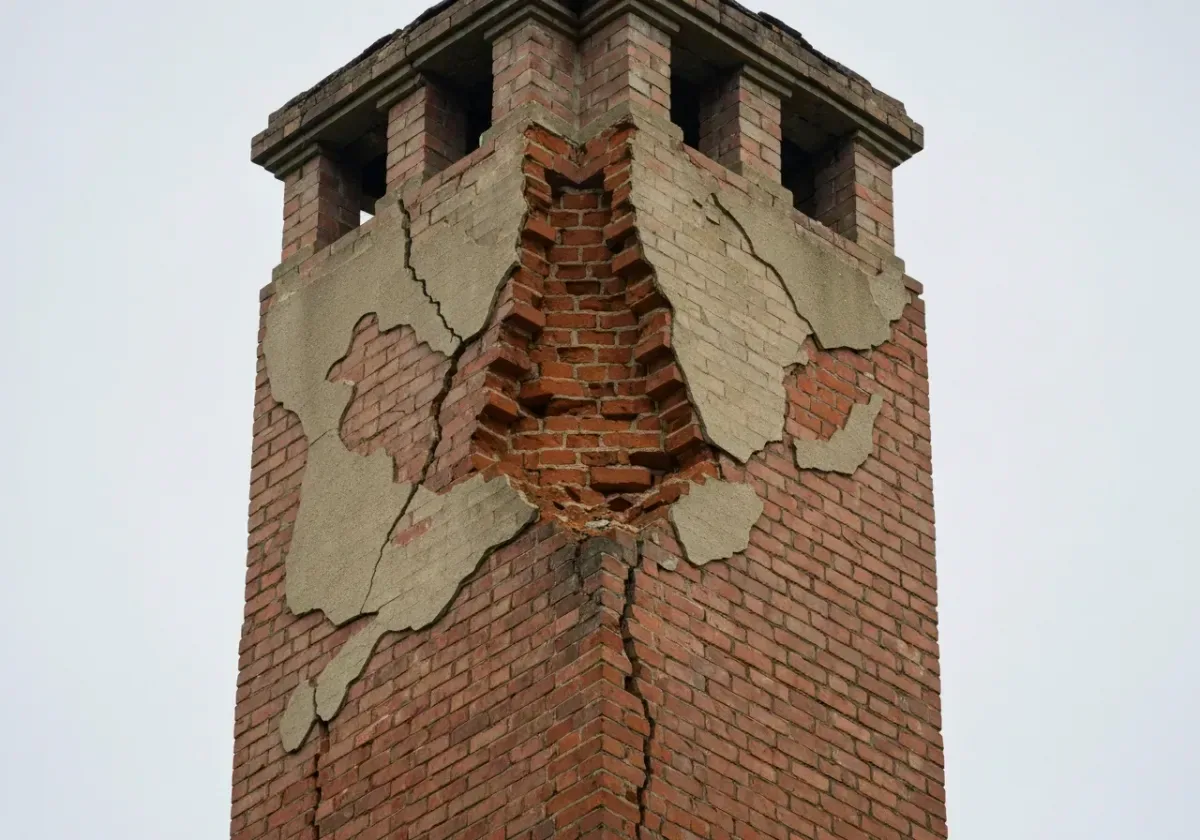
Unreinforced brick chimneys around Seattle were damaged in three deep earthquakes, 1949, 1965 and 2001, and each time West Seattle had pockets of heavy damage, according to the USGS authors who mapped 2001's toll. A USGS Earthquake Hazards Program simulation offers one reason: a bedrock fold some 200 meters across, roughly 300 meters underground, that focuses waves coming from the south.
Creosote and earthquake damage are a bad pair. Glaze fills hairline cracks in flue tile and makes them invisible to a camera. A chimney fire, if one starts, can then reach through those cracks toward the framing. Removing heavy creosote is therefore also the first step to finding out whether the flue survived the quakes intact.
What this work is quoted at for Seaview homes — the exact figure comes from the $99 on-site inspection, credited toward the work.
| Service | Price in Seaview | What that covers |
|---|---|---|
| Creosote Removal | From $245 | Priced by creosote stage — glazed stage 3 is the heavy end |
| Chimney Sweep | $189–$449 | Full flue swept, Level 1 inspection included |
| Chimney Inspection | $99 plus tax | Level 1 visual; Level 2 adds a full camera scan |
| Chimney Relining | From $1,900 | Full-length stainless liner, sized to the appliance |
| Chimney Repair | From $425 | Masonry repair — brick and mortar, scoped after diagnosis |
Ranges are what these jobs are quoted at in Seaview. The exact figure is set on site after a $99 inspection (credited toward the job if you go ahead), and you approve it before any work starts.
Seaview is a west-facing neighborhood south of Alki and Genesee that runs down to Beach Drive SW, on Puget Sound, with homes of mixed ages, pre-1940 houses making up between 23% and 30% of the two ZIP code areas it straddles.
SeaviewKing County, WA · 47.556, -122.390
Before and after
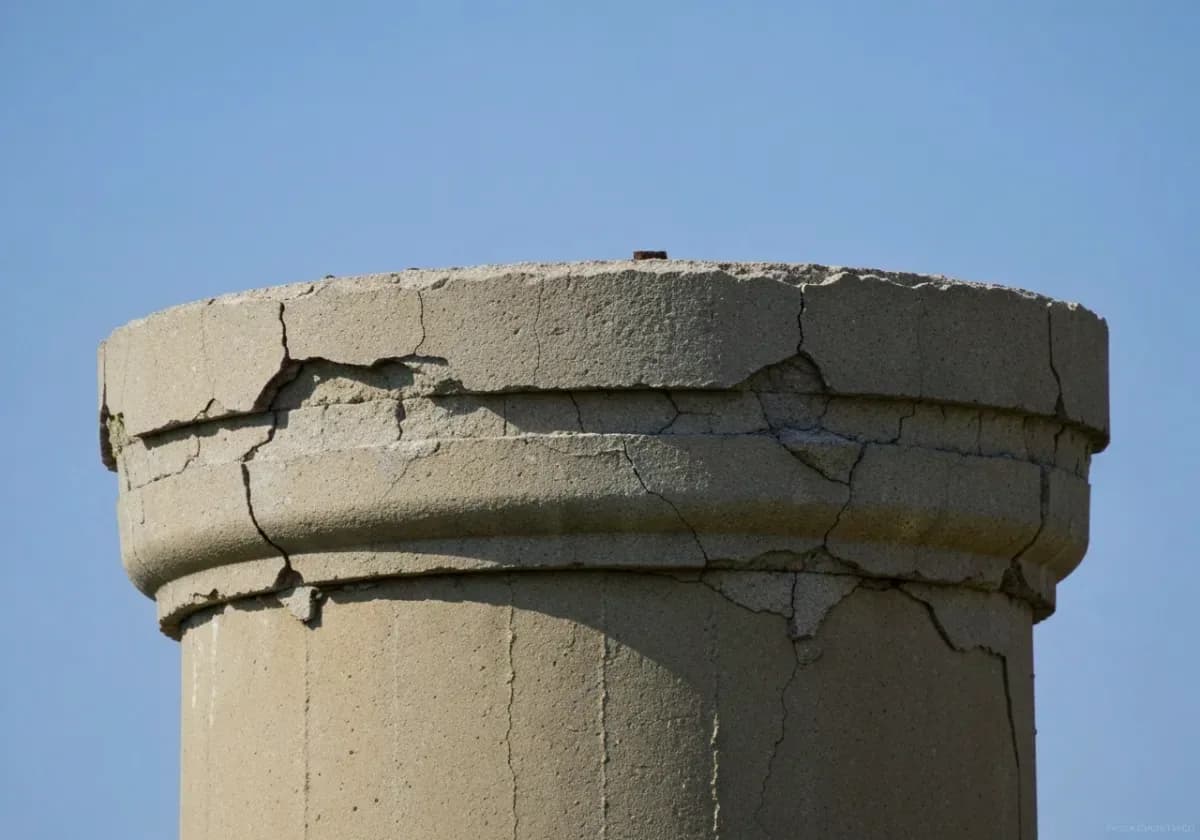
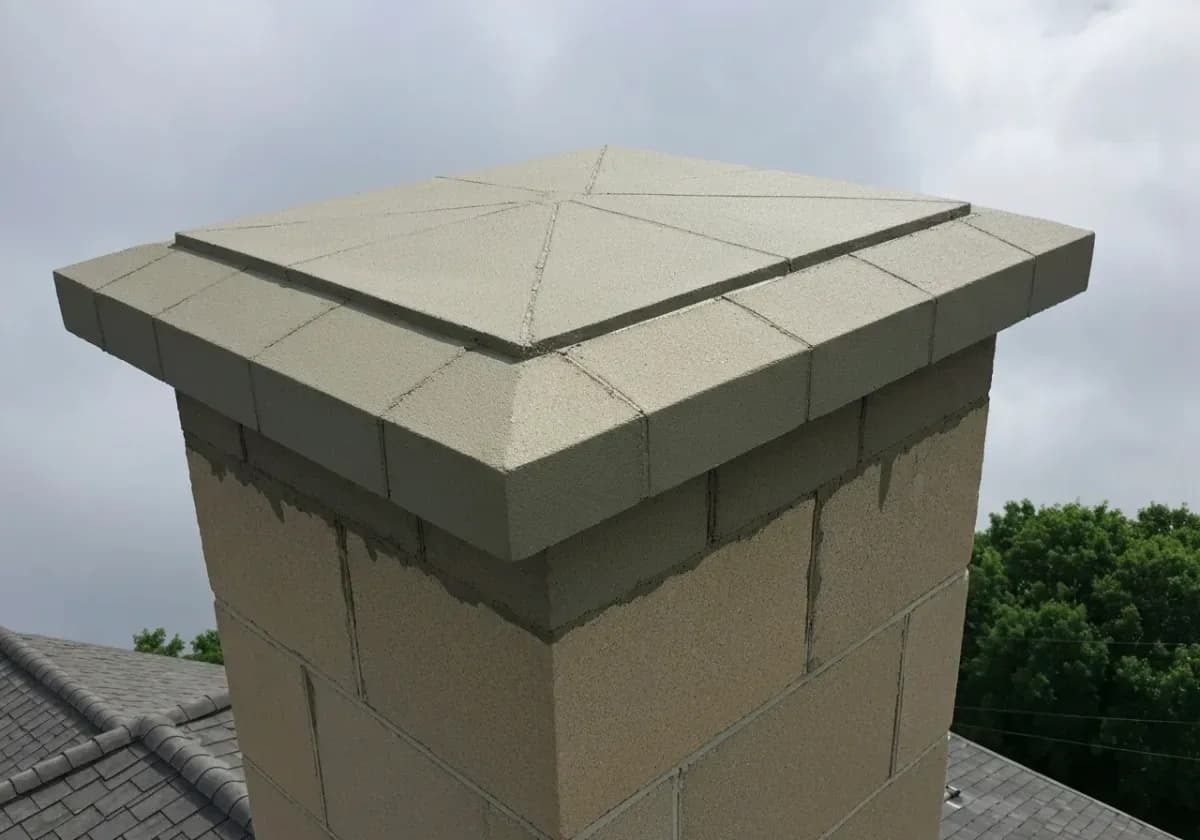
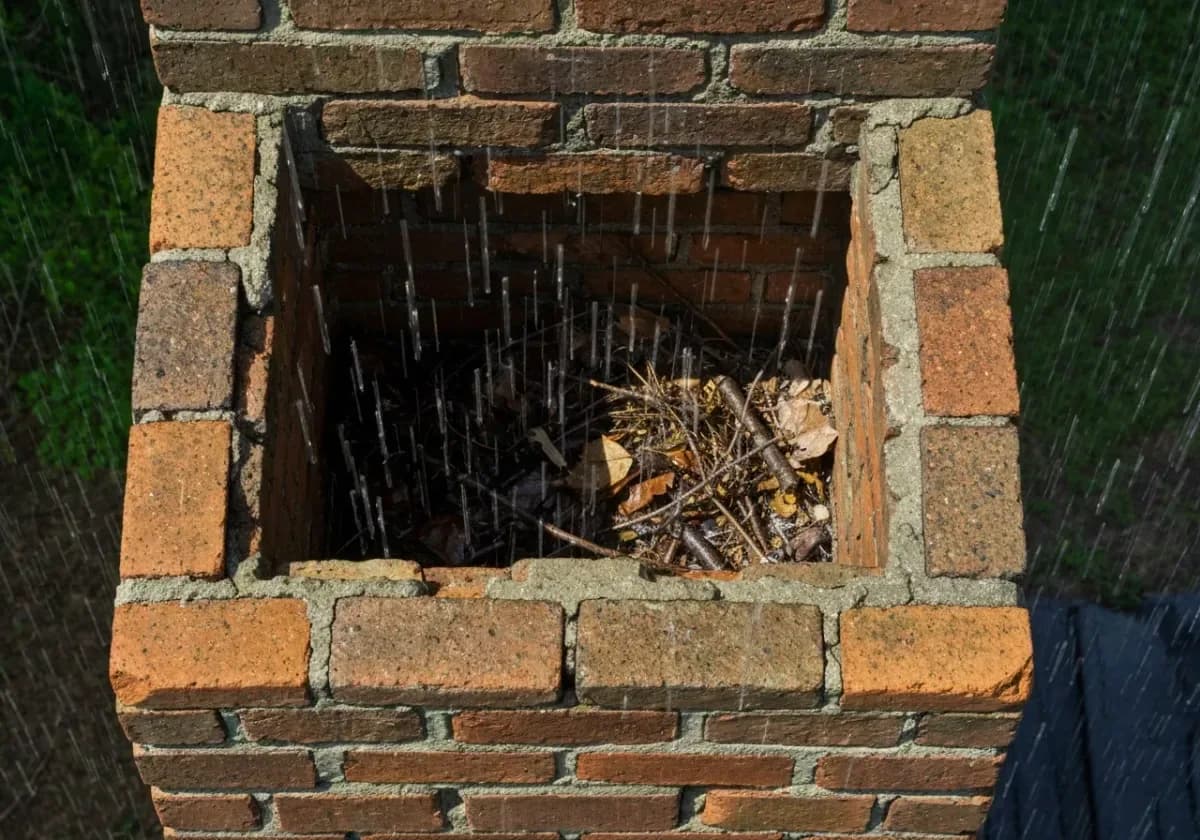
Illustrations of what each repair changes on a typical chimney — not photos of a specific job.
 Before
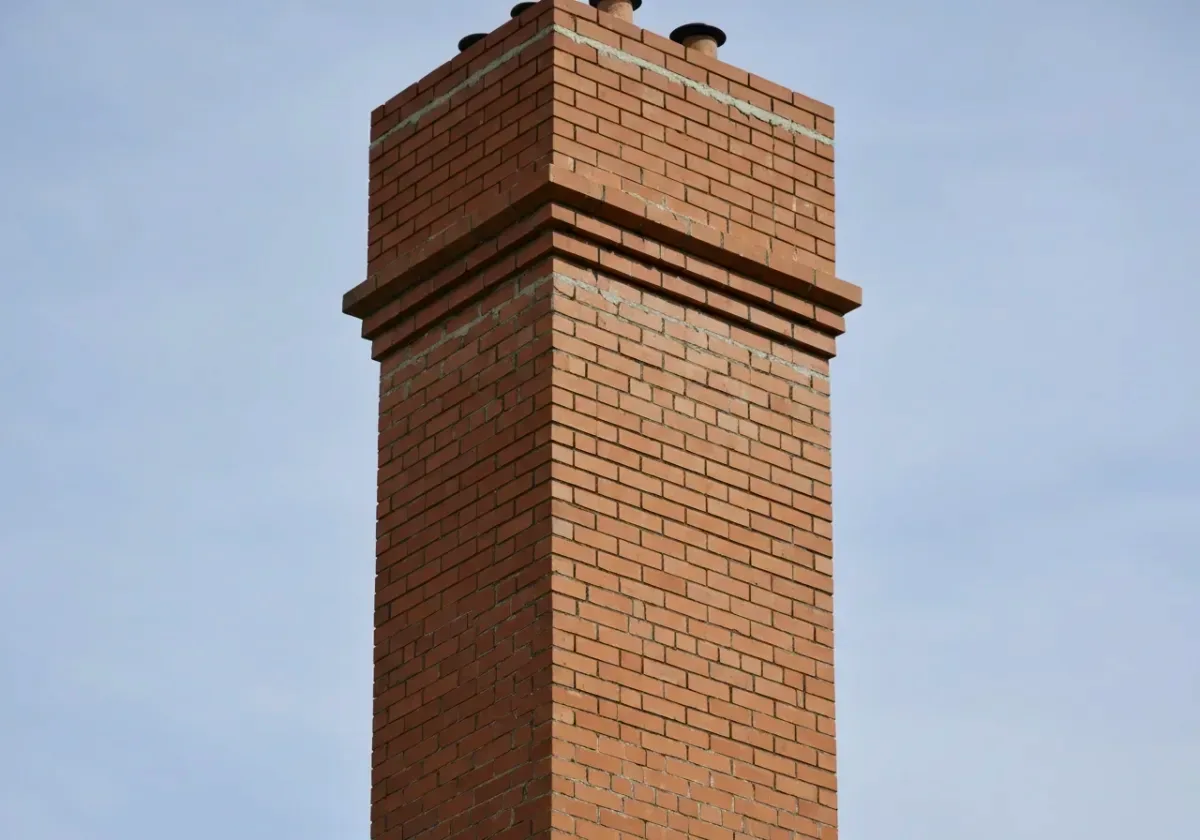 After
 Before
 After
 Before
 After

Four steps, each one on paper — so you always know what happens next.
Choose a genuine opening on the crew's calendar. Confirmation is immediate.
Liner, crown, cap, flashing and masonry examined in order — each finding photographed.
One document, plain numbers, covering only the work your chimney genuinely needs.
The repair is completed, then handed over with before-and-after photos of every item.
From $245 when a rotary head can clear the deposit in a single trip. Third-stage glaze, which may take a chemical soak and a second trip, is quoted once we have filmed it.
Yes. It is the deposit most likely to ignite, and when it does it burns very hot. Do not use the fireplace until it has been removed.
Split wood a season ahead and keep it under cover, let the fire breathe rather than choking it down for a long burn, and have the flue looked at every year, as CSIA recommends following NFPA 211.
A $99 on-site inspection, a written quote before any work, and photos of every item we touch.