Genesee, King County
Removing creosote from a Genesee chimney starts at $245. That covers a flue where the deposit has gone past loose soot but still breaks up under rotary tools. Thick tar, or a shiny glaze baked onto the tiles, takes longer and sometimes a second visit, and the quote says so before any work begins. We grade what is on the flue wall with a camera first, because the right tool depends on it.
Typical investment
From $245
Book an inspection
Book your $99 inspection
$99 plus tax, deducted when you approve the repair
Not sure where to start
Pick what you're seeing at your Genesee home — we'll point you to the right fix.
What we do
The same crew, the same written quote — for Genesee homes.
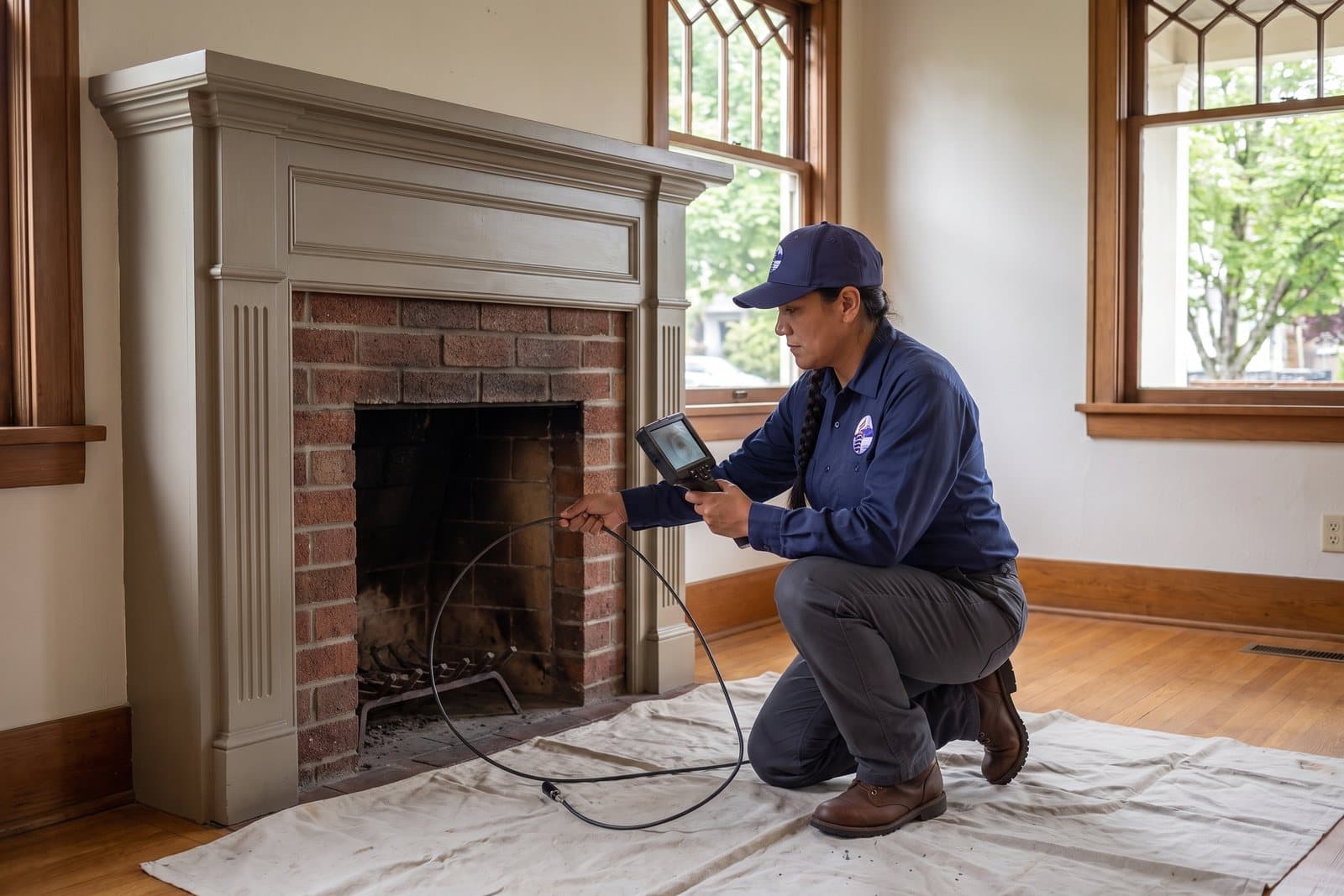
Level 1 examination of everything reachable, with a Level 2 camera pass when the reachable parts leave a question open
Learn more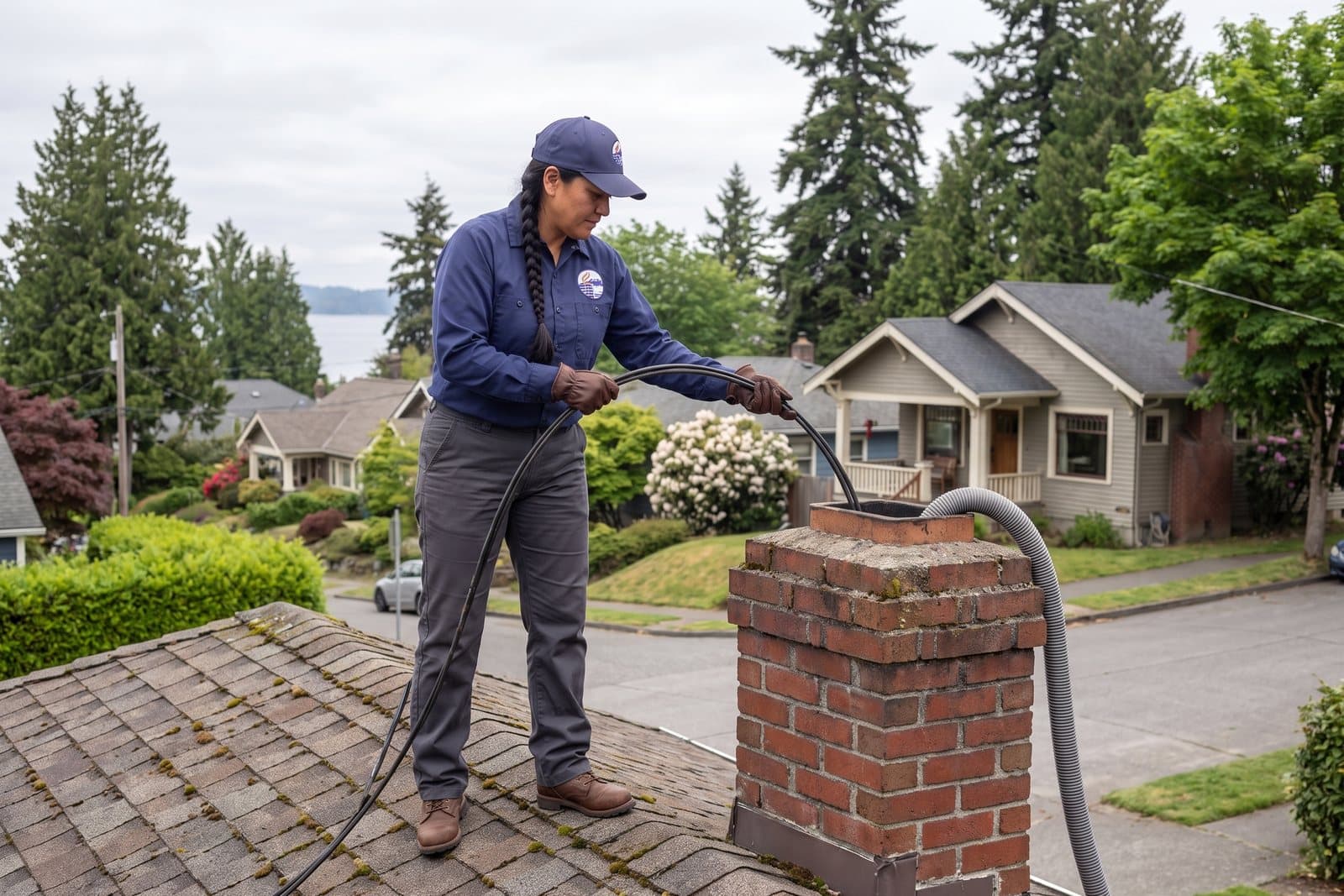
Full-height brushing of the flue with a head sized to its shape and material
Learn more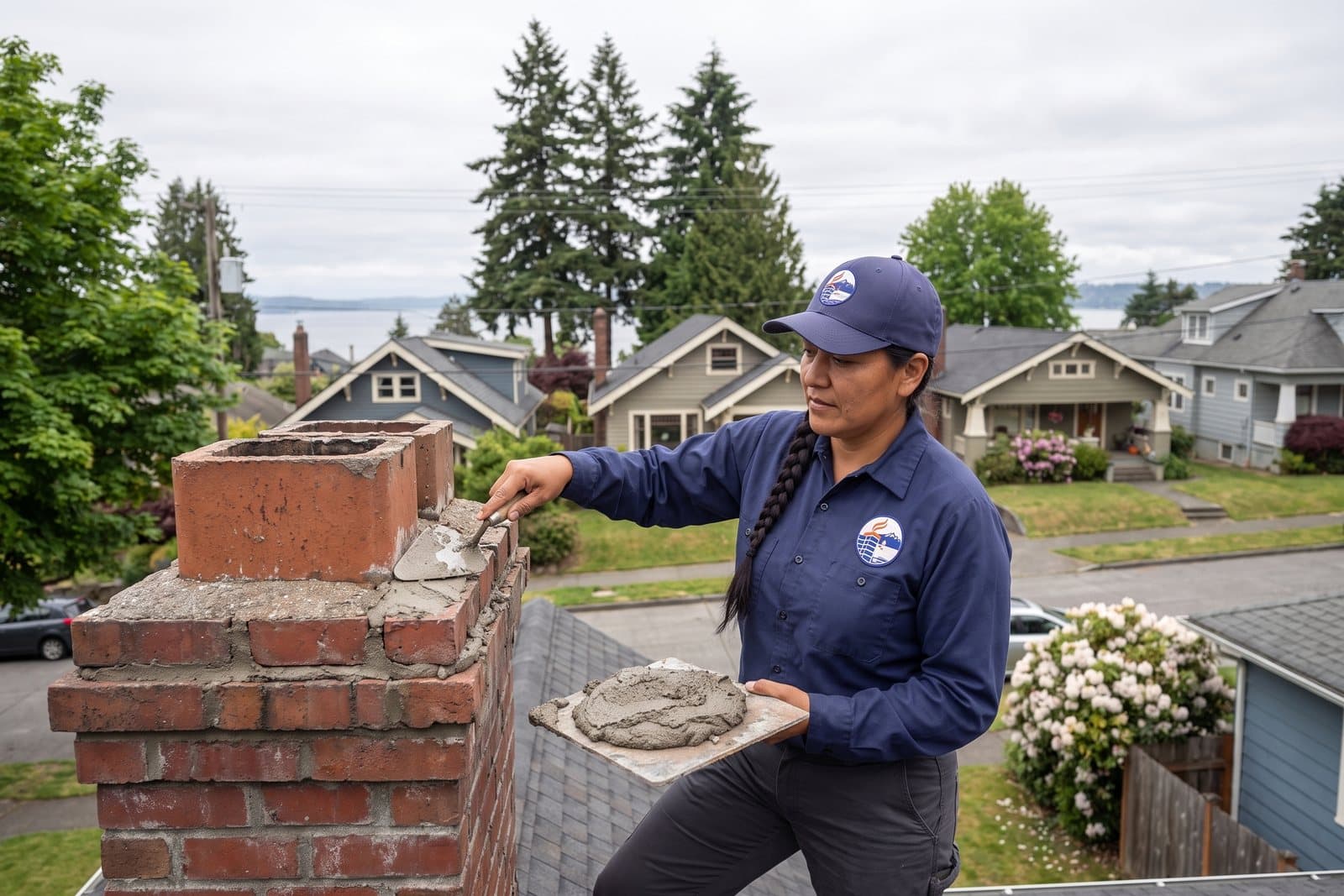
Assessment of the stack from roofline to crown, with a photo of each defect
Learn more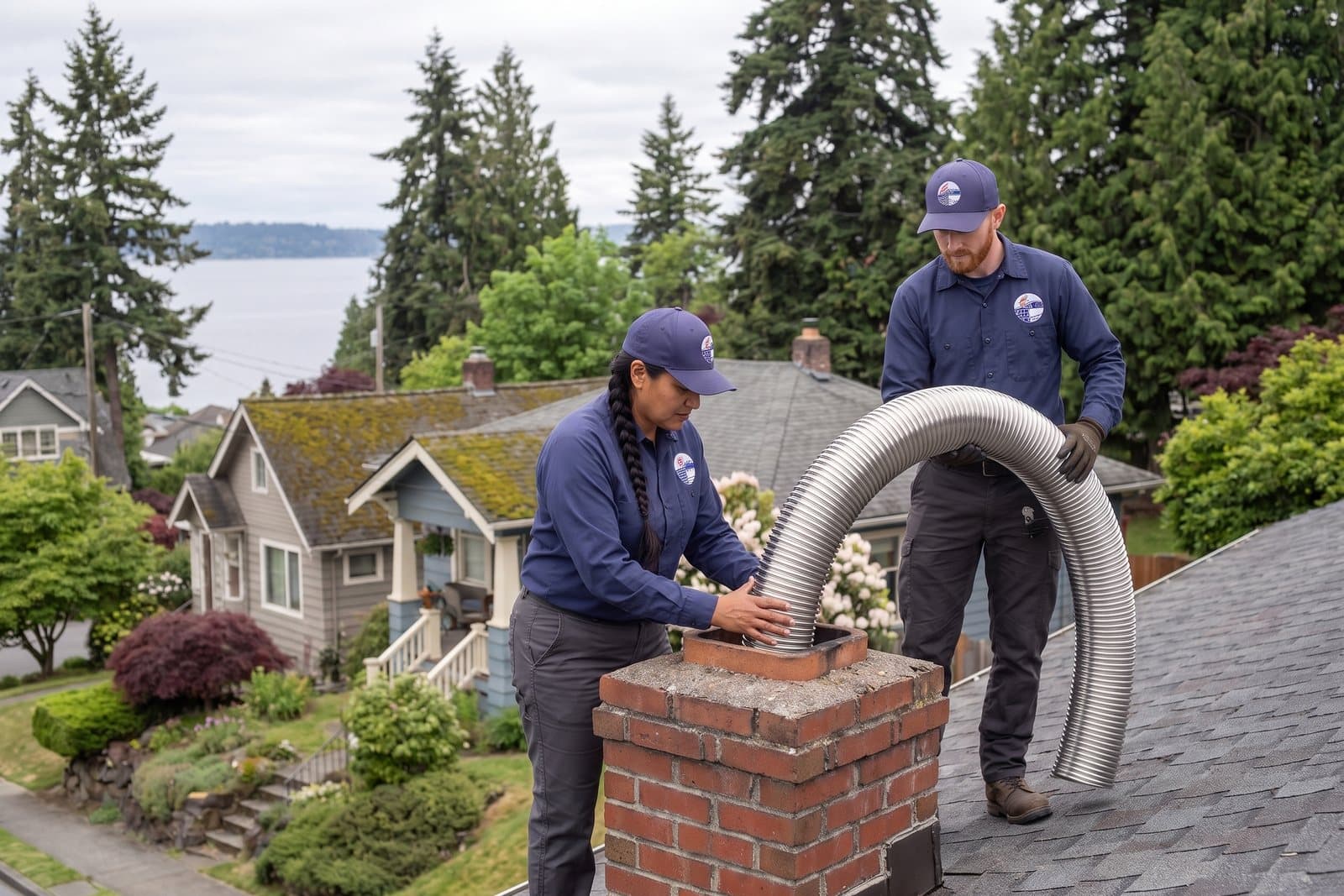
Camera survey and measurement of the existing flue before anything is ordered
Learn more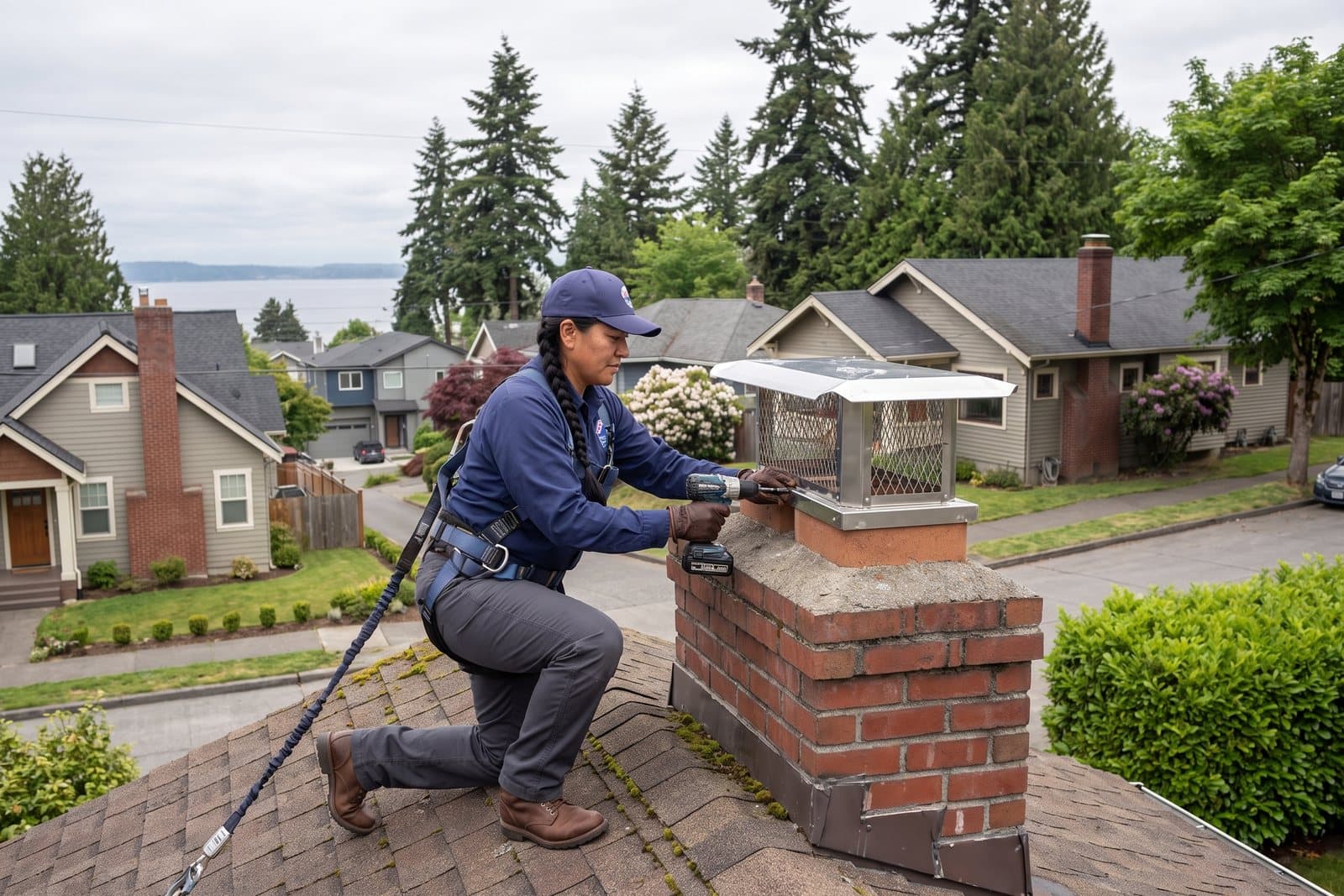
Measurement of each flue tile, or of the whole crown for a multi-flue cap
Learn more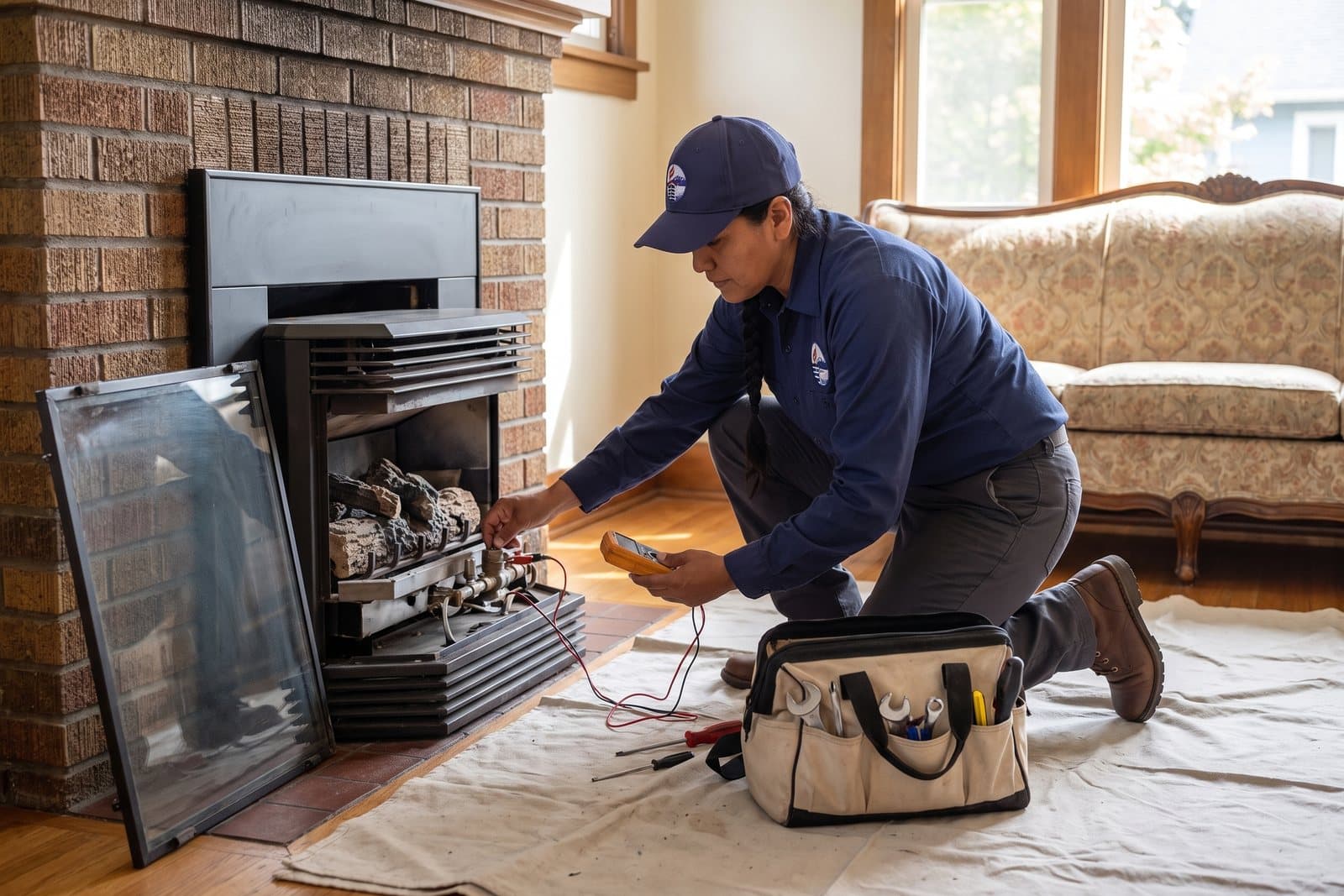
Burner, pilot assembly and firebox cleaned; logs or media put back in the layout the manual shows
Learn moreRanges shown for orientation — the exact figure is written up on-site, after the inspection.
Wood is seldom anyone's main heat on this hill. Across the Census ZIP area that groups Genesee with Alki, Admiral and northern Seaview, the 2020-2024 survey puts the number of homes whose main heat is wood at zero, give or take 25. That figure counts the furnace, not the fireplace. It cannot see the evening fire, the stove lit only in a cold snap, or the hearth that comes back into use when the power fails. Those are exactly the habits that build creosote, since a fire lit now and then in a cold flue rarely burns hot enough to keep the walls clean.
Genesee Hill School opened its doors on January 31, 1949, and by the following September a ten-room addition had been finished, according to HistoryLink. Enrollment kept climbing to a peak of 726 pupils in the 1958-59 school year. A hill that needed classrooms that quickly was a hill where families were moving into newly built homes.
A house from those years may still have its first open fireplace and its first clay-tile flue, or it may have taken an insert since. Both matter for creosote. An open hearth vents into a wide flue that a small fire never fully warms, which favors buildup. An insert pushed into that same flue without a liner sized to its collar does the same, only faster, because its smoke leaves cooler. The Census heating table for the surrounding ZIP code area also shows how rarely wood is the main fuel, so the fires that do get lit tend to be occasional ones.
Every creosote removal we do in Genesee includes:
Smoke coming back into the room, or a smell that won't go? Book the inspection first.
Book nowSmoke that loses its heat on the way up leaves part of itself behind. Its tars and moisture condense on the flue wall, first as a dry, sooty powder, then as crusty flakes, then as a sticky coat that hardens into glaze with the next fires. Damper half shut, logs that hissed when they caught, a large old flue warmed by a small fire: each one slows the smoke and feeds the deposit. The third stage is the one that matters most. It burns fiercely if it ignites, and it hides the surface of the liner from view, so a crack behind it goes unnoticed until the glaze is gone.
Wind takes the power out on this peninsula more readily than elsewhere in the city. Seattle's history of power outages singles out West Seattle in a 1958 windstorm, and calls the Columbus Day Storm of 1962 the biggest the region has seen. The city's windstorm analysis explains why: West Seattle is among its most heavily forested areas, and in a gale most of the damage comes from falling trees.
When a hilltop house loses its electric heat, the fireplace is what people reach for. Fires burned that way tend to be long, damped down to last the night and fed with whatever wood is at hand. That is the recipe for the tar stage of creosote. After any outage in which you relied on the hearth for a day or more, a camera look before the next routine fire is a sensible step, and on a steep roof it also lets us check that the storm left the chimney top in place.
The camera travels the full flue and we name the stage of the deposit, section by section, with the footage on screen for you.
Flakes, tar and glaze get their own lines in the quote. Nothing is removed until you agree to the method.
Rotary heads matched to the liner shape take off what will come off mechanically, with the hearth sealed and the vacuum running.
Where glaze remains, a modifier is applied and left to work, then the loosened residue is cleared. Heavy cases may need a return trip.
A last camera pass shows the clean liner, which is also when a hidden crack would appear.
What this work is quoted at for Genesee homes — the exact figure comes from the $99 on-site inspection, credited toward the work.
| Service | Price in Genesee | What that covers |
|---|---|---|
| Creosote Removal | From $245 | Priced by creosote stage — glazed stage 3 is the heavy end |
| Chimney Sweep | $189–$449 | Full flue swept, Level 1 inspection included |
| Chimney Inspection | $99 plus tax | Level 1 visual; Level 2 adds a full camera scan |
| Chimney Relining | From $1,900 | Full-length stainless liner, sized to the appliance |
| Chimney Repair | From $425 | Masonry repair — brick and mortar, scoped after diagnosis |
Ranges are what these jobs are quoted at in Genesee. The exact figure is set on site after a $99 inspection (credited toward the job if you go ahead), and you approve it before any work starts.
Genesee is a hill neighborhood between SW Genesee and SW Charlestown streets, from 46th to 56th Avenues SW, with homes from before and after World War II, about 23% of those in its ZIP code area built before 1940 and 16% in the 1940s and 1950s.
GeneseeKing County, WA · 47.564, -122.372
Before and after
Illustrations of what each repair changes on a typical chimney — not photos of a specific job.
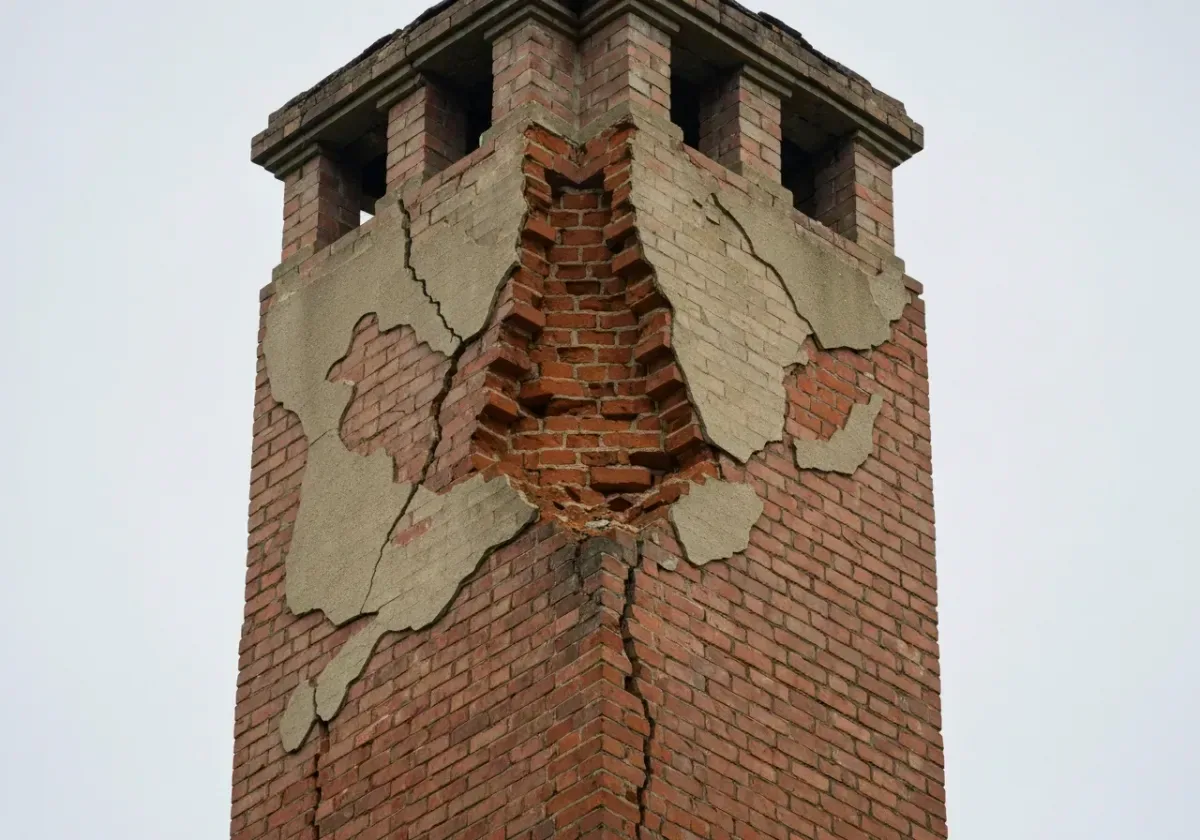 Before
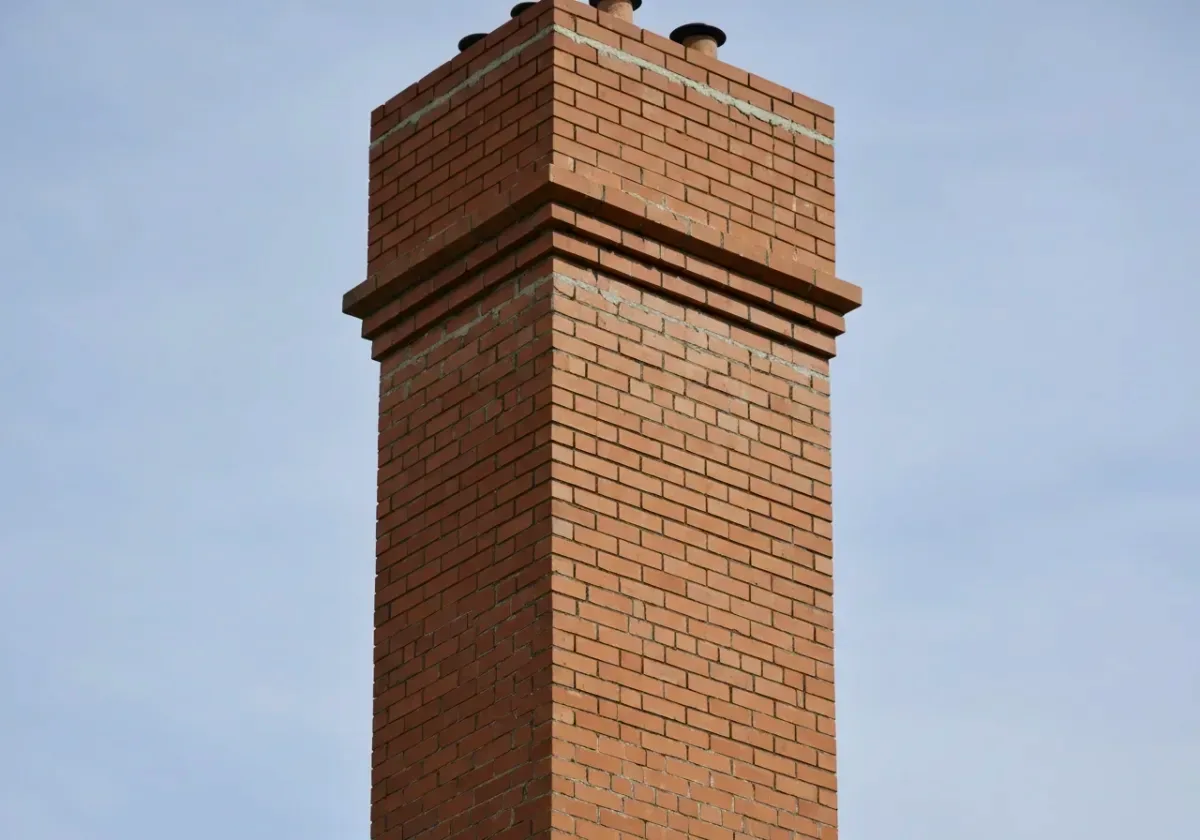 After
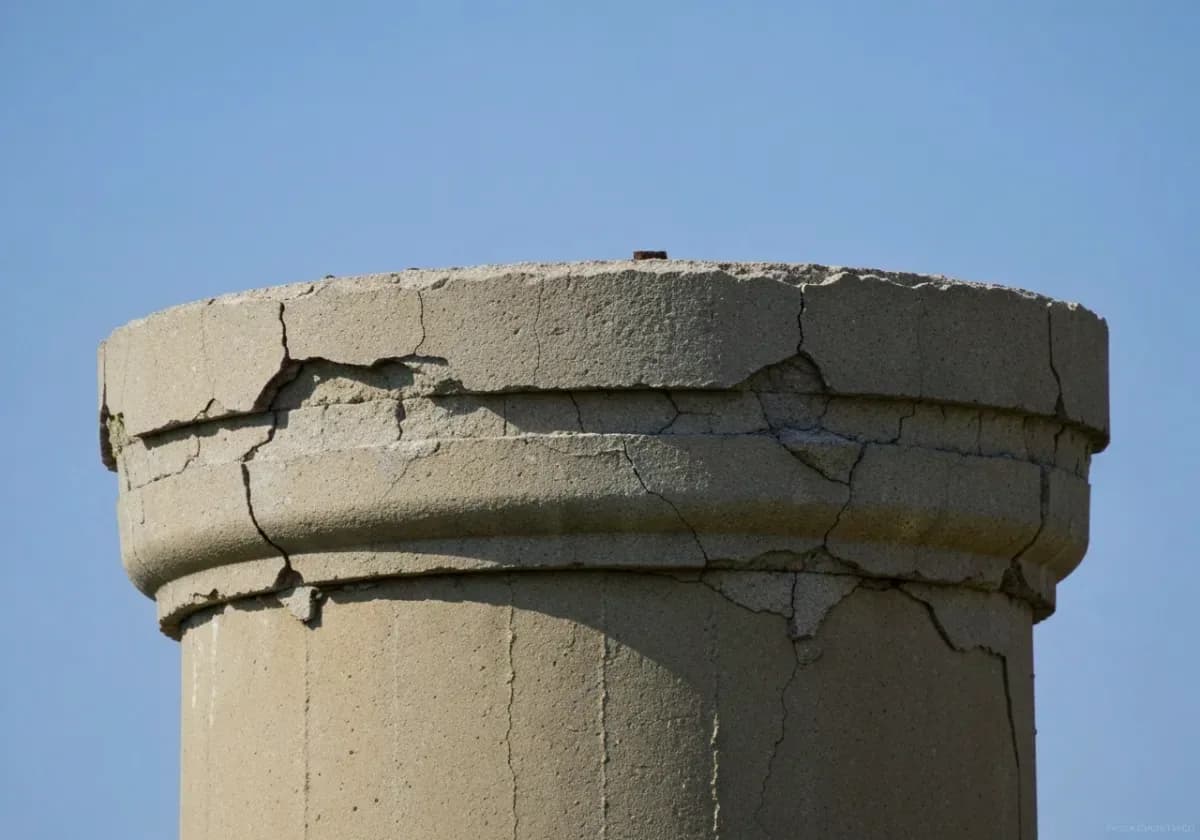 Before
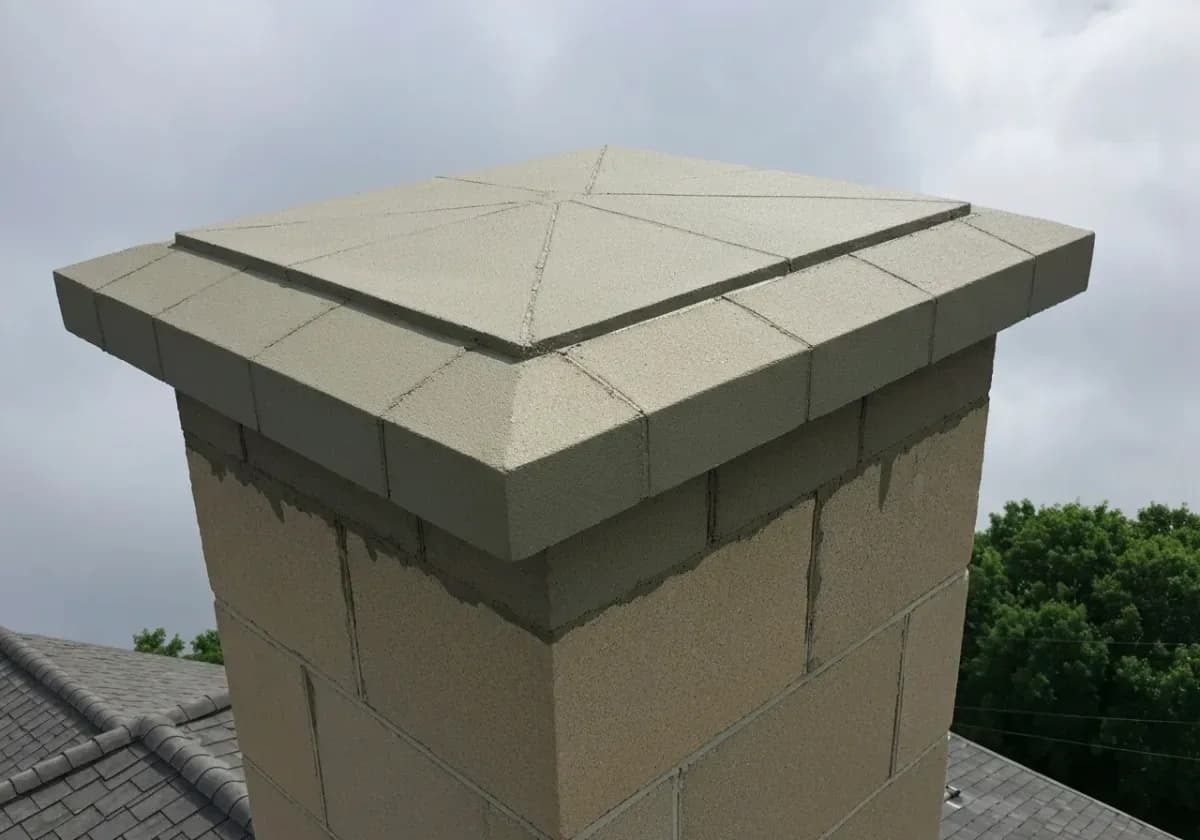 After
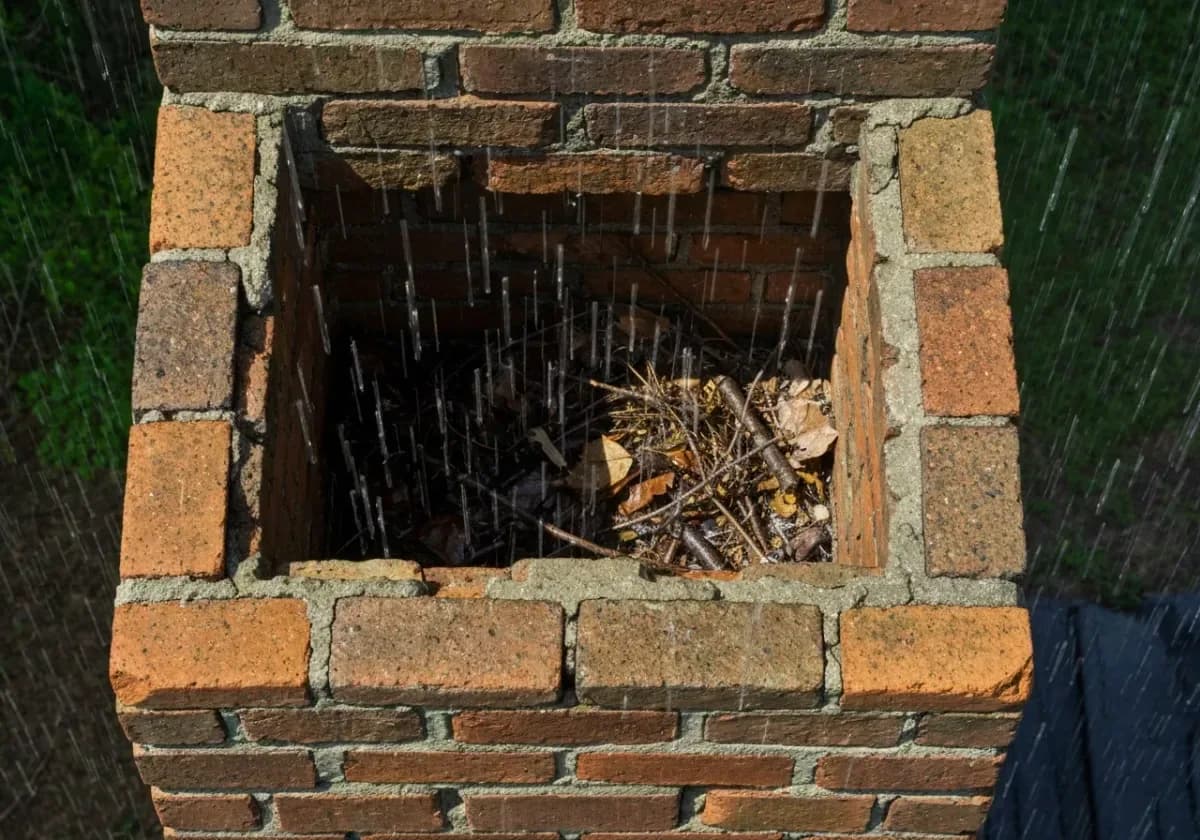 Before
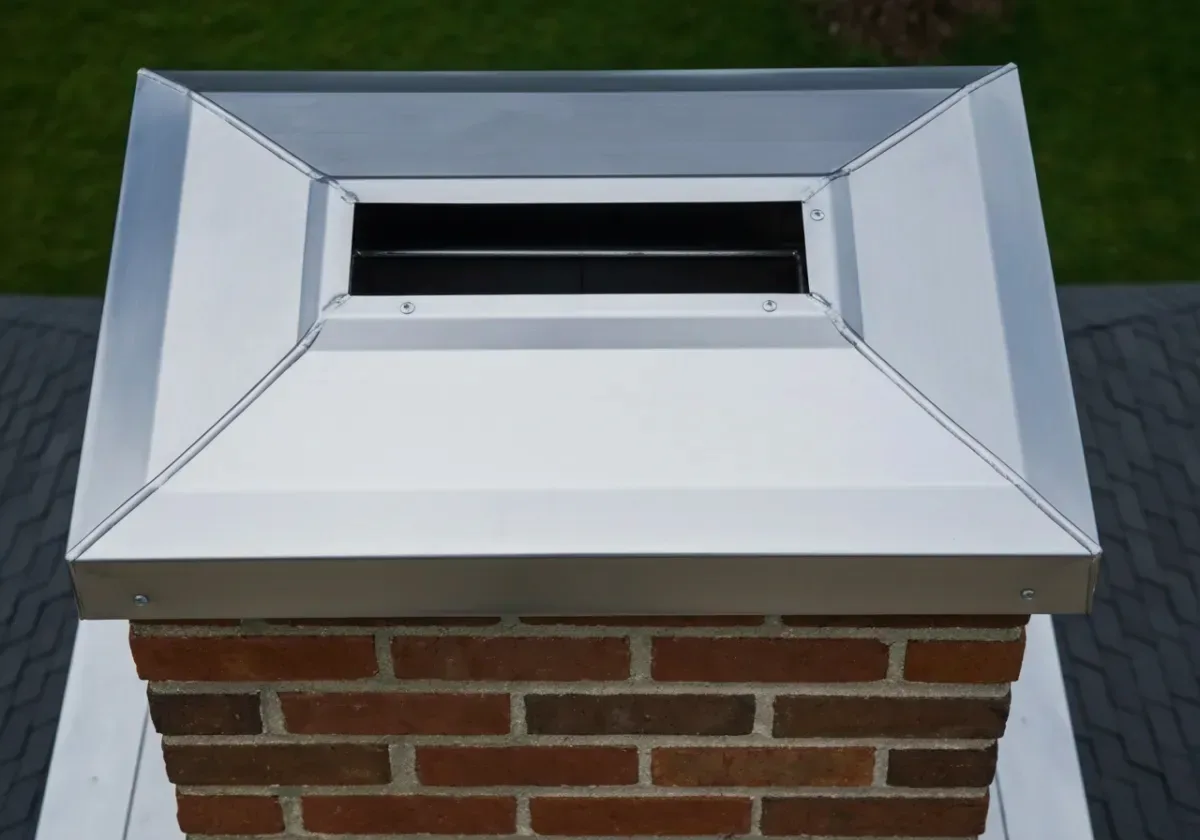 After
Four steps, each one on paper — so you always know what happens next.
Choose a genuine opening on the crew's calendar. Confirmation is immediate.
Liner, crown, cap, flashing and masonry examined in order — each finding photographed.
One document, plain numbers, covering only the work your chimney genuinely needs.
The repair is completed, then handed over with before-and-after photos of every item.
A sweep brushes out soot and loose flakes. Removal is for deposits that a brush rides over: tar and glaze. We can tell the two apart only on camera.
Such logs may loosen light deposits so a brush gets more of them. Glaze is a different matter, and nothing burned in the firebox replaces a look down the flue.
Our camera inspection costs $99 plus tax, charged per chimney. If you then accept our quote, whether for removal or another job, we knock $99 off it.
After a mechanical clean, usually yes. Where a modifier went on, the waiting time before you light again is written on your report.
A $99 on-site inspection, a written quote before any work, and photos of every item we touch.