Fauntleroy, King County
Wood smoke leaves part of itself behind in every flue, and a sweep takes it back out before it turns into fuel. In Fauntleroy we price that job between $189 and $449. The spread comes from the height of the flue, the pitch of the roof and what burns at its base: an open fireplace is quicker than an insert we must slide out of the opening first. While there we also look over firebox, damper plate and flue mouth by eye.
Typical investment
$189–$449
Book an inspection
Book your $99 inspection
$99 plus tax, deducted when you approve the repair
Not sure where to start
Pick what you're seeing at your Fauntleroy home — we'll point you to the right fix.
What we do
The same crew, the same written quote — for Fauntleroy homes.
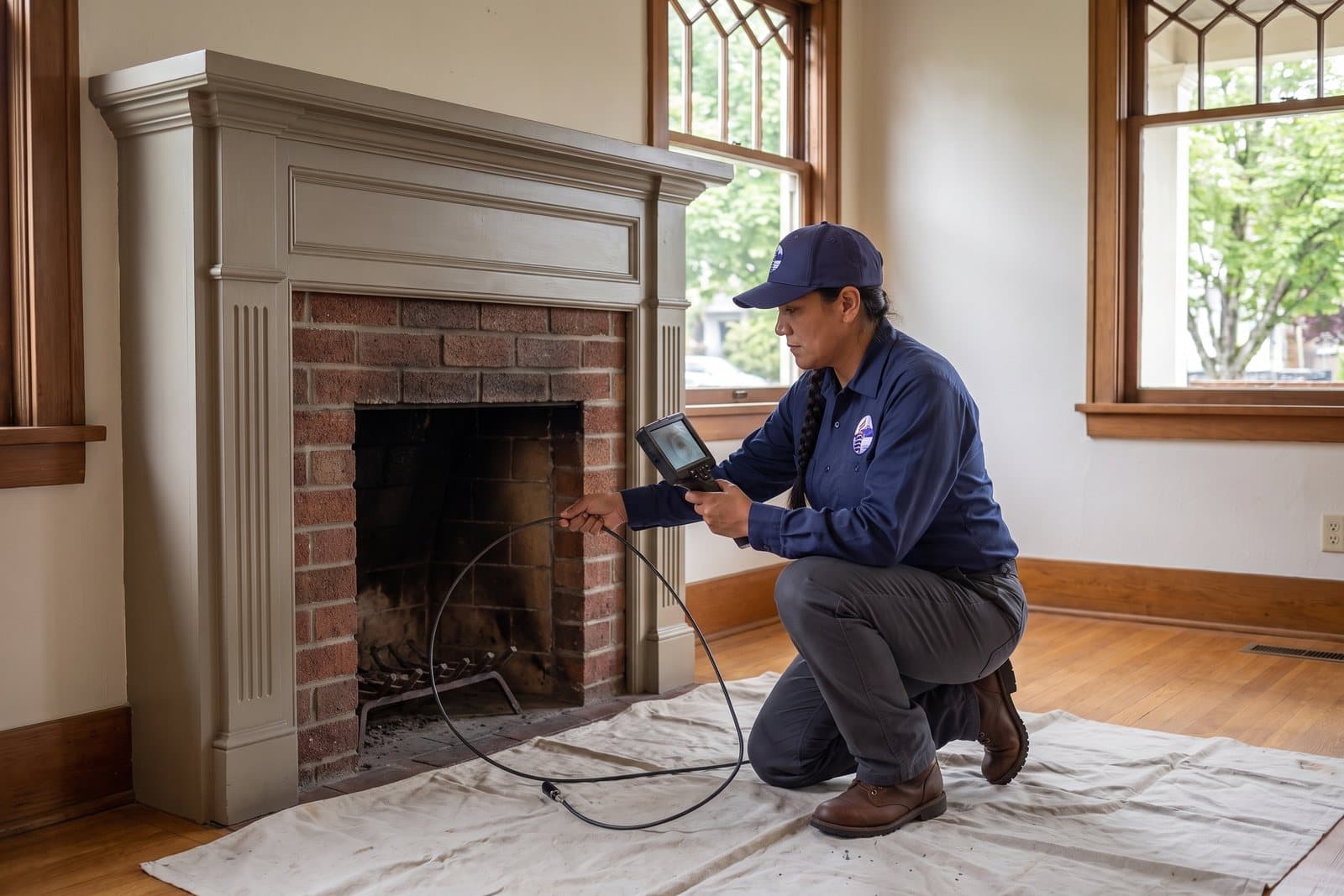
Level 1 examination of everything reachable, with a Level 2 camera pass when the reachable parts leave a question open
Learn more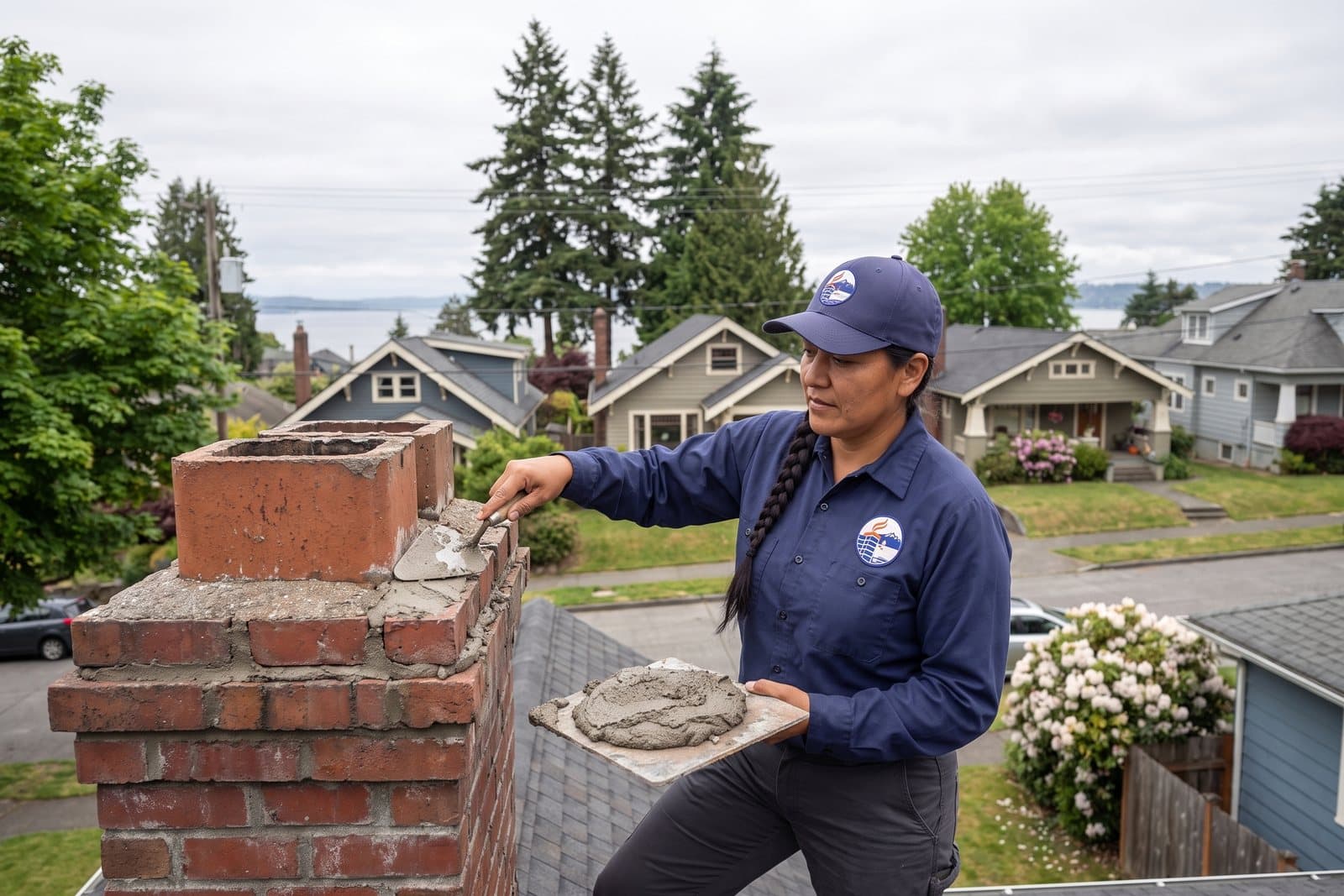
Assessment of the stack from roofline to crown, with a photo of each defect
Learn more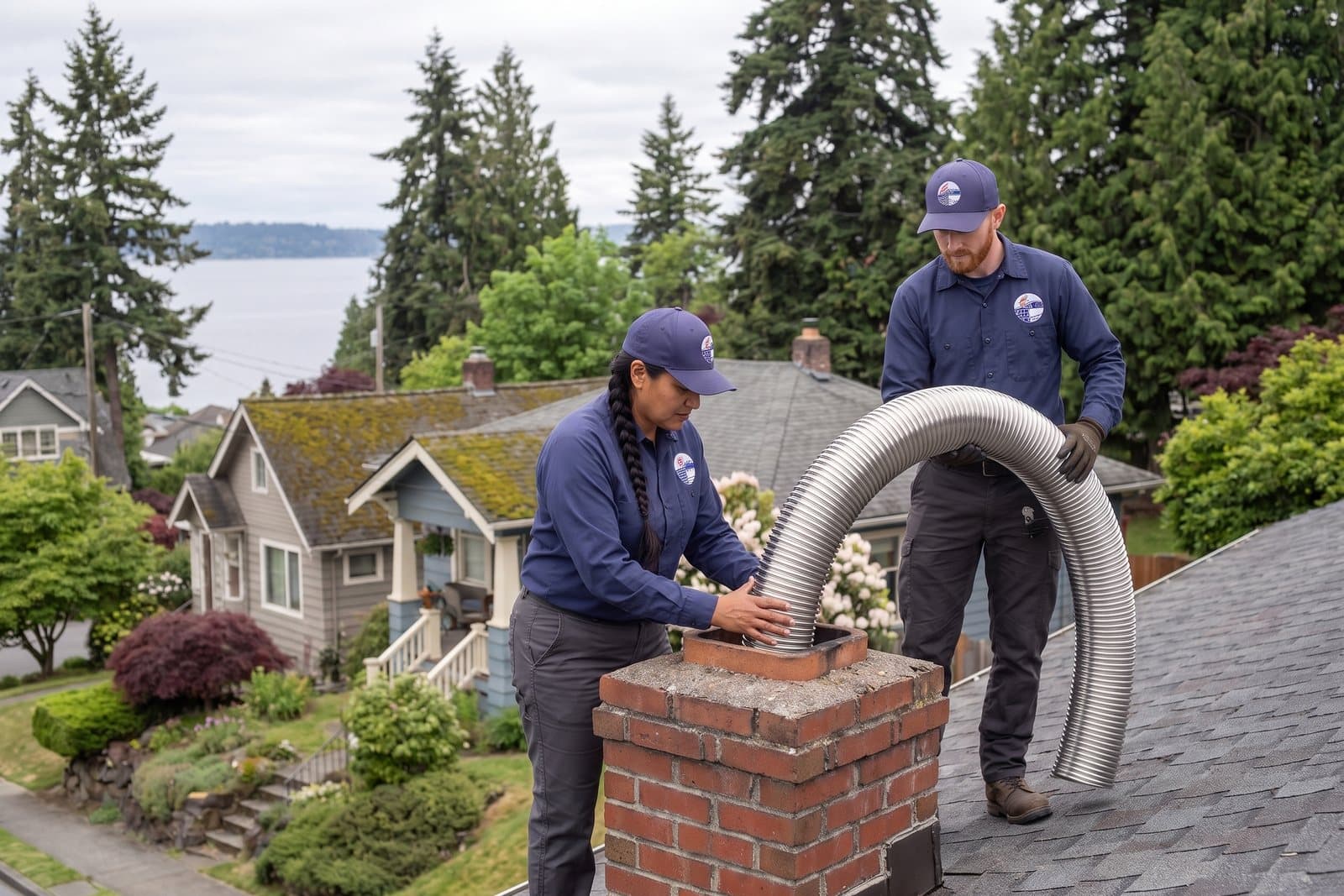
Camera survey and measurement of the existing flue before anything is ordered
Learn more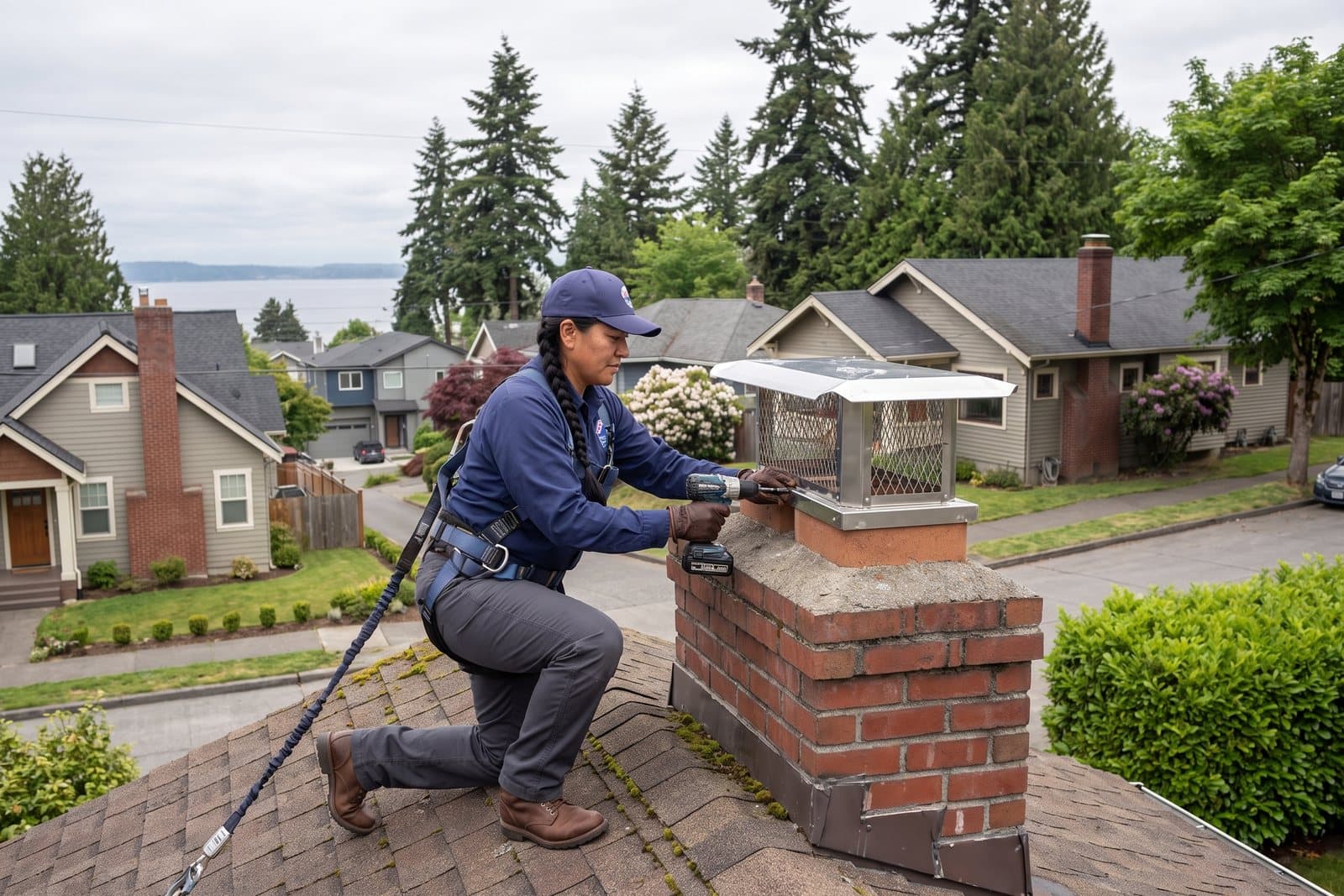
Measurement of each flue tile, or of the whole crown for a multi-flue cap
Learn more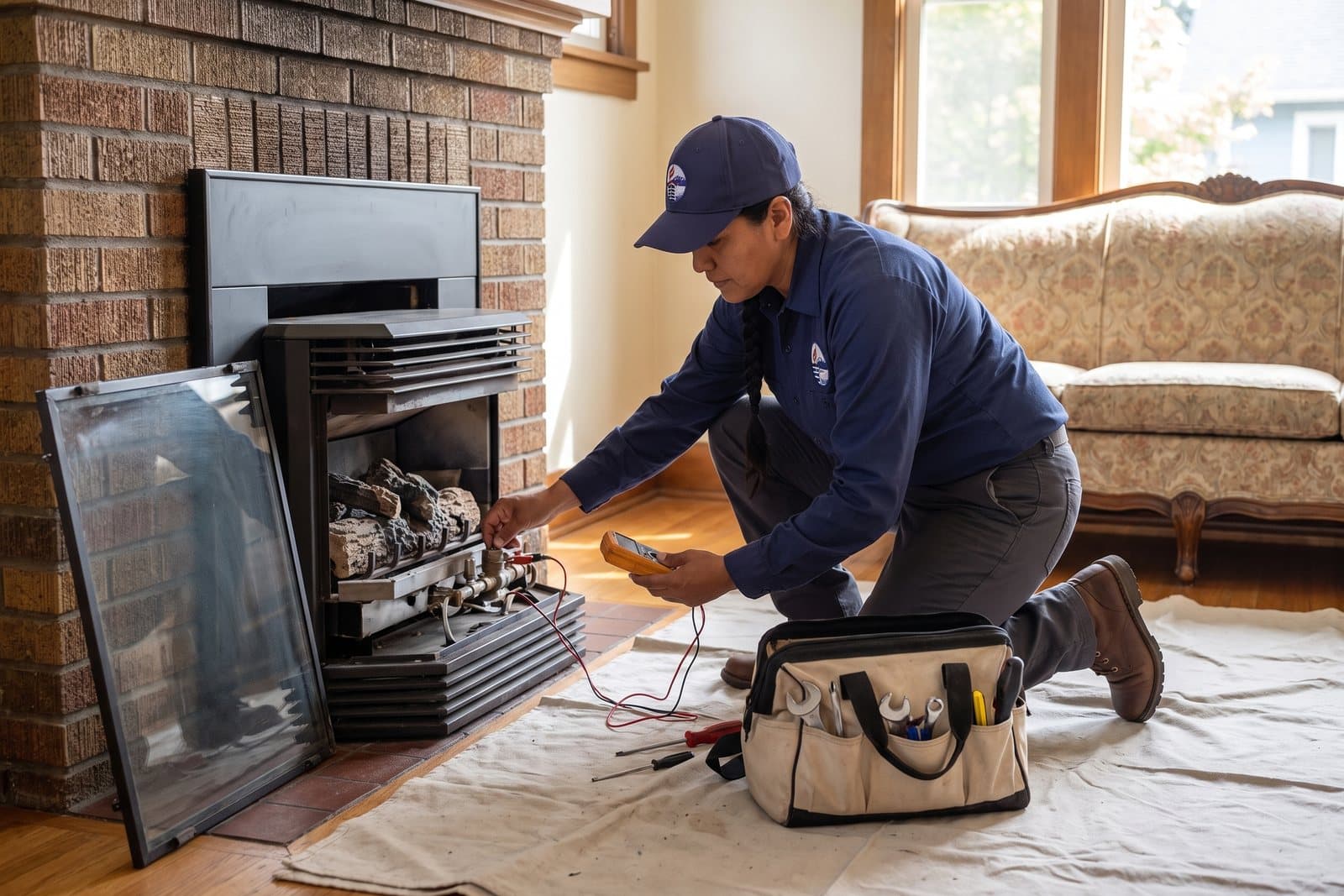
Burner, pilot assembly and firebox cleaned; logs or media put back in the layout the manual shows
Learn more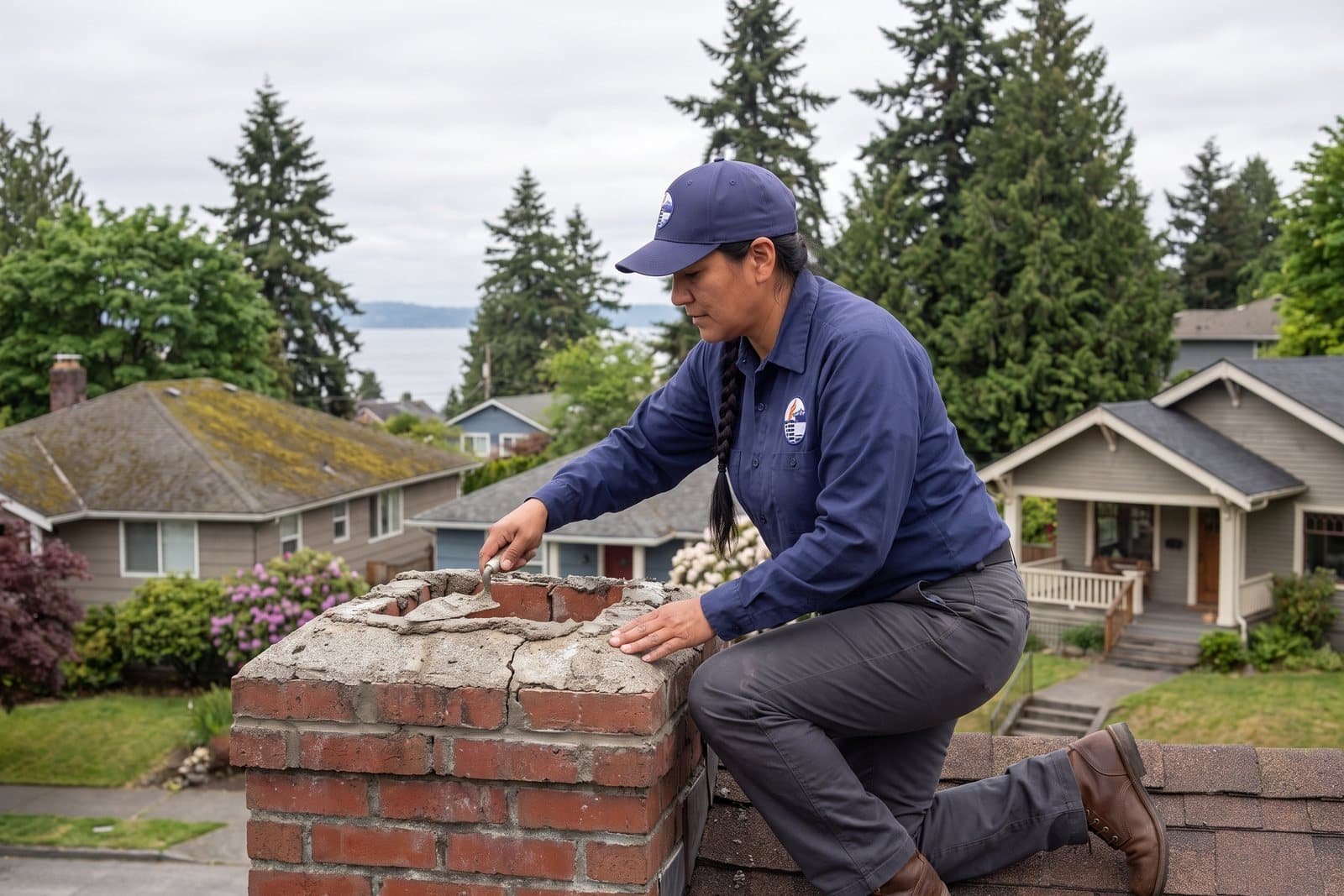
Joints cut back to firm mortar and repointed (tuckpointing) to match the existing profile
Learn moreRanges shown for orientation — the exact figure is written up on-site, after the inspection.
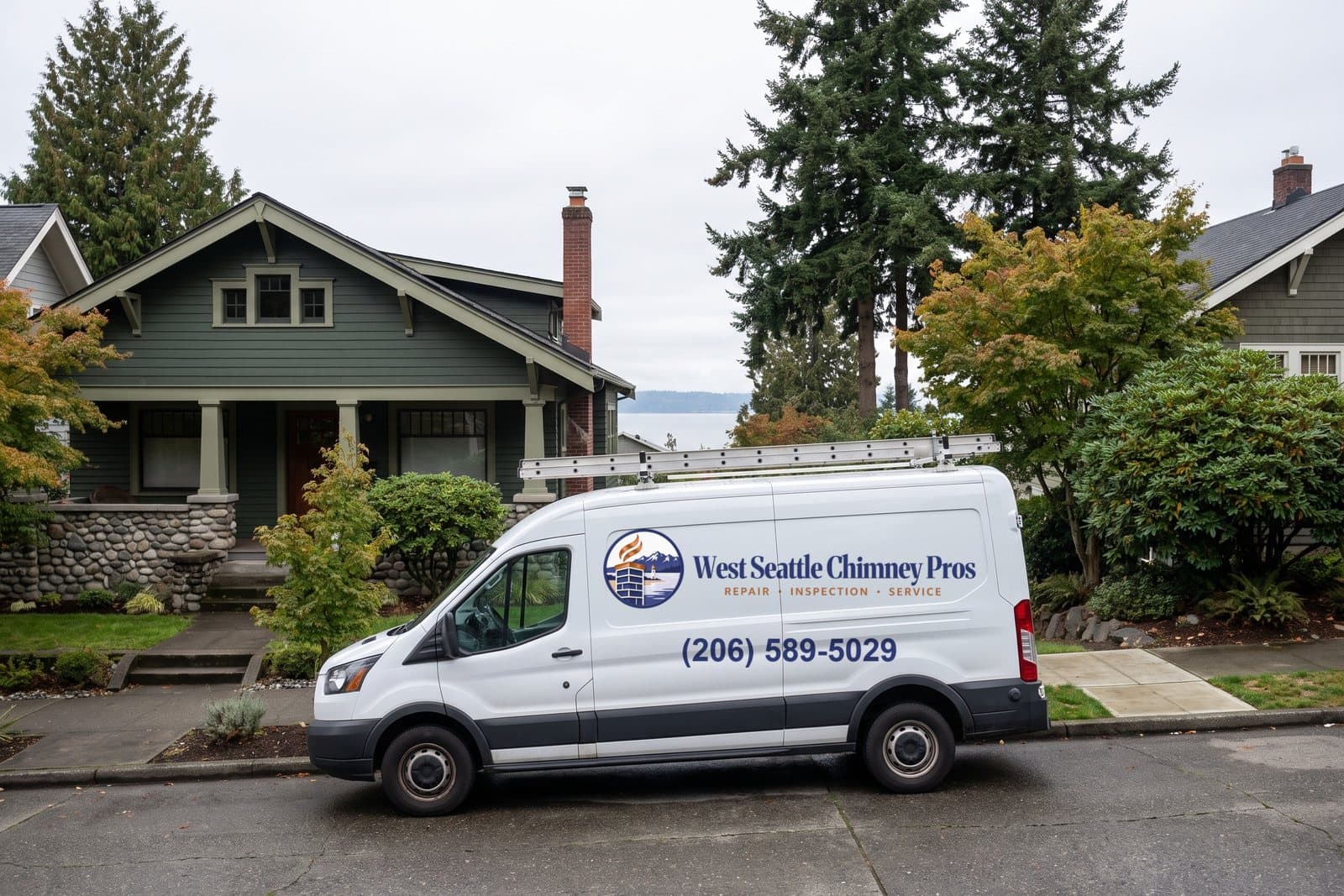
Fauntleroy was built in two layers. Seattle Parks dates its beginning as a summer colony to 1904 and its first permanent homes to 1907, while HistoryLink and the Southwest Seattle Historical Society both describe houses climbing the hillsides above the cove by the 1950s. Census figures for the ZIP code area shared by Fauntleroy, Gatewood and the southern end of Seaview's waterfront show the same split: about 30 percent of its housing units predate 1940 and the median unit dates from 1960. Nobody publishes a count of fireplaces per street. We check first, and the van carries rods and brushes for more than one kind of flue.
Wikipedia's West Seattle article explains why the 1851 settlers gave up on the peninsula's western side: it was exposed, with high winds and tides. Fauntleroy sits on that side. WeatherSpark's Seattle profile, the closest one available, calls the stretch between October 15 and April 24 the windier part of the year, and has the wind arriving chiefly from the south.
That calendar is also the burning season. Wind crossing the top of a flue changes how it draws, and a fireplace that behaves in September can push smoke into the room in December. During a sweep we therefore pay attention to the top: a cap that still sits square, a screen that is not half closed with soot, a flue mouth with nothing lodged in it.
Every chimney sweep we do in Fauntleroy includes:
Smoke coming back into the room, or a smell that won't go? Book the inspection first.
Book nowWood is almost never the main heat here. The Census estimate of wood-heated households for that ZIP code area is small, and its margin of error is wider than the number itself. That tells us most Fauntleroy fires are occasional ones, lit on a few cold evenings, and occasional fires are the kind that burn cool and leave soot. CSIA's threshold for a masonry fireplace is a soot layer one-eighth inch deep; glazed, shiny deposits move the date up.
Tarps go down over the floor and whatever furniture sits close; the vacuum hums before any brush moves.
We sweep from the firebox or from the roof, whichever the house allows, then empty the smoke shelf where the loosened soot collects.
With the walls clean we check the firebox joints, the damper plate and the top of the flue, and photograph anything out of order.
You get the photos and a plain statement: fine to burn, or the specific item that should be dealt with first.
Once the April 29, 1965 earthquake was over, a survey team covered 188 city blocks of West Seattle on foot, HistoryLink writes, and tallied 5,005 chimneys. Of those, 1,712 were damaged, or 34 percent. The figure is for West Seattle as surveyed, not for Fauntleroy alone, and no source we read breaks it down by neighborhood.
Many of those chimneys were patched and went back to work. Soot hides the evidence: a cracked tile or an open joint looks like every other black surface until the brush has passed. That is why the look after the sweep matters as much as the sweep, and why the yearly inspection NFPA 211 calls for is worth keeping even in a year with few fires.
What this work is quoted at for Fauntleroy homes — the exact figure comes from the $99 on-site inspection, credited toward the work.
| Service | Price in Fauntleroy | What that covers |
|---|---|---|
| Chimney Sweep | $189–$449 | Full flue swept, Level 1 inspection included |
| Chimney Inspection | $99 plus tax | Level 1 visual; Level 2 adds a full camera scan |
| Chimney Relining | From $1,900 | Full-length stainless liner, sized to the appliance |
| Chimney Repair | From $425 | Masonry repair — brick and mortar, scoped after diagnosis |
| Chimney Cap Installation | $235–$850 | Stainless cap fitted; multi-flue and custom at the top |
Ranges are what these jobs are quoted at in Fauntleroy. The exact figure is set on site after a $99 inspection (credited toward the job if you go ahead), and you approve it before any work starts.
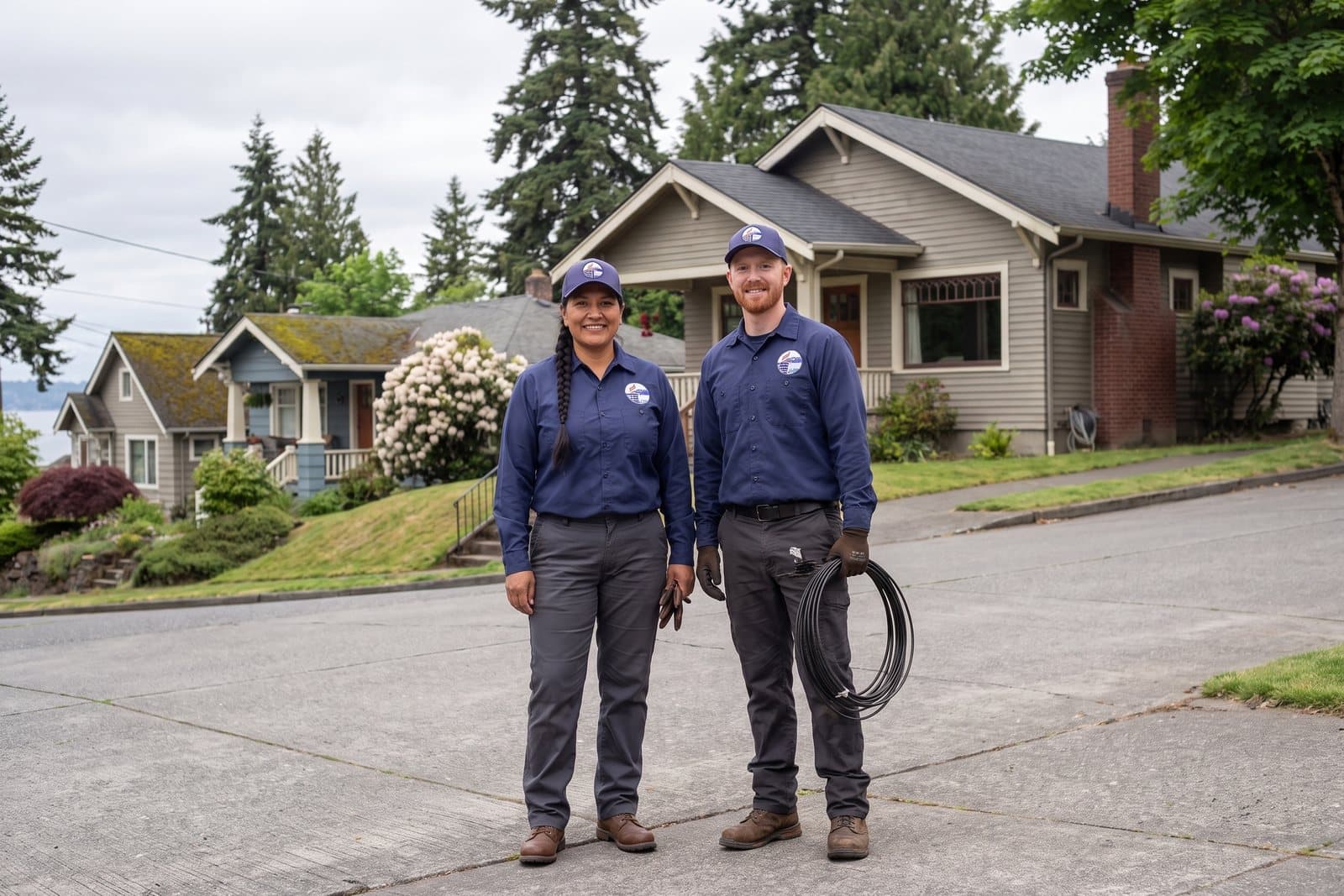
Fauntleroy is a cove neighborhood in the southwest corner of Seattle that began as a summer colony in 1904, on Fauntleroy Cove, with permanent homes that go back to 1907 and hillsides that filled in after World War II. We work every part of it — Endolyne included.
FauntleroyKing County, WA · 47.523, -122.394
Before and after
Illustrations of what each repair changes on a typical chimney — not photos of a specific job.
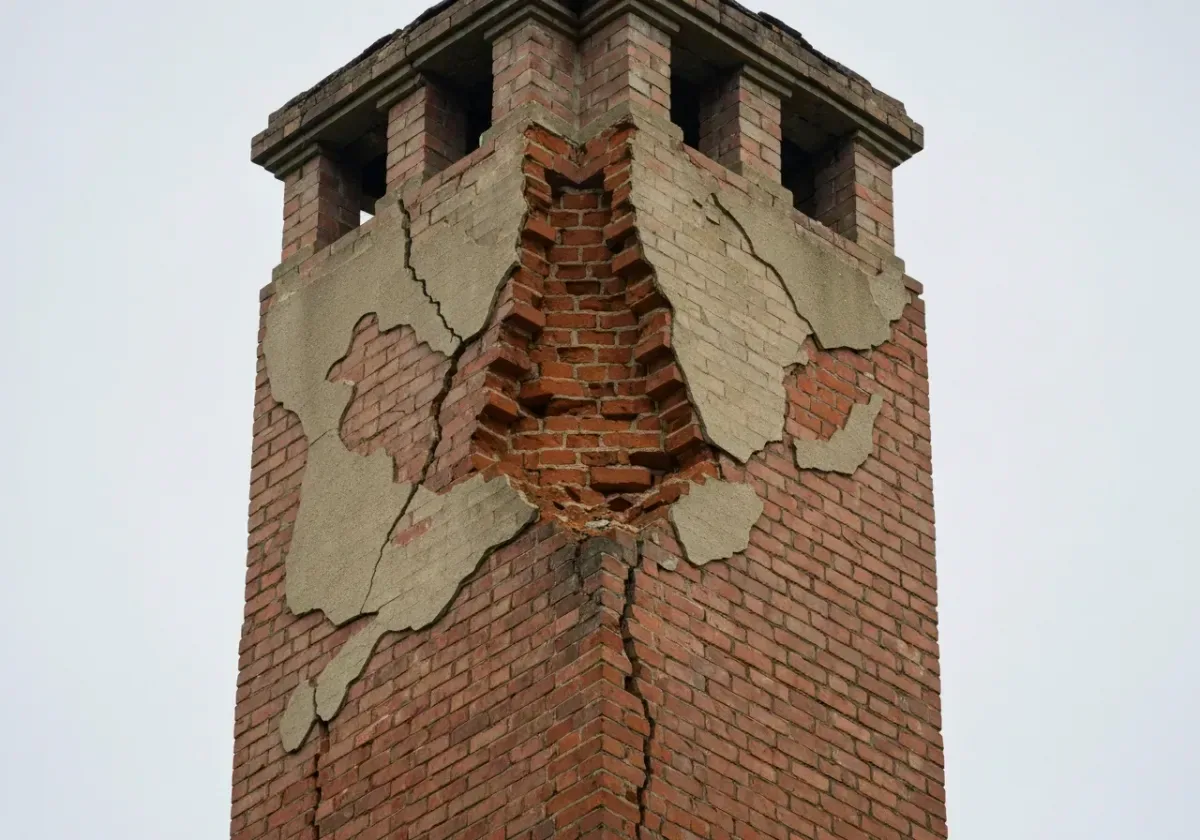 Before
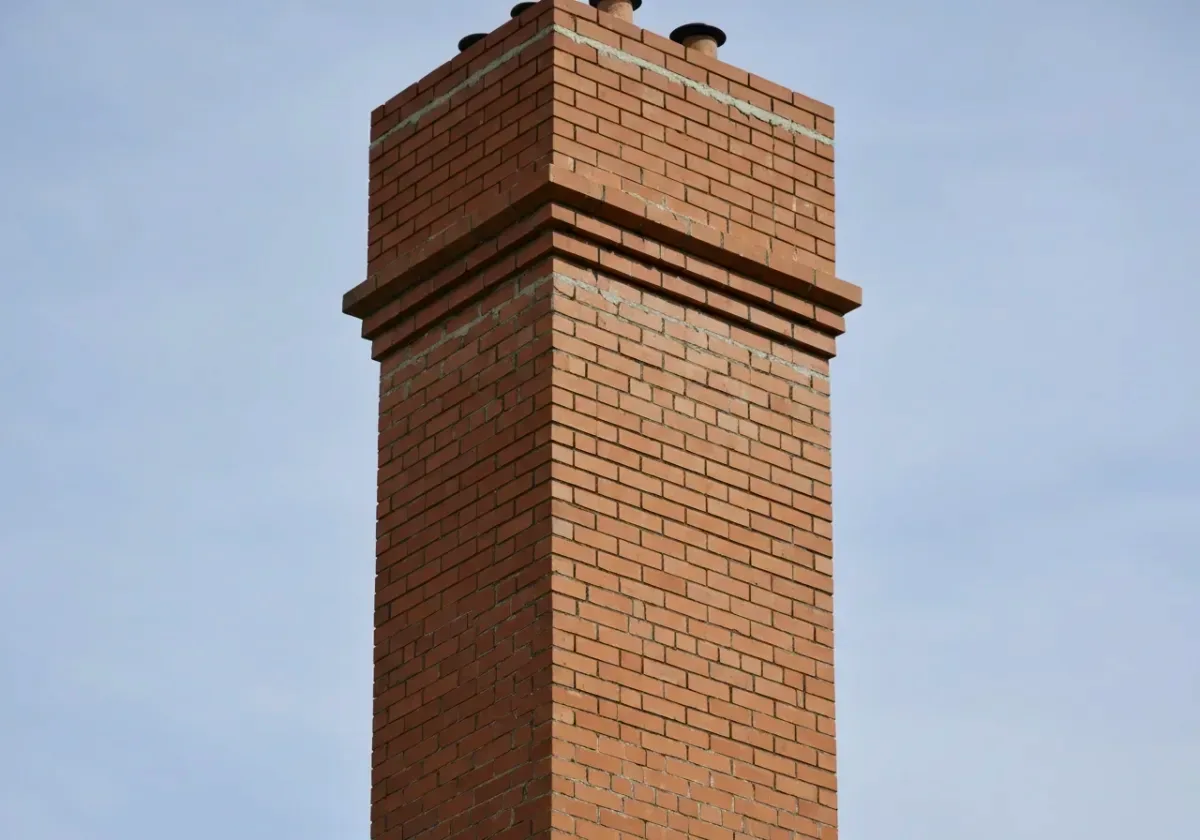 After
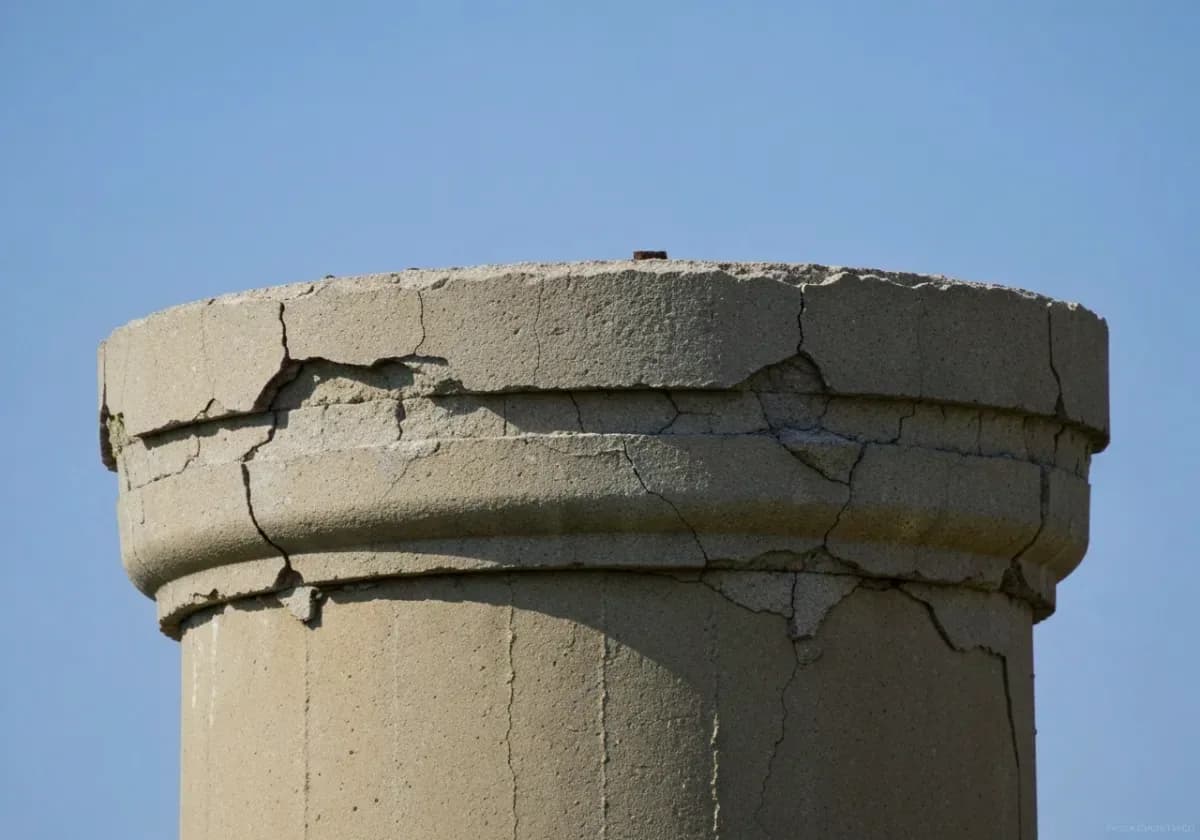 Before
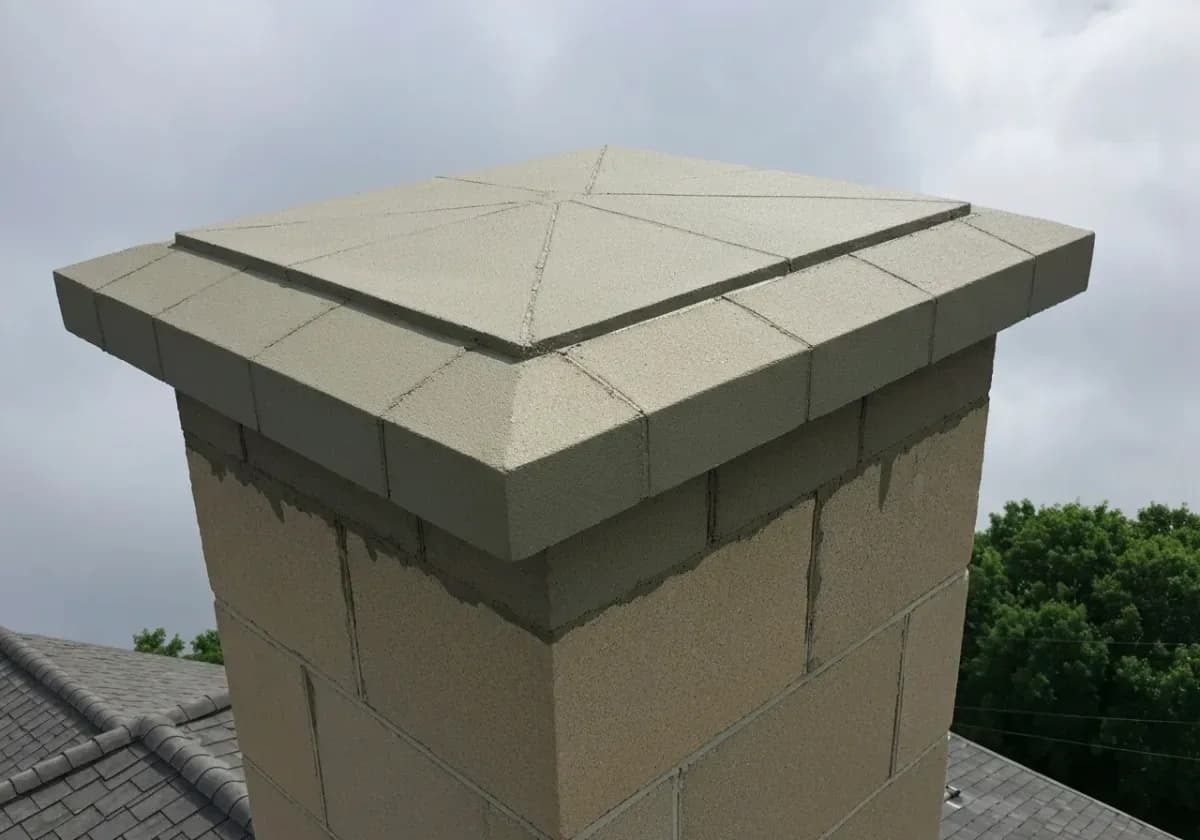 After
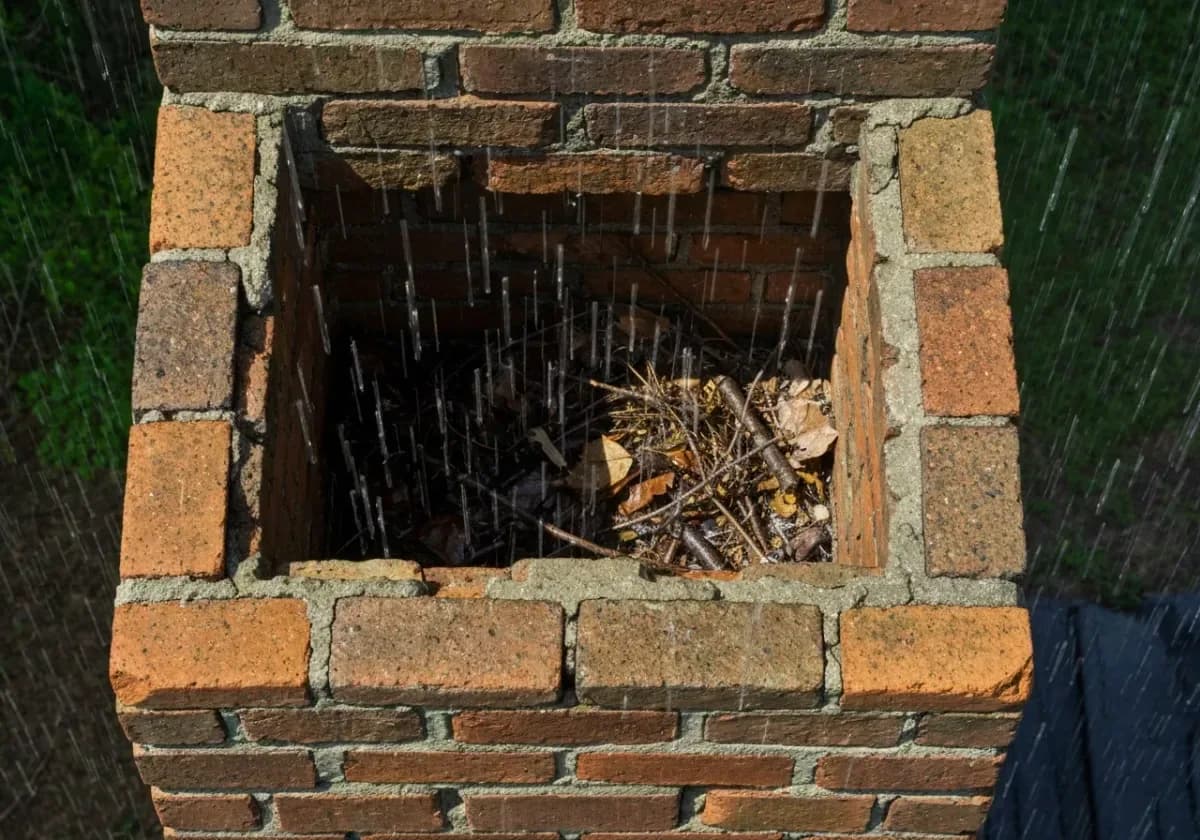 Before
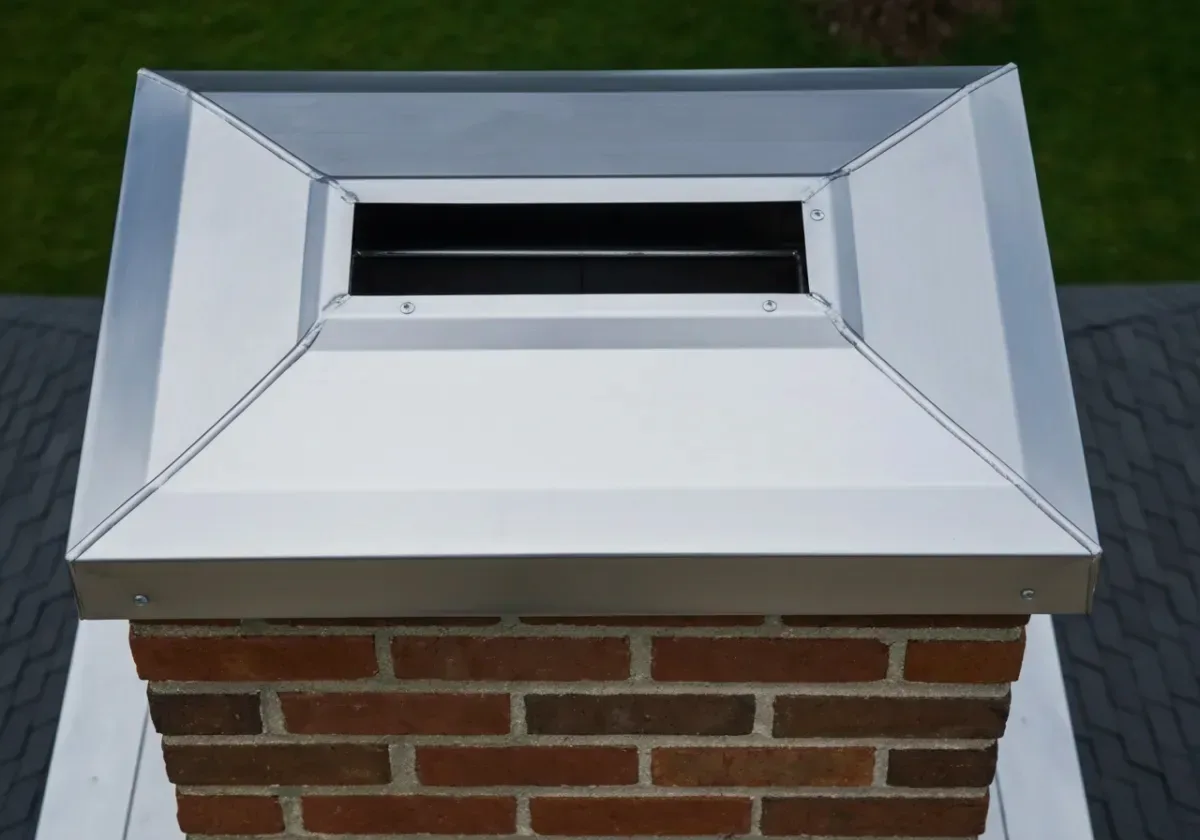 After
Four steps, each one on paper — so you always know what happens next.
Choose a genuine opening on the crew's calendar. Confirmation is immediate.
Liner, crown, cap, flashing and masonry examined in order — each finding photographed.
One document, plain numbers, covering only the work your chimney genuinely needs.
The repair is completed, then handed over with before-and-after photos of every item.
It depends on use, not on the calendar. CSIA cites NFPA 211 on this: chimneys, fireplaces and vents get looked at once a year, and the brush comes out when that look finds enough soot.
Then we stop guessing and film it. Filming runs $99 plus tax. Approve the repair quote that follows and we knock the $99 off.
Yes, unless the Puget Sound Clean Air Agency has called a burn ban. A Stage 1 ban already shuts down wood fireplaces and uncertified stoves and inserts across King County.
A $99 on-site inspection, a written quote before any work, and photos of every item we touch.